Direct-from-factory extrusion line selections for international distributors, brand owners, and industrial print farms.
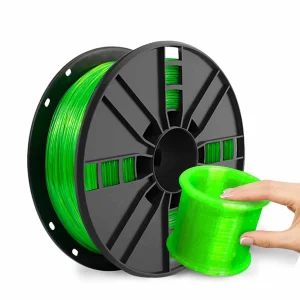
An engineering insight into why Thermoplastic Polyurethane (TPU) at 1.75mm gauge has emerged as the premier elastomeric material for industrial and consumer additive production.
Thermoplastic Polyurethane (TPU) represents a unique class of block copolymers composed of alternating hard and soft segments. The hard segments—derived from diisocyanates and short-chain diols—confer mechanical strength, thermal resistance, and structural rigidity. Conversely, the soft segments—comprising long-chain polyether or polyester polyols—provide elasticity, low-temperature flexibility, and impact absorption.
When extruding 1.75mm TPU filament, precise control over this block copolymer ratios is critical. Standard rigid thermoplastics (such as PLA or PETG) exhibit high flexural modulus, enabling straightforward pushing through drive gears. TPU, however, requires a finely tuned melt flow index (MFI) to balance column strength during feeding with instantaneous stress-relaxation upon leaving the nozzle orifice.
Historically, flexible filaments were predominantly extruded at 2.85mm to prevent buckling within older Bowden tube extruders. However, modern high-speed FDM printers (including Bambu Lab AMS, Voron CoreXY, and industrial Direct Drive heads) have shifted heavily toward 1.75mm standard diameter due to:
Why sourcing directly from an established China TPU manufacturer delivers unparalleled economic and technical advantages to global B2B procurement leaders.
We partner directly with tier-1 chemical resin suppliers including Covestro, BASF, and Lubrizol. By purchasing virgin TPU resin in multi-ton bulk batches, we eliminate intermediate compounding markups and secure chemical lot consistency across 100% of our production runs.
Every meter of our 1.75mm TPU filament passes through high-frequency dual-axis laser micrometers. Real-time feedback loops automatically adjust extruder screw speeds to lock diameter tolerances strictly within ±0.02mm, eliminating nozzle jams caused by ovality or swell.
Elastomeric filaments tend to stretch under improper winding tension, causing diameter constriction. Our specialized servo-controlled CNC winders lay TPU in uniform, anti-tangle parallel rows under zero-tension conditions, ensuring flawless feeding in automated farms.
TPU is inherently hygroscopic, capable of absorbing atmospheric water content within hours. Damp TPU results in hydrolytic degradation, steam popping, heavy stringing, and weak layer bond strength. Our facility incorporates continuous vacuum-desiccant drying hoppers operating at 80°C prior to extrusion. Immediate inline automated vacuum sealing with premium silica desiccant guarantees moisture levels below 0.04% upon customer unboxing.
Direct technical evaluation comparing TPU variants against popular engineering thermoplastics for OEM material selection.
| Material / Grade | Shore Hardness | Tensile Strength (MPa) | Elongation at Break (%) | Print Temp (°C) | Bed Temp (°C) | Key Industrial Property |
|---|---|---|---|---|---|---|
| TPU 75A Ultra-Soft | 75 Shore A | 28 MPa | 650% | 200 - 220 °C | 30 - 50 °C | Maximum flexibility, dampening & gel-like feel |
| TPU 85A Flexible | 85 Shore A | 35 MPa | 580% | 210 - 230 °C | 40 - 60 °C | High tear resistance, ideal for shoe insoles & seals |
| TPU 95A Industrial Standard | 95 Shore A | 45 MPa | 480% | 215 - 235 °C | 50 - 60 °C | Optimal printability, universal high-speed compatibility |
| PETG Engineering | 70 Shore D | 50 MPa | 120% | 230 - 250 °C | 70 - 80 °C | Rigid, chemical resistant, clear optics |
| PLA High Speed | 80 Shore D | 60 MPa | 6% | 190 - 220 °C | 40 - 60 °C | Rigid, zero warping, high tensile strength |
| ABS Industrial | 75 Shore D | 40 MPa | 30% | 230 - 260 °C | 90 - 110 °C | Heat resistance, ductile impact strength |
Removing regulatory friction for multi-national brands, Amazon FBA distributors, and regional industrial suppliers.
All Torwell TPU 1.75mm filaments comply with stringent environmental and human safety standards required across North American, European, and Asia-Pacific markets:
We empower regional distributors to build dominant market positions with fully customized localization assets:
How global industries leverage Torwell 1.75mm TPU filament to solve demanding mechanical challenges.
Engineered TPU 95A is extensively used for customized air-intake gaskets, protective wiring grommets, and interior dampening pads. Its oil and grease resistance ensures long service life inside vehicle compartments.
Using 85A and 90A TPU, podiatrists print patient-specific orthopedic insoles with variable density lattice infills. TPU offers the exact fatigue resistance required to endure millions of compression cycles without permanent deformation.
Ideal for shock-absorbing smartphone cases, drone camera mounts, and ruggedized power tool bumpers. Provides superior drop-impact dispersion compared to brittle rigid plastics.
Robotic end-effectors, soft vacuum suction cups, and flexible drive belts. TPU 95A provides high wear resistance and non-marring surface contact for delicate assembly lines.
A systematic 5-stage process guaranteeing rapid turnaround from sample formulation to mass container delivery.
Define target Shore hardness (75A-95A), filament color (Pantone/RAL), target print speed, and spool dimensions (250g, 1kg, 3kg, 5kg).
Our R&D laboratory extrudes trial sample spools within 5 business days for customer print validation and mechanical testing.
Design private label packaging including die-cut box layouts, custom sticker labels, and branded cardboard spool cores.
Mass extrusion across 6 high-speed lines with continuous laser diameter monitoring, desiccant drying, and vacuum packaging.
Strategic growth trajectories for flexible filaments and optimized printing parameters for peak performance.
Explore our complete catalog of PLA, PETG, Silk PLA, and specialty flexible 3D printer filaments.
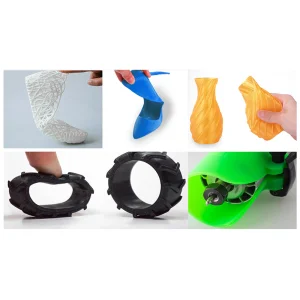
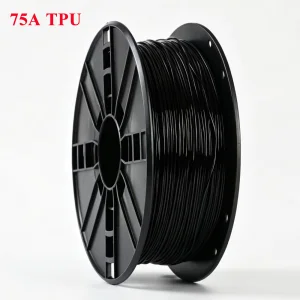
Direct technical and operational answers to facilitate vendor evaluation and bulk procurement decisions.