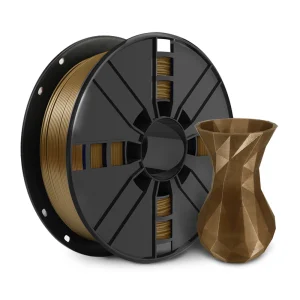
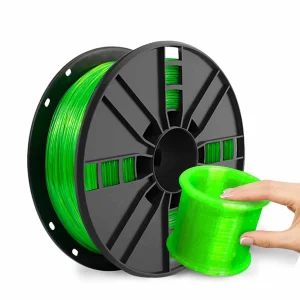
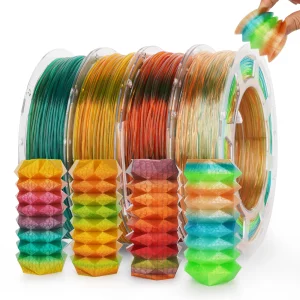
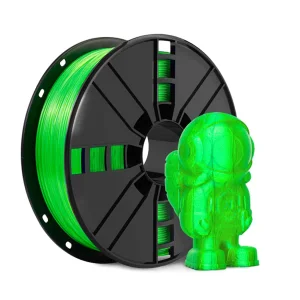
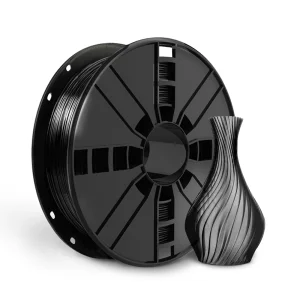
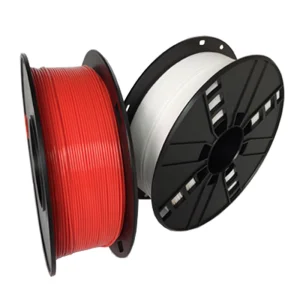
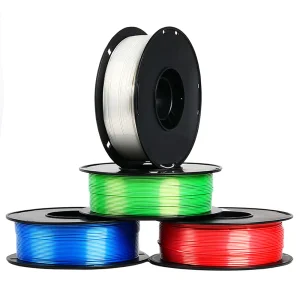
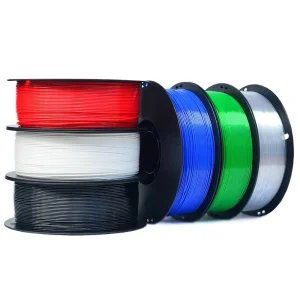
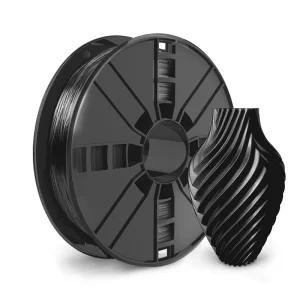
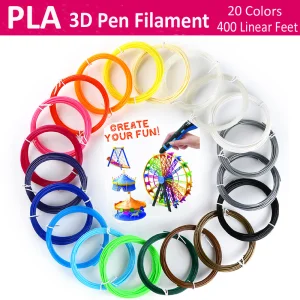
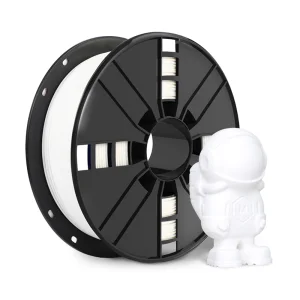
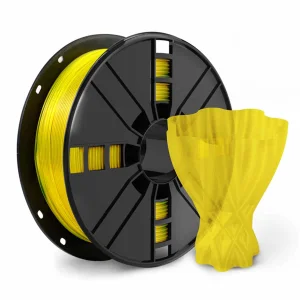
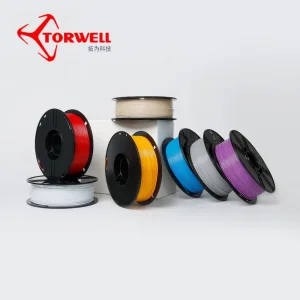
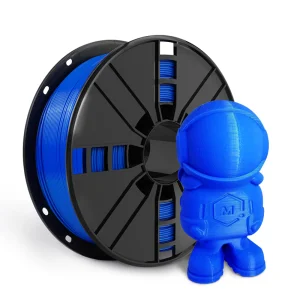
Explore our flagship, factory-direct spools engineered for exceptional melt flow indices, minimal warping, and zero-tangle automated spooling.
From Desktop Prototyping to Industrial 24/7 High-Speed Additive Manufacturing (HSAM)
The global 3D printing ecosystem is experiencing a structural pivot. Polylactic Acid (PLA), historically evaluated primarily on its ease of printing and low thermal expansion, has emerged as a cornerstone industrial thermoplastic. Enterprise print farms running thousands of autonomous FDM units require unprecedented spool-to-spool physical uniformity.
When operating at volumetric melt speeds exceeding 30 mm³/s on modern core-XY architectures, minor material variations cause catastrophic nozzle blockages, severe stringing, or inter-layer shear failure. Modern PLA spools are no longer simple plastic consumables—they are precision-engineered dynamic polymer distribution components.
For global brand owners, regional distributors, and large-scale manufacturing hubs, securing a top-tier wholesale PLA spool manufacturer is a primary driver of supply chain resilience. Low-cost standard suppliers frequently suffer from batch instability, ovality drifts above ±0.05 mm, and inadequate desiccant vacuum packing.
Our OEM/ODM manufacturing infrastructure combines virgin lactide chemical sourcing with closed-loop dual-axis laser feedback systems. This guarantees that every bulk spool shipped complies strictly with international mechanical standards, environmental regulations, and custom brand specifications.
Key technological trajectories redefining polymer extrusion, eco-packaging, and automated multi-material printing systems.
Next-generation 3D printers operate at speeds ranging from 300 mm/s to over 600 mm/s. Standard PLA formulations suffer from under-extrusion and poor layer adhesion under high shear stress.
Global environmental legislation (EU Single-Use Plastics Directive, ESG corporate initiatives) is driving a transition away from virgin single-use plastic spools.
Automated material switching systems (Bambu Lab AMS, Prusa MMU3, Anycubic ACE) demand precise spool geometry, low hub friction, and zero edge deformities.
Standard PLA possesses a Vicat softening temperature of approximately 55-60°C and brittle impact resistance (approx. 16 kJ/m²). Advanced OEM wholesale manufacturers apply impact modifiers (such as organic polybutadiene graft copolymers or micro-mineral nucleating agents) to create PLA+ (High Toughness PLA). This boosts Izod impact strength up to 35-40 kJ/m² and enables post-print thermal annealing to push heat deflection temperatures (HDT) past 85°C without compromising bio-degradability metrics certified under DIN EN 13432.
How advanced extrusion engineering, real-time laser closed-loop control, and raw resin procurement scale efficiency.
Extruding polymer filament at high speed requires constant monitoring. Our automated extrusion lines integrate twin-axis laser micrometers sampling diameter cross-sections at 1,000 Hz. If variance approaches ±0.015 mm, automated closed-loop PID controllers immediately adjust melt pump RPM and tractor puller speed.
Spool tangles remain a leading cause of print farm downtime. Our modern winding units feature servo-driven optical traversing heads that lay filament strands side-by-side with uniform pitch and controlled tensile force from start to finish.
| Manufacturing Metric | Standard Wholesale Market Level | Torwell Factory 4.0 Specification | Operational Benefit to Buyer |
|---|---|---|---|
| Diameter Precision | ±0.05 mm to ±0.03 mm | ±0.02 mm (Real-time laser log) | Eliminates under/over-extrusion bands on printed parts. |
| Moisture Content | < 0.10% (1000 ppm) | < 0.02% (200 ppm, Karl Fischer) | Prevents hydrolytic degradation, bubbles, and stringing. |
| Melt Flow Index (MFI) | Variable batch-to-batch | Strictly Controlled (7–12 g/10min @210°C) | Consistent extrusion force across high-speed nozzles. |
| Winding Quality | Manual / Semi-automated | Servo-driven Optical Neat Winding | Guarantees zero knotting during unattended 24/7 print jobs. |
| Color Consistency | Visual comparison | Spectrophotometer Delta E < 1.0 | Flawless color matching across re-orders and large runs. |
How global enterprise sectors leverage high-performance PLA spools for rapid tooling, healthcare, and mass manufacturing.
Tier-1 automotive suppliers use PLA and PLA-CF spools for low-cost, rapid fabrication of assembly jigs, alignment fixtures, and check-gauges. Dimensional stability ensures micrometric alignment on vehicle production lines.
Hospitals and medical institutes utilize high-purity, bio-compatible grade PLA spools to print 1:1 patient anatomical models from DICOM CT scans, improving surgical planning accuracy and lowering procedure times.
Architectural firms require ultra-smooth surface finishes and crisp edge sharpness for complex scale models. Silk PLA and Matte PLA spools deliver premium aesthetic detail without visible layer boundaries.
Print-on-demand enterprises scaling up to 500+ machines rely on high-volume 1kg, 2.5kg, and 5kg PLA spools. Consistent melting behavior eliminates recalibration routines between batch reloads.
A structured engineering roadmap for enterprise distributors, private label brands, and retail importers.
Provide a Pantone / RAL code or physical sample. Our laboratory utilizes spectrophotometers to formulate custom masterbatches, achieving exact color matching with a Delta E < 1.0 guarantee across all manufacturing batches.
Select spool materials (Cardboard, Polycarbonate, ABS), spool weights (250g, 500g, 1kg, 3kg, 5kg), custom flange printing, QR code tracking labels, and custom high-barrier vacuum seal bags with desiccant packs.
Every shipment includes complete documentation: Technical Data Sheets (TDS), Safety Data Sheets (SDS), RoHS 3 testing certificates, REACH SVHC compliance declarations, and FDA food-contact certificates.
Tailoring PLA spool product lines to specific regional demand trends and regulatory frameworks.
High demand for fast-printing PLA+, Silk dual-color spools, and eco-friendly recyclable cardboard spools. Strong growth driven by Amazon FBA brands, educational STEM purchasing contracts, and maker-space networks.
Strict adherence to REACH, RoHS, and bio-degradability standards. EU buyers prioritize carbon-neutral packaging, certified compostable virgin resins, and zero single-use plastic spools to comply with ESG mandates.
Rapid growth in industrial prototyping and rapid manufacturing hubs. High demand for cost-optimized 1kg standard PLA spools alongside high-toughness PLA+ for commercial assembly line tooling.
Expand your brand's market reach with our specialized PETG, ABS, TPU, and engineered specialty PLA filaments.
In-depth technical and commercial answers for procurement managers, brand owners, and logistics directors.
Our standard factory MOQ for stocked PLA colors is 100 spools (mixed colors supported). For custom OEM private label packaging—including custom printed master cartons, branded spool labels, and customized inner boxes—the standard MOQ is 500 spools per artwork design. Custom Pantone/RAL color matching requires an MOQ of 1,000 kg depending on raw resin availability.
We employ a continuous dual-axis inline laser micrometer system operating at 1,000 measurements per second. The laser sensors monitor both X and Y axis diameter dimensions simultaneously to catch ovality variations. If the extruded strand deviates beyond ±0.018 mm, an automated closed-loop PID controller automatically adjusts puller speed and melt pump output in real time. Strands exceeding tolerance are mechanically rejected before spool winding.
We offer standard 1kg spools, 2.5kg industrial spools, and 5kg print farm spools. Spool options include transparent polycarbonate, high-impact polystyrene (HIPS), and eco-conscious 100% recyclable heavy-duty cardboard spools. All spools feature standardized outer diameters (200 mm for 1kg reels) and center hub inner diameters (53–55 mm) ensuring full compatibility with automated multi-color feeder systems (Bambu Lab AMS, Prusa MMU, etc.).
Directly after automated winding and moisture level verification (Karl Fischer titration < 200 ppm), every spool is immediate vacuum-sealed inside a thick multi-layer aluminum-PE composite barrier bag with a high-capacity active desiccant packet. Individual spools are packed in reinforced 3-ply corrugated inner boxes, then master-packed into heavy-duty 5-ply export cartons on heat-treated wooden pallets, wrapped in moisture-proof stretch film for international shipping security.
Standard PLA is derived from corn starch or sugarcane lactide and offers high tensile stiffness but moderate impact brittleness. PLA+ is enhanced with elastomer impact modifiers and nucleating agents during compounding. This increases Izod impact strength by up to 2.5 times compared to standard PLA, improves inter-layer bond strength by 30%, and provides a wider printing temperature window (190°C to 230°C) without stringing.
Yes. Every wholesale filament grade is fully documented. We provide detailed Technical Data Sheets (covering Tensile Strength, Modulus, HDT, MFI, Density, and Flexural Modulus), Material Safety Data Sheets (MSDS/SDS) compliant with GHS standards, RoHS 3 (EU 2015/863) test reports, REACH SVHC screening reports, and FDA 21 CFR food contact compliance certificates on request.
For standard inventory spools, orders ship within 3–5 business days. For customized OEM private label orders or full container loads (a 20ft container holds approximately 9,000–10,000 spools of 1kg; a 40ft HQ container holds approx. 20,000–22,000 spools), our standard manufacturing lead time is 15–20 calendar days from artwork approval and initial deposit confirmation.
We maintain locked compounding master recipes and digital color spectrum profiles stored in high-precision spectrophotometer systems. For every production run, raw masterbatch color ratios are precisely batched via gravimetric feeders. Extruded sample spools are tested against master retain samples under standardized D65 lighting to guarantee a Delta E variance below 1.0.