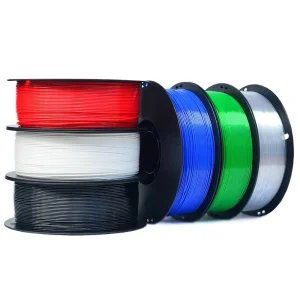
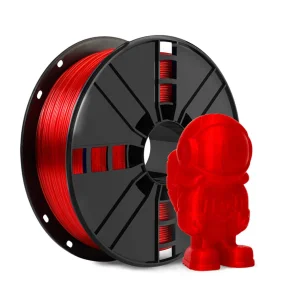
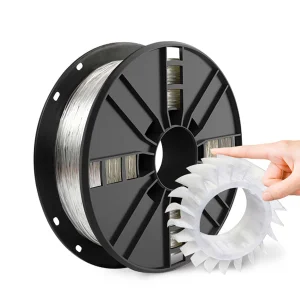
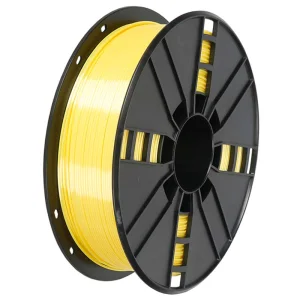
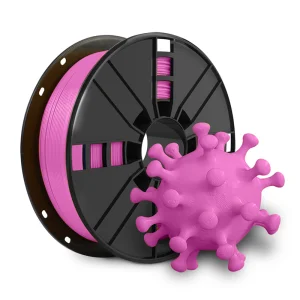
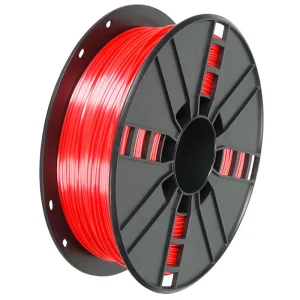
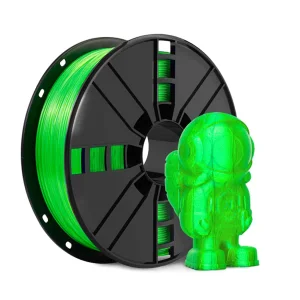
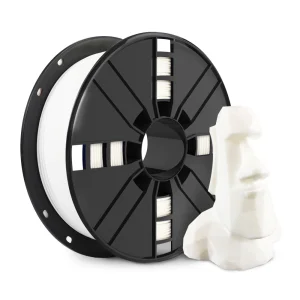
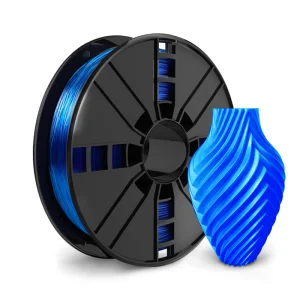
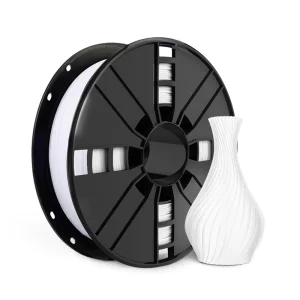
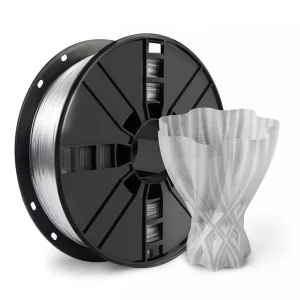
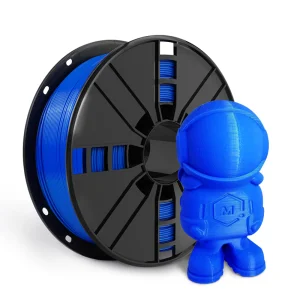
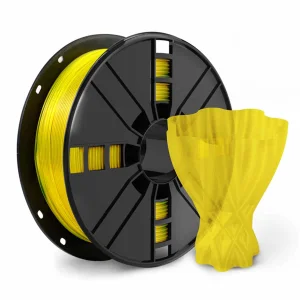
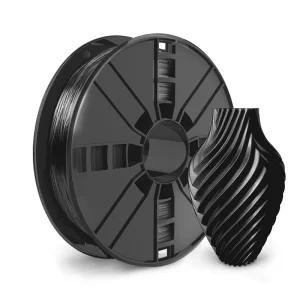
Explore our top-tier extruded filaments engineered for high-speed FDM machines, industrial prototyping, and retail distribution.
As a premier global Wholesale PLA+ Manufacturer, Torwell Technologies leads the transition from conventional bio-resins to engineered thermoplastic compounds designed for industrial reliability, high-speed FDM printing, and structural integrity.
Poly-Lactic Acid (PLA) has long served as the baseline polymer for Fused Deposition Modeling (FDM). However, standard virgin PLA suffers from inherent material limitations: brittleness, low impact resistance, poor inter-layer adhesion under stress, and limited thermal deflection capabilities (glass transition temperature around 55°C). To bridge the gap between easy-to-print bio-polymers and heavy-duty engineering thermoplastics (such as ABS or Polycarbonate), material scientists engineered modified formulations broadly classified as PLA+ (Poly-Lactic Acid Plus).
Through controlled chemical compounding, PLA+ incorporates core-shell rubber impact modifiers, chain extenders, stereocomplex nucleating agents, and flow-enhancement additives. The result is an advanced bio-based composite that retains the zero-warpage, low-odor, and low-temperature processing perks of standard PLA while dramatically enhancing Izod impact strength, tensile strain at break, and melt flow index (MFI) tailored for modern high-speed printing engines (300–600 mm/s).
| Mechanical / Thermal Parameter | Standard PLA | Torwell Industrial PLA+ | Standard PETG | Industrial ABS |
|---|---|---|---|---|
| Charpy Impact Strength (kJ/m²) | 2.5 - 4.0 | 14.5 - 18.2 (400% Improvement) | 6.5 - 9.0 | 12.0 - 15.0 |
| Tensile Strength (MPa) | 55 - 60 | 62 - 68 | 48 - 52 | 40 - 45 |
| Elongation at Break (%) | 3.2% | 12.5% | 22.0% | 10.0% |
| Heat Deflection Temp (HDT @ 0.45MPa) | 53°C | 62°C (92°C Annealed) | 68°C | 85°C |
| Warping / Shrinkage Tendency | Very Low | Near Zero | Low | High (Requires Enclosure) |
| Maximum Recommended Print Speed | 60 - 100 mm/s | up to 500 mm/s | 120 - 200 mm/s | 80 - 150 mm/s |
The global additive manufacturing material market is undergoing a seismic shift driven by high-acceleration FDM hardware, strict corporate ESG sustainability mandates, and the democratization of rapid digital tooling.
Next-generation kinematic systems (CoreXY, linear motor motion drives, Bambu Lab, Creality K1 series, Voron) operate at speeds exceeding 500 mm/s with accelerations over 20,000 mm/s². Standard PLA filaments snap or suffer melt-starvation under high volumetric flow rates (Q > 30 mm³/s). Torwell PLA+ is compound-optimized with controlled melt elasticity, ensuring smooth layer deposition without nozzle drag or under-extrusion.
Global enterprises across North America and Europe face mounting regulatory pressure to phase out petroleum-derived polymers like ABS/HIPS where possible. Derived from annually renewable agricultural starches (corn starch and sugarcane), PLA+ delivers a cradle-to-gate carbon footprint up to 68% lower than petroleum polymers, offering enterprise procurement officers an eco-friendly functional alternative.
Contract manufacturing facilities operating 50 to 500+ FDM printers simultaneously require extreme batch consistency. A 0.05mm deviation in diameter causes backpressure spikes, leading to print farm downtime. Torwell's dual-axis inline laser monitoring guarantees ±0.02mm tolerances, preventing nozzle jams across continuous 24/7 production cycles.
Our proprietary twin-screw compounding and extrusion processes integrate structural enhancements at the molecular level, delivering performance metrics unmatched by conventional OEM factories.
Through dedicated research since 2011, our polymer engineers have solved four major pain points in additive manufacturing materials:
Torwell PLA+ is trusted across global industries for applications requiring structural stiffness, aesthetic precision, and rapid turnaround times.
Used by design studios and Tier-1 automotive vendors for full-scale concept models, dashboard trim prototyping, and check-fixtures where structural stability and dimensional accuracy are critical.
Ideal for rapid iteration of smart-home sensor housings, drone arms, custom mechanical keyboard frames, and handheld equipment shells requiring crisp detail and high snap-fit resistance.
Factory production lines deploy PLA+ for assembly line alignment jigs, drill guides, and end-of-arm tooling components (EOAT). The elevated impact toughness prevents sudden fractures under mechanical load.
Hospitals and surgical training centers utilize high-detail PLA+ prints for 3D pre-operative planning, patient-specific anatomical bone models, and prosthetic socket prototyping.
Schools and universities mandate non-toxic, eco-friendly printing materials. Torwell PLA+ offers a low-odor, zero-styrene printing environment with ultra-reliable bed adhesion for classroom settings.
Prop makers and architects benefit from PLA+'s smooth surface finish, ease of post-sanding, primer compatibility, and resistance to warping over large physical prints (500mm+ build plates).
As a dedicated manufacturer, Torwell provides end-to-end OEM, ODM, and private label services, taking your brand from raw formulation concept to Amazon FBA or regional distribution warehouse.
Equipped with spectrophotometric color testing, our lab matches exact corporate Pantone or RAL color codes. We maintain strict batch-to-batch color consistency ($\Delta E < 1.0$), eliminating shade variations across multi-container shipments.
We supply eco-friendly recycled cardboard spools, high-strength ABS spools, or master bulk spools (3kg, 5kg, 10kg) tailored for industrial print farms. Customized branded boxes, vacuum bags, barcode labels, and master shipping cartons are fully integrated.
Every lot undergoes melt flow index testing, tensile strength verification, and moisture checks before shipping. Our 2,500 m² facility operates under standardized quality protocols to guarantee reliable export lead times worldwide.
Clear, direct answers for print farm operators, distributors, and procurement managers considering bulk orders of PLA+ filament.
Torwell PLA+ incorporates specialized organic toughening agents (elastomeric core-shell polymers) and chain extenders into raw poly-lactic acid resin. Standard PLA is brittle because polymer chains crack under sudden impact. Our impact modifier forms sub-micron rubber domains that disperse mechanical stress. This increases Charpy impact strength from ~3 kJ/m² up to over 15 kJ/m² while enhancing inter-layer fusion during extrusion.
Yes. Modern high-speed printers require high volumetric melt rates (MFR). Torwell PLA+ is formulated with optimized melt viscosity that flows smoothly through high-flow hotends without tearing or stringing. It maintains excellent inter-layer adhesion even when cooling fans run at 100% capacity during high-speed moves.
We maintain a target diameter tolerance of ±0.02 mm on all 1.75 mm and 2.85 mm filaments. Each production line uses inline dual-axis laser micrometers that scan the filament diameter and ovality continuously. If filament dimensions drift beyond set parameters, closed-loop feedback automatically adjusts extruder speed.
For standard stock colors, our MOQs are highly flexible for initial sample evaluation. For custom Pantone color matching or private-label custom boxes and spool labeling, our standard MOQ starts at 500 kg per batch. This can be split across multiple colors or spool sizes based on your contract terms.
Prior to spooling, our filament is dried to below 200 ppm moisture levels. Immediately after automated winding, each spool is sealed in a thick vacuum barrier bag with high-capacity silica gel desiccant. Sealed spools are packed in reinforced corrugated cartons to protect against humid ocean freight conditions.
Torwell PLA+ remains grounded in bio-based lactic acid derived from renewable crops like corn and sugarcane. While it requires industrial composting facilities (conforming to EN 13432 / ASTM D6400 standards) to fully break down into water, CO2, and biomass, its environmental carbon footprint is significantly lower than petroleum-derived plastics like ABS, PET, or Nylon.
Recommended nozzle temperatures range from 200°C to 230°C depending on print speed (higher temperatures for 300mm/s+). Heated bed temperature is optimal at 50°C to 65°C. No enclosure is required, and standard PEI, glass, or textured build plates offer excellent first-layer adhesion.
PLA+ offers higher tensile strength and stiffness than PETG, making it easier to print without stringing or nozzle blob accumulation. PETG has higher chemical resistance and slightly higher raw heat deflection, but PLA+ prints faster, produces cleaner bridge spans, and achieves superior surface aesthetics for retail end-products.
Browse our extended product portfolio including specialty Silk PLA, functional ABS, high-flex TPU, and transparent PETG materials.