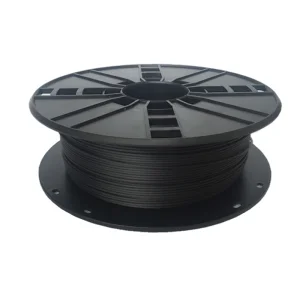
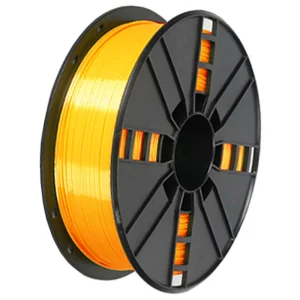
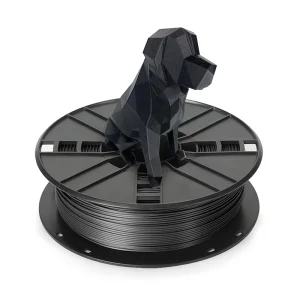
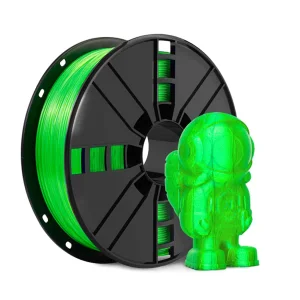
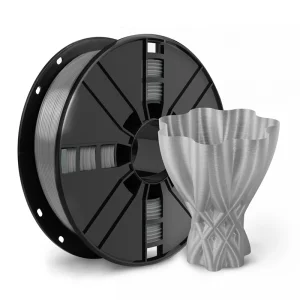
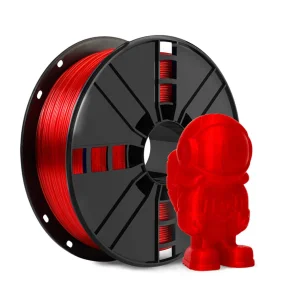
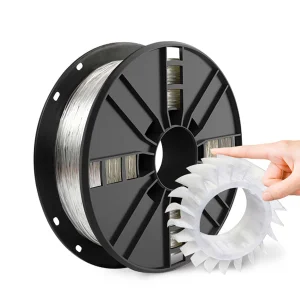
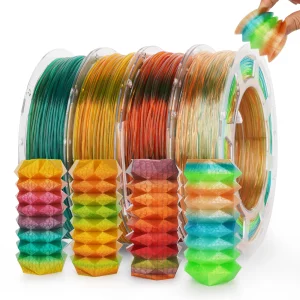
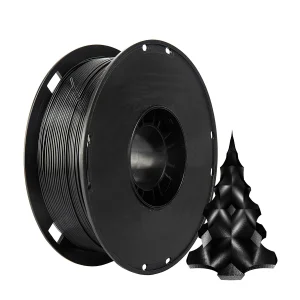
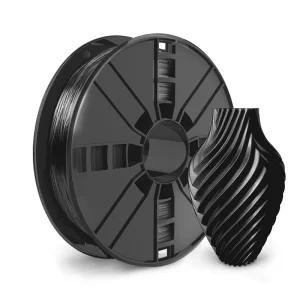
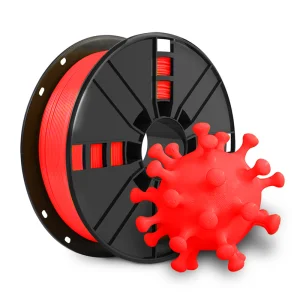
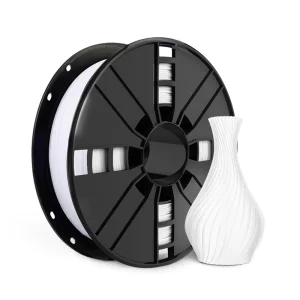
Explore our high-performance 3D printing consumables, manufactured under strict ISO 9001 quality controls with inline laser micrometer monitoring (+/-0.02mm accuracy).
As the global additive manufacturing landscape transitions from decorative prototyping toward end-use functional component production, high-performance engineering thermoplastics have seen unprecedented growth. Among these polymers, 1.75mm Polycarbonate (PC) filament represents the apex of mechanical durability, optical clarity, and thermal resistance in Fused Deposition Modeling (FDM) / Fused Filament Fabrication (FFF) technologies.
Historically limited to high-temperature industrial machines operating with 2.85mm feeds, advanced extrusion techniques perfected by tier-1 China factories have popularized the 1.75mm dimensional standard for PC filament. This shift allows desktop enterprise printers, print farm operators, and automotive OEMs to leverage PC’s extraordinary Izod impact strength, high Heat Deflection Temperature (HDT), and flame-retardant properties without investing in multi-million dollar capital equipment.
Industrial B2B applications demand zero flow fluctuations. Advanced factory lines utilize continuous dual-axis laser diameter monitoring to maintain tight 1.75mm tolerances (±0.02mm), mitigating extruder gear slip and hot-end clogging.
Polycarbonate exhibits high melt viscosity. Formulations tailored by raw material suppliers blend precise molecular weight distributions to achieve lower shear viscosity during hot-end transit while preventing layer sag.
PC resins are inherently hygroscopic, absorbing ambient moisture rapidly. Premium suppliers incorporate multi-stage vacuum desiccation protocols and aluminum-barrier foil packaging to ensure ready-to-print delivery.
Understanding the polymer physics of Polycarbonate is critical for industrial purchasing teams and procurement engineers evaluating bulk filament suppliers. Polycarbonate is an amorphous thermoplastic derivative of Bisphenol A (BPA) linked by carbonate groups ($[-O-C(=O)-O-]$). This chemical structure grants high optical transparency, extreme ductility under impact, and exceptional thermal resistance.
While Unfilled Pure PC 1.75mm yields maximum impact resistance and optical clarity, industrial print farms often request modified grades. PC-ABS alloys reduce thermal expansion coefficient and warping, making them easier to print on open-frame equipment. Carbon Fiber Reinforced PC (PC-CF) introduces micro-chopped carbon fibers, elevating tensile modulus above 6,000 MPa while reducing part weight and eliminate anisotropy across Z-axis layers.
The following engineering data table highlights mechanical performance metrics across standard wholesale 3D printing filament formulations:
| Material Grade | Tensile Strength (ISO 527) | Flexural Modulus (ISO 178) | Heat Deflection Temp (0.45 MPa) | Izod Impact Strength (ISO 180) | Recommended Nozzle / Bed Temp |
|---|---|---|---|---|---|
| Industrial Pure PC 1.75mm | 68 - 75 MPa | 2,350 - 2,500 MPa | 138°C - 145°C | 65 - 80 kJ/m² | 270°C - 310°C / 100°C - 120°C |
| PC-ABS Alloy | 55 - 62 MPa | 2,100 - 2,300 MPa | 110°C - 122°C | 45 - 55 kJ/m² | 250°C - 280°C / 90°C - 110°C |
| Carbon Fiber PC (PC-CF) | 85 - 110 MPa | 5,800 - 6,500 MPa | 148°C - 155°C | 28 - 35 kJ/m² | 280°C - 320°C / 100°C - 130°C |
| Flame Retardant PC (UL94 V-0) | 65 - 72 MPa | 2,400 - 2,600 MPa | 135°C - 142°C | 50 - 60 kJ/m² | 275°C - 310°C / 105°C - 120°C |
| High-Impact PETG (For Comparison) | 48 - 52 MPa | 1,900 - 2,100 MPa | 72°C - 78°C | 8 - 12 kJ/m² | 230°C - 250°C / 70°C - 80°C |
For factory buyers, selecting the right polymer matrix depends directly on the end-use environment. In high-stress automotive enclosures or aerospace ducting, pure PC or PC-CF is non-negotiable due to creep resistance under sustained thermal loading.
Sourcing engineering filaments like Polycarbonate 1.75mm at enterprise scale requires rigorous evaluation of vendor capabilities, factory capacity, raw material transparency, and OEM customization options. Global distributors and private-label brand owners must navigate distinct manufacturing criteria to guarantee supply chain resilience.
Leading China factories offer comprehensive OEM integration. This encompasses custom spool branding (cardboard vs transparent high-temp polycarbonate spools), individualized box art, custom net weight configurations (0.5kg, 1kg, 3kg, 5kg, and 10kg industrial spools), and custom Pantone/RAL color matching for corporate buyers.
Polycarbonate’s high raw material cost mandates optimized freight handling. Bulk buyers benefit from container-level shipping strategies (FCL vs LCL). Industrial packaging must feature moisture barrier laminates to prevent humidity degradation during 30-45 day maritime transit windows across ocean freight routes.
Polycarbonate is not merely an alternative to consumer-grade PLA or PETG; it is a structural material engineered for harsh operational environments. Below are key vertical sectors deploying bulk PC 1.75mm filament solutions:
Under-the-hood components, fluid reservoirs, headlight housings, and custom ducting exposed to ambient engine bay temperatures exceeding 120°C.
Flame-retardant PC 1.75mm formulations utilized in junction boxes, switchgear housing, and terminal blocks compliant with international UL94 electrical safety standards.
Lightweight structural brackets, camera gimbals, and UAV frames utilizing PC-CF due to its high strength-to-weight ratio and vibration dampening capabilities.
End-of-arm tooling for robotic assembly lines requiring non-marring, high-impact jaws capable of withstanding millions of cyclic pneumatic clamping motions.
When selling high-tier engineering consumables in European, North American, and Asian markets, factory compliance documentation is vital for customs clearance and enterprise customer buy-in. Qualified wholesale PC filament factories adhere to rigorous international environmental and safety standards.
Polycarbonate filament masterbatches must comply with EU Directive 2015/863 (RoHS 3) and REACH Regulation (EC) No 1907/2006, ensuring the total absence of heavy metals, phthalates, and restricted Substances of Very High Concern (SVHC).
For aerospace and electronics applications, specific modified PC 1.75mm lines achieve UL94 V-0 flame ratings, guaranteeing self-extinguishing behavior within 10 seconds without dripping flammable molten polymer droplets.
Direct factory procurement mandates ISO 9001:2015 certified manufacturing facilities. Each production lot undergoes Melt Mass-Flow Rate (MFR) testing, density verification (ISO 1183), and continuous 3D test printing.
As 3D printer speeds increase from traditional 50 mm/s to ultra-high-speed regimes exceeding 300 mm/s to 600 mm/s (driven by modern CoreXY kinematics), filament formulations are undergoing rapid transformation. Factory R&D teams are actively innovating along three primary technological vectors:
Incorporating specialized low-molecular-weight hyperbranched polymer modifiers to increase Melt Flow Index (MFI) by up to 40% without compromising layer adhesion or ultimate tensile strength during high-speed printing.
Integrating ISCC PLUS certified mass-balance bio-attributed Polycarbonate resins and post-industrial recycled PC content, offering eco-conscious procurement options for global enterprise buyers targeting ESG goals.
Doping PC matrix resins with Graphene nanoplatelets and Multi-Walled Carbon Nanotubes (MWCNTs) to grant static-dissipative (ESD) protection for sensitive semiconductor component manufacturing fixtures.
Clear answers to technical and commercial questions frequently submitted by industrial buyers, supply chain officers, and private label distributors.
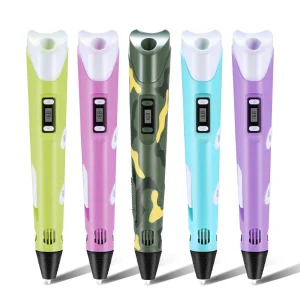
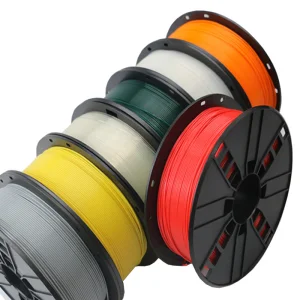
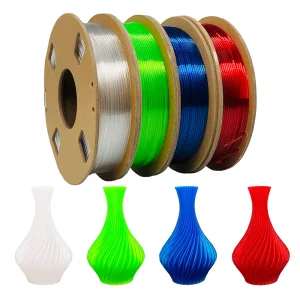
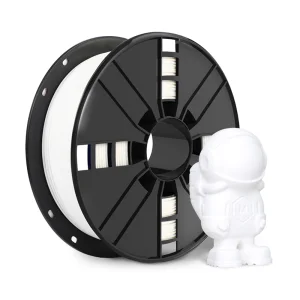
Browse our expanded portfolio of engineering polymers, flexible resins, decorative specialty filaments, and 3D drafting tools available for OEM wholesale supply.