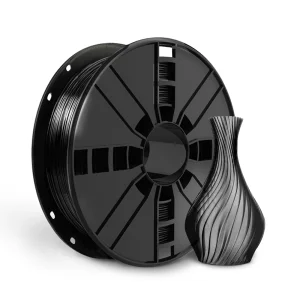
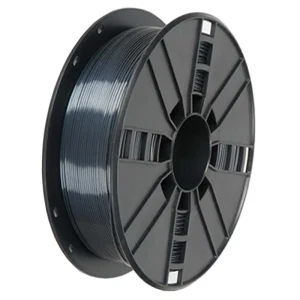
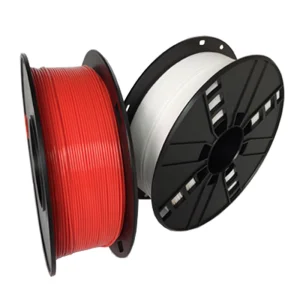
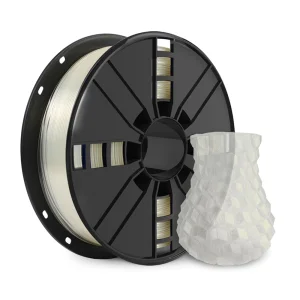
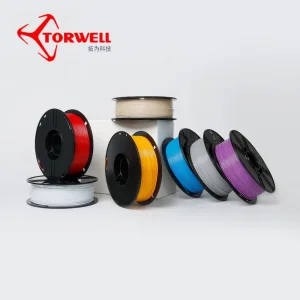
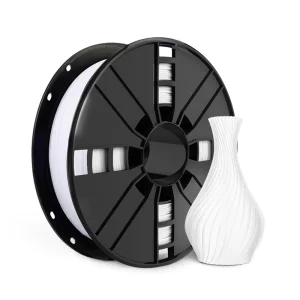
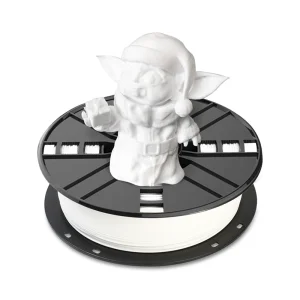
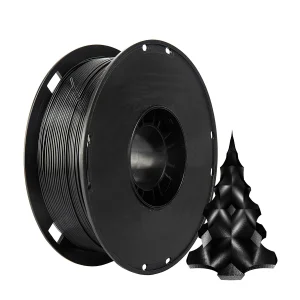
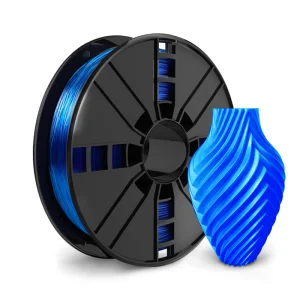
Direct factory supply featuring tight diameter tolerances (±0.02mm), optimized rheology, and export-grade vacuum packaging.
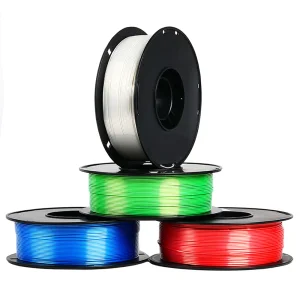
Examining the structural evolution of thermoplastic extrusion materials across global supply chains, additive manufacturing farms, and OEM brand ecosystems.
The global 3D printing filament market is accelerating toward a multi-billion dollar valuation, propelled by the democratization of high-speed Fused Deposition Modeling (FDM) and Fused Filament Fabrication (FFF) hardware platforms. Enterprise procurement is transitioning from rapid prototyping to direct additive end-use manufacturing.
Key verticals—including automotive tooling, aerospace jigs & fixtures, medical orthotics, consumer electronics housings, and architectural modeling—require consistent rheological properties. Modern manufacturers must guarantee strict melt flow indexing and batch-to-batch colorimetric accuracy.
Industrial print farms running thousands of continuous operating hours demand sub-micron extrusion consistency. Spool tangling, diameter fluctuation, or micro-voids lead to thermal nozzle clogs and expensive print failures, elevating the technical requirements for wholesale OEM partners.
Understanding polymer molecular structures, thermal transition dynamics, and mechanical performance metrics for wholesale sourcing optimization.
Thermoplastic selection directly governs printability, tensile strength, impact resistance, and environmental durability. A professional wholesale filament manufacturer must control polymer crystallization kinetics, molecular weight distribution, and stabilizer additive packages during the compounding phase.
PLA is a biodegradable aliphatic polyester derived from renewable starches such as corn or sugarcane. In wholesale manufacturing, standard PLA offers excellent tensile strength (50–65 MPa) and negligible thermal shrinkage, making it the primary choice for consumer, educational, and display prototyping.
PETG is modified by replacing cyclohexanedimethanol with ethylene glycol during polymerization, preventing crystallization (amorphous state). It delivers exceptional mechanical toughness, chemical resistance to acids and alkalis, low moisture absorption, and minimal warping. It serves as the primary workhorse for functional enclosures and print-farm production.
ABS provides high glass transition temperature ($T_g \approx 105^\circ\text{C}$), superior impact strength, and post-processing flexibility (acetone vapor smoothing). ASA upgrades ABS chemistry by replacing butadiene rubber with acrylic rubber, rendering the material UV-stable and weather-resistant for long-term outdoor industrial deployment.
Ranging from Shore 85A to 95A hardness, TPU features block copolymer structures combining hard polyurethane segments with soft polyether or polyester chains. Precision extrusion guarantees constant flexibility without buckling in direct-drive or Bowden extruder systems.
Engineering-grade Polycarbonate offers high heat deflection ($>120^\circ\text{C}$) and structural rigidity. Carbon fiber reinforced variants (e.g., PETG-CF, PLA-CF, PA-CF) embed chopped micro-carbon fibers into the polymer matrix, dramatically boosting tensile modulus, dimensional stability, and surface matte quality while suppressing warping tendencies.
Next-generation advancements driving high-speed compatibility, biopolymer engineering, and automated quality monitoring systems.
Modern FDM hardware now operates at print speeds exceeding 500 mm/s with accelerations over 20,000 mm/s². Wholesale manufacturers must re-engineer melt flow indices (MFI) to enable fast melting in hotends, rapid thermal relaxation, and instant cooling solidification without sacrificing layer bond integrity.
Global environmental mandates are fueling demand for post-industrial (PIR) and post-consumer (PCR) recycled filaments (rPETG, rPLA), alongside bio-attributed raw materials. Advanced compounding technology removes impurities while preserving mechanical property degradation under 5% across re-melting cycles.
Automatic Material Systems (AMS) demand precise spool dimensions, optimized flange geometry, smooth outer wire finishes, and controlled friction coefficients. Dual-color, triple-color, and gradient rainbow co-extrusions require sub-micron die alignment to produce sharp color transitions during part rotation.
How state-of-the-art manufacturing facilities maintain tight tolerances and zero-defect output for global distribution.
During high-speed polymer extrusion, continuous dual-axis laser scanning units monitor filament diameter at over 1,000 Hz frequencies. Real-time feedback loops automatically adjust extruder capstan speed to ensure standard 1.75mm and 2.85mm strands remain within strict $\pm 0.02\text{ mm}$ limits, simultaneously detecting and isolating ovality deviations.
Hydroscopic polymers (PETG, TPU, PC, Nylon) rapidly absorb atmospheric moisture, resulting in hydrolytic degradation during printing, bubbling, excess stringing, and weakened part strength. Raw polymer pellets undergo desiccant tower drying ($<200\text{ ppm}$ water content) prior to melt extrusion, followed by immediate vacuum packaging with active desiccant pouches.
Engineered reference parameters comparing key physical, thermal, and extrusion characteristics across major polymer grades.
| Material Grade | Extrusion Temp (°C) | Bed Temp (°C) | Tensile Strength (MPa) | Heat Deflection (HDT @0.45MPa) | Impact Resistance | Primary Industrial Use Case |
|---|---|---|---|---|---|---|
| Standard PLA | 190 – 220 | 0 – 60 | 55 – 65 | 55 °C | Moderate | Prototyping, Architectural Models, Retail |
| PLA+ / PLA Pro | 200 – 230 | 50 – 65 | 60 – 68 | 58 °C | High (Toughened) | Functional Prototypes, Mechanical Jigs |
| Silk PLA | 200 – 230 | 50 – 60 | 45 – 55 | 52 °C | Moderate | Display Aesthetics, Cosplay, Consumer Goods |
| PETG | 230 – 250 | 70 – 85 | 48 – 55 | 72 °C | Very High | End-Use Parts, Chemical Containers, Print Farms |
| ABS | 230 – 260 | 90 – 110 | 40 – 50 | 98 °C | High Impact | Automotive Tooling, Enclosures, Vapor Smoothing |
| ASA | 240 – 260 | 90 – 110 | 42 – 52 | 100 °C | High + UV Stable | Outdoor Fixtures, Marine Components, Signage |
| TPU (95A) | 210 – 230 | 30 – 60 | 35 – 45 | N/A (Elastomer) | Extreme (Elongation >400%) | Gaskets, Seals, Dampeners, Wearables |
| Polycarbonate (PC) | 260 – 300 | 100 – 120 | 65 – 75 | 125 °C | Extreme Hardness | High-Temp Engineering, Structural Components |
Explore custom colors, specialized functional polymers, and complete 3D pen ecosystem offerings available for white-label OEM partnership.
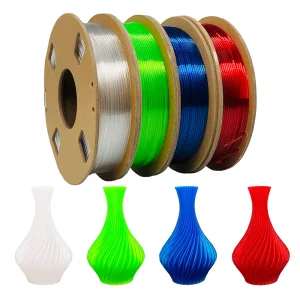
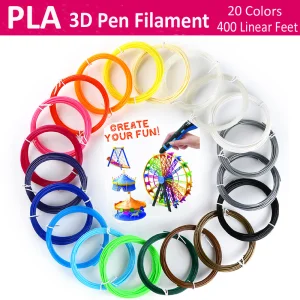
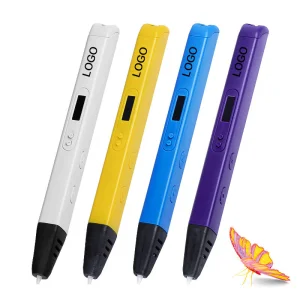
End-to-end manufacturing workflows tailored for global brand owners, Amazon private labels, regional wholesalers, and print farm networks.
Our in-house masterbatch color laboratory can match any custom Pantone or RAL code, as well as physical color swatches. High-precision color dispersion technology ensures zero batch-to-batch color shift ($\Delta E < 1.0$).
Choose from recyclable cardboard spools, clear PC transparent spools, high-durability ABS spools, or high-capacity bulk spools (2.5 kg, 5 kg, 10 kg). All packaging features customized artwork, customized box graphics, barcodes, and localized regulatory compliance labels.
Export packaging features heavy-duty corrugated master cartons, corner protection supports, and moisture-resistant shrink wraps. Orders ship with full customs documentation, MSDS, RoHS, REACH, and FDA material compliance certificates.
Expert insights covering procurement terms, technical specifications, OEM capabilities, and storage protocols.