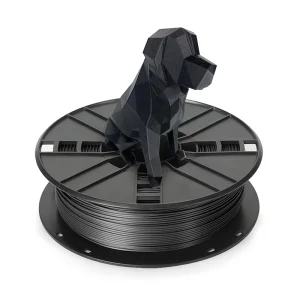
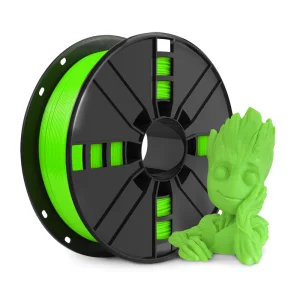
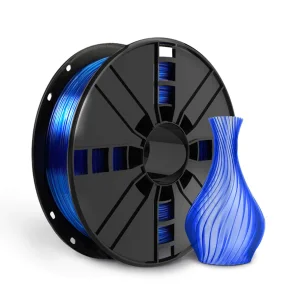
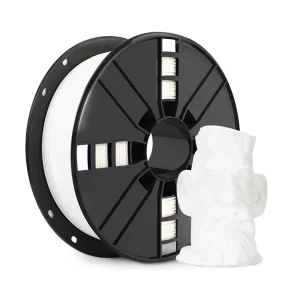
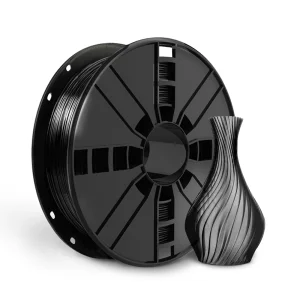
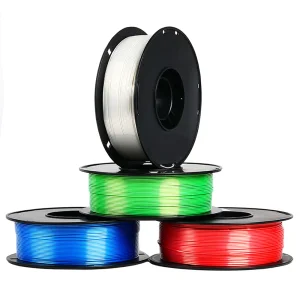
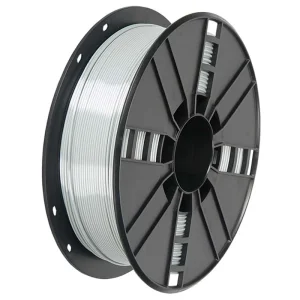
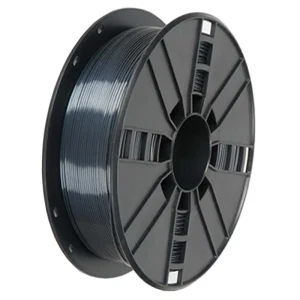
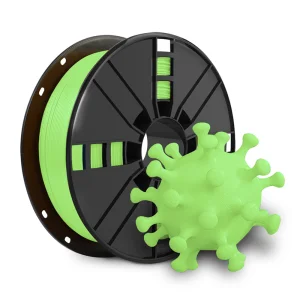
Factory-direct bulk supply engineered for continuous production, additive manufacturing farms, and international distributor channels.
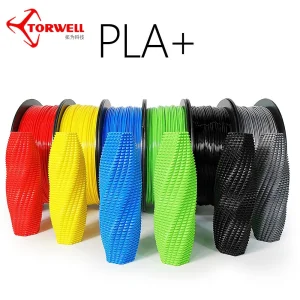
Acrylonitrile Butadiene Styrene (ABS) remains one of the most vital engineering thermoplastics in the additive manufacturing sector. As enterprise-scale Fused Deposition Modeling (FDM) and Fused Filament Fabrication (FFF) transition from low-volume functional prototyping to industrial end-use production, global demand for wholesale bulk ABS filament has experienced exponential growth. Sourcing officers, brand owners, and industrial procurement teams face increasing pressure to secure manufacturing partners who offer structural reliability, thermal stability, minimal batch-to-batch variance, and scalable volume pricing.
Unlike standard consumer-grade PLA (Polylactic Acid), industrial ABS requires rigorous polymer synthesis and precise thermal-profile control during extrusion. The copolymer's tri-monomer chemistry—combining Acrylonitrile's chemical resistance and thermal endurance, Butadiene's exceptional impact strength, and Styrene's structural rigidity and processability—makes it uniquely suited for automotive components, electronics housing, consumer goods prototyping, and functional tooling jigs. However, unoptimized extrusion processes often lead to severe warpage, thermal contraction gradient stresses, micro-void voids, and erratic melt flow index (MFI) values, resulting in high scrap rates for enterprise print farms.
To evaluate a reliable wholesale bulk ABS filament supplier, procurement engineers must examine the material's chemical and mechanical baseline parameters. Torwell's proprietary ABS formulation utilizes virgin high-grade terpene-modified ABS resin, suppressing unreacted monomer volatiles while balancing the phase morphology between the polybutadiene rubber particles and the styrene-acrylonitrile matrix.
Maintained at a stable $105^\circ\text{C} \pm 2^\circ\text{C}$. This ensures printed parts maintain structural integrity without creeping under elevated operational temperatures up to $95^\circ\text{C}$.
Notched Izod impact resistance metrics reach $\ge 22 \text{ kJ/m}^2$ (tested per ISO 180 standard), offering high energy absorption during sudden mechanical shock or vibration loading.
Calibrated to $12-15 \text{ g}/10\text{ min}$ ($220^\circ\text{C}/10\text{kg}$), delivering balanced viscosity ideal for high-speed printing platforms (up to $300\text{ mm/s}$) without nozzle clogging.
Dual-plane laser micrometers sample filament diameter every $2\text{ milliseconds}$ during extrusion, enforcing strict $\pm 0.02\text{ mm}$ tolerance standards to eliminate volumetric over/under-extrusion.
To eliminate moisture-induced degradation during processing, raw ABS pellets undergo a 4-hour dehumidifying drying cycle at $85^\circ\text{C}$ prior to entering the single-screw extruder barrel. The extruded filament strand is drawn through multi-stage temperature-zoned water baths, mitigating thermal shock and internal micro-stress build-up. This engineered process minimizes thermal shrinkage warping ($< 0.7\%$), enabling seamless large-format industrial FDM printing.
Bulk procurement of Torwell ABS filament supports diverse vertical sectors, bridging the gap between digital design files and heavy-duty real-world applications.
Enables low-cost rapid turnaround of air intake ducts, interior trim bezels, bumper brackets, and HVAC housing assemblies. Printed ABS components accept post-processing such as chemical vapor smoothing, sanding, painting, and heat-set threaded insert installation.
Offers electrical insulation performance with high dielectric strength. Custom flame-retardant UL94 V-0 ABS grades are available upon enterprise request for housing industrial controller circuit boards, sensor junction boxes, and terminal covers.
Replaces heavy CNC-machined aluminum assembly fixtures with lightweight 3D printed ABS alternatives, lowering operator fatigue and enabling fast design iterations directly on the factory floor.
Features controlled winding tension to ensure tangle-free spooling during multi-day unmanned print jobs across high-speed core-XY printing arrays (such as Bambu Lab, Creality K1, and Voron systems).
A comparative evaluation designed to assist procurement specialists in selecting the optimal polymer for specific operating environments.
| Material Metric | Torwell Industrial ABS | High-Impact PLA+ | Engineering PETG | UV-Resistant ASA | Composite ABS-CF |
|---|---|---|---|---|---|
| Tensile Strength (MPa) | 43 - 48 | 55 - 60 | 45 - 50 | 42 - 46 | 65 - 75 |
| Glass Transition Temp ($T_g$) | $105^\circ\text{C}$ | $60^\circ\text{C}$ | $80^\circ\text{C}$ | $102^\circ\text{C}$ | $108^\circ\text{C}$ |
| Impact Resistance (kJ/m²) | $\ge 22$ | $\ge 15$ | $\ge 9$ | $\ge 18$ | $\ge 16$ |
| Acetone Vapor Smoothing | Excellent | Not Applicable | Not Applicable | Excellent | Moderate |
| UV & Outdoor Weathering | Moderate (Needs Paint) | Poor | Moderate | Outstanding | Good |
| Warping Sensitivity | Moderate (Chamber Recommended) | Very Low | Low | Moderate | Very Low (CF-Stabilized) |
| Density (g/cm³) | 1.04 | 1.24 | 1.27 | 1.07 | 1.12 |
As regulatory compliance and corporate environmental, social, and governance (ESG) goals expand globally, material science in ABS extrusion is evolving rapidly. Torwell Technologies continues to invest in specialized additive formulations to solve longstanding environmental and operational challenges in traditional ABS processing.
Traditional ABS release volatile organic compounds (VOCs) and ultra-fine particles (UFPs) when heated above $230^\circ\text{C}$, requiring sealed print chambers and HEPA/carbon filtration. Torwell's next-generation Low-Styrene ABS incorporates monomer-purified resins and reactive thermal stabilizers, reducing volatile styrene off-gassing by up to 70% while maintaining inter-layer adhesion strength.
By compounding high-modulus chopped carbon fibers (15% by weight) into the ABS matrix, Torwell has engineered an ultra-stiff, low-density composite filament. The carbon fiber orientation restricts volumetric thermal expansion during layer deposition, virtually eliminating print warping while raising the Flexural Modulus to over $4,500 \text{ MPa}$.
Addressing circular economy mandates, Torwell provides high-purity post-industrial recycled ABS (rABS) options. By sourcing traceable industrial off-cuts and re-stabilizing polymer chains with anti-oxidants, Torwell rABS delivers up to 90% of the mechanical strength of virgin resin with a reduced carbon footprint.
To support global distributors, private label brands, and regional manufacturing hubs in over 75 countries, Torwell offers comprehensive OEM/ODM customization options backed by international regulatory documentation.
Our color laboratory provides spectrophotometric matching ($\Delta E < 1.0$) for custom corporate colors, matte textures, fluorescent shades, and high-visibility safety colors.
Available in standard 1kg spools, 2.5kg enterprise reels, 5kg industrial reels, and 10kg master farm reels. Packaging options include high-impact plastic spools or eco-friendly recycled paper spools compatible with AMS automatic material systems.
Every shipment is accompanied by Technical Data Sheets (TDS), Safety Data Sheets (SDS) adhering to OSHA/GHS standards, EU RoHS 3 (Directive 2015/863), REACH SVHC declarations, and ISO 9001:2015 quality certificates.
Filament spools are dried immediately prior to automatic winding, vacuum-sealed in heavy-duty foil/PE moisture barrier bags with active desiccant packs, and packed into reinforced corrugated outer cartons built for ocean container freight.
Expert responses addressing key operational queries from industrial buyers and print farm operations.
Extrusion temperatures should be set between $230^\circ\text{C}$ and $260^\circ\text{C}$ (depending on print speed), with heated bed temperatures maintained between $90^\circ\text{C}$ and $110^\circ\text{C}$. For optimal layer adhesion and to prevent warping on large prints, an enclosed build chamber kept at $45^\circ\text{C} - 60^\circ\text{C}$ is strongly recommended, along with cooling fan speeds reduced to 0–20%.
We utilize a 4-axis inline dual-laser micrometer monitoring system on every extrusion line. The system automatically adjusts melt pump speed and puller tension in real-time, enforcing a strict $\pm 0.02\text{ mm}$ tolerance limit. Strands exceeding standard dimensions are automatically flagged and segregated by automated quality gateways.
Our standard MOQ for custom Pantone or RAL color matching on ABS filament is 300 kg per color. For standard catalog colors (such as Black, White, Red, Blue, Silver, and Natural), our baseline OEM bulk order MOQ starts at 100 kg, supporting flexible container-load mixing across multiple polymer types (PLA+, PETG, TPU, ABS).
While ABS is less hygroscopic than Nylon or PC, it will absorb ambient atmospheric moisture over prolonged exposure, leading to hydrolytic degradation, steam pop bubbles, and poor layer strength during printing. Torwell spools are vacuum-sealed with active silica desiccant. Sealed spools retain optimal printing quality for up to 24 months when stored in a cool, dry place ($15^\circ\text{C} - 25^\circ\text{C}$). Opened spools should be maintained in desiccant dry-boxes or re-dried at $70^\circ\text{C} - 80^\circ\text{C}$ for 4 hours prior to printing.
Yes. We offer end-to-end OEM and ODM private label services. This includes custom logo die-cut box printing, specialized label design containing your target product SKU data and barcodes, custom spool sticker placement, and customized instruction inserts for direct retail distribution or Amazon FBA fulfillment.
Discover our comprehensive collection of enterprise 3D printing consumables ready for global export.