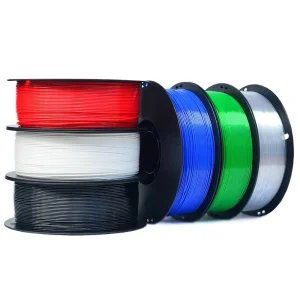
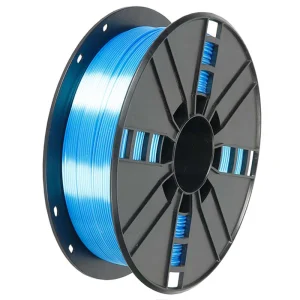
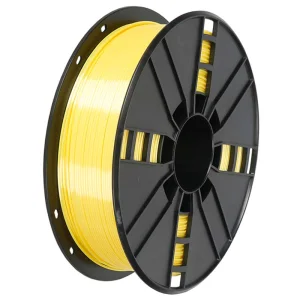
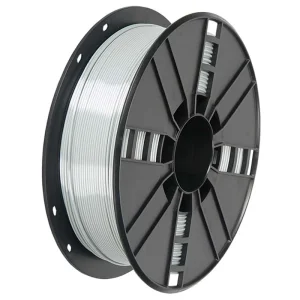
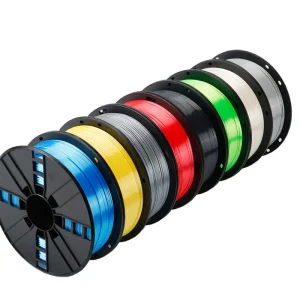
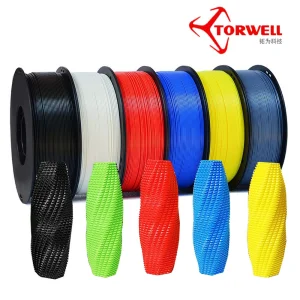
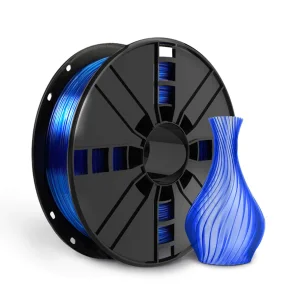
Explore our factory-direct filament portfolio manufactured with pure virgin raw materials, laser-monitored tolerances, and advanced vacuum packaging.
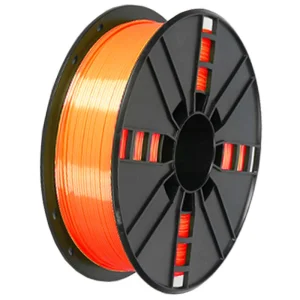
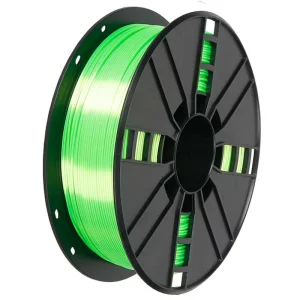
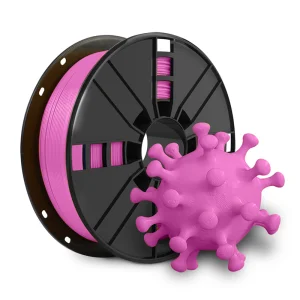
China 1.75mm Silk filament PLA 3D Filament Shiny Orange Manufacturers, Supplier
View Product DetailsA technical guide for industrial enterprise buyers, regional distributors, OEM brand owners, and commercial print farm managers evaluating Acrylonitrile Butadiene Styrene supply chains.
Acrylonitrile Butadiene Styrene (ABS) remains one of the foundational thermoplastics driving the modern industrial 3D printing ecosystem. Renowned for its superior structural toughness, high heat deflection temperature (HDT), exceptional impact resistance, and versatile post-processing capabilities (such as acetone vapor smoothing), ABS serves as an indispensable bridge between rapid conceptual prototyping and end-use industrial production.
As additive manufacturing matures from low-volume desk-top modeling to distributed direct digital manufacturing (DDM), the performance mandates placed upon 3D printer filament suppliers have escalated. Global procurement leaders no longer seek mere raw material availability; they demand absolute batch-to-batch consistency, chemical purity, zero volumetric diameter variance, and robust supply chain resilience. Sourcing premium wholesale ABS 3D printer filament directly from accredited Chinese manufacturing hubs offers global enterprises an unassailable balance of cost efficiency, scalability, and cutting-edge material engineering innovation.
Modern industrial ABS extrusion requires tightly controlled resin polymerization and real-time laser micrometer feedback. Partnering with specialized Chinese OEM factories grants enterprise buyers access to direct-from-source pricing, tailored chemical modifications (low-warping, anti-static, flame-retardant), and rigorous ISO-certified quality assurance.
Unpacking the supply chain infrastructure, petrochemical integration, and production technologies behind Chinese leadership in 3D material export.
China operates world-leading petrochemical refining infrastructure in partnership with global polymer giants (e.g., Sinopec, LG Chem, Formosa Plastics). This direct proximity to raw resin production ensures our factories receive high-purity virgin ABS pellets without re-grind contamination, guaranteeing optimal melt flow index (MFI) and color thermal stability.
Our manufacturing facility utilizes multi-zone precision screw extruders equipped with closed-loop optical laser measuring equipment. Operating at sampling rates up to 1000 Hz, these systems auto-calibrate extrusion speeds in real-time, locking thread tolerances into a narrow ±0.02 mm envelope across 100% of production runs.
Running automated multi-line extrusion operations round-the-clock allows Chinese factories to yield tens of metric tons of ABS filament monthly. This volume scalability provides international brand partners with unmatched lead times, rapid turnaround on container orders, and competitive tier-one wholesale pricing.
Understanding the molecular dynamics of Acrylonitrile Butadiene Styrene terpolymer matrix to maximize print success and end-use performance.
ABS is a synthesized terpolymer combining three distinct monomers, each contributing essential physical traits to the finalized filament standard:
Through proprietary modifying agents and specialized thermal annealing techniques during production, modern China factory ABS formulations mitigate traditional printing flaws such as thermal shrinkage stress, layer delamination, and volatile fume emissions.
| Material Property | Standard ABS | Modified ABS+ | ASA (Weather-Resistant) | PETG (Toughness) | Polycarbonate (PC) |
|---|---|---|---|---|---|
| Glass Transition Temp ($T_g$) | 105 °C | 108 °C | 105 °C | 80 °C | 147 °C |
| Heat Deflection Temp (HDT @ 0.45MPa) | 95 °C | 98 °C | 96 °C | 72 °C | 135 °C |
| Tensile Strength (ISO 527) | 43 MPa | 48 MPa | 42 MPa | 50 MPa | 65 MPa |
| Izod Impact Strength (kJ/m²) | 22 kJ/m² | 28 kJ/m² | 20 kJ/m² | 9 kJ/m² | 45 kJ/m² |
| Volumetric Shrinkage Rate | 0.5% - 0.8% | 0.3% - 0.5% | 0.4% - 0.6% | 0.1% - 0.2% | 0.7% - 1.0% |
| Acetone Vapor Polishability | Excellent | Excellent | Moderate | None | None |
| Recommended Bed Temp | 95 – 110 °C | 90 – 105 °C | 90 – 110 °C | 70 – 85 °C | 110 – 130 °C |
How modern extrusion factories are refactoring ABS materials for high-speed automated print farms and extreme industrial environments.
With the rise of high-speed CoreXY 3D printers operating at speeds up to 600 mm/s and accelerations over 20,000 mm/s², traditional filaments suffer from underextrusion and thermal starvation. High-Speed ABS incorporates low-viscosity polymer modifiers that melt instantly in high-flow hotends without compromising interlayer adhesion strength.
Targeted at aerospace, automotive electronics, and mass transit interiors, halogen-free flame-retardant ABS formulations self-extinguish within 10 seconds of flame exposure, preventing fire propagation while maintaining high mechanical stiffness and electrical insulation properties.
Integrating carbon nanotubes (CNTs) or micro-chopped carbon fibers creates specialized ABS matrix compounds. Electrostatic Discharge (ESD) safe ABS prevents static charge accumulation, protecting sensitive PCB assembly tooling, while Carbon Fiber ABS boosts flexural modulus by up to 150%.
To assist corporate buyers in fulfilling ESG environmental criteria, Chinese manufacturers have engineered high-purity Post-Consumer Recycled (PCR) ABS blends. These eco-friendly materials deliver >90% of the mechanical strength of virgin ABS while slashing carbon footprint during manufacturing.
From automotive assembly plants to consumer electronics packaging, discover how wholesale ABS filaments solve complex engineering challenges.
Automotive OEMs rely on ABS filament for rapid functional testing of dashboard vents, center console brackets, light housings, and ducting work. The material's thermal durability ensures prototypes resist cabin heat degradation during vehicle field tests.
Electrical engineers select ABS for its robust dielectrical strength and impact shielding. Print farms manufacture custom IoT gateway housings, server rack mount brackets, and handheld diagnostic meter cases ready for field deployment.
Factory shop floors utilize carbon-reinforced ABS jigs and alignment fixtures on automated assembly lines. ABS offers the strength needed to endure repeated mechanical impacts without cracking or deforming.
Streamlining global procurement for brand owners, Amazon sellers, regional distributors, and large-scale industrial buyers.
Maintain complete visual brand identity across your filament product catalog. Using dual-beam spectrophotometry, our compounding laboratory matches precise Pantone, RAL, or physical sample color chips with zero batch shift.
We deliver complete OEM turnkey fulfillment. Options include eco-friendly cardboard spools, high-temperature ABS spools, custom die-cut retail packaging, private label branding, and barcode sticker automation.
ABS is inherently hygroscopic. To guarantee pristine print performance upon opening, every spool undergoes industrial desiccation prior to immediate dual-layer vacuum sealing with high-capacity silica desiccant bags.
All exported ABS filament products strictly conform to RoHS, REACH, ISO 9001, and CE international standards. Our experienced export department handles container loading, sea/air freight documentation, and customs clearance support.
Direct wholesale catalog for international distributors, B2B procurement partners, and 3D printing brand owners.
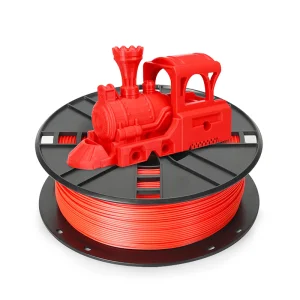
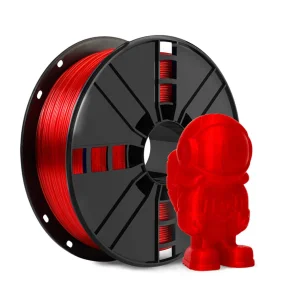
Wholesale PLA plus Red PLA filament 3D printing materials Manufacturer, Factory
View Product Details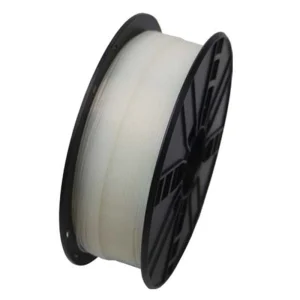
Wholesale Torwell ABS Filament 1.75mm for 3D printer and 3D pen Manufacturer, Factories
View Product DetailsIn-depth technical and commercial guidance to assist enterprise purchasing decisions.
ABS (Acrylonitrile Butadiene Styrene) offers significantly higher glass transition temperature ($T_g \approx 105^\circ\text{C}$) and heat deflection performance compared to PLA ($T_g \approx 60^\circ\text{C}$). Additionally, ABS exhibits superior impact resistance, ductility, and machinability (drilling, tapping, sanding), and can be post-processed using acetone vapor smoothing for seamless injection-molding quality surface finishes.
China factories integrate proprietary low-shrinkage core-shell modifiers into the ABS resin matrix. These additives suppress residual internal stresses created during high-temperature polymer cooling. When printed on a heated bed ($95-110^\circ\text{C}$) inside an enclosed build chamber, modern ABS filaments achieve superior dimensional stability with minimal edge deformation.
For standard stock color ABS spools, MOQs typically start at 100 kg to 300 kg. For custom Pantone color matching, special spool sizes, or custom-printed retail packaging, the OEM MOQ is generally 500 kg to 1,000 kg per SKU. Flexible mixed-carton container orders are available upon request.
Top-tier Chinese suppliers utilize inline dual-axis optical laser gauges that continually measure the extrudate at 1000 Hz. Standard production tolerances are guaranteed at $\pm0.02\text{ mm}$ for both 1.75 mm and 2.85 mm diameters, ensuring smooth flow without hotend clogging or volumetric fluctuations.
Filament strands are fully dried in industrial dehumidifying hoppers prior to spooling. Each spool is immediately vacuum sealed inside a heavy-duty, moisture-impermeable barrier bag alongside a active silica desiccant pouch. Vacuum-sealed spools are individually boxed in reinforced corrugated cartons designed for long-distance container sea shipping.
Yes. All polymer resins, color masterbatches, and additive modifiers pass third-party lab testing (SGS/TÜV) for compliance with EU RoHS Directive 2011/65/EU and REACH (EC 1907/2006) regulations. Full Technical Data Sheets (TDS) and Safety Data Sheets (SDS) are provided for corporate documentation.