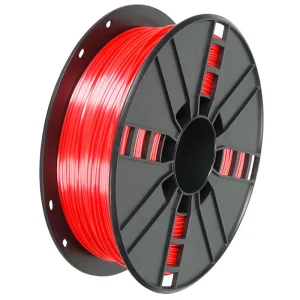
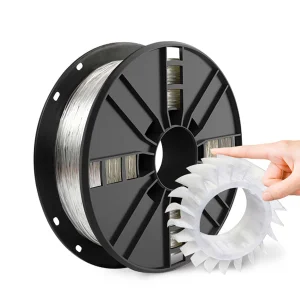
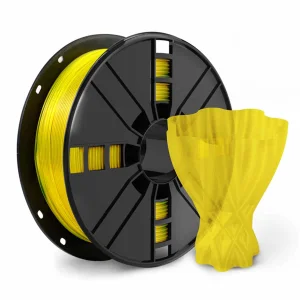
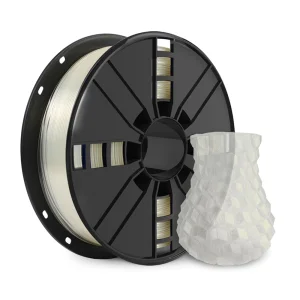
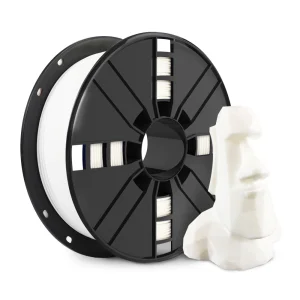
Factory-direct OEM/ODM grade 3D printer filaments extruded with tight ±0.02mm tolerances and continuous laser monitoring.
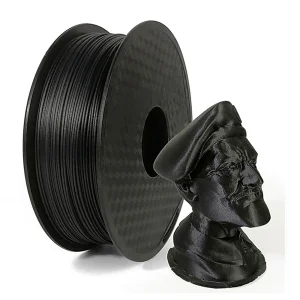
Demystifying thermoplastic polyurethane (TPU) extrusion capabilities and the benchmark NinjaFlex alternative chemistry made in China.
In the rapidly evolving additive manufacturing ecosystem, Thermoplastic Polyurethane (TPU) has transitioned from a niche material used primarily for rapid prototyping to an essential, engineering-grade functional polymer. Among elastomeric filaments, materials matching or exceeding the performance metrics of pioneer formulations like NinjaFlex represent the pinnacle of flexible material engineering.
Industrial buyers, contract OEMs, and additive manufacturing print farms globally are continuously seeking suppliers capable of delivering uniform elongation at break, high chemical resilience, superior layer adhesion, and reliable feeding characteristics across modern Fused Deposition Modeling (FDM) and Fused Filament Fabrication (FFF) hardware setups.
As a global manufacturing powerhouse, China's polymer processing infrastructure has underwent a massive technological leap. By pairing pure virgin resin block copolymers—such as polyether and polyester-based TPUs—with state-of-the-art dual-axis laser measurement lines, tier-1 Chinese manufacturers now deliver NinjaFlex-equivalent TPU filaments with dimensional consistency of ±0.02 mm.
This whitepaper provides procurement managers, product engineers, and OEM distributors with a complete technical evaluation of Chinese TPU manufacturing capabilities, raw material chemistry, localized application frameworks, compliance standards, and supply chain resilience metrics.
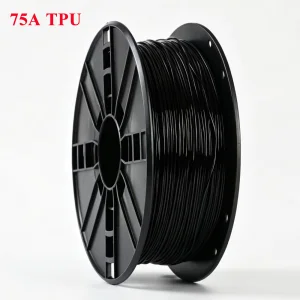
Understanding the molecular architecture that differentiates ultra-soft 75A, standard 85A NinjaFlex-style, and semi-rigid 95A TPU filaments.
The structural dynamics of TPU polymers depend on the microphase separation between hard segments (diisocyanates and chain extenders) and soft segments (long-chain polyols). Selecting the proper chemical backbone is critical for end-use performance:
| Polymer Subtype | Hydrolytic Stability | Abrasion Resistance | Low-Temp Flexibility | Chemical & Oil Resistance | Primary Application Area |
|---|---|---|---|---|---|
| Polyether TPU | Exceptional (No degradation in water) | Good | Superior (< -40°C) | Moderate | Medical devices, outdoor gear, marine seals |
| Polyester TPU | Moderate (Hygroscopic sensitivity) | Exceptional | Standard (-20°C) | Superior (Oils, fuels, solvents) | Industrial gaskets, automotive boots, drive belts |
| Polycaprolactone TPU | High (Superior to standard polyester) | High | Excellent | High | High-performance hydraulic seals, aerospace dampers |
Formulated to replicate natural rubber and gel-like elastomer behavior. Exhibits elongation properties up to 660%. Requires direct-drive extruders with constrained filament paths to prevent Euler buckling failure during printing.
The industry standard for flexible 3D printing. Strikes a precise balance between tactile squishiness, impact dampening, and pushability through PTFE tubes. Features low friction coefficients engineered into the filament surface.
Designed for high-speed coreXY 3D printers (print speeds up to 250–350 mm/s). Compatible with Bowden tube drive configurations. Exceptional tear strength, ideal for rigid-flexible hybrid components and protective armor.
Extruding ultra-soft TPU (such as NinjaFlex 85A or soft 75A grades) relies heavily on controlling column stiffness. The Euler critical load ($P_{cr} = \frac{\pi^2 E I}{(K L)^2}$) dictates that softer flexible filaments (lower Young's Modulus $E$) collapse easily under tension/compression inside unconstrained feeder gears. Top-tier Chinese manufacturers incorporate friction-reducing slip-agents into the polymer matrix during twin-screw compounding, increasing surface lubricity without compromising inter-layer bonding thermal dynamics.
From automotive prototyping to custom medical orthotics—how global enterprises deploy TPU NinjaFlex filaments.
Applications: Custom wiring harness grommets, air intake ducting, anti-vibration engine mounts, acoustic dampening gaskets, and dust boots.
Key Requirement: Fuel, grease, and ozone resistance alongside dynamic flex fatigue failure limits exceeding 1,000,000 stress cycles.
Applications: Patient-specific orthopedic footwear insoles, prosthetic liner dampeners, wearable diagnostic sensor sleeves, and anatomical training models.
Key Requirement: Biocompatibility testing compliance (ISO 10993 suitability), skin-safe contact, micro-porous infill tuneability for variable shore hardness.
Applications: Pneumatic soft robotic grippers, End-of-Arm Tooling (EOAT) suction pads, protective robot arm covers, conveyor belt cleats.
Key Requirement: High tear resistance, rapid mechanical energy absorption, zero scuffing mark performance on delicate electronics packaging.
Applications: Impact-resistant protective helmet liners, custom smartwatch straps, specialized athletic shoe soles, protective drone bumpers.
Key Requirement: UV resistance, vibrant Pantone color fidelity, sweat/washability resilience, low temperature flex properties.
Applications: Non-marring assembly jaws, custom paint masking plugs, fluid seals, vibration isolation pads under heavy machinery.
Key Requirement: Rapid turnaround manufacturing, high chemical resistance against cutting fluids, lubricants, and cleaning solvents.
Applications: Waterproof seal enclosures, shock-absorbing electronics cases, UAV landing gear pads, flexible conduit covers.
Key Requirement: Flame retardancy formulations (UL94-V0 compliance options), salt spray hydro stability, wide thermal operating range.
Why top global 3D printing brands partner with Chinese TPU manufacturers for scalable, cost-optimized production.
China commands over 45% of global polyurethane chemical precursor capacity (MDI, TDI, Polyols). Key domestic partnerships with chemical behemoths such as Wanhua Chemical and global strategic plants (Covestro, BASF China facilities) secure uninterrupted, prime-grade virgin TPU pellet supplies. This backward integration insulates global buyers from supply chain bottlenecks and raw material cost spikes experienced in Western markets.
Modern Chinese TPU production facilities operate automated closed-loop extrusion lines equipped with 4-axis inline laser micrometer monitoring systems. These sensors adjust melt pump speeds in real-time to guarantee strict standard deviations:
Extending far beyond filament extrusion, Chinese factory infrastructure provides end-to-end turn-key branding options. Because TPU is inherently hygroscopic, professional packaging processes are critical to preventing hydrolysis during ocean freight transit:
Next-generation material advances shaping the next decade of flexible 3D printing innovation.
Optimization of shear-thinning behavior to support ultra-fast high-speed CoreXY 3D printers (Bambu Lab, Creality K1, Voron). Specialized high-flow TPU resins enable printing flexible components at speeds exceeding 300 mm/s without layer delamination or nozzle clogging.
Integration of carbon nanotubes (CNT), graphene, and ESD additives into soft TPU matrices. Release of anti-static (ESD-safe) TPU for semiconductor handling tools and conductive flexible filaments for printed wearable sensors and soft robotics circuitry.
Transition toward bio-derived polyols (castor oil and corn-starch based polymers) achieving 40%–70% bio-based carbon content without compromising physical tear resistance. Introduction of fully chemically recyclable elastomer filament lines.
Development of gradient-durometer filaments featuring continuous variable shore hardness along a single spool (e.g., transition from rigid 55D to flexible 80A), opening unprecedented design freedom for monolithic dynamic structures.
Rigorous international standards ensuring seamless regulatory approval and supply chain accountability.
All TPU filament formulations are certified free from heavy metals, phthalates, polybrominated biphenyls (PBBs), and hazardous substances. Full chemical test reports (SGS/TÜV) are provided for seamless customs clearance in EU and North American markets.
Specific polyether-based clear TPU lines comply with FDA 21 CFR regulations for food processing machinery components, beverage tubing, and indirect food contact fixtures, supported by complete material safety data sheets (MSDS/TDS).
Dedicated customer success engineers provide localized print profile configuration files (.curaprofile, .orcaslicer), extruder tensioning guidelines, and direct trouble-shooting for high-volume enterprise deployment partners worldwide.
Expert answers addressing common procurement, technical extrusion, and operational queries from industrial buyers.
Explore our full line of industrial engineering filaments, including PLA, PETG, ABS, and Carbon Fiber composites.