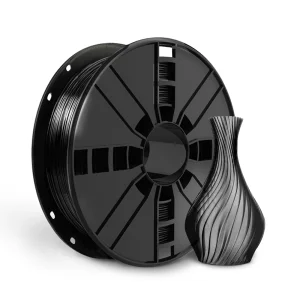
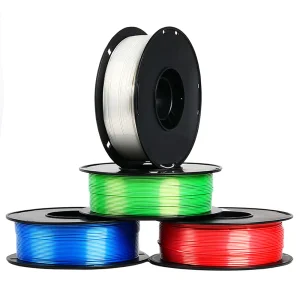
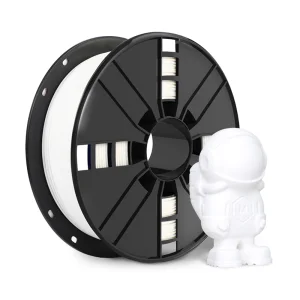
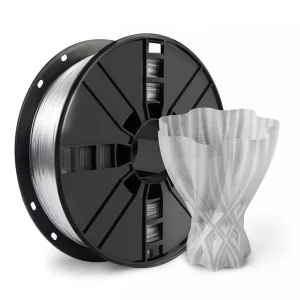
High-speed compatible, moisture-controlled, and laboratory-tested filament spools packaged for international distribution.
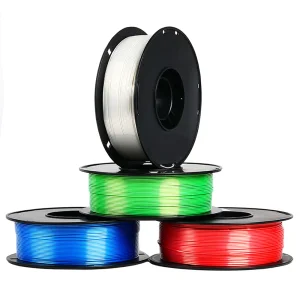
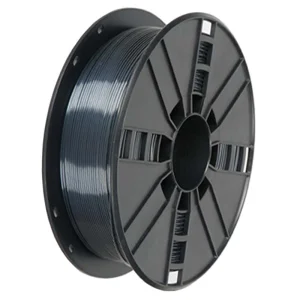
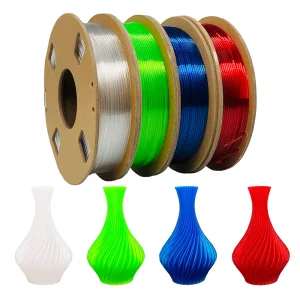
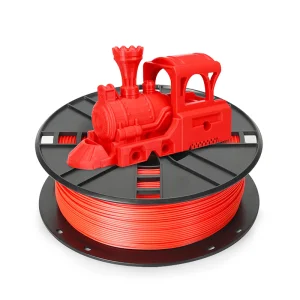
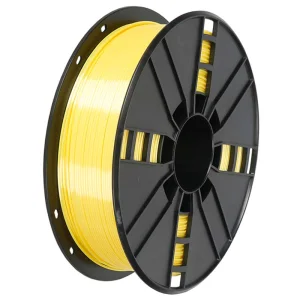
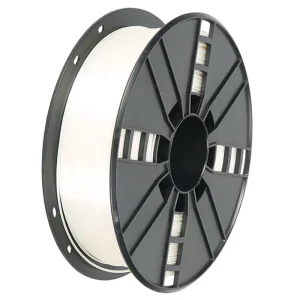
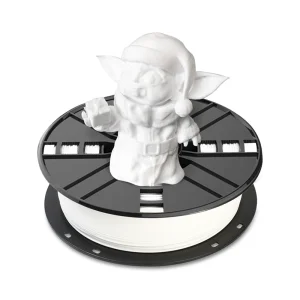
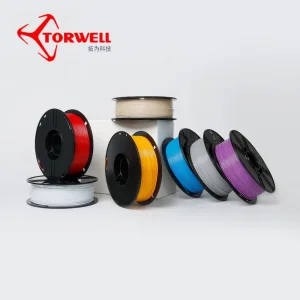
Thermoplastic Polyurethane (TPU) has transitioned from an experimental niche material into a cornerstone polymer for industrial FDM/FFF 3D printing. As global manufacturing demands greater agility, customized short-run production, and functional elastomeric components, TPU 3D printer filament is replacing traditional liquid silicone molding and vulcanized rubber prototyping across multiple sectors.
Unlike rigid polymers such as PLA or ABS, TPU combines the elastic resilience of rubber with the thermal processing ease of thermoplastics. In today's competitive landscape, procurement directors, OEM brand managers, and commercial print farm operators require TPU filaments that exhibit stringent dimensional stability, predictable melt flow index (MFI), and zero micro-void bubbling.
Formulated with shear-thinning rheology modifiers to support printing speeds up to 150-200 mm/s on next-generation CoreXY printers without nozzle clogging or feeding buckle.
Engineered using premium polyether and polyester polymer backbones to withstand oils, greases, industrial solvents, and atmospheric UV degradation.
Strict durometer tuning ensuring exact Shore 85A, 90A, 95A, and 70D ratings across batch runs, providing predictable flexural modules for critical end-use parts.
As a premier China TPU 3d printer filament manufacturer, our material engineers formulate raw TPU resins into high-performance 3D printing filaments by adjusting soft and hard polymer segment ratios. Understanding the fundamental chemistry of TPU is critical for industrial buyers specifying materials for harsh operational environments.
The table below provides physical and mechanical property metrics for our standard industrial TPU extrusion grades:
| Grade / Durometer | Tensile Strength (MPa) | Elongation at Break (%) | Tear Strength (kN/m) | Density (g/cm³) | Recommended Print Temp | Primary Application |
|---|---|---|---|---|---|---|
| TPU 85A (Ultra-Soft) | 35 MPa | 650% | 75 kN/m | 1.18 | 210°C - 230°C | Medical orthotics, soft grippers, dampeners |
| TPU 90A (Flexible) | 40 MPa | 580% | 90 kN/m | 1.20 | 215°C - 235°C | Shoe insoles, wearable straps, gaskets |
| TPU 95A (Standard) | 45 MPa | 500% | 110 kN/m | 1.21 | 220°C - 240°C | Protective cases, wheels, industrial seals |
| TPU 64D / 70D (Semirigid) | 55 MPa | 320% | 140 kN/m | 1.25 | 230°C - 250°C | Hinges, automotive bushings, cable conduits |
Vertical supply chain integration, automated laser dimensional tracking, and rigorous quality control for enterprise buyers.
Our automated lines deploy dual-axis high-speed laser odometers scanning diameter at 1000Hz. Real-time feedback automatically micro-adjusts haul-off pullers to guarantee strict ±0.02mm tolerance.
TPU is inherently hygroscopic. Raw pellets are dried in closed-loop desiccant hoppers down to micro-moisture levels (<0.02%) before entering precision twin-screw extruders.
Computerized winding systems maintain balanced spooling tension. This prevents filament stretching, interlocking turns, or friction drag in modern multi-material AMS extruders.
Supplier Assurance: Operating 6 fully automated extrusion lines with dedicated analytical testing labs, our facility delivers consistent monthly outputs of 60,000 kg. We support international container shipments with full REACH, RoHS, and SDS documentation.
Extruded TPU 3D printing filaments serve specialized requirements across diverse global industries. By supplying flexible polymers with tailored mechanical properties, we enable engineers to replace costly injection tooling with rapid additive manufacturing.
TPU is extensively used for customized vibration dampening mounts, protective wire harness boots, intake ducting prototypes, door seal gaskets, and engine bay grommets. High chemical resistance ensures structural integrity when exposed to automotive oils.
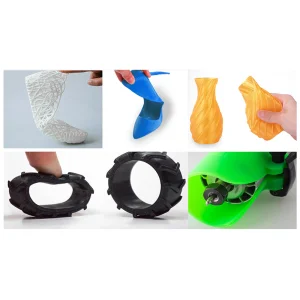
Biocompatible TPU 85A and 90A filaments empower podiatrists and footwear brands to 3D print lattice-structured corrective insoles, shock-absorbing midsoles, and personalized athletic footwear prototypes with tuned energy return.
In automated assembly lines, soft TPU 95A components serve as custom robotic end-effector grippers, vacuum suction pads, conveyor belt bumpers, and flexible bellows, preventing scratch damage to delicate assembly workpieces.
From ruggedized smartphone bumper cases and smartwatch straps to sports armor padding and drone chassis bumpers, TPU's high impact energy absorption guards against high-velocity drops and repeated abrasion.
We provide full-spectrum OEM and ODM customization services for international 3D printer material brands, regional distributors, and e-commerce sellers. Our facility handles end-to-end production from custom masterbatch color formulation to retail packaging.
Achieving optimal layer adhesion and surface finish with TPU requires precise printer setup. The parameter matrix below outlines starting recommendations for Direct-Drive extrusion systems:
| Printing Parameter | Standard TPU (95A) | Soft TPU (85A / 90A) | High-Speed TPU (95A) |
|---|---|---|---|
| Nozzle Temperature | 220°C - 235°C | 210°C - 225°C | 230°C - 250°C |
| Heated Bed Temperature | 40°C - 60°C | 30°C - 50°C | 50°C - 70°C |
| Print Speed | 30 - 50 mm/s | 15 - 30 mm/s | 100 - 180 mm/s |
| Retraction Distance | 0.8 - 1.5 mm | 0.5 - 1.0 mm (Direct Drive) | 0.8 - 1.2 mm |
| Cooling Fan Speed | 50% - 80% | 40% - 60% | 80% - 100% |
| Bed Preparation | Textured PEI / Painter's Tape | Textured PEI with Release Agent | PEI Sheet / Glue Stick |
Factory-direct materials packaged with desiccant vacuum seals for maximum shelf life.
Technical and logistics answers for distributors, OEM partners, and industrial purchasing managers.