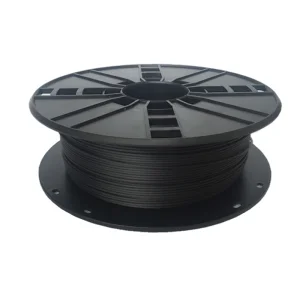
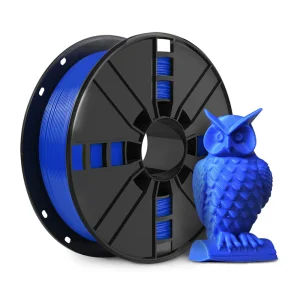
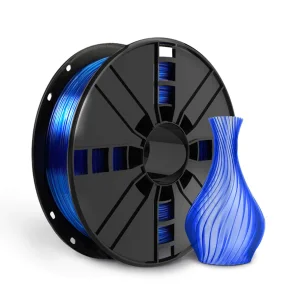
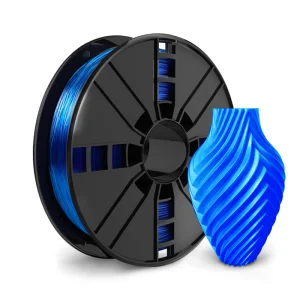
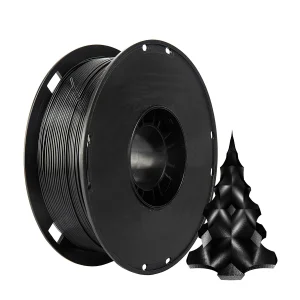
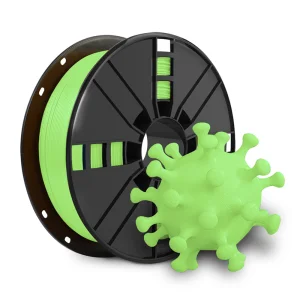
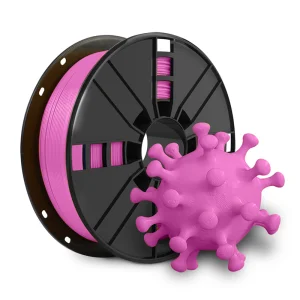
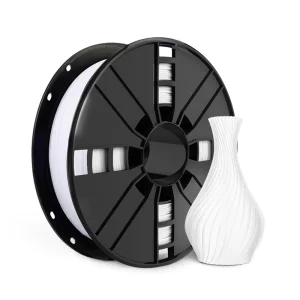
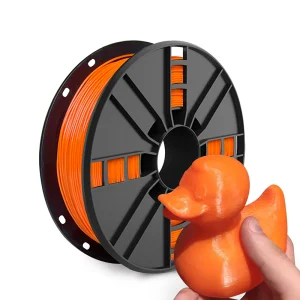
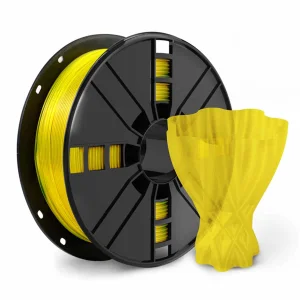
Direct factory extrusion lines running tight tolerance control (±0.02 mm) across high-durability TPE, TPU, Carbon Fiber, and PETG polymers for global enterprise distributors.
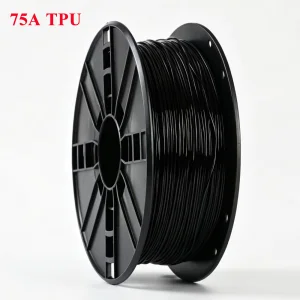
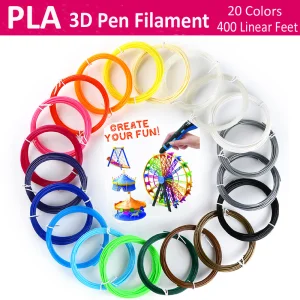
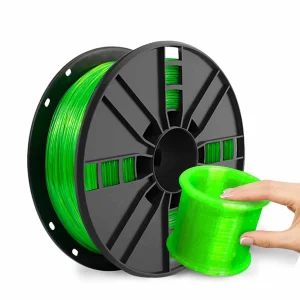
An in-depth analysis of how China's specialized chemical synthesis and precision polymer compounding have elevated flexible additive manufacturing from niche prototyping to end-use industrial production.
Global demand for rubber-like 3D printing filaments (specifically Thermoplastic Elastomers including TPE, TPU, TPV, and TPS) is accelerating at a compound annual growth rate (CAGR) exceeding 22.4%. As industries pivot from expensive custom injection molds toward rapid digital fabrication, procurement executives are establishing direct supply chain linkages with specialized Chinese manufacturers.
China's centralized chemical manufacturing infrastructure in Guangdong and Zhejiang provides raw resin synthesis advantage (polyether vs. polyester polyols), enabling unmatched cost-to-performance efficiency for bulk volume buyers, regional OEMs, and enterprise print farms.
Understanding elastomer chemistry is paramount for engineering sourcing:
How global purchasing managers evaluate OEM/ODM suppliers to guarantee print reliability, zero nozzle clogging, and batch-to-batch consistency.
Flexible filaments present unique feeding challenges due to buckling under compression. Direct-factory production must integrate dual-axis laser micro-gauges measuring filament diameter across 360 degrees 1,000 times per second.
A true ±0.02 mm tolerance prevents drive gear slippage, grinding, and sudden extruder jamming inside PTFE feed lines.
Elastomers—particularly polyether-based TPU—are highly hygroscopic. Moisture absorption leads to hydrolytic degradation during thermal extrusion, causing steam micro-voids, stringing, and weak layer bonding.
Tier-1 manufacturers dry virgin resin below 0.02% moisture content prior to extrusion and immediately execute automated inline multi-layer vacuum sealing with active desiccant pouches.
Tangled spools halt automated 24/7 additive manufacturing operations. Modern extrusion facilities utilize real-time tension-feedback automated CNC traverse spooling, maintaining uniform pitch and layer ordering.
This guarantees smooth filament payout even on high-speed direct-drive toolheads operating at print speeds over 150 mm/s.
Information Gain - Total Cost of Ownership (TCO) Impact: Sourcing direct from a Chinese certified manufacturer reduces raw spool procurement costs by 40–60% compared to Western re-branders, while inline laser monitoring reduces print failure rates on high-hour jobs from 14% down to under 0.5%.
From flexible soft-robotics to harsh automotive chemical environments, rubber filaments are replacing traditional vulcanized rubber prototypes.
Automotive OEMs utilize Shore 83A to 95A TPU and TPV filaments for functional testing of engine bay weatherstripping, fluid tubing grommets, dust boots, and anti-vibration damping mounts. The materials withstand continuous oil exposure, grease contact, and thermal cycling up to 110°C without plasticizer migration.
Soft-robotic end-of-arm tooling (EOAT), pneumatic suction cups, dynamic flexible couplings, and protective bellows require high fatigue life and tear strength (ISO 34-1). Rubber filaments formulated with polyether polyols exhibit over 500% elongation at break, enabling thousands of cyclic actuations without structural cracking.
Biocompatible TPU and TPE grades compliant with ISO 10993 cytotoxicity standards are deployed in patient-matched prosthetic socket liners, custom orthopedic insoles, soft surgical training models, and breathable biometric wearable sensor straps.
Global footwear brands utilize soft TPE (60A–75A) to additive-manufacture lattice midsoles with tuned energy return, ergonomic tool handles, impact-absorbing protective shells, and custom waterproof seals.
Direct from our R&D engineering laboratory: The chemical and mechanical advancements shaping the future of flexible FDM/FFF additives.
Traditional TPU extrusion encounters buckling at Shore hardnesses below 85A. Our advanced chemical compounding introduces modified SEBS/TPU hybrid chains that increase column melt-strength while retaining extreme surface softness (Shore 60A/70A), breaking historic speed barriers on standard direct-drive extruders.
Integrating machine-learning visual inspection along the water cooling bath enables automatic capstan puller speed modulation. This eliminates micro-variations in filament diameter caused by resin batch melt-flow index fluctuations, locking in ±0.02 mm accuracy.
Replacing petroleum polyols with bio-derived monomers (castor oil polyols) yields green TPU filaments with up to 48% renewable carbon content. These eco-elastomers provide identical tensile memory and UV resistance while drastically reducing corporate Scope 3 carbon emissions.
Laboratory test data evaluated under ISO standard conditions (23°C, 50% RH). Compare mechanical specs across our rubber, flexible, and engineering polymer spools.
| Filament Grade | Shore Hardness | Tensile Strength (MPa) | Elongation at Break (%) | Tear Strength (kN/m) | Nozzle Temp (°C) | Recommended Print Speed |
|---|---|---|---|---|---|---|
| TPE Super-Soft | 60A - 70A | 18.5 | > 650% | 45 | 210 - 230 °C | 15 - 30 mm/s |
| TPU Flexible Soft | 75A - 80A | 28.0 | > 580% | 65 | 215 - 235 °C | 20 - 40 mm/s |
| TPU Standard Flex | 95A | 45.0 | > 480% | 110 | 220 - 240 °C | 40 - 90 mm/s |
| PETG Composite | 78D (Rigid) | 50.0 | 12% | N/A | 230 - 250 °C | 40 - 100 mm/s |
| Carbon Fiber PLA | 83D (Rigid) | 62.0 | 4% | N/A | 200 - 220 °C | 50 - 120 mm/s |
| Polycarbonate (PC) | 85D (Rigid) | 68.0 | 8% | N/A | 260 - 280 °C | 30 - 60 mm/s |
Full-service turnkey manufacturing support tailored for international brands, wholesalers, and private label distributors worldwide.
We provide comprehensive private label packaging solutions designed to elevate your brand presence in target markets:
Every shipment is accompanied by complete regulatory documentation ensuring smooth customs clearance and market admission:
Field-tested extrusion parameters to maximize print success rates when working with flexible polymers.
For Shore 60A - 85A filaments, use short direct-drive extruders with fully constrained PTFE path guides right up to the dual-drive gears. Keep drive gear tension moderate to prevent filament flattening.
Limit retraction distance (0.5 mm - 1.5 mm for direct drive) and set retraction speed low (15 - 25 mm/s). Over-retraction draws hot semi-molten elastomer into the cold break tube, causing instant heat creep clogs.
Always dry TPU and TPE spools at 65°C for 5 to 8 hours in a forced-air dry box prior to printing. Print directly from a sealed dry box equipped with desiccant to maintain sub-15% relative humidity.
Explore our extended lineup of high-clarity PETG, luminous PLA, silk aesthetic gradients, and high-temp PC formulations.
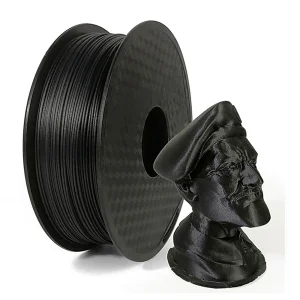
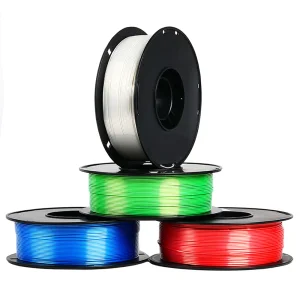
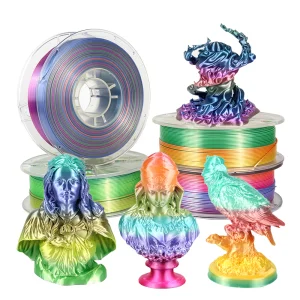
Detailed answers covering custom compounding, minimum order quantities (MOQ), printing hardware compatibility, and export logistics.
Sourcing directly from a Chinese OEM manufacturer eliminates intermediary distributor markups, cutting raw material costs by 40% to 60%. Furthermore, direct factory partnership allows custom Shore hardness tuning (from ultra-soft 60A up to rigid 98A), bespoke Pantone color formulation, direct technical support from polymer engineers, and stable bulk volume supply guaranteed by automated multi-line extrusion capacity.
Flexible filaments have low column stiffness and tend to buckle inside extrusion feed channels under compression. Diameter variance over +0.03 mm increases friction against PTFE liners, leading to extrusion binding. Conversely, under-diameter filament leads to drive gear slippage. Our inline 2-axis laser feedback system measures filament diameter continuously during production to lock tolerance within ±0.02 mm, guaranteeing consistent volumetric flow rates and preventing jam-induced job failures.
Harder flexible grades such as TPU Shore 95A print reliably on well-tuned Bowden tube systems at modest speeds (20 - 35 mm/s). However, for softer grades (Shore 60A - 83A), a Direct-Drive extruder with a fully constrained, zero-gap filament guide path directly under the drive gears is highly recommended to prevent filament wrapping around the gears.
For standard catalog colors in 1.75 mm or 2.85 mm, our MOQ starts at just 100 kg per batch. For custom Pantone color matching, private label printed packaging, or custom spool sizing (e.g., 250g mini spools or 5kg industrial spools), the standard production batch requirement is 300 kg to 500 kg per SKU.
Prior to packaging, filament spools undergo a 6-hour thermal dehumidification drying cycle to achieve a internal moisture content under 0.02%. Each spool is immediately vacuum sealed inside a heavy-gauge, puncture-resistant aluminum-poly vacuum pouch with an active silica desiccant pack. Individual spools are housed in reinforced corrugated outer cartons to withstand ocean container humidity and transit vibrations.