Direct-from-factory extrusion solutions engineered for high performance, structural integrity, and multi-material compatibility.
Demystifying thermoplastic elastomers (TPE, TPU, TPA, TPO) for industrial additive manufacturing and high-throughput production environments.
Rubber filaments owe their viscoelastic properties to block copolymer structures containing alternating hard segments (providing thermal and chemical resistance) and soft segments (providing high elongation and rubber-like elasticity). China suppliers synthesize specialized formulations to achieve low hysteresis loss during cyclic flexing.
Flexible filaments range from ultra-soft Shore 60A (emulating silicone rubber) to semi-flexible Shore 95A / 64D (offering rigid toughness). Understanding the exact Shore hardness rating is critical for selecting the proper direct-drive extrusion gear ratio and print speed parameters.
Polyurethane and block amide elastomers are highly hygroscopic. Absorbed atmospheric moisture leads to hydrolytic degradation during extrusion, causing micro-voids, steam bubbles, and reduced interlayer tensile strength. Modern China factories utilize inline dehumidifying drying systems prior to vacuum packaging.
A quantitative material science guide for engineering buyers evaluating TPU, TPE, TPA, and Vulcanized Rubber alternatives.
| Material Grade | Shore Hardness | Tensile Strength (MPa) | Elongation at Break (%) | Abrasion Resistance (DIN 53516) | Recommended Nozzle Temp | Primary Industrial Use Case |
|---|---|---|---|---|---|---|
| TPU 95A (Standard Flex) | 95A / 46D | 35 - 45 MPa | 450% - 550% | 35 mm³ loss | 210°C - 230°C | Industrial Gaskets, Protective Enclosures |
| TPU 85A (Soft Rubber) | 85A / 35D | 25 - 35 MPa | 600% - 700% | 25 mm³ loss | 220°C - 240°C | Vibration Isolation Mounts, Footwear Insoles |
| TPE 60A (Ultra-Soft Rubber) | 60A / 15D | 12 - 18 MPa | 750% - 850% | 50 mm³ loss | 230°C - 250°C | Medical Models, Wearable Seals, Grippers |
| TPA (PEBA Elastomer) | 90A / 40D | 40 - 55 MPa | 350% - 450% | 20 mm³ loss | 240°C - 260°C | High-Rebound Athletic Gear, Aerospace Tubes |
| Conductive Rubber TPE | 88A | 15 - 22 MPa | 300% - 400% | 60 mm³ loss | 220°C - 240°C | ESD-Safe Shielding, Flexible Wearable Sensors |
How Chinese additive manufacturing hubs combine upstream polymer chemistry, automated production technology, and strict quality control.
China's chemical industrial parks in Guangdong and Zhejiang provide direct access to high-purity polyurethane base resins, flame retardants, and organic pigments. This vertical integration allows OEM factories to reduce raw material lead times by up to 40% while maintaining absolute batch-to-batch chemical purity.
Extruding soft rubber filament requires ultra-precise tension control to prevent ovality and stretch-induced cross-sectional variance. Chinese manufacturing facilities deploy multi-axis laser measuring heads integrated with automated feedback loops that adjust puller speed in real-time, holding diameter tolerances within ±0.02 mm.
Because soft filaments (60A–85A) easily twist during high-speed winding, top-tier China factories utilize servo-driven, low-tension winding machines. This prevents overlapping wraps, filament stretching, and binding inside automated material systems (AMS) or direct-drive extruders.
Tailored supply solutions for international brands, 3D printing distributors, and large-scale industrial print farms.
Factories can formulate custom elastomeric blends matched to precise Shore hardness specifications (e.g., 72A, 88A, 92A). Color matching is conducted using spectrophotometers to match Pantone or RAL codes, maintaining optical consistency under dynamic mechanical strain.
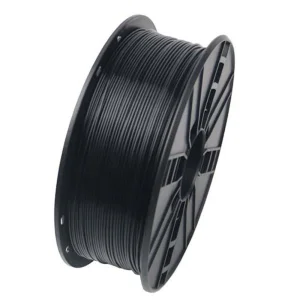
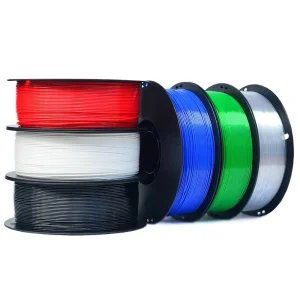
Choose from cardboard spools (eco-friendly), high-temperature ABS spools, or transparent polycarbonate spools. Spool weights range from 250g sample rolls up to 3kg and 5kg industrial master spools for long-run continuous printing operations.
Every flexible roll is vacuum-sealed in a high-density aluminum foil or heavy-duty polyethylene pouch containing active desiccant sachets. Standardized outer cartons are reinforced to withstand sea freight compression and moisture exposure.
Navigating international chemical safety certifications, material disclosures, and supply chain logistics.
China flexible soft suppliers ensure raw polymers are free from heavy metals, polybrominated biphenyls (PBBs), and SVHC (Substances of Very High Concern) in accordance with EU Directive 2011/65/EU (RoHS 3) and REACH Regulation (EC) No 1907/2006.
For medical devices and wearable products, specialized TPE and TPU resins meet ISO 10993 cytotoxicity and skin irritation standards. Selected grades carry FDA 21 CFR 177.2600 compliance for repeated food contact applications.
Leading suppliers provide DDP (Delivered Duty Paid), FOB, and CIF shipping options with harmonized System (HS) code classification (HS Code: 3916.90 for monofilament polymers). Comprehensive Technical Data Sheets (TDS) and Safety Data Sheets (SDS) accompany all export orders.
Transforming traditional elastomeric manufacturing across automotive, medical, robotics, and consumer markets.
Custom flexible seals, weatherstripping gaskets, anti-vibration bushings, and protective wire harness grommets. Rubber filaments absorb high mechanical impacts and resist oil, grease, and automotive fluids.
3D-printed orthopedic shoe insoles featuring variable infill densities for localized pressure relief, prosthetic socket liners, and anatomical surgical simulation models requiring realistic tissue flexibility.
Pneumatic soft-robotic grippers, vacuum suction cups, customized end-of-arm tooling (EOAT), and flexible bumpers designed to handle delicate items on high-speed automated packaging lines.
Rugged shockproof phone cases, ergonomic tool handle grips, watch bands, waterproof seals for outdoor electronics, and customized dynamic midsoles for performance athletic footwear.
Innovations driving the next decade of soft polymer formulation and rapid extrusion efficiency.
Traditional TPU required print speeds below 30 mm/s to prevent extrusion clogging. Next-gen high-flow TPU formulations feature shear-thinning rheological behavior, enabling stable printing speeds up to 150-250 mm/s on modern high-speed modern modern direct-drive 3D printers.
Shift toward sustainable monomer synthesis derived from castor oil and bio-based polyesters. Recyclable TPE blends allow printed rubber parts to be ground down and re-extruded into high-performance filament without mechanical degradation.
Advanced co-extrusion technology allows soft rubber filaments to form strong covalent molecular bonds with rigid substrates like PLA, PETG, or ABS during dual-extrusion printing, eliminating mechanical mechanical interlocks.
Engineering guidelines to eliminate buckling, stringing, and adhesion failures when printing soft rubber filaments.
Soft filaments (below 85A) buckle easily under compression. Ensure your printer utilizes a fully constrained direct-drive extruder where the gap between the dual drive gears and the PTFE guide tube is less than 1.0 mm.
Excessive retraction causes flexible filament to stretch, twist, and jam inside the heatbreak. For soft TPU/TPE, minimize retraction distance to 0.5–1.5 mm at a speed of 15–25 mm/s, or disable retraction completely for Shore 60A grades.
Always bake hygroscopic flexible filaments in a dedicated filament dryer at 60°C to 70°C for 4 to 6 hours prior to printing. Print directly from a sealed dry box to maintain consistent volumetric melt flow and eliminate stringing.
When specifying rubber-like filaments for automated production lines, request a melt flow index (MFI) report customized to your printing nozzle diameter. A higher MFI (measured at 210°C / 1.2 kg) allows cleaner retractions and prevents heat-creep oozing during complex multi-part build plates.
Answers to critical questions regarding sourcing, manufacturing standards, and material properties.
TPU (Thermoplastic Polyurethane) is a specific subset of TPE (Thermoplastic Elastomer). TPU offers higher tensile strength, superior abrasion resistance, and easier printability, making it ideal for 95A to 85A hardness applications. General TPE formulations can achieve lower Shore hardness values (down to 60A or softer) and provide a softer, tactile rubber-like feel, but require specialized direct-drive extruders. True vulcanized rubber cannot be melted and extruded via FDM; thus, "rubber filament" refers to thermoplastic elastomers engineered to replicate vulcanized rubber properties.
Bowden extruders can reliably print semi-flexible filaments rated at Shore 95A if print speeds are kept low (15–25 mm/s) and retraction is turned off. However, for softer grades (85A, 70A, 60A), a direct-drive extruder with a constrained filament path is mandatory to prevent the flexible strand from flexing, binding, or wrapping around the drive gears inside the feed mechanism.
Standard stock color spools have low MOQs (as low as 10–50 kg). Custom Pantone color matching or custom Shore hardness formulations typically require a baseline batch extrusion run of 300 kg to 500 kg per SKU. This ensures chemical uniformity across the masterbatch synthesis and automated spooling runs.
Leading Chinese manufacturers utilize automated gravimetric dosing systems for raw resin and color masterbatches, preventing manual mixing errors. Multi-axis closed-loop laser gauge micrometers continually sample filament diameter and roundness during extrusion. Batches failing the ±0.02 mm threshold or showing optical color variance are automatically segregated and discarded.
Filament must be kept sealed in moisture-barrier aluminum foil bags with fresh desiccant at temperatures between 15°C and 25°C. Unsealed rolls absorb atmospheric moisture rapidly. Prior to printing, drying at 65°C for 4–6 hours in a forced-air dehumidifying oven restores pristine polymer printing performance.
Standard shipments include comprehensive RoHS 3 compliance certificates, REACH SVHC declaration documents, SDS (Safety Data Sheets), and product Technical Data Sheets (TDS). Biocompatibility or FDA food-contact compliance certifications can be furnished upon request for specialized resin grades.
Complete material solutions for creative toys, specialty composites, and high-temperature engineering applications.