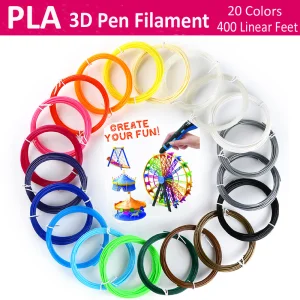
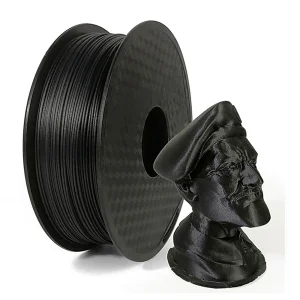
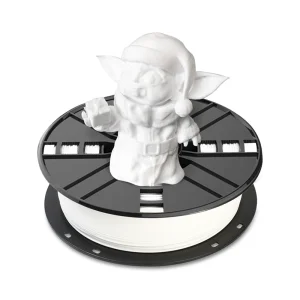
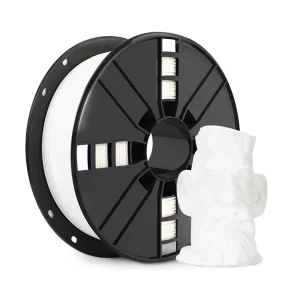
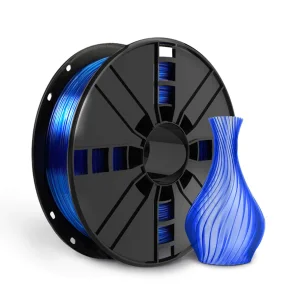
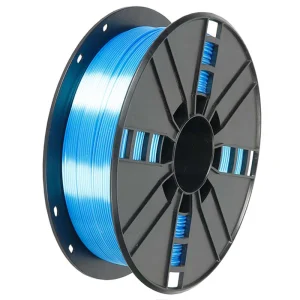
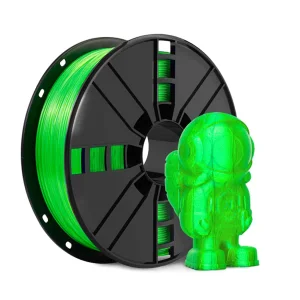
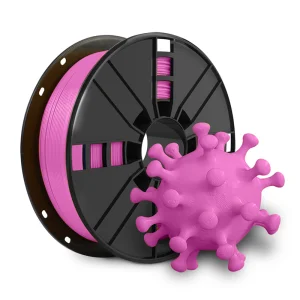
High-demand 3D printing consumables manufactured to strict ±0.02 mm volumetric tolerances, vacuum-sealed with desiccant packaging for international distribution.
Strategic Insights into the Global Aesthetic Consumables Market for Additive Manufacturing
The additive manufacturing landscape has undergone a profound paradigm shift over the past five years. Where fused deposition modeling (FDM) was once confined to utilitarian functional prototyping, it has expanded exponentially into consumer products, architectural scaling, custom decorative arts, and high-speed commercial production farms. At the center of this transformation lies the rapid market adoption of Rainbow Polylactic Acid (PLA) filament.
Procurement directors and B2B buyers seeking a reputable China Rainbow PLA manufacturer and supplier face a market demanding far more than basic color variations. Modern end-users require ultra-smooth color transitions, predictable gradient lengths (ranging from fast-change 3-meter shifts to slow-change 15-meter transitions), high silk gloss indices, and zero nozzle clogging during sustained high-speed printing (300mm/s to 600mm/s on modern CoreXY motion platforms).
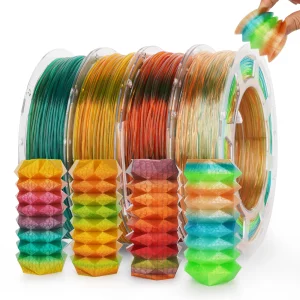
Rainbow PLA leverages optical dispersion masterbatches to eliminate layer line visibility. High-translucent and silk-modified formulations allow light refraction that boosts the commercial retail value of printed goods by up to 300% compared to standard monochrome PLA.
With the advent of high-speed FDM hardware (Bambu Lab, Creality K1, Voron), traditional low-melt flow filaments cause severe under-extrusion. Modern Rainbow PLA formulations integrate rheology modifiers to ensure fluid melt dynamics at extrusion speeds exceeding 350mm/s.
Color-changing spools must feature zero ovality drift and precise spool winding tension. Irregularities result in retraction jams within automatic material systems. Precision extrusion lines mitigate feeding failures entirely.
Understanding Lactide Polymerization, Rheology Tuning, and Co-Extrusion Dynamics
At the core of high-grade China Rainbow PLA manufacturing lies precise chemical engineering. Polylactic Acid is a thermoplastic aliphatic polyester derived from renewable plant starch (such as cornstarch or sugarcane). However, raw PLA resin (PLLA/PDLA copolymer blend) exhibits high brittleness, low glass transition temperature (Tg ≈ 55–60°C), and narrow processing windows.
To manufacture enterprise-grade multi-color gradient filaments, raw PLA pellets undergo compounding with specialized elastomer modifiers, nucleating agents, and optical pigments during twin-screw extrusion:
| Material Grade | Tensile Strength (MPa) | Melt Flow Index (MFI) g/10min | Transition Interval (Meters) | Recommended Hotend (°C) | Primary Industrial Use Case |
|---|---|---|---|---|---|
| Standard Rainbow PLA | 58 - 62 | 7 - 9 (190°C / 2.16kg) | 12 - 15 meters | 190 - 210 °C | Large architectural models, display figurines |
| Fast-Change Silk Rainbow | 45 - 50 | 12 - 14 (210°C / 2.16kg) | 3 - 5 meters Fast Gradient | 200 - 220 °C | Small decorative items, consumer toys |
| High-Speed PLA+ Rainbow | 62 - 68 | 16 - 20 (210°C / 2.16kg) | 8 - 10 meters | 210 - 230 °C | Commercial print farms (300mm/s+) |
| Matte Pastel Rainbow PLA | 52 - 55 | 8 - 10 (190°C / 2.16kg) | 10 - 12 meters | 195 - 215 °C | Low layer line aesthetic art pieces |
| TPU Flexible Rainbow 95A | 35 - 40 (Shore 95A) | Dynamic Rheology | 5 - 8 meters | 210 - 230 °C | Wearables, protective bumpers, dampeners |
To achieve vivid rainbow transitions without color muddying, specialized multi-port volumetric dosing units inject red, yellow, green, blue, and purple pigment concentrates in dynamic sinusoidal cycles directly into the melt pump zone. This produces seamless gradient flow with perfect axial symmetry.
Extrusion speed is controlled via feedback loops running at 500 Hz using dual-axis laser micrometers. Any deviation exceeding ±0.02 mm automatically triggers microscopic melt-pump RPM adjustments, preventing mid-print jamming or layer line inconsistencies.
Solving Wholesale Pain Points: Batch Consistency, Anti-Tangling, and Private Labeling
Global distributors, Amazon sellers, and commercial print farms face significant financial risk when procuring cheap, non-standardized 3D printer filaments. Common supplier failure modes include spool tangling due to poor layer winding, moisture-induced bubble formation, inconsistent gradient lengths between spools, and non-recyclable spool spools that warp under heating.
As a leading China Rainbow PLA factory established in 2011, Torwell Technologies addresses these systemic operational vulnerabilities through stringent manufacturing protocols:
Every single 1kg or 1kg+ spool is wound using servo-controlled tension systems. Layers are deposited with optical pitch feedback, eliminating overlapping strands and guarantee smooth, uninterrupted feeding during 48-hour prints.
Extruded filament is immediately dried in industrial desiccating hoppers to < 200 ppm moisture content. Spools are sealed in heavy-duty 4-mil vacuum bags containing active silica gel, preventing hydrolytic degradation during sea freight.
We provide complete private label customized packaging solutions. Services include custom color masterbatch development, Pantone shade matching, customized spool stickers, branded retail boxes, and eco-friendly cardboard spools.
Meeting Strict Environmental and Chemical Regulations for North American and EU Markets
Regulatory scrutiny over imported plastic products has intensified worldwide. Enterprise buyers must verify that their manufacturing partners adhere to global chemical safety guidelines and environmental footprint directives.
All Rainbow PLA resins and color pigments are rigorously tested for SVHC (Substances of Very High Concern) and comply fully with EU REACH and RoHS directives. Filaments contain zero heavy metals, lead, cadmium, or toxic phthalate plasticizers, guaranteeing safe indoor operational use in educational and home environments.
To assist B2B clients in hitting carbon reduction targets, we offer 100% recyclable, heat-resistant cardboard spools. These spools feature smooth rolled edges designed specifically to prevent rim flaking and dust accumulation inside enclosed 3D printer AMS drive gears.
Innovations in Co-Extrusion Geometry, High-Speed Flow Modifiers, and Smart Polymers
The additive manufacturing sector is accelerating toward unprecedented printing velocities and specialized material properties. Our R&D team continues to push the boundaries of 3D printing polymer technology across three primary innovation vectors:
Moving beyond sequential axial color changes, our latest co-extrusion technology splits the filament cross-section into 2 or 3 distinct longitudinal color zones. As the print head rotates, printed models exhibit dynamic color-shifting optical effects depending on viewing angle.
Targeting print speeds of up to 600mm/s, UHF Rainbow PLA incorporates nano-scale lubricants that drop melt viscosity under high shear rates without reducing inter-layer bond strength or tensile performance.
Integrating smart micro-encapsulated dyes that change color dynamically under thermal shift (e.g., above 31°C) or exposure to sunlight UV wavelengths, expanding applications in novelty items and functional indicators.
Direct Insights for Procurement Managers, Brand Owners, and Wholesale Buyers
For standard stock color rainbow gradients, our standard MOQ starts at 100 kg. For custom OEM gradient lengths, bespoke Pantone color transitions, or private label retail box production, the typical baseline MOQ is 500 kg per SKU.
Gradient transitions are governed by automated volumetric gravimetric dosing feeders synced directly with the extruder screw speed. This ensures that a "Fast Rainbow" spool transitions colors precisely every 3–5 meters across entire batch cycles of 1,000+ spools.
Yes. Our spools feature standardized dimensions (outer diameter 200mm, inner core 55mm, spool width 65mm) and strict ±0.02 mm laser tolerance control. Spool rims are smooth, ensuring seamless feeding and retraction inside closed automatic multi-color systems without slipping or jamming.
Standard production cycles for a full 20ft container (approx. 8,000–10,000 spools) range from 15 to 20 business days upon sample approval and deposit confirmation. Air freight sample orders ship within 3 to 5 business days.
Yes, fully verified TDS and SDS documents detailing physical properties (density, tensile strength, heat deflection temperature, MFI) and chemical safety compliance are provided with every product line for easy regulatory filing in target export markets.
High-Performance Materials: TPU, PETG, Silk PLA, Carbon Fiber, and Specialty Consumables