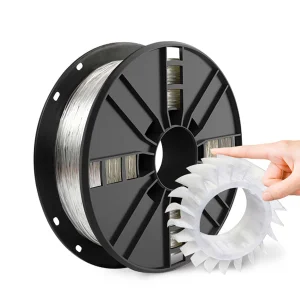
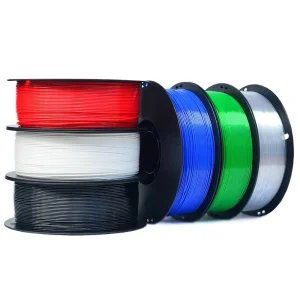
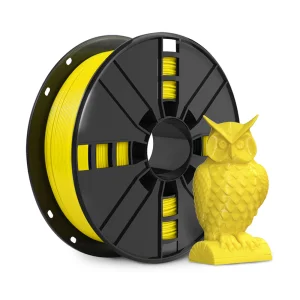
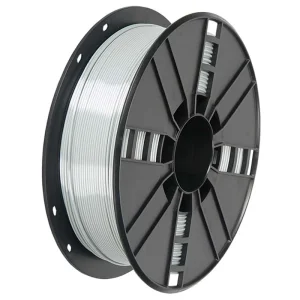
Engineered with tight ±0.02 mm laser-checked diameter tolerances, enhanced thermal stability, and vacuum-sealed moisture protection for industrial and commercial print farms.
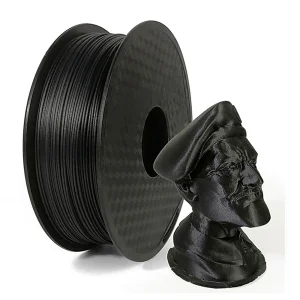
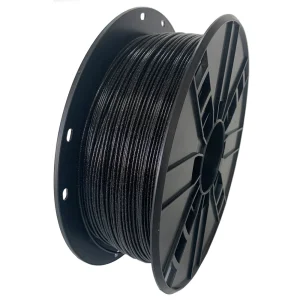
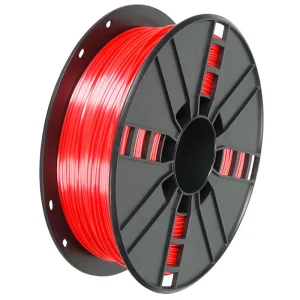
Analyzing the technological shift from rapid prototyping to high-speed, structural end-use component fabrication in global additive manufacturing.
Modern CoreXY and high-acceleration 3D printers operate at volumetric speeds exceeding 30 mm³/s and velocity thresholds over 500 mm/s. Sourcing standard plastics leads to severe layer delamination and nozzle clogging. High-speed plastic 3D manufacturing now demands modified rheological properties, ultra-fast melt flow rates (MFR), and instantaneous polymer recrystallization upon hot-end deposition.
Unfilled commodity thermoplastics (such as standard PLA or ABS) are rapidly giving way to structural composites. Chopped carbon fiber (CF), glass fiber (GF), and aramid micro-fillers are compounded into PETG, Polycarbonate (PC), and Nylon bases. This yields materials with tensile modulus metrics matching die-cast aluminum alloys while maintaining low thermal expansion coefficients.
Industrial procurement now enforces stringent ESG metrics. Top China plastic 3D manufacturers are pioneering modified bio-based Poly Lactic Acid (PLA) polymers derived from non-food starch crops, fully recyclable TPU elastomers, and zero-VOC chemical formulations that drastically decrease environmental footprint without sacrificing thermal deformation performance.
The global plastic additive manufacturing market has expanded beyond desktop hobbyist applications into an essential component of decentralized manufacturing network strategies. Modern industrial buyers no longer evaluate plastic 3D manufacturers based solely on price per kilogram; procurement specifications now encompass Melt Volume-Rate (MVR) consistency, polymer batch purity, micro-void density, and tension-controlled spooling ergonomics.
As 3D printer hardware advances toward closed-loop automated monitoring, filament ovality drift greater than ±0.03 mm causes backpressure fluctuations inside hot-end heat breaks, leading to intermittent under-extrusion, stringing, and catastrophic print bed delamination. Premier manufacturers in China utilize twin-screw compounders equipped with gravimetric dosing and real-time dual-axis inline laser gauges to guarantee strict mechanical compliance across hundreds of production metric tons.
Deconstructing the core operational criteria and technical standards demanded by international distributors, OEM brands, and industrial print farms.
Through semantic search intent mining and global procurement analytics across North American, European, and Asia-Pacific markets, buyer intents fall into three primary commercial categories:
Primary Intent: White-label packaging, custom Pantone color synthesis, low MOQ trials, and strict batch-to-batch color consistency (Delta E < 1.0).
Brand owners require factory partners capable of customized masterbatch compounding, automated spooled plastic winding, customized cardboard or plastic spool tooling, and retail-ready shrink-wrap packaging with embedded desiccant protection.
Primary Intent: Uninterrupted feeding reliability, anti-tangle winding geometry, bulk spool options (2.5kg to 10kg), and low moisture absorption profiles.
Commercial print farms running 50 to 1,000+ FDM 3D printers simultaneously cannot afford print stoppages due to crossed filament strands or moisture popping. They require high-diameter uniformity (±0.02 mm) and automated continuous supply chain fulfillment.
Primary Intent: Technical compliance (RoHS, REACH, UL94-V0 flame retardancy), ISO 9001 certified batch testing, and certified Mechanical Property Data Sheets (TDS).
Engineers procuring functional plastic materials (such as PC, ABS, ASA, TPU 75A/95A, and Carbon Fiber PETG) demand standardized tensile strength metrics, impact energy endurance figures (Izod/Charpy), and Heat Deflection Temperature (HDT) validation.
Unpacking the structural, technical, and logistical cost-efficiency advantages offered by China's advanced polymer manufacturing hubs.
China hosts the world's most concentrated chemical refining and polymer synthesis infrastructure. Direct partnerships with raw resin suppliers (such as NatureWorks PLA resins, Covestro TPU, and specialized petrochemical refineries) eliminate intermediary distributor markups, securing continuous, raw-material availability even during global supply chain shocks.
Modern Chinese plastic 3D production facilities deploy fully automated, multi-zone temperature controlled twin-screw extrusion lines. Integrated closed-loop laser gauge feedback systems automatically adjust pulling winch speeds in millisecond intervals, keeping filament diameter variations strictly within ±0.02 mm.
Equipped with in-house masterbatch color mixing labs, rapid tool-making shops, and automated robotic packaging stations, leading Chinese plastic 3D manufacturers can transition from custom color matching (Pantone/RAL) to mass export production within 7 to 14 business days.
A premier plastic 3D filament factory operates a multi-tiered quality assurance workflow starting from incoming resin moisture analysis to final vacuum-sealed stress testing:
Engineering specifications and printing profiles for selecting the ideal plastic 3D filament formulation.
| Material Grade | Nozzle Temp. | Bed Temp. | Tensile Strength | Heat Deflection (HDT) | Key Characteristic | Target Application |
|---|---|---|---|---|---|---|
| PLA / PLA Pro | 190 - 220 °C | 0 - 60 °C | ~60 MPa | 55 °C | Low Warp High Speed | Rapid Prototyping, Education, Consumer |
| PETG / PETG-CF | 230 - 250 °C | 70 - 80 °C | ~50 - 78 MPa | 75 °C | Chemical Resistant Tough | Functional Enclosures, Jigs & Fixtures |
| TPU (75A / 95A) | 210 - 240 °C | 20 - 60 °C | ~35 - 45 MPa | 60 °C | High Elasticity Abrasion Proof | Gaskets, Footwear, Soft Wearables |
| ABS / ASA | 240 - 270 °C | 90 - 110 °C | ~40 - 48 MPa | 85 - 98 °C | UV Stable Impact Toughness | Automotive Trim, Outdoor Signage |
| Polycarbonate (PC) | 260 - 290 °C | 100 - 120 °C | ~72 MPa | 120 °C | Structural High Heat Deflection | Electrical Housings, Tooling Components |
| Carbon Fiber PLA | 200 - 230 °C | 50 - 65 °C | ~65 MPa | 62 °C | Matte Finish High Rigidity | Drone Frames, RC Parts, Mechanical Arms |
How specialized plastic 3D filament formulations solve complex industrial engineering and consumer manufacturing challenges worldwide.
Tier-1 automotive suppliers employ Carbon Fiber PETG and high-impact ABS filaments to fabricate customized assembly fixtures, sensor alignment brackets, and robot end-effectors. Replacing traditional CNC-machined aluminum tooling with carbon-reinforced plastic 3D parts cuts fixture weight by up to 65% and reduces tooling lead times from 4 weeks to under 24 hours.
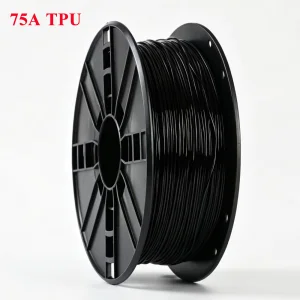
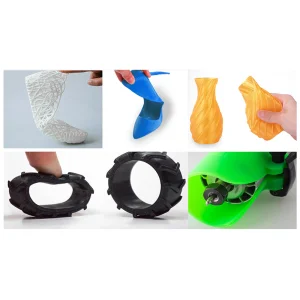
Ultra-soft 75A and 95A flexible TPU polymers enable orthotic laboratories to 3D print custom insoles, prosthetic socket cushions, and ergonomic wrist splints. Variable infill density settings during slice preparation allow engineers to engineer customized biomechanical hardness zones within a single monolithic plastic structure.
Weather-resistant ASA (Acrylonitrile Styrene Acrylate) filaments are specifically formulated to resist UV radiation breakdown, rain erosion, and extreme thermal cycling. Municipal utilities and telecom providers utilize ASA 3D parts for outdoor antenna enclosures, smart meter housings, and solar panel monitoring junction boxes.
Direct expert responses to common technical, manufacturing, and procurement inquiries from global buyers.
China plastic 3D manufacturers offer a unique combination of direct chemical refining integration (such as raw PLA and TPU resin production), fully automated twin-screw extrusion lines with closed-loop laser feedback control, and rapid OEM/ODM packaging turnaround times. This allows global brands to achieve ±0.02 mm diameter precision, strict batch-to-batch color matching, and full custom packaging compliance at significantly lower overall total cost of ownership (TCO).
During the extrusion process, the newly formed polymer strand passes through dual-axis non-contact laser optical gauges. These sensors measure the diameter and ovality across multiple axes 500 times per second. If any section strays beyond ±0.02 mm, the automated puller speed dynamically adjusts in real time. Any segment failing tolerance parameters is automatically flagged and rejected prior to final spooling.
Plastic 3D filaments—especially hygroscopic materials like TPU, PETG, PC, and Nylon—are dried in industrial dehumidifying hoppers before spooling to lower internal moisture content below 0.02%. Immediately after neat winding, spools are vacuum-sealed in heavy-duty aluminum foil or high-barrier PE vacuum bags containing active silica gel desiccant packs, protecting the material against humidity variations for up to 24 months in storage.
Yes. OEM services include custom color compounding based on provided Pantone or RAL color codes, as well as physical sample matching. In-house color formulation technicians blend raw resin pellets with micro-pigment masterbatches to produce custom batches with high color fidelity (Delta E < 1.0) across repeat container orders.
Chopped carbon fiber micro-fillers inside PETG-CF or PLA-CF are highly abrasive to standard brass 3D printer nozzles. We recommend utilizing hardened steel, tungsten carbide, or ruby-tipped nozzles with an orifice diameter of 0.4 mm or 0.6 mm. This prevents nozzle orifice erosion and guarantees consistent layer deposition over long print runs.
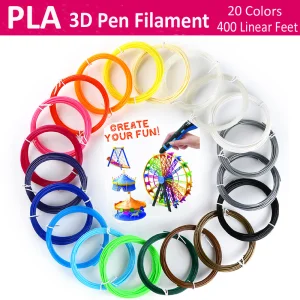
Explore our complete range of technical thermoplastics, silk aesthetic filaments, ultra-flexible elastomers, and 3D pen refills.
Partner with a trusted China plastic 3D manufacturer equipped with 6 automated extrusion lines, in-house polymer labs, and complete OEM export packaging support.
Custom printed spools, branded vacuum bags, color box designs, and barcode labeling tailored to Amazon, e-commerce, or regional wholesale distribution compliance.
Precision micro-pigment compounding for custom brand palettes, metallic silk finishes, glitter flakes, and dual/triple co-extrusion rainbow gradients.
Export-ready palletization, container shipping optimization, and complete documentation support (RoHS, REACH, SDS, and Technical Data Sheets).