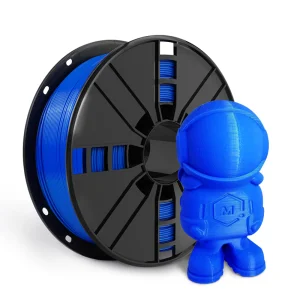
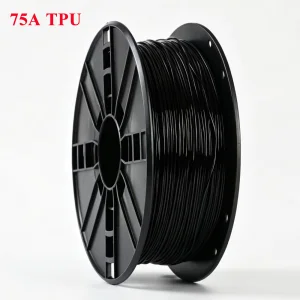
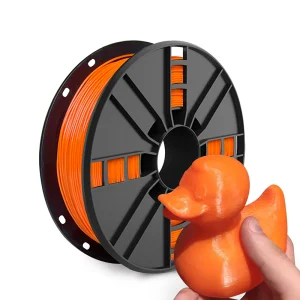
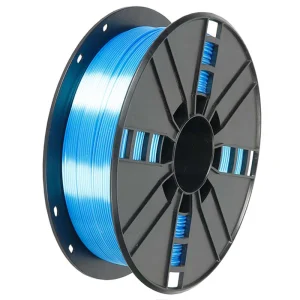
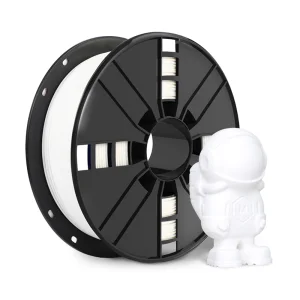
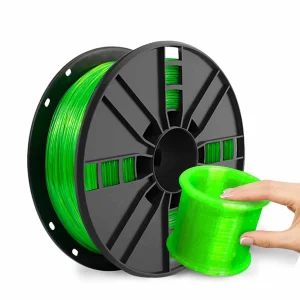
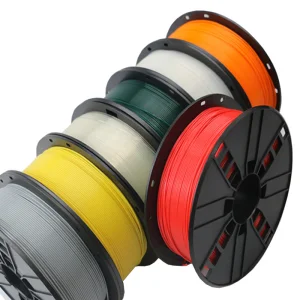
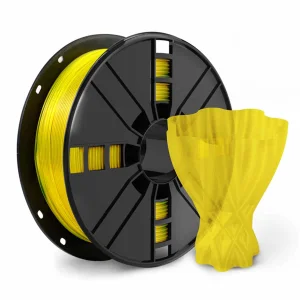
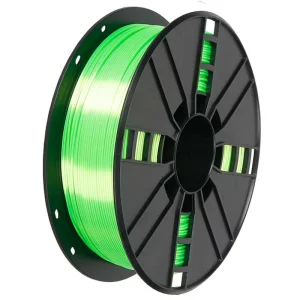
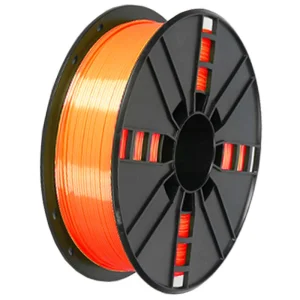
Engineered to ±0.02mm tolerances with advanced inline laser monitoring and automated neat-winding systems.
Understanding the shifting market preferences from standard single-color thermoplastics to complex gradient aesthetic polymers.
The global Fused Deposition Modeling (FDM) material sector is undergoing a rapid evolution. Desktop 3D printing is no longer restricted to monochrome functional prototyping; it has expanded into decorative consumer products, gaming miniatures, cosplay apparel, architectural visualization, and educational models. Consequently, PLA Rainbow Filament—characterized by seamless chromatic transitions across the spool—has witnessed an unprecedented surge in demand across North America, Western Europe, and the Asia-Pacific region.
End-users increasingly demand high-aesthetic visual outputs directly from the build plate without labor-intensive sanding, priming, or multi-stage hand-painting. Rainbow PLA solves this bottleneck by embedding pre-engineered gradient cycles directly into the extruded strand. This allows hobbyists, print farms, and OEM brand owners to monetize finished prints at higher margin multipliers due to their unique, non-repetitive visual appeal.
With the commercial saturation of high-speed CoreXY 3D printers (operating at volumetric speeds above $20-30\text{ mm}^3/\text{s}$ and linear speeds of $300\text{--}500\text{ mm/s}$), modern PLA Rainbow filaments must exhibit exceptional thermal conductivity, consistent viscosity, and rapid crystallization rates to maintain inter-layer adhesion during fast extrusion cycles.
Not all rainbow filaments are created equal. Professional B2B procurement teams categorize rainbow filaments into "Fast Gradient Rainbow" (color change every 3 to 5 meters of strand) and "Slow Architectural Rainbow" (color change every 15 to 20 meters). Sourcing the correct transition frequency directly dictates part aesthetic feasibility based on object weight and layer density.
How leading Chinese factories manipulate melt flow index, thermomechanical properties, and dynamic masterbatch dosing.
At the core of premium PLA Rainbow filament lies high-purity Poly(lactic acid) synthesized from fermented plant starch (corn or cassava). Leading Chinese factories blend high-molecular-weight virgin PLA with specialized impact modifiers and nucleating agents. This balance ensures low thermal contraction, minimal warping, and superior tensile strength ($\ge 60\text{ MPa}$) while preserving bio-degradability under industrial composting conditions.
Achieving clean chromatic shifts requires multi-feed dosing systems connected to twin-screw extruders. Rather than static color mixing, precision gravimetric feeders continuously ramp down one pigment concentration while accelerating another (e.g., Silk Red $\to$ Gold $\to$ Emerald Green $\to$ Sapphire Blue). Controlling barrel temperature zones across 5 stage heaters ($180^\circ\text{C}$ melt zone up to $215^\circ\text{C}$ nozzle head) prevents pigment thermal degradation and micro-void bubbles.
To ensure consistent backpressure inside 0.4mm brass or hardened steel nozzles, the Melt Flow Index of PLA Rainbow material is standardly tuned to $8\text{--}12\text{ g}/10\text{ min}$ (at $190^\circ\text{C}/2.16\text{kg}$). This precise rheological profile eliminates stringing, blobbing, and thermal degradation during long print jobs spanning multiple color cycles.
Unmatched raw material integration, automated quality assurance, and massive scale efficiencies.
China's Guangdong province (Shenzhen, Dongguan, Huizhou) represents the world's most concentrated 3D printing ecosystem. Raw biopolymer synthesis, organic pigment refining, spool molding, desiccant production, and packaging printing are localized within a 50-kilometer radius. This proximity drastically reduces procurement lead-times and material transport costs.
Modern Chinese extrusion lines operate dual-axis optical laser gauges measuring strand roundness and diameter at $500\text{ Hz}$. If a strand strays past $\pm0.025\text{ mm}$, the system automatically triggers linear tension adjusters or diverts defective lengths. Combined with automated mechanical winding arms, spools are wound in ultra-neat, tangle-free layers that feed effortlessly into multi-material system (AMS) units.
China factories excel in custom contract manufacturing. International buyers can specify custom color spectrum transitions (e.g., Pastel Macaron Rainbow, Silk Metallic Sunset, Dark Cyberpunk Rainbow), customized spool materials (recyclable cardboard or clear polycarbonate), custom branding stickers, vacuum desiccant packaging, and retail box artwork with low minimum order quantities (MOQs).
From high-margin consumer merchandise to architectural visualization and STEM educational platforms.
Cosplay creators and prop studios leverage Silk Rainbow PLA to print fantasy swords, organic armor plating, and mythical dragon figures. The pre-gradient surface creates organic color shifts across curved geometries, mimicking iridescent insect wings, magic crystal formations, or forged dragon scales without post-paint degradation.
Architectural interior designers utilize translucent and silk rainbow filaments to fabricate custom lithophanes, geometric vases, and decorative lampshades. When illuminated internally by LED sources, the rainbow gradients refract light unevenly, creating mesmerizing ambient lighting fixtures popular in boutique retail spaces and modern home decor.
Educational institutions integrate rainbow PLA into geography, biology, and data topology curricula. Topographical maps printed with fast gradient rainbow filament naturally represent elevation curves in distinct chromatic bands, making geographic contour lines immediately intuitive to students without requiring separate multi-extruder hardware.
Engineering parameters for China-manufactured PLA Rainbow vs. Standard & Engineering Grades.
| Filament Type | Nozzle Temp (°C) | Bed Temp (°C) | Tensile Strength (MPa) | Transition Cycle | Primary Industry Application |
|---|---|---|---|---|---|
| Silk PLA Rainbow | 195 – 225 | 50 – 65 | ≥ 58 | 5m / 10m / 15m | Decorative Art, Cosplay, Giftware |
| Matte PLA Rainbow | 200 – 230 | 50 – 60 | ≥ 52 | 8m / 12m | Architectural Models, Visual Props |
| Glow-in-Dark Rainbow | 210 – 235 | 55 – 65 | ≥ 48 | 10m Gradient | Novelty Toys, Safety Markings |
| High-Speed PLA+ Rainbow | 215 – 240 | 50 – 65 | ≥ 65 | 4m Fast Transition | CoreXY Print Farm Production |
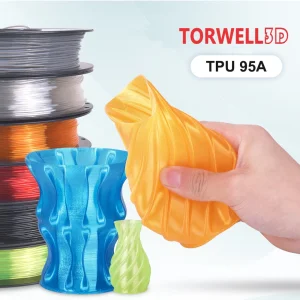
| Flexible TPU Rainbow (95A) | 210 – 230 | 30 – 60 | ≥ 35 (Shore 95A) | 10m Gradient | Wearables, Phone Cases, Gaskets |
How international distributors and brand owners audit Chinese manufacturers for consistent volume delivery.
Require supplier verification of continuous laser measurement logs. Reject factories relying on manual caliper spot-checks. Verified suppliers provide continuous spool dataset charts guaranteeing tolerances within $\pm0.02\text{ mm}$ across the entire $330\text{m}$ strand of a standard $1\text{kg}$ spool.
PLA is hygroscopic. Hydrolysis during high-temperature extrusion causes severe bubbling, stringing, and brittle layer adhesion. Professional China factories bake raw PLA resin in desiccant dehumidifiers down to $<200\text{ ppm}$ water content before extrusion, immediately followed by inline vacuum sealing with active silica desiccant bags.
For global distribution, compliance documents are non-negotiable. Ensure your Chinese manufacturing partner provides complete technical documentation including RoHS (Restriction of Hazardous Substances), REACH compliance for chemical importation, and FDA contact certification for food-safe consumer novelty products.
Where the multi-color 3D printing filament market is heading in 2025 and beyond.
The latest evolution combines longitudinal co-extrusion with rainbow gradient transitions. The strand itself split-extrudes two or three colors along its axis (e.g., Silk Gold/Purple co-extrusion) while simultaneously shifting shades along its length, producing dynamic dichroic reflections as models rotate under light.
To reduce plastic waste, leading Chinese suppliers are transitioning to recycled cardboard spools featuring precision-rolled flanges compatible with automated multi-spool feed systems. Master-spool refill systems (spool-less filament coils) are also expanding among print farm operators.
As 3D printer movement speeds double every two years, next-generation rainbow PLA resins incorporate bio-based plasticizers that lower melt viscosity without sacrificing tensile strength. This allows consistent color layer formation at print speeds exceeding $500\text{ mm/s}$.
Direct answers for distributors, Amazon sellers, and print farm managers sourcing from China factories.
Discover our full spectrum of performance thermoplastics, flexible materials, and specialty aesthetic filaments.