
Technical Analysis of Polymer Extrusion Engineering, High-Speed Material Formulations, Smart Factory OEM Sourcing, and Sustainable Additive Manufacturing Systems
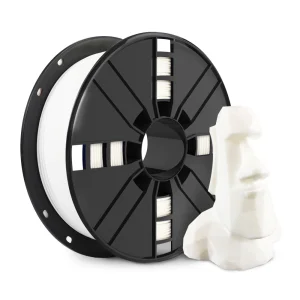
Precision-extruded thermoplastic spools engineered for zero-tangle feeding, strict ±0.02 mm diameter tolerance, and exceptional layer adhesion.
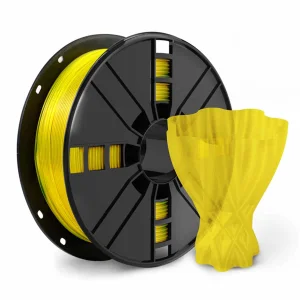
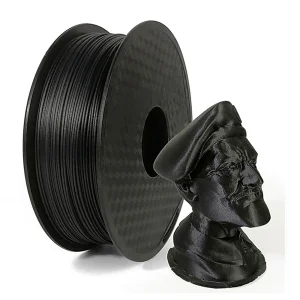
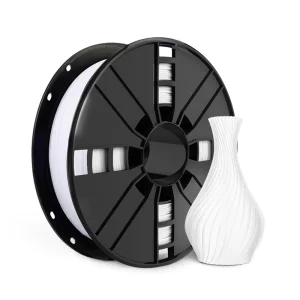
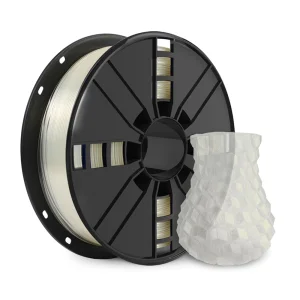
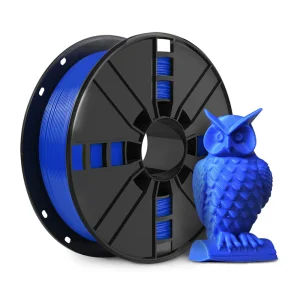
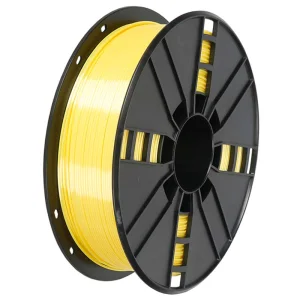
Analyzing the paradigm shift in global thermoplastic procurement, supply chain concentration, and polymer chemical innovation.
The global Fused Deposition Modeling (FDM) and Fused Filament Fabrication (FFF) 3D printing ecosystem relies fundamentally on Polylactic Acid (PLA) as its primary volumetric resin. Accounted for over 62% of global desktop and semi-industrial filament consumption, PLA has evolved from an educational modeling medium into an advanced engineering bio-polymer. Modern additive manufacturing demands unprecedented mechanical properties: rapid thermal crystallization, ultra-low volumetric shrinkage rate (<0.3%), high Melt Flow Index (MFI), and absolute dimensional consistency.
China has firmly established itself as the world's premier manufacturing powerhouse for 3D printing consumables. By coupling direct access to high-purity lactide chemical synthesis with sophisticated multi-stage screw extrusion technology, leading Chinese manufacturers—such as Torwell Technologies Co., Ltd. (operating specialized production since 2011)—deliver unmatched production scalability, rigorous batch repeatability, and cost-efficient OEM customization for global brands, enterprise print farms, and regional distributors.
Core Industry Insight: Sourcing high-performance PLA filament requires evaluating more than just price per kilogram. Enterprise buyers must assess resin purity, stereocomplex crystallization capabilities, inline dual-axis optical gauging metrics, and moisture barrier integrity during international transit.
Inside automated manufacturing lines: how precision thermal profiling and real-time optical feedback eliminate thermal degradation and physical ovality.
Virgin raw PLA pellets are hygroscopic. Modern Chinese factories utilize industrial-grade molecular sieve desiccant dryers operating at continuous dew points of -40°C to reduce moisture content below 200 ppm prior to extrusion, preventing polymer hydrolytic degradation.
Precision single and twin-screw extruders featuring L/D ratios of 30:1 utilize multi-stage PID thermal heating zones. This maintains uniform melt viscosity, ensuring masterbatch colorants, toughening agents, and nucleating additives achieve molecular-level dispersion.
Dual-axis high-speed laser micrometers monitor filament diameter continuously at 500 Hz. Automated feedback loops adjust puller speeds in real time to enforce strict dimensional tolerances of ±0.02 mm, completely discarding out-of-spec sections.
Rapid thermal quenching can introduce residual internal stress leading to filament brittleness. Controlled multi-stage warm-to-cool water baths ensure uniform cross-sectional cooling, preserving high tensile yield strength and flexibility.
Eliminating spool line crossover and tangling requires automated servo-driven winding units. Precise mechanical pitch control guarantees layer-by-layer spooling compatibility with high-speed multi-material automatic switching systems (AMS).
Directly following winding, spools pass into climate-controlled clean packaging zones. Spools are thermo-vacuum sealed inside high-density moisture-barrier bags with fresh active desiccant pouches to guarantee shelf life during long ocean freight transit.
Examining material science breakthroughs driving high-speed printability, thermal resistance, and structural toughening.
The additive manufacturing landscape is undergoing a massive shift toward hyper-speed FDM printers operating at linear speeds exceeding 500 mm/s and accelerations beyond 20,000 mm/s². Standard PLA resin formulas extrude unreliably at high volumetric flow rates (>30 mm³/s), resulting in under-extrusion, poor inter-layer cohesion, and matte finish degradation. Leading Chinese PLA filament manufacturers are pioneering four key material technology vectors:
By blending specific melt-index modifiers and controlled molecular weight distribution PLA resins, HS-PLA exhibits lower dynamic viscosity in the molten state. This allows rapid liquefaction in the hotend melt zone and immediate shear thinning, allowing clean extrusion at 600 mm/s speeds without requiring nozzle temperatures that thermal-degrade the polymer chain.
Standard untreated PLA possesses a low Glass Transition Temperature ($T_g$) of ~55°C–60°C, limiting its functional use in automotive interiors or electronic enclosures. Advanced HT-PLA formulations incorporate organic mineral nucleating agents that trigger high-crystallinity thermal annealing post-printing. This elevates Heat Deflection Temperatures (HDT at 0.45 MPa) from 55°C to over 95°C, rivaling traditional ABS heat resistance.
Unmodified PLA exhibits brittle fracture mechanics upon impact. Second-generation PLA+ blends incorporate biodegradable elastomer micro-inclusions (such as PBAT or custom core-shell impact modifiers). These micro-phase domains arrest crack propagation, boosting Izod impact strength from 2.5 kJ/m² to over 12 kJ/m² while maintaining non-warping print characteristics.
Forward-thinking factories are establishing closed-loop recycling infrastructure. By combining post-industrial clean extrusion scrap with high-purity virgin L-lactide, manufacturers produce eco-friendly recycled PLA lines (rPLA) boasting identical tensile performance and dimensional tolerances while lowering carbon footprint metrics for enterprise ESG compliance.
| Mechanical / Thermal Property | Standard PLA | High-Speed PLA (HS-PLA) | Toughened PLA+ | Heat-Resistant PLA (Annealed) |
|---|---|---|---|---|
| Melt Flow Index (MFI @ 210°C/2.16kg) | 6 – 9 g/10min | 18 – 28 g/10min | 8 – 12 g/10min | 10 – 15 g/10min |
| Tensile Strength at Yield (MPa) | 58 – 65 MPa | 55 – 62 MPa | 48 – 55 MPa | 62 – 70 MPa |
| Notched Izod Impact Strength (kJ/m²) | 2.5 – 3.2 kJ/m² | 3.0 – 4.0 kJ/m² | 10.5 – 15.0 kJ/m² | 5.0 – 8.5 kJ/m² |
| Heat Deflection Temp (HDT @ 0.45 MPa) | 55°C | 54°C | 57°C | 95°C – 105°C |
| Max Recommended Print Speed | 150 mm/s | 600 mm/s | 300 mm/s | 250 mm/s |
How customized PLA formulations solve operational challenges across diverse commercial and industrial sectors.
Factory shop floors utilize high-stiffness PLA+ and Carbon-Fiber reinforced filaments to rapidly fabricate light-weight assembly fixtures, robotic end-of-arm tooling, and check gauges at a fraction of CNC machining costs.
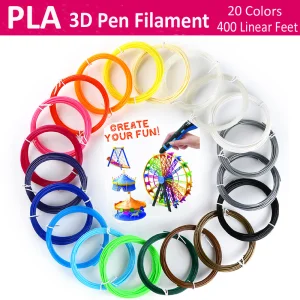
Odorous, high-VOC polymers are unsuitable for classroom environments. Premium non-toxic PLA and PLA 3D Pen filaments provide safe, low-odor, zero-heavy-metal hands-on learning tools for elementary to university engineering labs.
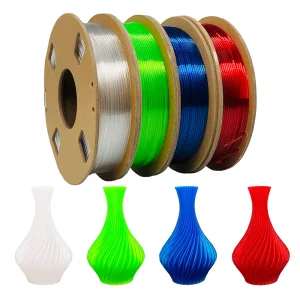
Surgeons utilize ultra-high clarity Transparent PLA and multi-color Silk PLA to print patient-specific anatomical models from DICOM CT scans, improving pre-operative planning accuracy and surgical efficiency.
Architectural firms require highly detailed matte and stone-texture PLA spools capable of rendering crisp edges without warping across large build volumes (500x500mm build plates) over 100+ hour continuous print cycles.
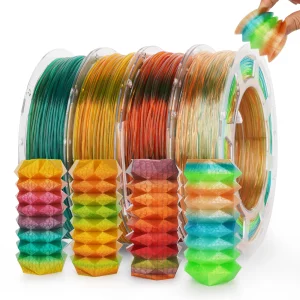
High-aesthetic co-extruded Dual-Color and Rainbow Silk PLA formulations dominate the prosumer gift, cosplay, and decorative retail product markets, commanding high retail margins for Amazon and regional e-commerce sellers.
Tier-1 automotive suppliers use toughened PLA+ and PETG to verify interior panel ergonomics, HVAC duct routing, and aesthetic surface finishes before committing millions of dollars to steel injection molds.
Eliminating regulatory hurdles, ensuring food safety compliance, and establishing zero-risk global logistics protocols.
Exporting plastic polymer consumables to North America, the European Union, standard-regulated Asian markets, and Latin America requires strict compliance with international chemical safety and environmental frameworks. Working with certified Chinese export manufacturers safeguards brand equity against customs impounds and market safety recalls.
A step-by-step roadmap for global buyers to build high-margin custom branded filament lines directly from China's primary factory floor.
Submit physical plastic chips or Pantone codes. Factory color technicians generate custom masterbatches with exact color variance matching ($\Delta E < 1.0$) inside professional spectrophotometer labs.
Select from eco-friendly recyclable cardboard spools, high-clarity polycarbonate spools, or multi-slot spools. Complete artwork customization for outer display boxes, die-cut labels, and vacuum foil bags.
Flexible spool weight extrusion accommodating 250g sample packs, standard 1kg retail rolls, up to heavy-duty 3kg, 5kg, and 10kg bulk spools designed for industrial print farm operations.
Comprehensive ocean freight (FCL/LCL), air cargo express, and direct Amazon FBA warehouse fulfillment with all customs clearing documentation (TDS, SDS, COO) seamlessly handled.
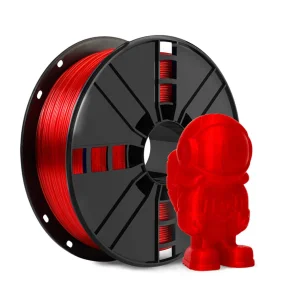
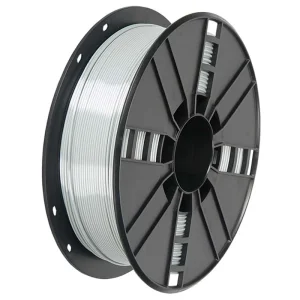
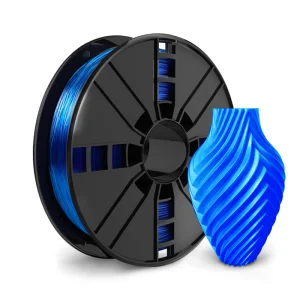
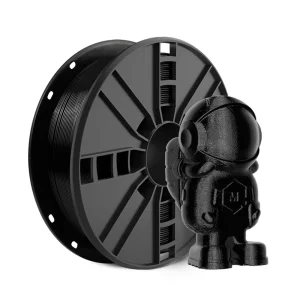
Specialty material formulations including TPU flex, high-impact ABS, weather-resistant ASA, and multi-color aesthetic filaments.
Addressing critical engineering, OEM logistics, minimum order quantities, and quality management questions.
A top-tier PLA filament factory must feature closed-loop dual-axis laser micrometer diameter feedback systems maintaining continuous dimensional tolerances of ±0.02 mm. Furthermore, look for industrial raw pellet dehumidifying drying systems operating at -40°C dew point to eliminate moisture bubbles, dynamic melt flow index (MFI) control, servo-driven precision neat winding equipment, and ISO 9001 quality certification with RoHS/REACH compliance documentation.
Torwell utilizes spectrophotometric color matching laboratories. Raw masterbatch formulations are locked to exact digital RGB/CIELAB color space values ($\Delta E < 1.0$). Each incoming raw batch undergoes melt testing and sample swatch extrusion, ensuring that an OEM brand's specific color shade (e.g., Signal Red or Navy Blue) remains 100% identical across repeat container shipments over years of production.
Standard factory stock colors are available with low MOQs (typically 100–200 spools). For full OEM private labeling—including custom-printed retail cartons, branded spool stickers, custom vacuum foil bags, and specialized Pantone color matching—MOQs generally start at 1,000 kg total order volume, which can be subdivided across multiple material types or color variations.
HS-PLA is chemically formulated with higher Melt Flow Index (MFI) resins and nucleating agents. When passing through hotends at extreme volumetric flow rates (>30 mm³/s), HS-PLA melts significantly faster with lower fluid viscosity, requiring less shear force from extruder gears. It also crystallizes instantaneously upon exiting the cooling fan nozzles, preventing bridge sagging and stringing at extreme print speeds.
Polymer filaments are winded in humidity-controlled cleanrooms. Immediately post-spooling, each spool is sealed inside a thick, multi-layer Moisture Vapor Transmission Rate (MVTR) vacuum bag containing active silica gel desiccant. The sealed bags are then packed into reinforced corrugated outer master cartons, palletized, shrink-wrapped, and fitted with container desiccant packs to prevent ocean freight moisture penetration.
Yes. Industry leaders like Torwell Technologies supply official laboratory testing documentation including EU RoHS 10-substance compliance, REACH SVHC chemical safety compliance, FDA 21 CFR food-contact resin certification, and industrial compostability compliance under DIN EN 13432 / ASTM D6400 standards upon request.