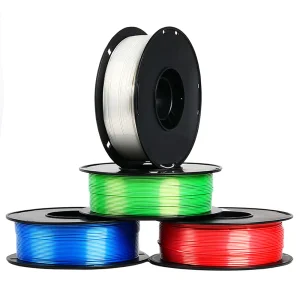
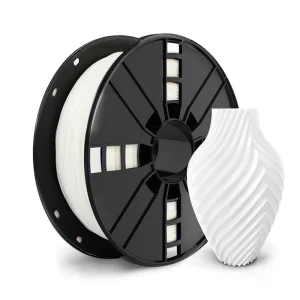
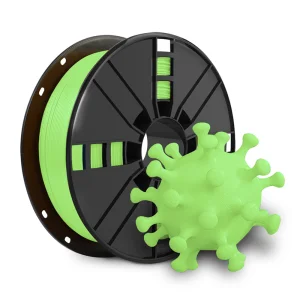
Explore our factory-direct 3D printing filaments engineered with high tolerance, high clarity, and batch consistency for enterprise procurement.
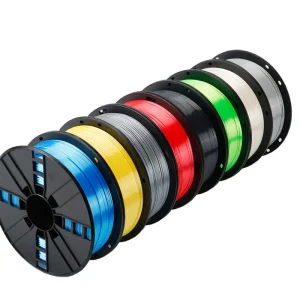
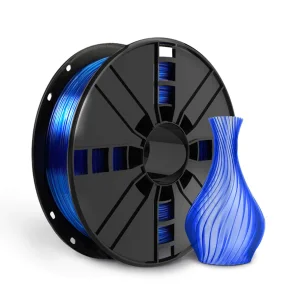
An authoritative analysis of Polyethylene Terephthalate Glycol (PETG) in additive manufacturing and industrial extrusion ecosystems.
In the rapidly evolving additive manufacturing sector, PETG Transparent (Polyethylene Terephthalate Glycol) has established itself as the non-negotiable standard bridging entry-level thermoplastics like PLA and heavy-duty engineering polymers such as Polycarbonate (PC). Combining exceptional optical transparency, superior impact resistance, chemical inertness, and ease of printability, PETG is the preferred polymer for applications demanding visual inspection, food contact compliance, and structural integrity.
As global supply chains demand higher batch-to-batch consistency and lower total cost of ownership (TCO), China’s specialized PETG suppliers and manufacturing factories have transitioned from low-cost extrusion operations into high-precision polymer research hubs. Companies such as Torwell Technologies Co., Ltd. (operating since 2011 with a 2,500 m² standardized facility and 6 automated extrusion lines) lead this transformation by pairing strict inline laser micrometer gauging ($\pm0.02\text{ mm}$ tolerance) with raw material chemical tuning.
Deconstructing the molecular architecture, glycol-modification mechanisms, and optical characteristics that prevent crystallization.
Standard PET (Polyethylene Terephthalate) naturally crystallizes when cooled slowly, turning opaque and brittle. PETG incorporates 1,4-cyclohexanedimethanol (CHDM) into the polymer backbone. This bulky glycol modifier disrupts the long-range crystalline structure, preserving an amorphous state during melt extrusion and cooling.
High-grade raw transparent PETG resin boasts a light transmittance rating exceeding 90% with a refractive index of approximately 1.57. When extruded under precise melt temperature profiles (230°C to 250°C) without thermal oxidation or shear degradation, the resulting filament prints void-free parts with glass-like clarity.
With a Glass Transition Temperature ($T_g$) of approximately $80^\circ\text{C}$, PETG retains structural stability well above standard ambient operating temperatures. However, its hygroscopic nature mandates pre-extrusion desiccant drying down to $<0.02\%$ moisture content to prevent hydrolytic degradation of polymer chain length.
Practical B2B deployment across global sectors where optical transparency, mechanical toughness, and chemical resistance intersect.
Transparent PETG is heavily relied upon for custom microfluidic prototypes, diagnostic test cartridges, surgical guide models, and liquid storage containers. Its compliance with ISO 10993 and USP Class VI biocompatibility protocols makes it suitable for non-invasive clinical equipment where fluid flow monitoring is critical.
Unlike ABS or styrenics, pure PETG resins comply with FDA CFR 21 177.1315 regulations for direct food contact. European and North American food-tech manufacturers utilize PETG transparent filament to 3D print customized container lids, dispensing nozzles, specialized conveyor guides, and reusable water filter housings without BPA leaching risks.
On automated assembly lines, machine operators require clear protection screens that withstand mechanical impacts and lubricant splashes. PETG offers an Izod impact strength (~80 J/m) significantly higher than acrylic (PMMA), resisting cracking when exposed to cutting oils, mild acids, and industrial solvents.
Architectural firms and commercial lighting manufacturers employ clear PETG to fabricate intricate light fixtures, LED covers, sign channels, and structural glazing prototypes. The material's balanced refractive index diffuses light cleanly without yellowing under indoor LED spectrums.
Tier-1 automotive suppliers use transparent PETG for functional check gauges, fluid reservoir prototypes, and inspectable assembly jigs. The transparency allows engineers to visually confirm internal mechanical clearances and part seating without disassembling testing rigs.
How China’s integrated petrochemical infrastructure and automated production facilities ensure quality, scalability, and cost leadership.
Sourcing transparent PETG filament directly from tier-1 Chinese factories offers global distributors and OEM brands unprecedented competitive advantages. China’s industrial ecosystem integrates upstream monomer synthesis directly with automated downstream profile extrusion.
China accounts for a substantial percentage of global PTA (Purified Terephthalic Acid) and Ethylene Glycol synthesis. Factories based in regional manufacturing hubs like Guangdong benefit from direct raw resin access, mitigating global commodity price spikes and securing pure, virgin-grade polymer feedstocks.
Leading factories like Torwell Technologies utilize automated multi-zone twin-screw extruders paired with high-frequency dual-axis laser diameter monitoring systems. Real-time feedback automatically adjusts puller speed to keep filament diameter strictly within $\pm0.02\text{ mm}$, virtually eliminating ovality and print nozzle clogs.
Operating 6 continuous extrusion lines producing over 50 metric tons monthly creates significant economies of scale. High-density automated spooling, desiccant vacuum packing, and optimized master carton loading ensure high container volume utilization, lowering per-unit ocean freight costs for international buyers.
Emerging trends in material science, bio-monomers, ultra-high-speed FDM extrusion, and circular economy compliance.
Chemical R&D efforts in China are focused on substituting traditional petrochemical ethylene glycol with bio-based alternatives derived from agricultural biomass. Bio-PETG maintains identical optical clarity ($>90\%$) and mechanical properties while reducing product life-cycle carbon footprints by up to 35%.
As core-XY 3D printers reach speeds of 500 mm/s to 600 mm/s, legacy PETG formulations suffer from flow starvation and thermal stress hazing. Next-generation PETG transparent grades feature controlled molecular weight distribution (MWD) to achieve rapid melt flow index drops in the hotend without sacrificing layer adhesion strength.
To fulfill European Union plastic tax directives and global ESG mandates, advanced chemical recycling facilities depolymerize post-industrial PETG waste back into pure terephthalate monomers. Refined rPETG transparent filament achieves clarity within 98% of virgin resin performance.
Comparative engineering benchmark evaluating transparent PETG against alternative clear 3D printing polymers.
Selecting the optimal transparent material requires balancing mechanical strength, chemical resistance, optical clarity, and processing complexity. The matrix below illustrates why PETG is widely selected by B2B buyers over PMMA, PC, and standard PLA.
| Material Metric | Transparent PETG | Acrylic (PMMA) | Polycarbonate (PC) | Standard Clear PLA |
|---|---|---|---|---|
| Optical Light Transmission | 90% – 92% | 92% – 93% (Highest) | 88% – 90% | 85% – 88% |
| Impact Resistance (Izod J/m) | 75 – 90 J/m | 15 – 20 J/m (Brittle) | 600 – 800 J/m (Extreme) | 25 – 35 J/m |
| Glass Transition Temp ($T_g$) | ~80°C | ~105°C | ~145°C | ~55°C – 60°C |
| Printability & Warpage Risk | Excellent / Very Low | Poor / High Warp | Difficult / High Warp | Easy / Minimal Warp |
| Chemical & Water Resistance | High (Acids/Alkalies) | Moderate | Moderate (Solvent Sensitive) | Low (Hydrolyzes easily) |
| Food Contact Compliance | FDA Approved Grades | Limited | BPA Concerns | Bio-based, low temp only |
Rigorous quality gateways implemented by certified Chinese factories to guarantee zero-defect shipment worldwide.
Continuous 1000Hz laser scanning monitors the $X$ and $Y$ axes independently during extrusion. Any section deviating beyond $\pm0.02\text{ mm}$ or displaying excessive ovality triggers automatic alarms and extrusion puller adjustments.
Every raw polymer resin batch undergoes MFI testing according to ISO 1133 / ASTM D1238 standards (typically $15-25\text{ g}/10\text{ min}$ at 230°C/2.16kg). This guarantees consistent viscosity and prevents stringing across varying hotend designs.
Because PETG is hygroscopic, finished spools undergo high-temperature desiccant baking before immediate vacuum sealing inside heavy-duty foil-laminated bags containing active silica desiccant packets, preventing ambient moisture absorption during ocean transit.
Expert technical and commercial guidance for purchasing directors, OEM brand owners, and industrial distributors.
Comprehensive product lineup available for factory-direct bulk supply, distributor ordering, and enterprise OEM projects.