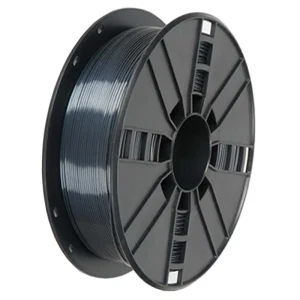
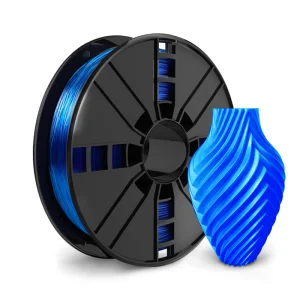
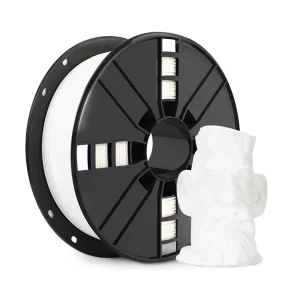
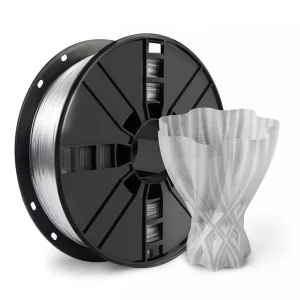
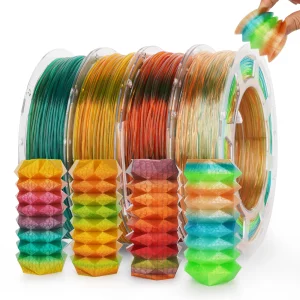
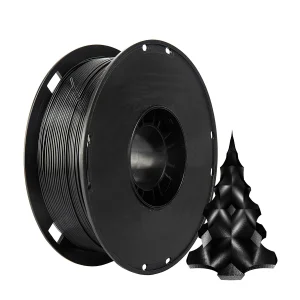
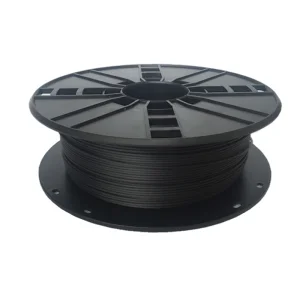
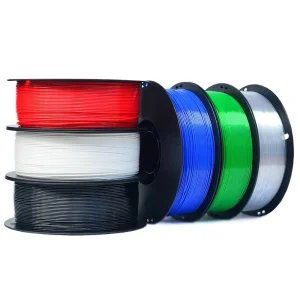
Explore our core extrusion lineup, precision-engineered for low warpage, high interlayer adhesion, and strict ±0.02mm diameter tolerances.
Analyzing the shift from hobbyist rapid prototyping to industrial-grade additive manufacturing and China's pivotal role in polymer synthesis scaling.
Additive manufacturing has matured far beyond cosmetic models. Industrial sectors require materials balancing high tensile strength, chemical resistance, and thermal endurance without complex chamber requirements. Polyethylene Terephthalate Glycol-modified (PETG) has emerged as the definitive bridge between entry-level PLA and expensive high-temp polymers like PEEK or Polycarbonate.
China remains the center for high-precision polymer extrusion engineering. Facilities like Torwell Technologies Co., Ltd. leverage vertically integrated chemical supply chains, allowing global B2B buyers, private label brands, and print farms to access ultra-consistent raw materials with unmatched price-to-performance efficiency.
Global procurement directors face major challenges: batch-to-batch color variance, diameter drift causing extruder jams, and improper moisture sealing during maritime freight. Modern China PETG factories mitigate these risks through multi-axis laser gauging, automated tension spooling, and heavy-duty foil vacuum packaging.
Understanding glycol modification, thermal degradation prevention, and inline laser telemetry in modern 3D filament manufacturing.
Standard PET (Polyethylene Terephthalate) tends to crystallize during slow cooling, becoming brittle and opaque. By substituting Cyclohexanedimethanol (CHDM) during polymerization, PETG is formed. The bulky glycol modifier breaks polymer chain symmetry, blocking crystallization. This yields an amorphous thermoplastic with exceptional optical clarity, toughness, and flexibility.
Extruding PETG requires precise melt flow index (MFI) management. If thermal zone profiling is inaccurate, polymer degradation causes stringing and severe nozzle oozing. Torwell's automated extrusion lines feature 5-zone barrier screws that apply uniform shear heat, preserving intrinsic viscosity (IV) for optimal inter-layer bond strength during printing.
To deliver a consistent ±0.02 mm diameter tolerance across standard 1.75 mm and 2.85 mm formats, inline dual-axis laser gauges measure roundness and gauge dimensional accuracy at 500 Hz. Automated feedback loops adjust haul-off tractor speeds instantly, discarding non-conforming segments automatically.
| Polymer Property | PETG (Torwell Grade) | PLA / PLA+ | ABS Industrial | ASA UV Stable |
|---|---|---|---|---|
| Tensile Strength (MPa) | 50 MPa | 65 MPa | 40 MPa | 42 MPa |
| Flexural Modulus (GPa) | 2.1 GPa | 3.1 GPa | 2.3 GPa | 2.0 GPa |
| Izod Impact Strength (kJ/m²) | 8.5 kJ/m² | 3.2 kJ/m² | 15 kJ/m² | 12 kJ/m² |
| Glass Transition Temp (Tg) | 80 °C | 60 °C | 105 °C | 100 °C |
| Chemical Resistance | High (Acids, Alkalis, Alcohols) | Low | Moderate (Soluble in Acetone) | High |
| UV & Weathering Resistance | Moderate / Good | Poor | Poor (Yellows outdoor) | Exceptional |
| Recommended Printing Temp | 230–250 °C | 190–220 °C | 230–260 °C | 240–260 °C |
From chemical processing plants to high-speed enterprise print farms, explore how customized PETG formulations solve physical production challenges.
PETG's high structural toughness and low shrinkage make it ideal for manufacturing line assembly jigs, drill guides, and automated robotic end-effectors requiring impact endurance without micro-fracturing.
With inherent chemical resistance against sterilization fluids, isopropyl alcohol, and dilute acids, clear PETG filaments are extensively utilized in custom laboratory manifold housings and fluid containment units.
Offers excellent dielectric strength and electrical insulation properties. Ideal for outdoor IoT sensor housings, PCB protective covers, and waterproof battery storage cases for electric mobility projects.
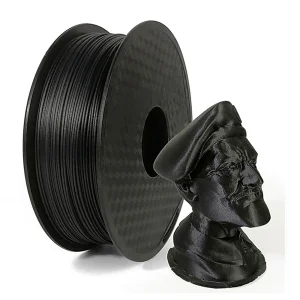
By blending micro-carbon fibers into pure PETG resin, structural rigidity increases dramatically while maintaining easy printability. Used extensively in aerospace prototyping, RC drone frames, and racing automotive ducting.
How Torwell guarantees seamless compliance, custom branding, and long-distance sea-freight protection for B2B partners across North America, Europe, and Asia-Pacific.
All raw polymer batches undergo rigorous testing to comply with international regulations including RoHS, REACH, and FDA 21 CFR food-contact guidelines. Technical Data Sheets (TDS) and Safety Data Sheets (SDS) are provided for every SKU to support smooth regional customs clearance.
We provide comprehensive private label customization: from masterbatch Pantone color matching to eco-friendly cardboard spools, custom vacuum seal bags, customized desiccants, barcode integration, and branded retail display cartons.
PETG is moderately hygroscopic. Torwell operates a pre-extrusion resin drying phase (reducing moisture below 0.02%) and packs each spool immediately into high-barrier vacuum seal packaging with active silica desiccant, preventing moisture degradation during long-distance shipping.
Exploring next-generation additive manufacturing advancements: CoreXY optimization, eco-friendly rPETG, and advanced functional nanocomposites.
Modern 3D printers like Bambu Lab, Voron, and Creality K1 require materials capable of rapid shear thinning and rapid thermal transition. Torwell’s R&D team has formulated high-flow PETG variants that maintain mechanical layer adhesion even under extrusion speeds exceeding 500 mm/s.
As global environmental directives push for circular economy practices, our plant provides certified post-industrial recycled rPETG lines. By re-stabilizing recycled polymer chains, we deliver eco-friendly spools without compromising printability or structural performance.
Future iterations of our industrial PETG catalog include UL94 V-0 flame-retardant blends for aerospace avionics enclosures and Electrostatic Discharge (ESD) safe formulations designed for sensitive semiconductor manufacturing environments.
Direct answers regarding factory production capabilities, technical settings, OEM minimum orders, and material properties.
PETG offers significantly higher impact resistance, greater flexural fatigue strength, and higher thermal deflection (Tg ~80°C vs ~60°C for PLA). Furthermore, PETG exhibits strong resistance to acids, alkalis, and outdoor moisture, making it far superior for functional engineering housings.
Our 2,500 m² factory runs 6 automated extrusion lines equipped with dual-axis laser measurement telemetry. These laser sensors monitor filament diameter and roundness in real-time at 500 Hz, making instantaneous automated micro-adjustments to extrusion speed to ensure strict tolerance compliance.
For custom Pantone color matching or private label packaging (custom spools, branded boxes, customized labels), our typical Minimum Order Quantity starts at 500 kg per batch. Standard inventory colors can be ordered in smaller wholesale quantities.
If PETG absorbs ambient humidity, it can cause stringing and micro-void bubbles. We recommend drying moisture-exposed spools in a dedicated filament dryer or convection oven at 60°C – 65°C for 4 to 6 hours before printing.
No. Carbon fiber filaments are highly abrasive. Printing PETG-CF through a standard soft brass nozzle will wear down the orifice diameter quickly. We strongly recommend using hardened steel, tungsten carbide, or ruby-tipped nozzles (minimum 0.4mm diameter).
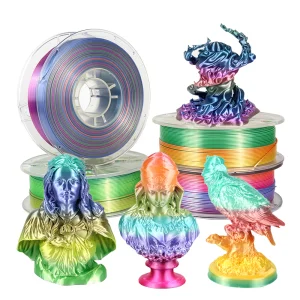
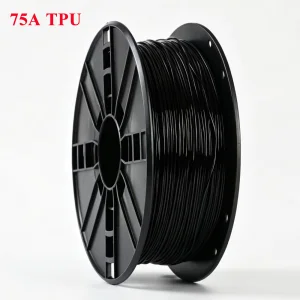
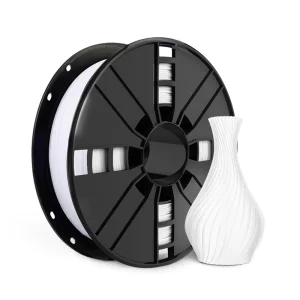
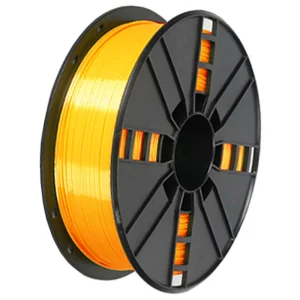
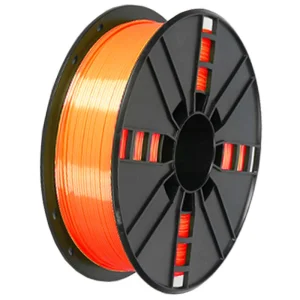
Browse additional high-demand materials including TPU, Silk PLA, White PETG, and Carbon Fiber PLA engineered for global distribution.