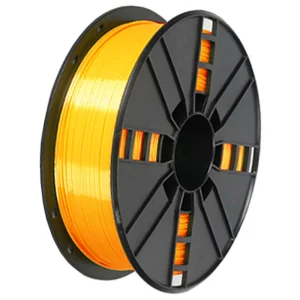
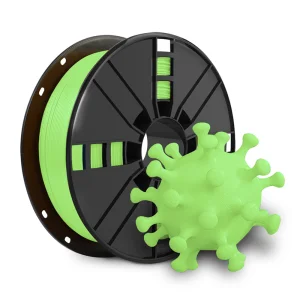
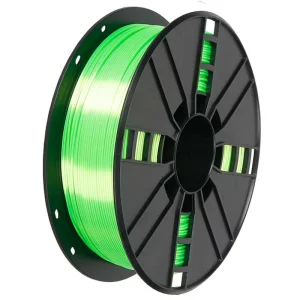
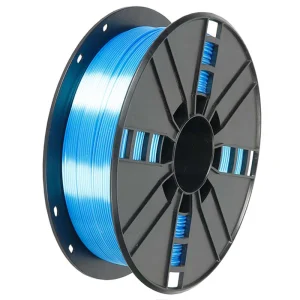
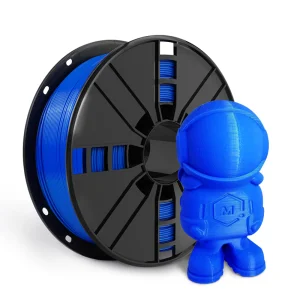
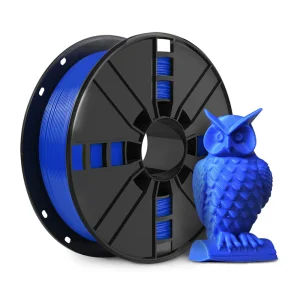
Industrial-grade 3D printing filaments manufactured under ISO 9001 certified conditions with strict inline laser diameter tracking (±0.02 mm).
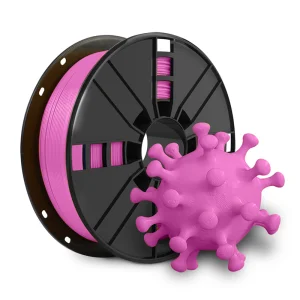
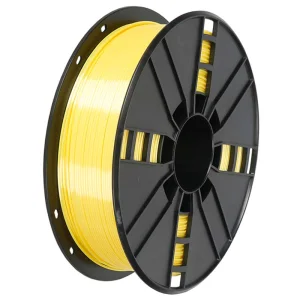
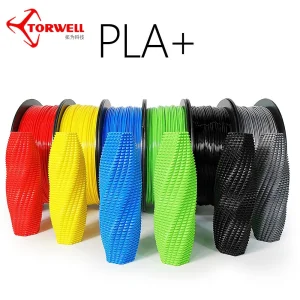
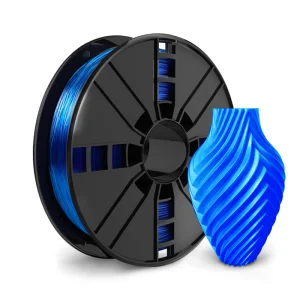
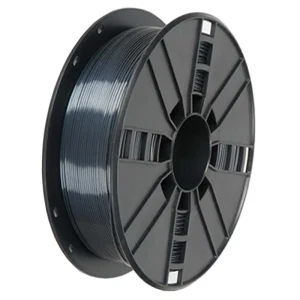
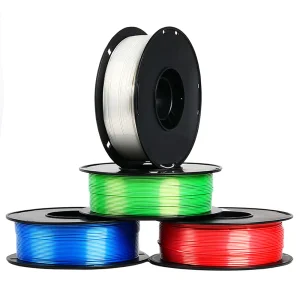
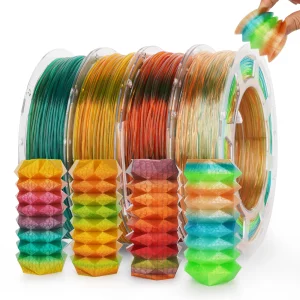
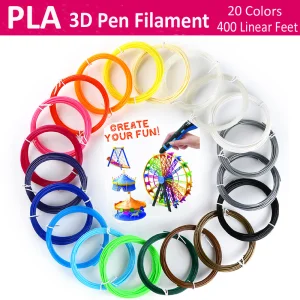
As additive manufacturing transitions from rapid prototyping into volume production of end-use components, demand for elastomeric polymers has escalated exponentially. Among these materials, Thermoplastic Polyurethane (TPU) stands out due to its unique bridge between the flexibility of rubber and the processing ease of thermoplastics. Founded in 2011, Torwell Technologies Co., Ltd. has established itself as an authoritative manufacturer operating a standardized 2,500 m² production facility equipped with 6 automated extrusion lines, delivering technical grade filaments to over 75 countries.
Core Information Gain Insight: Unlike standard rigid filaments (such as PLA or ABS), flexible TPU filaments require exact rheological control during melt processing. Fluctuations in moisture, shear stress, or cooling bath temperatures result in ovality and buckle-prone strands. Torwell solves this via inline dual-axis laser micro-gauging delivering a consistent target tolerance of ±0.02 mm across standard 1.75 mm and 2.85 mm spools.
We formulate both chemical backbone variants. Polyether-based TPUs deliver superior hydrolytic stability and biological resistance (ideal for medical and outdoor applications), while Polyester-based TPUs provide elevated chemical resistance to oils, greases, and hydrocarbons.
Torwell operates 6 fully closed-loop extrusion units capable of producing 50,000 to 60,000 kg per month. This continuous output safeguards global distributors from supply bottlenecks during peak procurement cycles.
By strictly controlling section roundness (ovality < 1%), our flexible TPU filament resists structural column buckling inside bowden tubes and high-speed direct-drive extruders, eliminating jamming risks.
Search intent analysis among B2B buyers—including OEM purchasing directors, Amazon brand owners, and industrial design studios—reveals three fundamental market shifts:
Traditional flexible filaments were restricted to print speeds below 30 mm/s. Enterprise print farms demand TPUs formulated for high melt-flow index (MFI) that maintain interlayer adhesion at volumetric speeds exceeding 12 mm³/s. Torwell's modified Shore 95A and Shore 85A formulations meet these high-speed requirements without inducing stringing or thermal degradation.
Procurement teams no longer accept a "one-size-fits-all" TPU. Application requirements range from soft gaskets requiring 85A flexibility to semi-rigid structural dampeners requiring 95A or higher. Torwell provides exact Shore rating customization matching precise durometer specifications.
The table below presents standardized testing parameters for Torwell Flexible TPU filaments compared against standard industrial rigid polymers (PLA, ABS, PETG).
| Material Grade | Shore Hardness | Tensile Strength (MPa) | Elongation at Break (%) | Abrasion Loss (mm³) | Recommended Extruder Temp | Primary Industrial Use |
|---|---|---|---|---|---|---|
| Torwell TPU 95A | Shore 95A | 45 – 50 MPa | 480% – 520% | 35 mm³ | 210°C – 230°C | Gaskets, Automotive Bushings, Phone Cases |
| Torwell TPU 85A | Shore 85A | 32 – 38 MPa | 600% – 650% | 25 mm³ | 200°C – 220°C | Medical Grips, Wearables, Soft Seals |
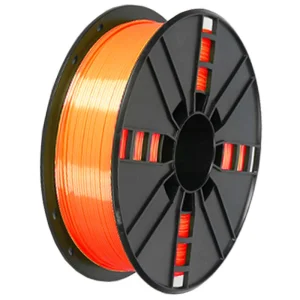
| Torwell TPU Rainbow / Silk | Shore 95A | 42 – 46 MPa | 450% – 500% | 40 mm³ | 215°C – 235°C | Consumer Electronics, Decorative Models |
| Standard PLA Plus (Pro) | Shore 80D | 60 – 65 MPa | 8% – 12% | N/A (Rigid) | 190°C – 220°C | Structural Models, Prototyping |
| Torwell ABS Filament | Shore 76D | 40 – 45 MPa | 15% – 25% | N/A (Rigid) | 230°C – 260°C | Automotive Housings, Enclosures |
*Data verified via internal laboratory tensile testing (ISO 527-2) at 23°C and 50% Relative Humidity.
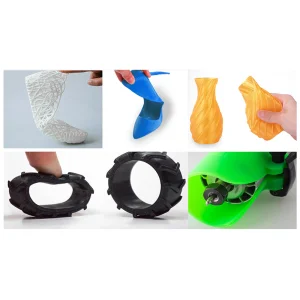
Torwell Flexible TPU material science provides tailored solutions for demanding global engineering sectors:
Vibration dampers, custom intake hoses, dust boots, and protective wiring grommets. Our TPU resists thermal degradation up to 110°C continuous operation and prevents mechanical fatigue caused by engine harmonic vibrations.
Robotic end-of-arm tooling (EOAT), flexible pneumatic suction cups, protective bellows, and conveyor belt guides. High tear strength prevents delamination even under continuous cyclic stretching.
Lattice orthotic insoles, athletic shoe midsoles, and shock-absorbing smart watch bands. Excellent energy return metrics combined with skin-safe, non-irritating formulations.
Prosthetic socket liners, custom surgical tool handles, and non-slip pads. Polyether-based options withstand repeated chemical sterilization and alcohol washdowns.
For international distributors and private-label brands selling across Amazon, regional distribution networks, or enterprise contracts, supply chain consistency is critical. Torwell provides end-to-end turnkey OEM services:
Our material testing lab matches physical spectrophotometer samples or standard RAL/Pantone references within 7 business days, ensuring brand color consistency across all extrusion batches.
TPU is inherently hygroscopic. Every roll undergoes thermal desiccant baking prior to immediate deep-vacuum sealing with high-density desiccant packs, preventing moisture hydrolysis during extended sea freight transit.
All materials extruded by Torwell are fully certified under EU RoHS 2.0, REACH (SVHC), and FDA 21 CFR compliance standards, backed by third-party SGS test reports available for import verification.
We offer customized cardboard spools, clear PC high-speed spools, branded outer cartons, QR code tracking labels, and custom user manuals designed for your specific regional market.
Torwell Technologies continuously invests in polymer chemistry R&D. Our forward engineering roadmap for flexible filaments focuses on four key technical vectors:
Eliminating shiny stringing residue by incorporating sub-micron micro-powders that scatter light, creating an aesthetically pleasing matte surface finish directly off the print bed.
Developing halogen-free, self-extinguishing TPU grades engineered specifically for automotive battery enclosures and aerospace electrical insulation boots.
Formulating carbon-nanotube filled flexible TPUs with electrical volume resistivity < 100 Ω·cm, enabling directly 3D-printed flexible sensors and wearable haptic circuits.
Replacing petroleum-derived polyols with castor oil derivatives to achieve up to 45% bio-based carbon content without compromising mechanical tear strength.
Direct answers to high-intent technical and sourcing queries submitted by enterprise purchasing officers and print farm operators.
Browse our broader range of 3D printing consumables, including Silk PLA, ABS, and Soft Flexible materials.