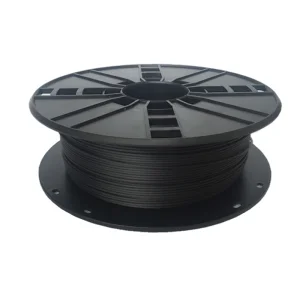
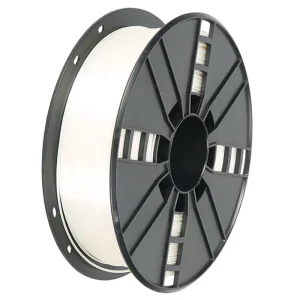
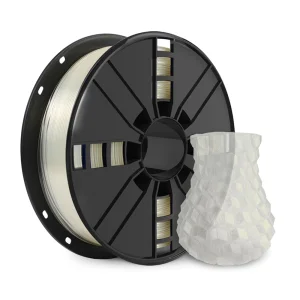
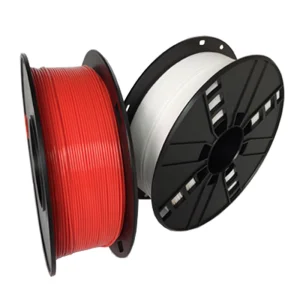
Explore our high-performance thermoplastic filaments manufactured under strict ISO 9001:2015 quality standards for worldwide distribution.
An Executive Analysis of Optical Clarity, Polymer Extrusion Science, and Supply Chain Engineering for Global B2B Buyers
In the landscape of additive manufacturing, achieving true optical transparency in Fused Deposition Modeling (FDM) / Fused Filament Fabrication (FFF) printing has historically presented a formidable technical barrier. While opaque polymers allow for minor melt flow fluctuations and micro-void inclusions without aesthetic degradation, clear 3D printer filament demands absolute material purity, precise polymer crystallographic control, and zero-defect extrusion. As global industries transition from rapid prototyping to end-use functional components, demand for high-clarity transparent filaments—spanning Clear PETG, Clear PLA, Clear PC (Polycarbonate), Clear TPU, and specialized acrylic blends—has surged exponentially across medical, automotive, architectural, and consumer electronics sectors.
As a leading China clear 3D printer filament supplier and factory since 2011, Torwell Technologies has spearheaded R&D in optical-grade polymer processing. Manufacturing high-clarity transparent filaments requires eliminating core failure modes: thermal yellowing caused by polymer degradation, internal micro-bubbling due to moisture absorption, optical diffusion resulting from diameter variation, and light scattering caused by inter-layer boundary mismatches. This technical whitepaper explores the material physics, extrusion controls, quality compliance protocols, and procurement strategies that position Chinese manufacturing facilities at the pinnacle of the global 3D printing materials market.
Understanding the optical performance of 3D printed parts begins at the molecular level. Light transparency in solid polymers is governed by Rayleigh and Mie light scattering, which occur when light encounters refractive index discontinuities inside the extruded strand or between printed layers. To achieve glass-like clarity, the raw polymer matrix must maintain an amorphous structure during cooling, preventing the formation of light-scattering spherulites (crystalline domains).
PETG is the industry benchmark for clear 3D printing. The addition of cyclohexane dimethanol (CHDM) during polymerization prevents crystallization, keeping the material fully amorphous. Clear PETG exhibits up to 90% light transmittance, exceptional impact toughness, minimal shrinkage (0.2–0.5%), and outstanding chemical resistance against acids and alkalis.
For high-temperature structural applications demanding optical transparency, Clear PC offers a heat deflection temperature (HDT) up to 120°C and supreme tensile strength. Featuring a refractive index of ~1.586, PC provides sparkling visual clarity when printed at elevated temperatures (270–300°C) with slow print speeds to ensure complete layer bonding.
Modified transparent PLA provides an eco-friendly option derived from renewable plant starches. While virgin PLA possesses slight natural crystallization upon slow cooling, specialized nucleating modifier additives and rapid cooling profiles allow Clear PLA to achieve gloss clarity suited for consumer goods and decorative prototypes.
| Polymer Grade | Light Transmittance (%) | Refractive Index (n) | Tensile Strength (MPa) | Heat Deflection (°C) | Primary Industry Application |
|---|---|---|---|---|---|
| Clear PETG High-Clarity | 89% – 92% | 1.570 | 48 – 52 | 72 – 75 | Fluidics, Containers, Medical Models |
| Clear PC Engineering | 88% – 90% | 1.586 | 65 – 72 | 115 – 125 | Automotive Light Guides, Lenses |
| Clear PLA Standard | 85% – 88% | 1.455 | 55 – 60 | 55 – 58 | Cosmetic Packaging, Concept Models |
| Clear TPU 95A Flexible | 82% – 86% | 1.510 | 35 – 40 | 80 – 85 (Shore) | Gaskets, Seals, Flexible Tubing |
In standard FDM printing, curved extrusion beads leave air gaps (triangular voids) between perimeter lines and adjacent layers. Each void creates an air-to-polymer interface with a sharp change in refractive index (n_air = 1.000 vs. n_petg = 1.570), bending passing light rays and rendering the print translucent or opaque white. Achieving optical clarity requires 100% rectilinear infill, slight over-extrusion (103–106%), and elevated hotend temperatures to weld layer interfaces into a monolithic crystal block.
Inside Torwell's 2,500 m² Automated Facility: How Advanced Engineering Yields Superior Clear Filament
We partner directly with tier-1 global chemical producers including NatureWorks, Eastman, SABIC, and Covestro. We utilize 100% virgin-grade resin without regrind or low-grade recycled filler, ensuring total freedom from black specks, thermal degradation contaminants, or tint inconsistency.
Each of our 6 automated extrusion lines is equipped with closed-loop dual-axis high-frequency laser gauges. Diameter tolerances are monitored continuously in real-time, maintaining a strict target of ±0.02 mm for 1.75 mm and 2.85 mm spools to ensure predictable volumetric extrusion.
Hygroscopic resins such as PETG, PC, and TPU absorb ambient moisture, which vaporizes at nozzle temperatures to form optical micro-bubbles. Our raw pellets undergo twin-tower desiccant drying down to moisture levels under 200 ppm prior to melt processing.
To deliver flawless clear 3D printer filament to international markets, every production batch at our factory follows a rigorous quality protocol:
Tailored Supply Chain Solutions for Brand Owners, Wholesalers, and Industrial Print Farms
Global enterprises, Amazon private label brands, and regional distributors face distinct supply chain challenges: regulatory hurdles, custom branding requirements, and inventory consistency. As an established Chinese factory supplier, Torwell Technologies offers end-to-end OEM/ODM customization services backed by comprehensive international compliance certifications.
From custom spool weight options (250g, 500g, 1kg, 3kg, up to 10kg master reels) to custom box printing, branded spool stickers, and eco-friendly cardboard spools, we tailor every packaging metric to your brand guidelines.
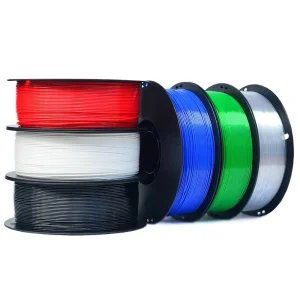
In addition to pure water-clear filaments, our masterbatch R&D lab formulates transparent color tints—including Transparent Red, Blue, Green, Amber, Smoke Clear, and Fluorescent Yellow—maintaining optical clarity without cloudiness.
All clear filament batches comply with RoHS (2011/65/EU) and REACH (EC 1907/2006) regulations. Select clear PETG and PLA resins comply with FDA food-contact guidelines (Title 21 CFR), suitable for transparent packaging prototypes.
We provide localized import compliance documentation including MSDS (Material Safety Data Sheets), TDS (Technical Data Sheets), transport safety certificates, and customs HS code classifications (3916909000). Whether shipping DDP, FOB Shenzhen/Ningbo, or CIF to major European, North American, or Asia-Pacific ports, our logistics partners ensure seamless customs clearance.
How Modern Engineering Sectors Leverage Clear 3D Printer Filament
Clear PETG and PC are used to print custom microfluidic chips, liquid flow manifolds, visual test chambers, and surgical drill guides. Transparency enables real-time visual inspection of fluid flow, bubble formation, and chemical reaction pathways.
Automotive design centers utilize clear polycarbonate (PC) and PETG to fabricate rapid prototypes of headlight covers, tail light lenses, interior ambient light pipes, and indicator housings, cutting lead times from weeks to hours.
Consumer electronics brands produce clear dust-proof enclosures, transparent smart-home device shells, and custom LED light diffusion panels that evenly spread light without hotspots.
Even the highest-purity clear filament will produce translucent results if standard slicer profiles are used. To achieve glass-like optical clarity, technical operators should follow our tested extrusion settings and post-processing protocols:
| Slicer Parameter | Standard Printing Setting | High-Clarity Optical Setting | Engineering Objective |
|---|---|---|---|
| Layer Height | 0.20 mm | 0.10 mm – 0.12 mm | Minimizes internal air gap geometry between paths. |
| Infill Pattern | Grid / Gyroid (20%) | Aligned Rectilinear (100%) | Ensures all infill lines run in the exact same direction. |
| Flow Rate / Extrusion Multiplier | 100% (1.00) | 103% – 106% (1.03 – 1.06) | Forces molten polymer into micro-voids to eliminate internal air gaps. |
| Print Temperature | 230°C (PETG) | 245°C – 255°C (PETG) | Lowers melt viscosity to fuse adjacent layer boundaries. |
| Cooling Fan Speed | 50% – 100% | 0% – 20% | Extends thermal window for optimal polymer inter-diffusion. |
| Print Speed | 60 – 100 mm/s | 15 – 30 mm/s | Prevents microscopic flow turbulence and air bubble entrapment. |
Expert Answers on Clear 3D Printer Filament Sourcing, Processing, and Performance
Factory-Direct Wholesale 3D Printing Materials for Global OEM Brands & Distributors