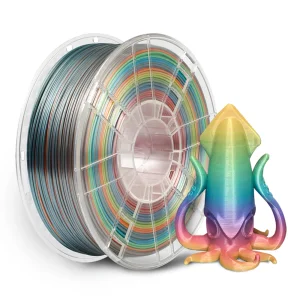
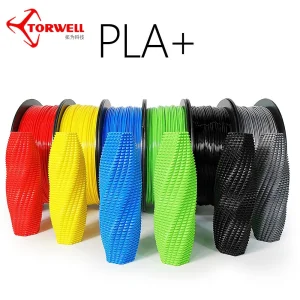
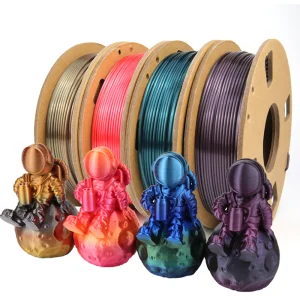
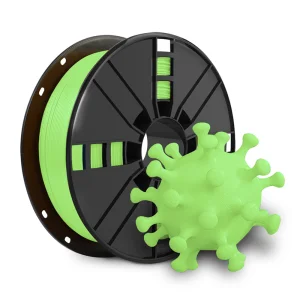
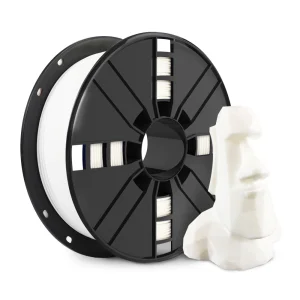
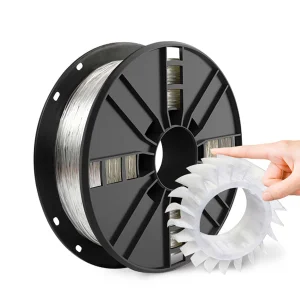
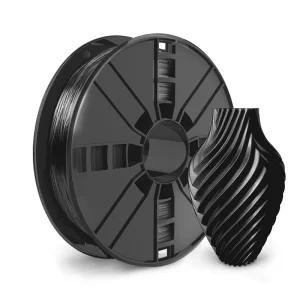
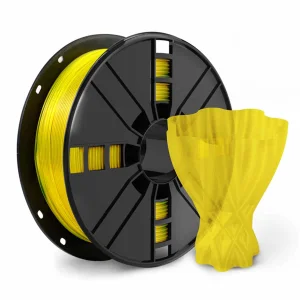
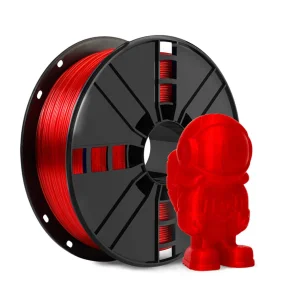
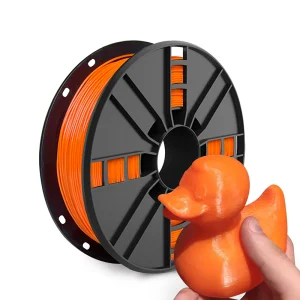
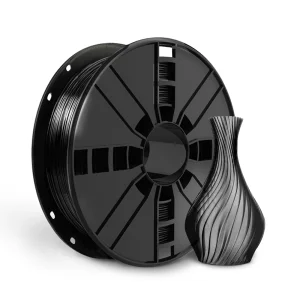
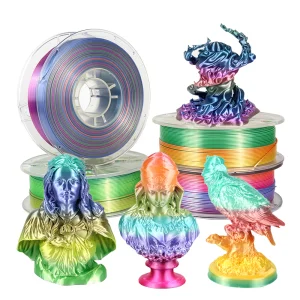
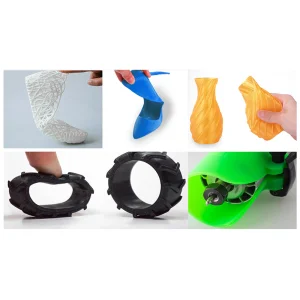
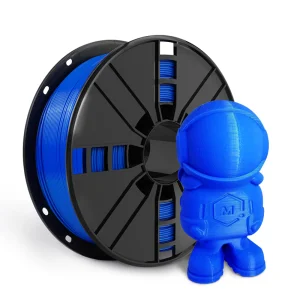
Featured material solutions produced in our 2,500 m² automated manufacturing facility.
Analyzing thermal stability, mechanical polymer physics, and China's strategic manufacturing role in modern B2B 3D printing supplies.
In the landscape of industrial additive manufacturing, Acrylonitrile Butadiene Styrene (ABS) remains one of the most foundational thermoplastic monofilaments utilized across Fused Deposition Modeling (FDM) and Fused Filament Fabrication (FFF) systems worldwide. As global supply chains transition from decorative desktop prototyping toward end-use functional components, low-volume direct digital manufacturing, and rapid tooling, the demand for high-purity, thermally stable, and geometrically consistent ABS monofilament has escalated dramatically.
As a premier China ABS Filament Manufacturer & Supplier, Torwell Technologies Co., Ltd. has spearheaded material R&D and polymer extrusion innovations since 2011. Operating a 2,500 m² automated production complex equipped with 6 high-precision continuous extrusion lines, Torwell bridges the critical gap between raw petrochemical resin synthesis and professional-grade 3D printer spools. This technical white paper examines the polymer physics, chemical ratios, thermal optimization strategies, supply chain efficiency, and localized industrial applications that define contemporary ABS manufacturing excellence in China.
Understanding the molecular dynamics of Acrylonitrile, Butadiene, and Styrene synthesis for optimal FDM melt behavior.
Provides chemical resistance, thermal stability up to $105^\circ\text{C}$ glass transition ($T_g$), and high tensile rigidity. Acrylonitrile polar groups facilitate chemical resistance against acids, alkalis, and oils while ensuring strong interlayer cohesion during nozzle extrusion.
Acts as an impact-absorbing elastomeric phase dispersed within the rigid matrix. High-butadiene loading prevents catastrophic brittle failure under dynamic mechanical loading, providing superior Izod impact resistance even at low ambient temperatures ($ -20^\circ\text{C} $).
Grants a smooth, glossy surface finish, lowers melt viscosity during processing, and enhances overall polymer melt flow index (MFI). Controlled styrene ratio minimizes shear thinning variance when printing at speeds exceeding 250 mm/s.
Extruding high-grade ABS filament requires precise control over the polymer's Melt Flow Index (MFI). Standard consumer-grade ABS resins often suffer from inconsistent molecular weight distribution, leading to unpredictable melt swelling at the nozzle orifice. At Torwell, our chemical engineers optimize the raw polymer compounding phase by incorporating anti-oxidants and secondary thermal stabilizers. This guarantees that when the filament is heated to $230^\circ\text{C} - 260^\circ\text{C}$ inside the hotend, no thermal degradation or cross-linking of the butadiene phase occurs, eliminating nozzle clogging and inconsistent extrusion width.
| Physical / Mechanical Property | Testing Standard | Torwell Industrial ABS | Generic Market ABS | Engineering Benefit |
|---|---|---|---|---|
| Glass Transition Temp ($T_g$) | ISO 11357 / ASTM D3418 | 105 °C | 98 °C – 101 °C | Higher resistance to thermal deformation in engine bays & electronic housings. |
| Tensile Strength at Yield | ISO 527 / ASTM D638 | 43.5 MPa | 35.0 – 38.0 MPa | Superior structural rigidity for functional end-use load-bearing brackets. |
| Izod Impact Strength (Notched) | ISO 180 / ASTM D256 | 18.5 kJ/m² | 12.0 – 14.0 kJ/m² | Exemplary resistance against high-velocity kinetic impact and vibration fatigue. |
| Flexural Modulus | ISO 178 / ASTM D790 | 2.35 GPa | 1.90 – 2.10 GPa | Low deflection under bending moments; essential for custom industrial jigs. |
| Heat Deflection Temp (0.45 MPa) | ISO 75 / ASTM D648 | 94 °C | 85 °C – 88 °C | Maintains physical geometry under elevated operating ambient temperatures. |
| Diameter Tolerance Control | Inline Laser Gauging | ±0.02 mm | ±0.05 mm | Prevents volumetric under/over-extrusion, stringing, and extruder jamming. |
Why China's integrated petrochemical infrastructure and Torwell's automated extrusion plant deliver unmatchable value to global OEM brands.
China accounts for over 45% of global synthetic polymer resin output. Torwell leverages direct raw-material pipeline integrations with top-tier petrochemical refiners (such as Sinopec and LG Chem blends). This proximity guarantees uninterrupted access to virgin, un-recycled ABS masterbatches with zero contamination, insulating global distributors from supply chain bottlenecks and raw material price spikes.
Our 6 continuous extrusion lines operate with closed-loop dual-axis laser calipers. Every millisecond, laser sensors scan the filament cross-section across two orthogonal axes. If diameter drift exceeds $\pm0.02\text{ mm}$ or ovality drifts over 1.5%, the extrusion line automatically adjusts haul-off capstan speed and melt pump pressure in real-time, dumping out-of-spec strand before spooling.
ABS is hygroscopic and readily absorbs atmospheric moisture ($\text{H}_2\text{O}$), leading to hydrolytic degradation during print extrusion (causing severe popping sounds, void formation, and poor layer bond strength). Torwell implements a multi-stage inline moisture elimination process: vacuum drying resin at $80^\circ\text{C}$ for 4 hours prior to extrusion, neat tension-controlled spool winding, immediate vacuum sealing in high-barrier composite foil bags with active silica desiccant, and sturdy corrugated carton enclosure. This guarantees a 24-month pristine shelf life for international sea freight shipments.
Positioning ABS filament within global FDM procurement strategies across North America, Europe, and Asia-Pacific markets.
While poly-lactic acid (PLA) continues to dominate entry-level consumer 3D printing due to its non-enclosed printability, industrial end-users and commercial print farms are rapidly scaling up consumption of engineering thermoplastics. ABS represents the ideal economic balance between mechanical toughness, thermal endurance, post-processing versatility (acetone vapor smoothing), and material unit cost.
PLA deforms at $55^\circ\text{C}$, making it unsuitable for automotive or warm environmental exposure. ABS delivers a $105^\circ\text{C}$ glass transition temperature ($T_g$) and superior impact strength, permitting functional mechanical loads without creep failure.
While PETG offers easy printing, it is difficult to sand, glue, or paint, and exhibits high flexural compliance. ABS allows crisp machining, solvent welding, acetone vapor polishing to optical gloss, and structural rigidity.
ASA replaces butadiene with acrylic rubber for extreme UV resistance. However, for indoor industrial applications, electronic enclosures, and internal automotive parts, ABS provides higher cost efficiency and higher tensile strength per dollar.
How global manufacturers and regional engineering hubs integrate Torwell ABS monofilament into production lines.
Used extensively for rapid manufacturing of custom dashboard instrument housings, HVAC duct adapters, sensor brackets, and prototype trim panels. ABS's $105^\circ\text{C}$ thermal threshold prevents sagging when vehicles are parked under intense sunlight in Southern Europe or North America.
Ideal for low-volume manufacturing of rugged handheld scanner shells, IoT gateway boxes, router housings, and battery management system enclosures. Torwell ABS supports UL94 flame retardancy standards and can be post-processed to a mirror gloss with acetone vapor baths.
Factory automation integrators print custom robotic end-effector vacuum mounts, cable track links, and sensor covers using Torwell ABS. Its high stiffness-to-weight ratio minimizes rotational inertia on high-speed SCARA and 6-axis robot arms.
Drone frame components, landing gear connectors, and camera gimbal brackets require severe impact absorption during rough landings. ABS monofilament allows press-fit metal heat-set threaded inserts (M3/M4) without cracking the surrounding polymer matrix.
Torwell's ongoing R&D initiatives to address ultra-high-speed FDM printers, sustainability, and advanced composite materials.
Optimized for modern CoreXY printers operating at speeds of 300 mm/s to 600 mm/s. By narrowing the molecular weight distribution and adding shear-thinning flow promoters, HS-ABS exhibits rapid thermal dissipation and instant layer solidification without sacrificing inter-layer adhesion strength.
Compounding 15% weight-ratio chopped micro-carbon fibers into the ABS polymer matrix. ABS-CF15 increases flexural modulus by 140%, virtually eliminates thermal expansion warping, and renders parts with a premium matte metallic surface finish.
Developing low-residual styrene monomer raw resins that diminish Volatile Organic Compound (VOC) emissions during hotend melting by over 65%. This enables safe deployment in educational facilities and non-ventilated office workspaces.
Complete regulatory documentation, customized branding, and private label support for international distributors.
To ensure smooth customs clearance and retail compliance across Europe, North America, and Japan, Torwell ABS monofilaments undergo rigorous third-party laboratory verification:
We empower regional brands, Amazon sellers, and industrial tool suppliers to establish their own proprietary filament product lines:
Direct technical answers for procurement directors, polymer engineers, and wholesale buyers.
Explore our complete manufacturing lineup supporting global 3D printing distributors.