Industry Engineering White Paper

China 75A TPU Supplier & Factories

Technical Reference & Supply Chain Benchmark for High-Performance Thermoplastic Polyurethane Elastomers, Monofilament Extrusion, & Precision Industrial Polymer Science

Featured 3D Printing Materials & OEM Product Catalog

Explore high-precision polymer filaments manufactured under ISO 9001 quality controls with inline laser micrometer tolerances.
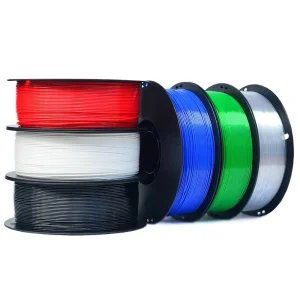
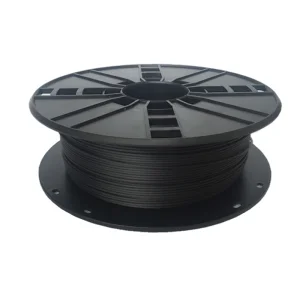
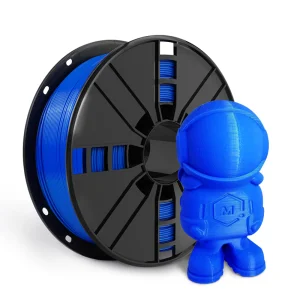
Wholesale PETG 3D Printer Filament 1.75mm/2.85mm, 1kg Manufacturers, Factories

View Product Specifications

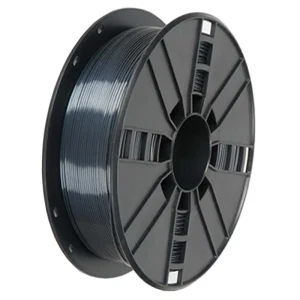
Wholesale 3D Printer Filament Carbon Fiber PLA Black Color Supplier, Suppliers

View Product Specifications

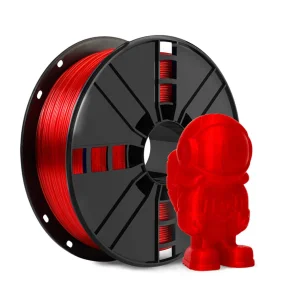
Wholesale Red 3D filament PETG for 3D printing Manufacturer, Factories

View Product Specifications

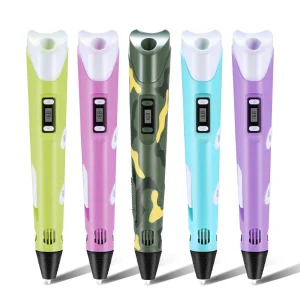
Wholesale DIY 3D Drawing Printing Pen with LED Screen- Creative Toy Gift For Kids Supplier, Suppliers

View Product Specifications

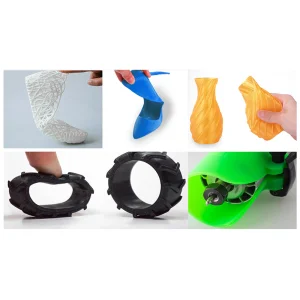
Wholesale Flexible TPU filament for 3D printing soft material Manufacturers, Supplier

View Product Specifications

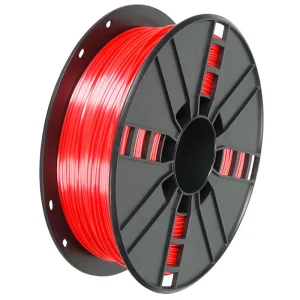
Wholesale Silk PLA 3D Filament Silk shiny 3D filament Manufacturer, Factories

View Product Specifications

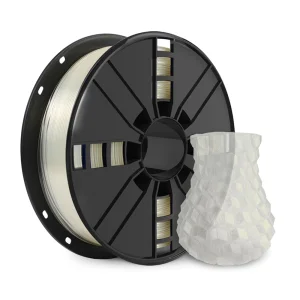
Wholesale 3D Print Transparent PLA Filament Manufacturer, Supplier

View Product Specifications

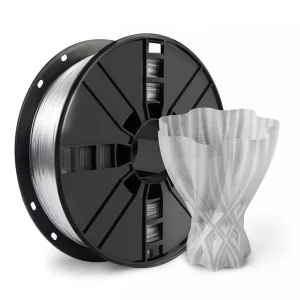
China PETG Transparent 3D filament Clear Supplier, Suppliers

View Product Specifications

Section 1: Chemical Structure & Polymer Physics of Shore 75A TPU

Understanding the molecular dynamics, phase morphology, and thermodynamic behavior of ultra-soft Thermoplastic Polyurethane elastomers.

Segmented Block Chemistry

Shore 75A TPU consists of linear alternating block copolymers containing alternating hard segments (diisocyanates like MDI and chain extenders) and soft segments (long-chain polyols). The 75A rating signifies a high concentration of soft segments (~70-80% mass fraction), yielding extreme flexibility, low glass transition temperatures ($T_g$ down to -40°C), and high elastic recovery without physical vulcanization.

Polyether vs. Polyester 75A

Polyether-based 75A TPU delivers unmatched hydrolysis resistance, biological stability, and microbial resistance, making it ideal for medical lines and outdoor water-exposed components. Polyester-based 75A TPU provides superior tear strength, tensile resistance, and oil/hydrocarbon endurance, outperforming in heavy-duty automotive seals and mechanical gaskets.

Viscoelastic Processing Window

Processing Shore 75A TPU requires precise rheological management. Due to its high tackiness and melt sensitivity, raw resin must be processed within a tight temperature profile ($190^\circ\text{C} - 215^\circ\text{C}$). Precise drying down to $<0.02\%$ moisture content is vital to prevent hydrolytic cleavage of urethane bonds during extrusion or injection molding.

Technical Highlight: Shore 75A sits at the extreme lower boundary of standard industrial TPU hardness scales. While standard TPU 95A exhibits a flexural modulus of ~80 MPa, Shore 75A drops to ~15-25 MPa, offering silicone-like tactile softness combined with the melt-processability, weldability, and 100% recyclability of thermoplastic polymers.

Section 2: Global Commercial & Industrial Market Landscape

Market growth drivers, material substitution trends, and mechanical performance benchmark across competitive elastomer classes.

7.8%
Global TPU CAGR (2024-2032)
>650%
Elongation at Break (75A)
<25 mm³
DIN Abrasion Loss Value
100%
Thermoplastic Recyclability

Across the global chemical and additive manufacturing landscape, industrial buyers are rapidly replacing thermoset silicone rubbers (LSR) and plasticized PVC with specialized 75A TPU grades. The primary catalysts include stricter European REACH plasticizer restrictions, the imperative for closed-loop sustainability, and the rapid adoption of flexible FDM and SLS 3D printing filaments in direct-drive automated production setups.

Material Property Shore 75A TPU (Polyether) Shore 95A TPU (Standard) SEBS TPE (Shore 70A) Liquid Silicone Rubber (LSR)
Hardness (Durometer A) 75 ± 2 A 95 ± 2 A 70 ± 3 A 70 ± 2 A
Tensile Strength (MPa) 35 - 45 MPa 50 - 65 MPa 12 - 18 MPa 8 - 12 MPa
Elongation at Break (%) 650% - 780% 450% - 550% 500% - 600% 400% - 500%
Tear Strength (kN/m) 65 - 80 kN/m 120 - 150 kN/m 30 - 45 kN/m 25 - 35 kN/m
DIN Abrasion Resistance 20 - 30 mm³ 35 - 45 mm³ 90 - 120 mm³ 150 - 200 mm³
Processing Method Extrusion / FDM / Injection Extrusion / FDM / Injection Injection / Blow Molding Thermoset Injection / Vulcanization
Recyclability 100% Thermoplastic 100% Thermoplastic 100% Thermoplastic Non-recyclable Thermoset

Section 3: Industrial & Localized Application Matrix for 75A TPU

Deployment across critical industrial verticals demanding exceptional elasticity, mechanical fatigue resistance, and environmental durability.

1. FDM/FFF 3D Printing Filament

Shore 75A TPU monofilament (1.75mm & 2.85mm) enables direct-to-print soft dampers, gaskets, and flexible grips. Engineered with low surface friction coatings to prevent filament buckling within direct-drive extruder drive gears.

2. Automotive Vibration & Noise Isolation

Utilized for steering column boots, suspension noise dampeners, electrical harness grommets, and weather-seal connectors exposed to hydrocarbon splash and physical flexing from $-35^\circ\text{C}$ to $+90^\circ\text{C}$.

3. Biomedical Devices & Soft Wearables

Biocompatible polyether 75A TPU grades serve in respiratory tubing, skin-contacting wearable sensor straps, prosthetic cushion liners, and ergonomic surgical instrument overmolding.

4. Soft Robotics & Pneumatic Grippers

Integrates directly into soft pneumatic actuators (SPAs) and compliant robotic end-effectors designed to manipulate fragile items in food packaging, agricultural sorting, and automated fulfillment lines.

5. High-Rebound Footwear & Athletic Gear

Engineered for lightweight, high-energy-return footwear midsoles, soccer cleat outsoles, protective sports padding, and flexible dynamic transfers subject to millions of flex cycles.

6. Industrial Cable Sleeving & Flex Hose

Protects industrial robotics power cables under severe torsional strain. High flex-life and dielectric strength protect internal copper conductors from mechanical shear and abrasion.

Section 4: Technical Roadmap & Manufacturing Innovation Vectors

Advanced synthesis techniques, precision extrusion diagnostics, and future material breakthroughs in elastomer engineering.

Phase 1: Reactive Extrusion & Stoichiometric Synthesis

Precise control of NCO/OH molar ratios using twin-screw continuous reactive extruders to yield ultra-narrow molecular weight distribution ($M_w/M_n < 2.1$).

Phase 2: Closed-Loop Dual-Axis Laser Monofilament Control

For 3D printing filament production, inline high-frequency laser micrometers continuously adjust haul-off capstans to enforce strict $\pm0.02\text{ mm}$ roundness and diameter tolerances.

Phase 3: Moisture-Elimination Vacuum Crystallization

Post-extrusion dew-point desiccant drying down to $<0.015\%$ moisture content followed by hermetic aluminum foil vacuum sealing with active silica-gel desiccants.

Future Technical Outlook (2025–2030)

  • Bio-Based Polyol Integration: Transitioning from petroleum-derived PTMEG to castor oil and corn-starch polyols, cutting carbon intensity by up to 45%.
  • Conductive 75A TPU Nanocomposites: Infusing carbon nanotubes (CNTs) and graphene flakes to produce piezoresistive elastomers for flexible printed circuits and tactile sensors.
  • Self-Healing Dynamic Covalent Networks: Incorporating disulfide linkages that automatically repair micro-tears under mild thermal stimulus ($60^\circ\text{C}$).
  • Direct-Pellet Additive Manufacturing (FGF): Formulating low-viscosity 75A TPU pellets for high-speed industrial pellet extruders printing large-scale elastic structures.

Section 5: China Supply Chain Resilience & Manufacturing Efficiency

Why OEM brand owners, industrial distributors, and high-volume print farms partner with leading Chinese TPU factories.

Upstream Chemical Integration

Chinese chemical parks house the world's largest integrated production units for key TPU monomers including MDI, BDO, Adipic Acid, and PTMEG. This raw material proximity mitigates global supply shocks, eliminates transport lead times for basic polymers, and guarantees batch-to-batch chemical stability.

Massive Production Scalability

Equipped with multi-line continuous extrusion facilities, state-of-the-art compounding equipment, and fully automated spooling/packing lines, modern Chinese factories achieve monthly outputs of 50,000–100,000+ kg, maintaining rapid lead times for global container orders.

OEM/ODM Customization Capabilities

Chinese suppliers offer comprehensive OEM capabilities including precision Pantone color-matching, custom spool weights (from 250g to 5kg cardboard/plastic spools), private-label packaging design, and custom modifier compounding (UV-stabilized, flame-retardant UL94 V-0, anti-static).

Section 6: Quality Assurance, Testing Standards & Compliance

Comprehensive laboratory verification and global regulatory compliance frameworks safeguarding international shipments.

Mechanical Testing Protocols

Every production batch undergoes strict laboratory testing compliant with international standards:

  • ASTM D2240: Durometer Hardness Verification (75 ± 2 Shore A).
  • ASTM D412: Tensile Strength and Ultimate Elongation Percentage.
  • ASTM D624: Tear Strength (Trouser and Die C test specimens).
  • DIN 53516 / ISO 4649: Abrasion Resistance under rotary drum shear.
  • Melt Flow Index (MFI): Rheological flow consistency testing at $190^\circ\text{C} / 8.7\text{ kg}$.

International Regulatory Certifications

Products are formulated to comply with strict environmental and safety frameworks:

  • RoHS 3 Compliance (Directive EU 2015/863): Free from heavy metals, lead, cadmium, and banned phthalates.
  • REACH SVHC Verification: Fully evaluated against European Chemicals Agency (ECHA) candidate list.
  • FDA 21 CFR 177.2600: Compliant grades available for repeated-use food contact surfaces.
  • ISO 10993 Biocompatibility: Select polyether grades tested for cytotoxicity and skin sensitization.

Section 7: Frequently Asked Questions (FAQ)

Technical guidance and commercial clarification for engineering buyers, procurement specialists, and brand managers.

What is the primary difference between Shore 75A TPU and standard Shore 95A TPU?
Shore 75A TPU contains a significantly higher ratio of soft polyol segments compared to hard diisocyanate segments. This yields extreme flexibility, silicone-like softness, and elongation exceeding 650%, whereas Shore 95A TPU is semi-rigid with higher tensile strength and lower flexural deformation. 75A is selected for parts requiring soft tactile dampening, compliance, and severe bending.
How do you prevent 75A TPU 3D printer filament from buckling inside direct-drive extruders?
Because 75A TPU monofilament is highly flexible, preventing buckling requires a fully constrained filament path with zero gap between the drive gears and the PTFE entry tube. Printing speed should be reduced to 15–30 mm/s, retraction distances minimized, and nozzle temperatures maintained at 210–225°C to reduce backpressure in the hotend.
Should I choose Polyether-based or Polyester-based 75A TPU for my application?
Choose Polyether-based 75A TPU if your product is exposed to water, moisture, medical fluids, or outdoor humid environments due to its permanent hydrolytic stability and resistance to microbial growth. Choose Polyester-based 75A TPU if your application demands higher tear strength, superior DIN abrasion resistance, and high resistance to oils, grease, and fuels.
What are the recommended drying parameters prior to processing 75A TPU pellets or filament?
75A TPU is highly hygroscopic. Raw resin pellets and filament spools must be dried in a desiccant air dryer at 70°C to 80°C for 3 to 5 hours until the moisture level drops below 0.02% (200 ppm). Processing moist TPU causes hydrolytic degradation, lower mechanical properties, bubbling, and surface stringing.
Can Chinese suppliers match custom Pantone colors for bulk OEM TPU orders?
Yes. Modern Chinese TPU factories feature in-house spectrophotometer color-matching labs capable of matching exact Pantone, RAL, or physical sample color targets. Masterbatch compounding is performed under strict melt dispersion conditions to prevent color streaking or batch variations.
What packaging methods are used to prevent moisture contamination during ocean freight?
Filament spools and pellets are vacuum-sealed inside high-barrier aluminum-laminated foil bags containing active silica-gel desiccants. Individual boxes are packed inside heavy-duty corrugated export master cartons and stretch-wrapped on wooden or plastic pallets with moisture-barrier top covers.
Is 75A TPU compliant with FDA food-contact or medical device standards?
Specific virgin polyether 75A TPU grades are formulated using raw materials compliant with FDA 21 CFR 177.2600 (repeat-use rubber articles) and ISO 10993 cytotoxicity standards. Technical datasheets and compliance certificates must be requested prior to placing orders for food contact or medical devices.
What is the typical minimum order quantity (MOQ) and lead time for custom OEM manufacturing?
Standard stocked filament colors feature low MOQs (often 50–100 kg), while custom Pantone color matching or specialized alloy compounding typically requires an MOQ of 500–1,000 kg. Production lead time generally ranges from 10 to 20 days depending on order complexity and container scheduling.

Complete High-Performance Filament Portfolio

Browse our additional wholesale 3D printer material lines for industrial, commercial, and professional applications.
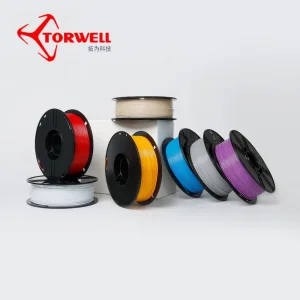
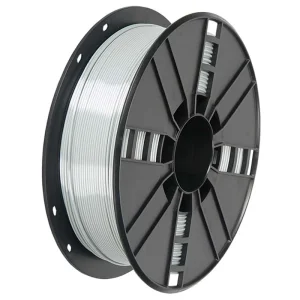
China PLA 3D Printer Filament 1.75mm/2.85mm 1kg per Spool Suppliers, Factories

View Product Specifications

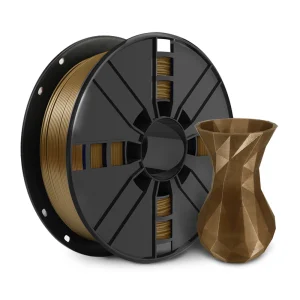
China 1.75mm 1kg Gold PLA 3D Printer Filament Manufacturer, Factory

View Product Specifications

China Silk Like Grey PLA filament 3D printer filament Supplier, Suppliers

View Product Specifications

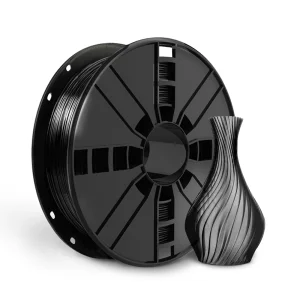
Wholesale PETG 3D printing material Black color Supplier, Factories

View Product Specifications

China ABS 3D Printer Filament, Blue Color, ABS 1kg Spool 1.75mm Filament Manufacturers, Supplier

View Product Specifications

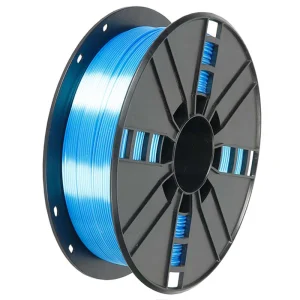
China PLA Silk 3D filament blue 1.75mm Suppliers, Factory

View Product Specifications

Wholesale Silk Red PLA 3D Printer Filament 1KG 3D Printing Materials Manufacturer, Factories

View Product Specifications

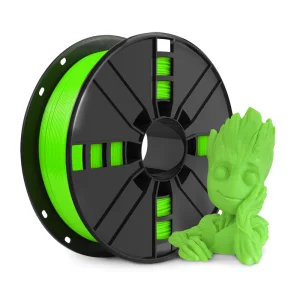
Wholesale Pla printer filament green color Manufacturers, Suppliers

View Product Specifications