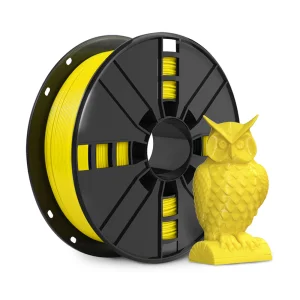
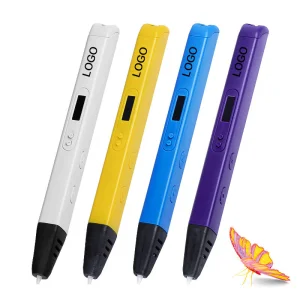
Extruded with laser-monitored ±0.02 mm tolerance. Vacuum-sealed and fully customizable for global B2B buyers.
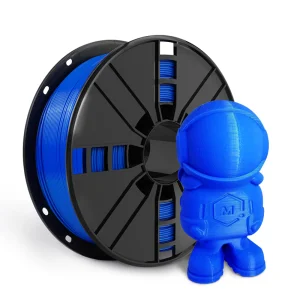
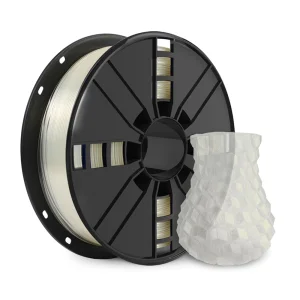
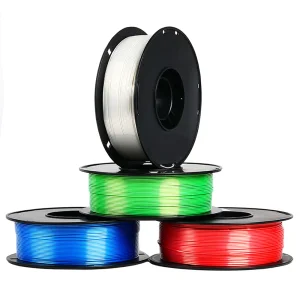
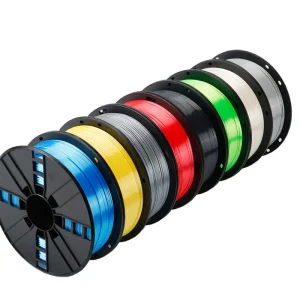
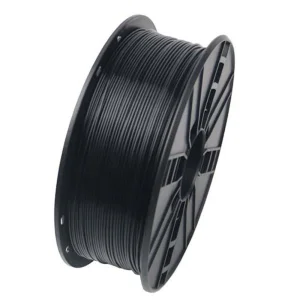
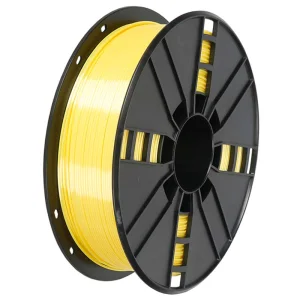
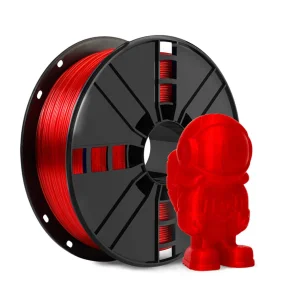
Evaluating how high-throughput polymer synthesis, vertical industrial clusters, and automated extrusion lines drive global additive manufacturing economics.
The global additive manufacturing (AM) sector has undergone a profound paradigm shift over the past decade. Fused Deposition Modeling (FDM) and Fused Filament Fabrication (FFF) technologies have rapidly evolved from prototyping tools into indispensable digital mass-production hardware. At the epicenter of this technological acceleration stands China's advanced polymer extrusion sector, which now manufactures and exports over 70% of the world’s thermoplastic 3D printing consumables. Partnering directly with an established China 3d Printing Wholesale Manufacturer & Supplier grants brand owners, regional distributors, Amazon FBA sellers, and enterprise print farms direct access to optimized Total Cost of Ownership (TCO) while securing military-grade batch consistency.
China’s manufacturing edge relies on dense industrial integration. Located within automated manufacturing hubs, facilities combine raw resin synthesis, custom color masterbatch production, precision twin-screw extrusion, non-contact dual-axis laser inspection, and robotic spooling under a single roof. This vertical integration reduces supply chain friction, allows rapid scaling for container-load orders, and protects against raw material price volatility. For international OEMs, direct sourcing eliminates multi-tiered distributor markups and guarantees strict adherence to international polymer purity standards.
Strategic Supply Chain Insight: Modern high-speed FDM printers (demanding volumetric melt rates above $30\text{ mm}^3/\text{s}$) require thermal uniformity and precise physical dimensions. Inferior filaments with diameter variations exceeding $\pm0.05\text{ mm}$ cause nozzle clogs, back-pressure fluctuations, and severe under-extrusion. Partnering with a certified Chinese manufacturer guarantees high-speed melt stability and zero-defect spool winding.
A rigorous scientific guide to polymer behavior, glass transition thresholds, tensile dynamics, and extrusion parameters across key 3D printing materials.
Derived from polymerized lactic acid via ring-opening lactide synthesis. Modified PLA+ incorporates rubber-phase impact modifiers, lowering brittleness while maintaining high tensile strength (60+ MPa) and minimal thermal shrinkage for ultra-fast, warping-free printing.
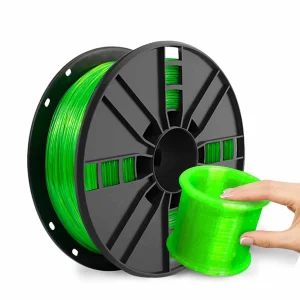
Polyethylene Terephthalate modified with Cyclohexanedimethanol (CHDM). This glycol addition prevents micro-crystallization, resulting in high optical clarity, excellent chemical resistance to acids and alkalis, and exceptional interlayer z-adhesion strength.
Engineering Terpolymers formulated for heat resistance ($T_g \approx 105^\circ\text{C}$) and mechanical durability. ASA replaces butadiene rubber with acrylic ester elastomers, delivering high weatherability and UV stability for long-term outdoor use.
Block copolymers composed of alternating hard polyurethane and soft polyether/polyester segments. Features high tear strength, superior abrasion resistance, high elongation at break ($>450\%$), and smooth feeding through direct-drive extruders.
Compounded with $15\text{--}20\%$ high-modulus chopped carbon fibers. The micro-carbon fibers align along the melt path during extrusion, dramatically increasing structural rigidity, reducing volumetric thermal expansion, and providing a matte surface finish.
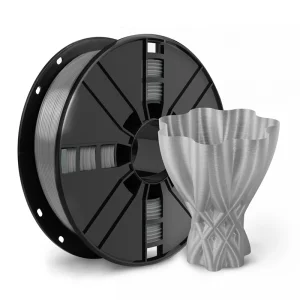
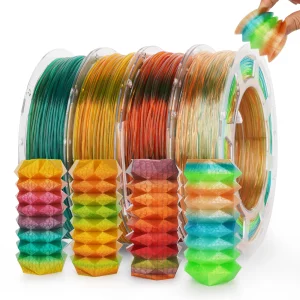
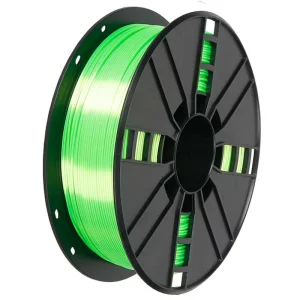
Engineered visual filaments modified with inorganic optical additives or co-extruded polymers. Offers vibrant dual-color cross-sections, high-gloss silk finishes, or long-lasting phosphorescent illumination without compromising layer adhesion.
| Polymer Grade | Melt Flow Index (MFI) | Glass Temp ($T_g$) | Tensile Strength | Impact Strength | Nozzle Temp Range | Bed Temp Range | Max Flow Speed |
|---|---|---|---|---|---|---|---|
| Standard PLA | 7 - 11 g/10min | 58 °C | 62 MPa | 3.4 kJ/m² | 190 - 220 °C | 0 - 60 °C | 500 mm/s |
| High-Speed PLA+ | 12 - 16 g/10min | 61 °C | 65 MPa | 6.8 kJ/m² | 200 - 230 °C | 50 - 60 °C | 600 mm/s |
| Silk Co-Extrusion PLA | 8 - 12 g/10min | 56 °C | 54 MPa | 4.1 kJ/m² | 200 - 225 °C | 50 - 60 °C | 350 mm/s |
| Industrial PETG | 10 - 15 g/10min | 78 °C | 50 MPa | 7.9 kJ/m² | 230 - 250 °C | 70 - 80 °C | 400 mm/s |
| High-Impact ABS | 18 - 24 g/10min | 105 °C | 43 MPa | 15.2 kJ/m² | 230 - 260 °C | 90 - 110 °C | 350 mm/s |
| UV-Stable ASA | 15 - 20 g/10min | 108 °C | 46 MPa | 12.4 kJ/m² | 240 - 260 °C | 90 - 110 °C | 300 mm/s |
| Flexible TPU 95A | 25 - 35 g/10min | -40 °C | 38 MPa | No Break | 210 - 230 °C | 30 - 60 °C | 150 mm/s |
| Carbon Fiber CF-PETG | 6 - 9 g/10min | 82 °C | 78 MPa | 9.5 kJ/m² | 240 - 270 °C | 75 - 90 °C | 300 mm/s |
How advanced extrusion technology, real-time laser monitoring, automated tension winding, and vacuum packaging ensure trouble-free printing.
Lines feature dual-axis non-contact optical laser gauges scanning filament at 1,000 Hz. Real-time feedback automatically adjusts screw RPM and haul-off speed to maintain a target diameter tolerance of $\pm0.02\text{ mm}$ and prevent ovality anomalies.
Hygroscopic polymers like PETG, TPU, and PA undergo multi-stage desiccant drying down to moisture levels below $0.02\%$ ($200\text{ ppm}$) before extrusion, eliminating internal steam bubbles, popping, stringing, and hydrolysis degradation during printing.
Automated, tension-controlled spooling systems lay filament seamlessly across the spool hub. This eliminates overlapping loops, preventing jams on multi-material switching systems (AMS/MMU) during long continuous print jobs.
From proprietary masterbatch color formulation to custom spool architecture and eco-friendly packaging, we build turnkey product lines for global brands.
Building a recognizable brand in the competitive 3D printing market requires more than standard, off-the-shelf products. As a leading China 3d Printing Wholesale Manufacturer & Supplier, we provide complete, white-label OEM/ODM solutions tailored to your market's exact brand aesthetic and technical requirements.
Using advanced spectrophotometer analysis, our chemical engineers match custom colors from Pantone, RAL, or physical target samples. We achieve precise color consistency ($\Delta E < 1.0$) across production runs, ensuring your branded filament maintains identical color matching from batch to batch.
We offer diverse spool options suited to your brand position, including high-impact transparent polycarbonate spools, standard black ABS spools, and eco-friendly 100% recycled cardboard spools. Spool dimensions can be customized for optimal fit in standard multi-material switching systems. Packaging options include customized aluminum foil vacuum bags, high-grade desiccant packs, serialized QR-code tracking stickers, and custom-printed retail cartons with your artwork and technical specs.
All materials are certified compliant with international chemical safety standards, guaranteeing full access to European, North American, and Asia-Pacific markets.
Every polymer formulation is independently tested and certified free of toxic heavy metals, polybrominated biphenyls (PBBs), phthalates, and Substances of Very High Concern (SVHC) under EU Regulation No 1907/2006 (REACH).
Extrusion lines operate under strict ISO 9001:2015 quality management procedures. Comprehensive batch traceability records raw material resin lots, laser diameter logs, ambient humidity levels, and final inspection metrics.
We prioritize environmental sustainability by using renewably sourced biopolymers (cornstarch-derived PLA), utilizing zero-waste internal regrind recycling systems for scrap, and offering fully compostable cardboard spools.
From automotive functional testing to medical prototyping and high-volume print farms, our materials power demanding production environments worldwide.
ABS, ASA, and Carbon-Fiber PETG materials provide the impact resistance, heat deflection, and dimensional stability required for functional automotive prototypes, customized assembly jigs, check gauges, and end-of-arm robotic tooling.
High-precision PLA+ and transparent PETG filaments enable hardware engineers to print snap-fit enclosures, light pipes, keypad membranes, and protective bumpers with tight tolerances and exceptional surface finishes.
Biocompatible-tested PLA and flexible TPU polymers allow medical professionals to produce anatomical preoperative surgical models, patient-specific orthotic insoles, prosthetic liners, and ergonomic assistive devices.
Designed for continuous 24/7 print farm operations. Our reliable diameter consistency ($\pm0.02\text{ mm}$) and tangle-free spooling prevent extruder jams, maximizing print farm uptime and yield.
How our polymer R&D team is advancing thermoplastic performance for next-generation additive manufacturing platforms.
As 3D printer kinematics advance—with coreXY architectures exceeding $600\text{ mm/s}$ speeds and accelerations over $20,000\text{ mm/s}^2$—traditional filament formulations face severe physical limits. Conventional polymers often suffer from thermal under-melting, layer delamination, and excessive stringing at elevated volumetric flow rates.
Our R&D laboratory is engineering next-generation polymer formulations with optimized molecular weight distributions and specialized rheology modifiers. These advancements lower melt viscosity at high shear rates without reducing the final mechanical strength of printed parts, allowing volumetric flow rates to safely exceed $40\text{ mm}^3/\text{s}$.
Future material lineups include high-temperature PEEK and PEI composites, continuous carbon-fiber reinforced filaments, flame-retardant UL94 V-0 thermoplastics, and marine-degradable Polyhydroxyalkanoates (PHA). By combining functional material science with eco-friendly polymer chemistry, we provide our global partners with forward-compatible solutions designed for tomorrow's manufacturing demands.
Clear, direct answers regarding minimum order quantities, OEM customization, quality guarantees, and global shipping logistics.
Factory-direct 3D consumables engineered for retail distributors, educational suppliers, and professional print operations.