China 3D Filament PETG Manufacturers & Supplier

The Comprehensive B2B Procurement Whitepaper & Technical Guide for High-Speed FDM/FFF Printing Alloys, Industrial Composites, and Supply Chain OEM Solutions

Featured OEM & Wholesale Product Portfolio (Part I)

Direct from factory production lines: High-precision 1.75mm and 2.85mm filaments engineered for industrial prototyping, commercial manufacturing, and high-speed print farms.
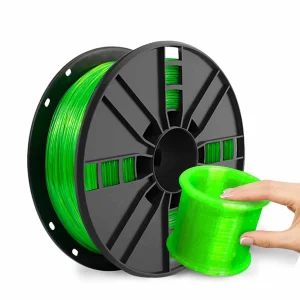
Wholesale TPU flexible filament 1.75mm 1kg Green color
Wholesale TPU Flexible Filament 1.75mm 1kg Green Color
View Product Details
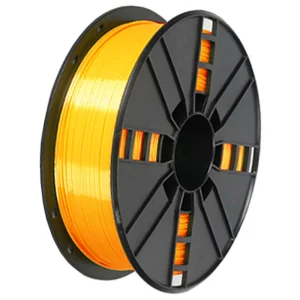
China Silk filament yellow gold 3D Printing filament Supplier
China Silk Filament Yellow Gold 3D Printing Filament
View Product Details
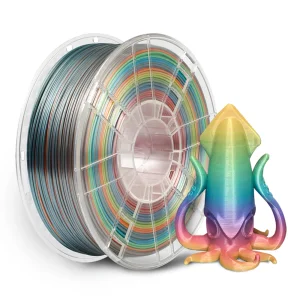
Wholesale PLA Silky Rainbow filament 3D printer Filament
Wholesale PLA Silky Rainbow Filament 3D Printer Filament
View Product Details
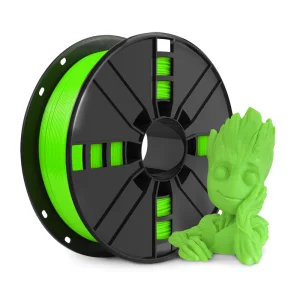
Wholesale Pla printer filament green color Manufacturers
Wholesale PLA Printer Filament Green Color
View Product Details
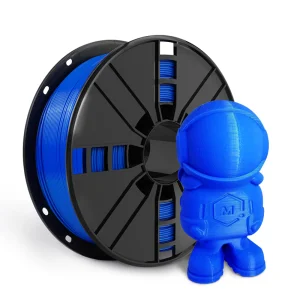
China ABS 3D Printer Filament Blue Color ABS 1kg Spool 1.75mm
China ABS 3D Printer Filament Blue Color 1.75mm 1kg
View Product Details
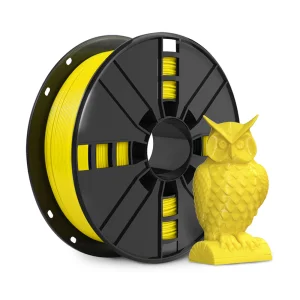
Wholesale Pla 3d printing filament yellow color Manufacturer
Wholesale PLA 3D Printing Filament Yellow Color
View Product Details
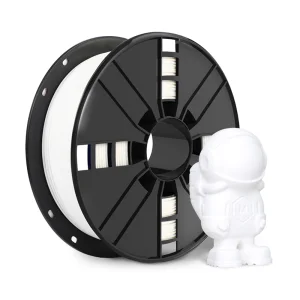
China Torwell ABS Filament 1.75mm White Dimensional Accuracy 0.03 mm
China Torwell ABS Filament 1.75mm White (±0.03 mm)
View Product Details
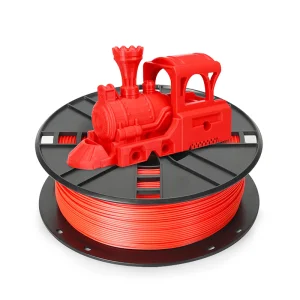
Wholesale PLA plus Red PLA filament 3D printing materials
Wholesale PLA Plus Red PLA Filament Materials
View Product Details
Industry Insight

1. Global Commercial & Industrial Status of PETG 3D Printing Materials

In the rapidly evolving additive manufacturing ecosystem, PETG (Polyethylene Terephthalate Glycol-modified) has emerged as the definitive bridge polymer between non-functional prototyping materials like standard PLA and high-cost engineering plastics like PC, PEEK, or Polyethersulfone. Global procurement shifts highlight a massive acceleration in PETG adoption across North America, Western Europe, and the Asia-Pacific region, driven by its unique combination of mechanical toughness, chemical inertness, low shrinkage, and ease of processing.

Unlike standard PET (Polyethylene Terephthalate), which crystallizes rapidly during cooling leading to brittleness and opacity, PETG incorporates Cyclohexanedimethanol (CHDM) glycol modifier chains into the polymer backbone. This molecular alteration disrupts crystallization, producing an amorphous, crystal-clear thermoplastic with exceptional impact resistance, excellent ductility, and superior inter-layer thermal fusion.

±0.02mm
Laser Gauged Diameter Tolerance
60,000 kg
Monthly Factory Output Capacity
75+
Global Export Markets & Distributors
99.4%
Print Farm Uptime Reliability Yield

Performance Parity with ABS

PETG delivers tensile strengths of 45–55 MPa and flexural moduli matching ABS, yet eliminates toxic styrene off-gassing and thermal warping. Industrial facilities can operate print farms without specialized heated chambers or intensive VOC scrubbing systems.

High Hydrophobic Stability

With an equilibrium water absorption rate significantly lower than Nylon (PA) or Polycarbonate (PC), PETG retains structural integrity and dimensional fidelity in humid operating environments, preventing hydrolytic degradation during processing.

Chemical & Solvent Resistance

Resistant to dilute acids, alkalis, alcohols, and aliphatic hydrocarbons, PETG is the preferred polymer for fluid handling reservoirs, chemical container prototypes, and sterilizable medical device housings.

Comprehensive Engineering Polymer Matrix Comparison

Material Grade Tensile Strength (MPa) Impact Strength (kJ/m²) Glass Transition ($T_g$) Warping Tendency Bed Temp Range Ideal Applications
Torwell Industrial PETG 50 – 55 7.8 – 9.2 78°C – 82°C Very Low (<0.2%) 70°C – 80°C Enclosures, Jigs, Fluidics, Outdoor Signage
Standard PLA 60 – 65 3.2 – 4.0 55°C – 60°C Negligible 45°C – 60°C Visual Prototypes, Educational Display
ABS (Acrylonitrile Butadiene Styrene) 40 – 45 15.0 – 20.0 105°C High (Requires Chamber) 90°C – 110°C Automotive Interior, Tool Housings
ASA (Acrylonitrile Styrene Acrylate) 42 – 48 12.0 – 16.0 100°C Moderate / High 90°C – 105°C UV-Exposed Exterior Marine & Automotive
PC (Polycarbonate) 65 – 75 30.0 – 45.0 145°C – 150°C Extreme 110°C – 130°C High-Impact Structural Load Components
Material Science

2. Technical Roadmap & Polymeric Innovations in PETG Extrusion

As 3D printing equipment transitions to high-speed kinetic architectures (acceleration speeds surpassing 20,000 mm/s² and volumetric print speeds exceeding 30 mm³/s), traditional PETG formulations face severe thermal bottlenecks, melt fracture, and inter-layer adhesion loss. Modern China PETG manufacturers have re-engineered polymer melt rheology to match next-generation high-speed additive hardware.

High-Speed Rheology & Melt Index Optimization

By blending high MFI (Melt Flow Index) virgin resins with customized nucleating modifiers, modern PETG maintains non-Newtonian shear-thinning characteristics. At high nozzle extrusion rates (300–500 mm/s), melt viscosity drops smoothly without inducing backpressure jams or hot-end heat creep.

Carbon Fiber & Micro-Glass Reinforcement

Incorporating 15%–20% chopped high-modulus carbon fibers (PETG-CF) or milled glass beads increases flexural modulus up to 4,800 MPa while reducing anisotropic shrinkage to near zero. PETG-CF provides an elegant matte black surface finish with suppressed layer lines, perfect for end-use industrial jigs and drone airframes.

Flame Retardant & ESD Modified Grades

Advanced formulations integrate non-halogenated organophosphorus flame retardants achieving UL94 V-0 self-extinguishing ratings at 1.5mm wall thickness. Electrostatic Discharge (ESD) safe PETG variants incorporate conductive carbon nanotube networks ($10^6 - 10^9 \ \Omega/\text{sq}$ surface resistivity) for semiconductor handling tray production.

Future Technical Roadmap (2025 – 2030)

  • Bio-Based CHDM Replacements: Transitioning toward partially bio-derived terephthalic acid (b-PTA) and bio-glycol monomers to lower cradle-to-gate carbon footprints by 40% without compromising tensile yields.
  • Closed-Loop PCR (Post-Consumer Recycled) Integration: Engineering rPETG filaments utilizing up to 70% purified post-consumer beverage bottles, stabilized with chain extenders to maintain molecular weight distribution ($M_w > 45,000 \ \text{g/mol}$).
  • Self-Healing & UV Stabilization Systems: Synergistic HALS (Hindered Amine Light Stabilizers) additives that extend outdoor service life against solar UV-A and UV-B degradation from 2 years to over 10 years without surface yellowing or micro-cracking.
Manufacturing Powerhouse

3. China Supply Chain Resilience & Extrusion Efficiency Advantages

The global dominance of Chinese 3D printing filament manufacturers rests upon an unmatched convergence of raw polymer feedstock synthesis, industrial tooling infrastructure, automated extrusion lines, and stringent quality control standardizations. Buyers partnering with tier-1 Chinese manufacturers like Torwell Technologies gain direct access to economies of scale and technical precision.

Automated Extrusion & Laser Closed-Loop Control

State-of-the-art multi-zone twin-screw extruders utilize closed-loop 4-axis inline laser micrometers. Extrusion speeds and melt pump pressures automatically adjust dynamically every 10 milliseconds, maintaining a target diameter of 1.75mm with a guaranteed tolerance of ±0.02 mm and roundness deviation below 1.01.

Melt Deaeration & Multi-Stage Desiccation

Polymer pellets undergo 6-hour vacuum desiccation at 65°C prior to extrusion to lower moisture content below 0.02%. Melt pumps pass resin through 10-micron stainless steel mesh filters, eliminating micro-contaminants that cause nozzle pops, stringing, or voids during printing.

End-to-End OEM / Private Label Ecosystem

From custom spectrophotometric masterbatch color matching (Pantone/RAL) to automated robotized spool winding, customized die-cut retail packaging, eco-cardboard spools, and moisture-proof vacuum sealing with high-absorption silica packs—China’s supply chain delivers turnkey white-label brand launching capability within 14 days.

Commercial Deployment

4. Industrial & Commercial Localized Application Scenarios

The versatile mechanical profile of PETG filament makes it the material of choice across a diverse spectrum of global commercial and industrial end-use sectors:

Automotive Manufacturing & Tooling

Engineers utilize heat-stabilized PETG for lightweight assembly fixtures, wire harness alignment guides, custom air intake ducts, and protective painting masks. Its resistance to automotive fluids (oils, brake fluid, engine coolant) ensures long service life on production floors.

Electrical Junction Enclosures & IoT Housings

With high dielectric breakdown strength (>18 kV/mm) and IP65 enclosure compatibility when printed with optimized perimeter wall overlays, PETG protects sensitive outdoor microcontrollers, smart solar meters, and telecom sensors against water spray and dust ingress.

Medical Prototypes & Food Packaging Jigs

Compliant with FDA 21 CFR food-contact standards and biological evaluation guidelines, virgin PETG is widely used in custom food processing conveyor guides, clear anatomical surgical models, and non-sterile medical device prototype enclosures.

24/7 Industrial Print Farm Operations

Commercial additive print farms operating hundreds of machines simultaneously rely on Torwell PETG due to zero-tangle precision spooling. This minimizes mechanical nozzle crashes, reduces spool-change downtime, and delivers continuous 99.4% print job completion rates.

Quality Assurance

5. International Compliance, Quality Assurance & Regional Support

Navigating international regulatory frameworks requires complete transparency and verified material compliance. Torwell Technologies adheres to rigorous international quality management systems to guarantee smooth customs clearance and environmental safety for global markets.

Environmental & Chemical Compliance

Every production batch is certified under EU RoHS 3 Directive (2015/863) and REACH SVHC (Substances of Very High Concern) regulations. Raw resins are free from heavy metals, phthalates, halogenated flame retardants, and bisphenol A (BPA).

ISO 9001:2015 Traceability Standard

From incoming resin inspection (MFI test, moisture titrator analysis) to extrusion laser logging and finished spool tensile testing—each reel is assigned a unique batch tracking barcode printed on the spool label for 100% end-to-end quality auditability.

Global Logistics & Inventory Buffers

Offering FOB, CIF, DDP, and Express delivery options with consolidated container loading. Custom palletizing, heat-treated ISPM 15 wooden pallets, and reinforced double-wall export corrugated boxes prevent carton crush damage during sea transit.

Technical Help Desk

6. Frequently Asked Questions (FAQ) for B2B Procurement & Engineering

In-depth answers to key technical and commercial questions raised by distributors, OEM partners, and industrial procurement managers.

Q1: What makes Torwell PETG filament superior to standard market alternatives in high-speed 3D printing?
Torwell PETG is formulated with specialized rheology modifiers that optimize melt flow rate (MFR) without reducing polymer chain length. This allows the material to maintain structural viscosity across high shear rates present in 300–500 mm/s high-speed printing (such as Bambu Lab, Voron, or Creality K1 platforms), ensuring strong inter-layer diffusion and zero stringing.
Q2: How does Torwell guarantee a tight diameter tolerance of ±0.02 mm across thousands of spools?
Our production lines employ closed-loop multi-axis laser micrometers that scan the extrudate continuously at high speed. The real-time laser measurements feed directly into the extrusion melt pump controls, making micro-adjustments instantly. Spools that deviate beyond ±0.02 mm or exhibit ovality above 1.01 are automatically rejected during winding.
Q3: Can Torwell handle custom color matching for private label OEM brands?
Yes. We offer precise masterbatch color matching based on Pantone, RAL, or physical color samples submitted by clients. Our in-house spectrophotometers measure color delta ($E$) tolerances, guaranteeing that repeat production runs stay strictly below $\Delta E < 1.0$, preventing visible shade variations across shipments.
Q4: What are the optimal printing parameters recommended for Torwell Industrial PETG?
Recommended nozzle temperatures range from 230°C to 250°C, with bed temperatures set between 70°C and 80°C. For high-speed printing, nozzle temperatures can be bumped to 255°C–260°C to facilitate rapid heat transfer. Print cooling fan speeds should be maintained at 30%–50% for structural parts, or up to 80% for fine aesthetic detail work.
Q5: How is hygroscopic moisture degradation prevented during international sea freight?
Immediately following extrusion and inline quality logging, spools are dried, wound under climate-controlled low-humidity air ($<15\% \ \text{RH}$), and vacuum-sealed with high-capacity desiccant pouches inside heavy-duty barrier foil bags. This prevents moisture ingress during 30–60 day maritime transport.
Q6: What certifications are available for regulatory verification in Europe and North America?
We provide comprehensive technical documentation including Technical Data Sheets (TDS), Safety Data Sheets (MSDS), EU RoHS 3 compliance certificates, REACH SVHC declarations, and FDA 21 CFR food-contact compliance declarations upon request.
Q7: Does Torwell support eco-friendly spools such as cardboard or recycled plastics?
Yes. We offer fully recyclable hard-pressed cardboard spools engineered with smooth bevels to prevent dust shedding inside automatic material systems (like Bambu AMS). Reusable ABS spools and master-spool refill packaging options are also available for sustainable product lineups.
Q8: What is the Minimum Order Quantity (MOQ) for custom OEM orders vs standard stock?
Standard stocked colors are available with low MOQs starting at 50 to 100 kg. For custom OEM private label packaging and custom color matches, our typical minimum production run is 500 kg per color, allowing highly efficient cost amortization for brand owners.
Q9: How does PETG compare directly to PLA+ in terms of post-processing and machining?
While PLA+ offers high stiffness and ease of printing, PETG exhibits far superior ductility and impact energy absorption. PETG parts can be drilled, tapped with threads, solvent welded, or sanded without shattering or melting as readily under friction heat compared to PLA+.
Q10: How can commercial print farm operators maximize layer adhesion when printing PETG?
To maximize inter-layer bond strength, print farm operators should maintain nozzle temperatures at 240°C–250°C, keep cooling fan speeds below 40%, and limit volumetric flow rates so the polymer melt resides sufficiently long in the heating zone for complete molecular entanglement across print paths.

Featured OEM & Wholesale Product Portfolio (Part II)

Explore additional high-demand materials across our broad manufacturing scope—from specialty aesthetic silk filaments to technical engineering polymers.
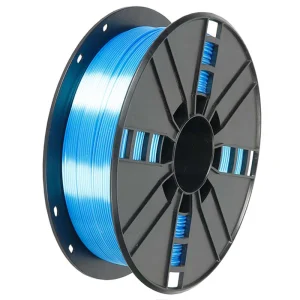
China PLA Silk 3D filament blue 1.75mm Suppliers
China PLA Silk 3D Filament Blue 1.75mm
View Product Details
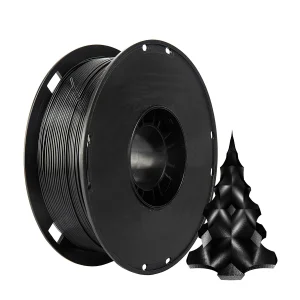
Wholesale PC 3D filament 1.75mm 1kg Black Manufacturers
Wholesale PC 3D Filament 1.75mm 1kg Black
View Product Details
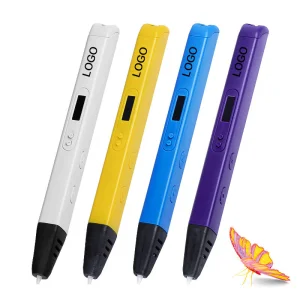
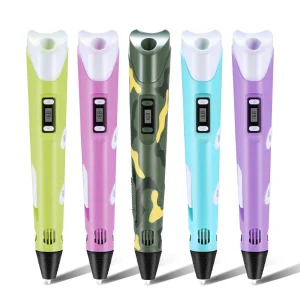
China 3D Printing Pen with Display Includes 3D Pen 3 Colors PLA Filament
China 3D Printing Pen with Display + 3 Colors PLA
View Product Details
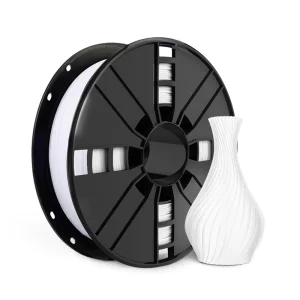
Wholesale 1.75mm white PETG Filament for 3D printing Manufacturers
Wholesale 1.75mm White PETG Filament for 3D Printing
View Product Details
Wholesale DIY 3D Drawing Printing Pen with LED Screen Creative Toy Gift
Wholesale DIY 3D Drawing Pen with LED Screen
View Product Details
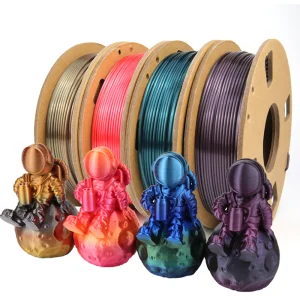
Wholesale Dual Color Silk PLA 3D Filament Pearlescent 1.75mm Coextrusion
Wholesale Dual Color Silk PLA 1.75mm Coextrusion
View Product Details
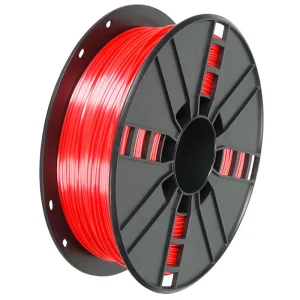
Wholesale Silk Red PLA 3D Printer Filament 1KG 3D Printing Materials
Wholesale Silk Red PLA 3D Printer Filament 1kg
View Product Details
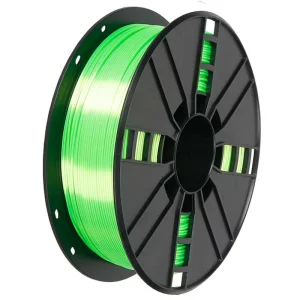
Wholesale Silk PLA 3D Filament 1KG green color Manufacturer
Wholesale Silk PLA 3D Filament 1kg Green Color
View Product Details