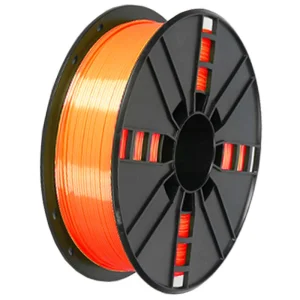
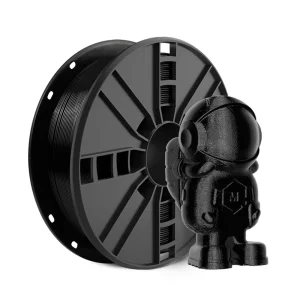
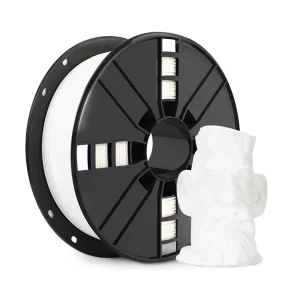
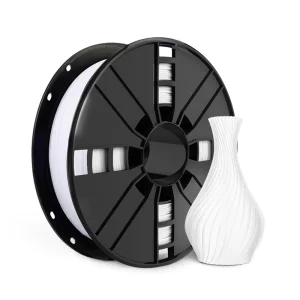
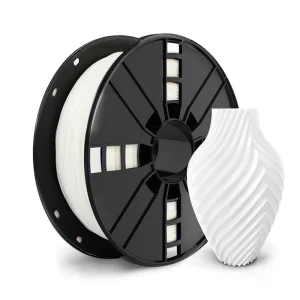
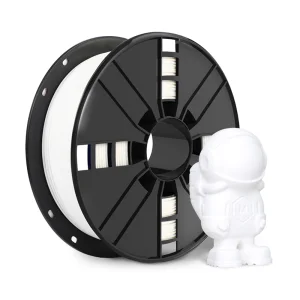
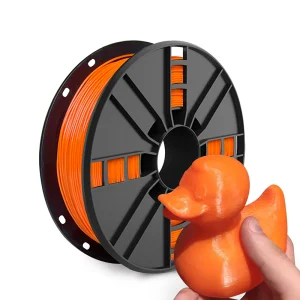
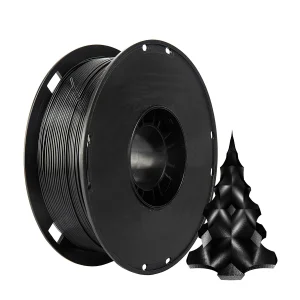
Direct factory supply featuring tight batch-to-batch dimensional accuracy (±0.02mm), optimized flow mechanics, and long-afterglow performance.
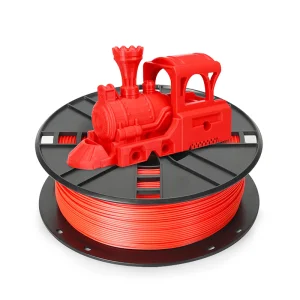
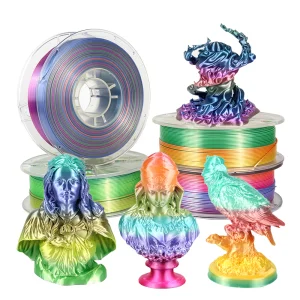
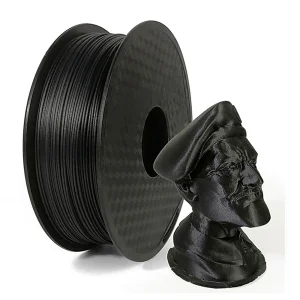
Understanding the transition from novelty consumer printing to high-reliability industrial photoluminescent applications across global manufacturing ecosystems.
Modern industrial photoluminescent filaments have evolved beyond traditional Zinc Sulfide (ZnS) compounds. Leading OEM manufacturers in China utilize Rare-Earth doped Strontium Aluminate ($SrAl_2O_4:Eu^{2+},Dy^{3+}$), offering 10 times higher initial brightness and 20 times longer luminescent persistence post-excitation.
Industrial adoption is driven by regulatory directives for zero-power emergency illumination. Additive manufacturing of photoluminescent markers complies with ISO 16069, DIN 67510, and ASTM E2072, establishing photoluminescent PLA and PETG as vital materials for maritime, aviation, and civil defense infrastructure.
As a primary manufacturing center in China, our facilities integrate localized rare-earth extraction, precision twin-screw compounding, and high-speed laser-monitored extrusion lines. This vertically integrated supply chain ensures cost efficiencies, customized particle sizes, and rapid scalability for international brands.
An in-depth evaluation of phosphor dispersion, matrix polymer degradation, nozzle abrasion mitigation, and luminescent decay profiles.
| Matrix Resin | Phosphor Loading % | Particle Size (PSD) | Melt Flow Index (MFI) | Afterglow Decay (DIN 67510) | Recommended Nozzle Type |
|---|---|---|---|---|---|
| Industrial PLA Matrix | 15% - 25% SrAl₂O₄ | 15 µm - 35 µm | 8 - 12 g/10min (210°C/2.16kg) | Class C (>140 mcd/m² @ 10min) | Hardened Steel / Ruby (≥0.4mm) |
| Toughened PETG Matrix | 10% - 20% SrAl₂O₄ | 20 µm - 40 µm | 15 - 22 g/10min (240°C/2.16kg) | Class B/C (>100 mcd/m² @ 10min) | Hardened Steel / Tungsten Carbide |
| High-Impact ABS Matrix | 12% - 18% SrAl₂O₄ | 15 µm - 30 µm | 18 - 25 g/10min (230°C/3.8kg) | Class B (>80 mcd/m² @ 10min) | Hardened Steel / DLC Coated |
| Flexible TPU (95A) | 8% - 15% SrAl₂O₄ | 10 µm - 25 µm | 25 - 35 g/10min (210°C/1.2kg) | Class B (>60 mcd/m² @ 10min) | Hardened Steel (Direct Drive) |
Luminescent intensity correlates directly with phosphor grain size; larger particles yield higher brightness but induce nozzle clogging. Torwell employs a proprietary micro-screening process that constrains PSD within 15–35 µm, maintaining optimal photon emission while ensuring smooth extrusion through standard 0.4mm print nozzles.
Strontium Aluminate crystals exhibit a Mohs hardness of 6.0 to 6.5, making them highly abrasive to standard brass nozzles (Mohs 3.0). Extrusion parameters must be calibrated for hardened steel (HV 700+), tungsten carbide, or ruby-tipped nozzles to prevent bore enlargement and diameter drift during multi-kilogram print runs.
Our photoluminescent formulations are tuned for maximum absorption in the ultraviolet and blue spectrum (320 nm to 450 nm). Excitation via sunlight or standard ambient LED lighting yields an initial photopic luminance exceeding 10,000 mcd/m², decaying along a logarithmic curve with visible afterglow persisting up to 12 hours.
Pioneering advancements in multi-spectrum emission, hydrophobic surface passivating encapsulation, and ultra-high-temperature matrix polymers.
Unprotected Strontium Aluminate reacts with atmospheric moisture over time, leading to hydrolysis and loss of phosphorescence. Our R&D roadmap integrates nano-scale silica ($SiO_2$) and silane shell encapsulation around phosphor crystals, preventing degradation in humid outdoor environment applications.
Moving beyond classic green emission, multi-doped phosphor matrices ($La_2O_2S:Eu,Mg,Ti$) now enable secondary spectrum shifts. Materials daylight-appear orange, glow aqua-blue under UV light, and transition to deep violet in pitch darkness—broadening aesthetic and functional possibilities.
Developing composite photoluminescent filaments utilizing Polyetheretherketone (PEEK) and Polyetherimide (PEI/ULTEM). Designed for aerospace emergency cabin components, these materials maintain photoluminescent characteristics while enduring service temperatures exceeding 180°C.
From compliance-driven egress markers to specialized tactical gear, discover how photoluminescent polymers deliver tangible engineering value.
Additive manufacturing enables rapid custom production of low-location lighting (LLL) indicators, door handle bezels, and directional arrows in subterranean facilities, offshore platforms, and manufacturing plants. Printed parts operate independently of power grids, providing fail-safe evacuation guidance.
Military and law enforcement units utilize glow-in-the-dark TPU and PETG for tactile identification markers, equipment switches, and night-vision target reference points. The non-electrical glow reduces thermal signatures while retaining visibility at close range.
Tier-1 automotive suppliers use photoluminescent polymers for door handle surrounds, console trim, and trunk emergency release pulls. This offers aesthetic differentiation and passive safety without requiring complex electrical wiring harness extensions.
In specialized low-light surgical environments and diagnostic darkrooms, custom-printed anatomical models, tool alignment trays, and equipment control markers molded from biocompatible photoluminescent PLA provide clear positional awareness for medical staff.
High-end gaming accessories, shockproof bumper cases, watch bands, and sport equipment incorporate glow-in-the-dark TPU and Silk PLA for visual appeal. Precise diameter controls maintain aesthetic quality without surface voiding.
Architects and interior designers leverage photoluminescent filaments to fabricate custom wall tiles, stair tread inserts, and illuminated artwork elements. These components charge via natural daylight and provide ambient night illumination.
Torwell Technologies operates 6 fully automated extrusion lines across a 2,500 m² clean facility. We supply global brands with custom masterbatch formulation, specialized spooling (250g to 5kg), private-label packaging, and dedicated technical data sheets (TDS/SDS) compliant with international regulations.
Authoritative answers on extrusion parameters, material handling, wear prevention, and OEM procurement.
Explore our broader portfolio of functional 3D printing filaments engineered for professional, industrial, and retail distribution channels.