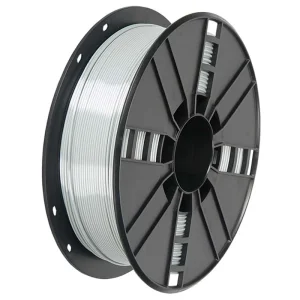
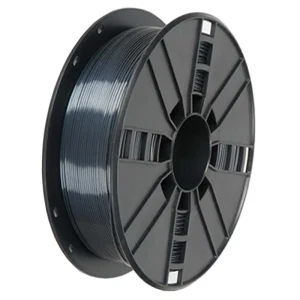
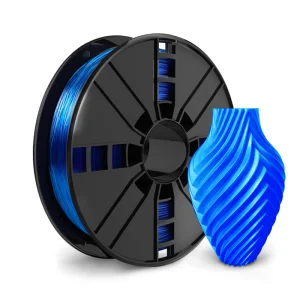
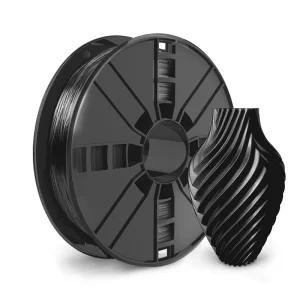
Factory-direct high-performance filaments engineered for precision FDM/FFF 3D printing applications.
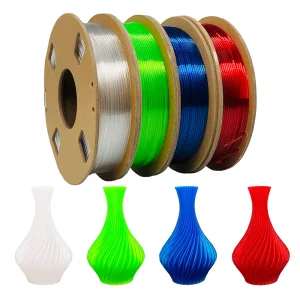
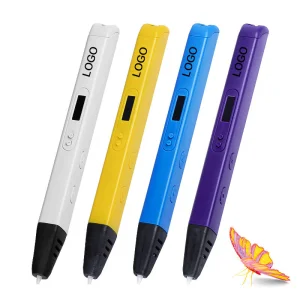
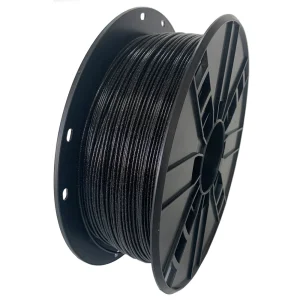
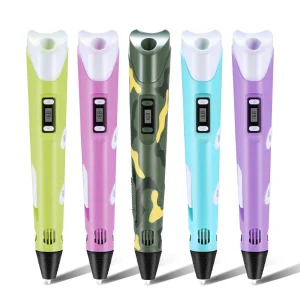
As additive manufacturing shifts from aesthetic rapid prototyping to load-bearing functional production, demand for elastomeric polymers—specifically Thermoplastic Polyurethane (TPU) and Thermoplastic Elastomer (TPE)—has experienced exponential growth. B2B procurement specialists, international brand owners, and industrial additive manufacturing networks are increasingly sourcing flexible filaments from specialized Chinese manufacturing hubs.
Unlike rigid polymers such as PLA or ABS, flexible 3D printer filaments introduce distinct melt-rheology challenges during FDM (Fused Deposition Modeling) processes. Achieving precise dimensions, high layer adhesion, zero moisture voiding, and tangle-free spooling requires advanced twin-screw extrusion machinery, continuous real-time laser measurement, and precise polymer chemistry modification. This industrial white paper provides an in-depth breakdown of material dynamics, Chinese supply chain efficiencies, technical roadmaps, localized engineering applications, and strategic B2B sourcing protocols for global buyers searching for reliable China 3d filament flexible suppliers & factories.
To maximize procurement value, buyers must understand the molecular composition and thermal behavior of flexible filaments. Elastomers exist in a phase-separated morphology, consisting of hard block segments (providing structural integrity and thermal resistance) and soft block segments (providing elasticity and impact energy dissipation).
Polyester-based TPUs offer high cut/abrasion resistance and oil/chemical resilience, ideal for industrial seals. Polyether-based TPUs provide exceptional hydrolysis resistance and low-temperature flexibility, making them suited for medical gear, footwear, and outdoor environmental exposure.
Thermoplastic Elastomers (TPE) and Thermoplastic Polyester Elastomers (TPC) deliver rubber-like tactile feel with lower flexural modulus. They provide high damping coefficients, though they require fine-tuned extrusion temperatures to prevent column buckling inside direct-drive feed mechanisms.
Flexible filaments exhibit non-Newtonian shear-thinning behavior. Under high shear rates within the printer nozzle, melt viscosity drops dynamically, enabling fast extrusion flow. Upon exiting the nozzle, rapid melt-strength recovery prevents excessive stringing, oozing, and vertical sagging.
Selecting the correct durometer is essential for balancing print speed compatibility with part performance:
| Durometer Grade | Flexural Modulus (MPa) | Elongation at Break (%) | Feed Speed Capability | Target Industrial Applications |
|---|---|---|---|---|
| Shore 75A - 85A | 15 - 35 | > 600% | 15 - 30 mm/s (Direct Drive Only) | Gaskets, soft robotic grippers, medical liners, damping pads |
| Shore 90A - 95A | 45 - 80 | 450% - 550% | 40 - 100 mm/s (High Printing Speed) | Protective phone cases, automotive bushings, footwear midsoles |
| Shore 60D - 70D | 180 - 350 | 200% - 350% | 60 - 150 mm/s (Bowden Compatible) | Conveyor belting, industrial snap-fit couplings, tough enclosures |
China maintains a structural lead in global 3D printing filament production due to complete supply chain integration. From upstream chemical synthesis of raw polyurethane resins in Guangdong and Zhejiang industrial parks to specialized OEM extrusion facilities, China provides unmatched efficiency, scalability, and material consistency.
Leading Chinese factories work directly with raw resin producers (such as BASF, Wanhua, and Covestro) to compound customized TPU masterbatches. By adding specialized slip agents, nucleation modifiers, and anti-static additives directly at the melt phase, suppliers eliminate filament surface tackiness without compromising inter-layer bond strength.
Advanced extrusion lines feature 4-axis inline laser gauge monitoring operating at high sampling frequencies. If filament diameter strays beyond $\pm 0.02\text{ mm}$ or exhibits ovality, automated puller-speed feedback loops adjust tension instantaneously. This guarantees smooth feeding in modern AMS (Automatic Material Systems) and high-speed direct-drive toolheads.
The rapid adoption of core-XY high-speed 3D printers operating at speeds of 300–600 mm/s has driven next-generation technical developments in flexible filament manufacturing. China's top R&D facilities are deploying several technological advancements:
Flexible 3D printing filaments are replacing traditionally cast silicone and injection-molded rubber components across major global industries:
Custom vibration dampeners, protective wire harness grommets, air-intake bellows, and interior tactile seals produced on-demand for prototyping and niche low-volume vehicle manufacturing.
Patient-specific 3D printed orthotic shoe insoles with vario-density lattice infill, customized prosthetic socket liners, bio-compatible wearable straps, and anatomical surgical preparation models.
Soft pneumatic grippers designed to handle fragile items without damage, flexible joint covers, suction cups, and protective end-of-arm tooling bumpers used in automated assembly lines.
Customized footwear midsoles featuring energy-returning internal structures, impact-resistant protective cases for electronics, smart wearable bands, and flexible seals for outdoor gear.
Leading Chinese suppliers employ strict quality assurance processes at every stage of production to satisfy international market requirements.
Every batch undergoes ISO 34 tear strength and DIN 53504 tensile testing to ensure the material withstands repeated cyclic flexing without tearing or structural fatigue.
Elastomers are dried in industrial dehumidifying hoppers down to micro-moisture levels (<0.02% water content) prior to extrusion, preventing moisture bubbling and popping during printing.
All materials comply with EU RoHS 3 (Directive 2015/863) and REACH (SVHC chemical guidelines), ensuring non-toxic, eco-friendly printing in educational and indoor office environments.
When partnering with Chinese suppliers for private-label brands or high-volume enterprise consumption, buyers can leverage tailored customization options:
Explore additional high-performance polymers engineered for functional rapid prototyping and end-use part manufacturing.