Industrial-Grade Polymer Extrusion, ±0.02mm Precision Tolerances & OEM Supply Solutions for Greater London's Additive Manufacturing Ecosystem
Send Inquiry NowDirect-from-factory polymer spools optimized for high-speed printing, architectural modelling, functional engineering prototyping, and consumer goods manufacturing across the UK.
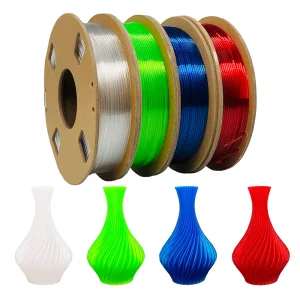
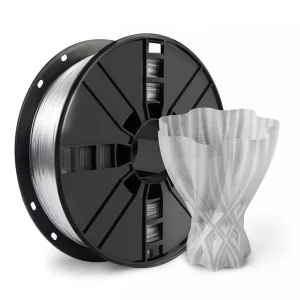
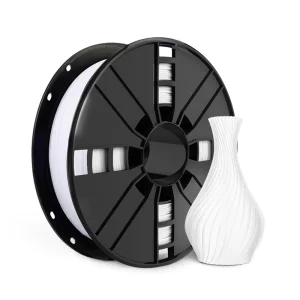
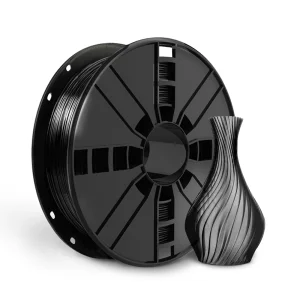
As one of the world’s leading epicentres for industrial design, engineering innovation, architectural consultancy, and advanced manufacturing, the Greater London metropolitan area—stretching from Old Street’s Tech City to the industrial parks of Park Royal, Thames Gateway, and Croydon—is undergoing a rapid technological transformation. Driven by the UK Government's Industry 4.0 initiatives and London’s aggressive target to achieve Net Zero carbon emissions by 2030, localized additive manufacturing (AM) has shifted from early-stage conceptual prototyping to scalable, low-volume production of end-use parts.
Within this vibrant ecosystem, Polyethylene Terephthalate Glycol (PETG) has emerged as the polymer of choice for UK design engineers, print farm operators, and commercial procurement managers. While Polylactic Acid (PLA) remains widely utilized in educational environments due to ease of printing, its low heat deflection temperature ($T_g \approx 55^\circ\text{C}$) and brittle nature make it unsuitable for demanding industrial environments. Conversely, traditional Acrylonitrile Butadiene Styrene (ABS) presents severe thermal shrinkage, intense styrene off-gassing, and propensity for layer delamination—requiring fully enclosed, heated build chambers that increase operational capital expenditure.
PETG bridges this engineering divide seamlessly. By incorporating cyclohexane dimethanol (CHDM) into the polyethylene terephthalate polymer chain during synthesis, crystallization is suppressed. The resulting amorphous copolymer delivers exceptional tensile strength, chemical resistance against acids, alkalis, and glycol fluids, coupled with near-zero volumetric warpage during Fused Deposition Modeling (FDM) extrusion. For London’s fast-paced product development studios, PETG provides an uncompromised balance of mechanical toughness, dimensional stability, and straightforward processing on desktop and industrial FDM hardware alike.
SEO & Market Insights for UK Procurement Directors: Post-Brexit supply chain vulnerabilities have led UK manufacturing firms to demand transparent, direct-from-factory raw material sourcing. By partnering directly with specialized PETG filament manufacturers, London enterprises eliminate intermediary markups, secure batch-to-batch chemical continuity, and ensure compliance with strict UK REACH and RoHS environmental standards.
Resistant to water absorption compared to nylon, and highly impervious to oils, dilute acids, and cleaning chemicals used in UK industrial processing environments.
Extremely high molecular interlayer bond strength minimizes mechanical anisotropy, delivering functional parts capable of handling multi-directional mechanical loads.
With a Glass Transition Temperature ($T_g$) of approximately $80^\circ\text{C}$, PETG parts retain structural integrity in automotive cabins, electronic enclosures, and warm industrial settings.
At Torwell Technologies, our 2,500 m² state-of-the-art manufacturing facility operates 6 automated extrusion lines engineered specifically for high-grade technical thermoplastics. Manufacturing industrial-grade PETG filament suitable for demanding European commercial markets requires tight control over thermodynamic parameters during melt blending, vacuum degassing, and strand cooling.
Standard Polyethylene Terephthalate (PET) is inherently semi-crystalline. When extruded, uncontrolled crystallization creates opacity, internal stress points, and brittleness. By substituting ethylene glycol monomer units with 1,4-cyclohexanedimethanol (CHDM) during polymerization, the molecular symmetry is disrupted. This prevents molecular chain packing, rendering the resulting PETG fully amorphous. The visual clarity of clear PETG options reaches over 90% light transmission, while mechanical impact resistance increases exponentially ($>8\text{ kJ/m}^2$ Izod notched impact strength).
For automated FDM 3D print farms across London running high-speed hardware (such as Bambu Lab X1-Carbon, Voron 2.4, or industrial BigRep systems), diameter consistency is paramount. A variance of even $\pm0.05\text{mm}$ in 1.75mm filament causes volumetric flow rate fluctuations of up to 6%, leading to localized over-extrusion blob formation or under-extrusion layer weakness.
Our factory employs continuous closed-loop dual-axis laser diffraction micrometers stationed immediately downstream from the primary water quenching bath. Operating at a sampling frequency of 500 Hz, these sensors measure both X-axis and Y-axis diameter profiles to detect ovality in real-time. If the dimension strays past $\pm0.02\text{mm}$ from the target $1.75\text{mm}$ or $2.85\text{mm}$ specification, an automated servo feedback loop dynamically adjusts the haul-off tractor speed, guaranteeing absolute dimensional uniformity throughout the entire 1kg or 5kg spool length.
Factory Quality Assurance Protocol: Every master batch of PETG resin undergoes continuous Melt Flow Index (MFI) testing (typically $15\text{--}20\text{ g/10 min}$ at $240^\circ\text{C}/2.16\text{kg}$) and residual moisture analysis prior to extrusion, ensuring zero micro-voids, bubbling, or hydrolytic degradation during processing.
The table below highlights why London procurement managers select PETG over alternative thermoplastic materials for functional prototyping and production tooling:
| Polymer Metric | PETG (Torwell Specification) | PLA / PLA+ | ABS (Industrial) | ASA (Weatherproof) |
|---|---|---|---|---|
| Tensile Strength (MPa) | 50 – 53 MPa | 55 – 65 MPa | 40 – 45 MPa | 42 – 48 MPa |
| Flexural Modulus (GPa) | 2.1 GPa | 3.1 GPa | 2.2 GPa | 2.3 GPa |
| Notched Izod Impact (kJ/m²) | 8.5 kJ/m² | 3.2 kJ/m² | 12.0 kJ/m² | 10.0 kJ/m² |
| Glass Transition Temp ($T_g$) | 80°C | 55°C | 105°C | 100°C |
| Volumetric Shrinkage Rate | < 0.4% (Very Low) | < 0.3% (Very Low) | 1.5 – 2.5% (High) | 1.0 – 1.5% (Moderate) |
| Enclosure Requirement | Not Required | Not Required | Mandatory Heated | Mandatory Heated |
| Chemical Resistance | Excellent (Acids/Bases) | Poor | Moderate | Good |
| VOC Off-Gassing Emissions | Extremely Low (Odorless) | Low (Sweet Odor) | High (Styrene Risk) | Moderate |
As a direct manufacturer supplying B2B clients in over 75 countries, Torwell tailors PETG raw material formulations and spool formats to match specific commercial applications across Greater London’s top industry clusters:
London houses world-leading architectural consultancies (e.g., Foster + Partners, Zaha Hadid Architects). Our ultra-white and optical clear PETG filaments enable seamless printing of intricate building facades, structural lighting conduits, and durable masterplan models without layer splitting.
High-end retail hubs along Oxford Street and Regent Street rely on custom, vibrant display fixtures. Our custom Pantone-matched PETG series delivers high-gloss surface finishes, scratch resistance, and flame-retardant grade options suitable for commercial visual merchandising.
For research labs along the M4 tech corridor and London engineering workshop facilities, black and dark grey PETG filaments provide high chemical resistance against motor oils, brake fluids, and shop solvents, ideal for printing assembly jigs and sensor brackets.
Collaborating with UK medical device incubators, our virgin PETG raw material complies with ISO 10993 cytotoxicity standards and food-contact directives, enabling production of non-critical medical casings and ergonomic prosthetic testing units.
Navigating post-Brexit trade requirements demands direct compliance support from your overseas manufacturing partner. Torwell Technologies provides a complete documentation package for every commercial shipment landing at Felixstowe, Southampton, London Gateway, or Heathrow Airport:
All PETG filaments exported to the UK market are formulated using 100% virgin polymer resin without low-cost fillers or plasticizer additives. Our products strictly comply with:
PETG is hygroscopic; ambient moisture absorption during sea transit leads to hydrolytic degradation during printing, resulting in excessive stringing and reduced tensile strength. To ensure 100% factory-fresh performance upon arrival at your London warehouse, our standardized export packaging includes:
Looking to launch your own brand of 3D printer filament in the UK market? Torwell offers complete ODM/OEM private label production. From custom pantone color matching and branded spool stickers to recyclable eco-cardboard spools, custom die-cut retail boxes, and integrated RFID tags for high-speed multi-material systems, our factory team handles end-to-end execution with low minimum order quantities (MOQs).
As 3D printing equipment speeds surge beyond $500\text{ mm/s}$ with acceleration rates exceeding $20,000\text{ mm/s}^2$, material science must evolve in parallel. Torwell Technologies is actively researching and deploying next-generation PETG derivatives designed specifically for ultra-high-speed industrial printing:
Engineered with modified molecular chain branching to decrease shear viscosity at elevated temperatures, allowing fluid volumetric flow rates ($>30\text{ mm}^3/\text{s}$) on high-speed Bambu Lab, K1 Max, and industrial print farms without sacrificing layer adhesion.
Integrating 15% chopped high-modulus carbon fibers into the PETG matrix yields a matte-finish structural material with exceptional flexural strength ($>85\text{ MPa}$), zero warping, and anti-static ESD properties for electronics assembly tooling.
Supporting London's circular economy, our rPETG line utilizes up to 100% post-industrial PETG scrap collected from our internal extrusion lines, purified and re-compounded to achieve properties within 98% of virgin resin performance.
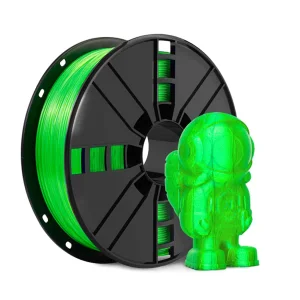
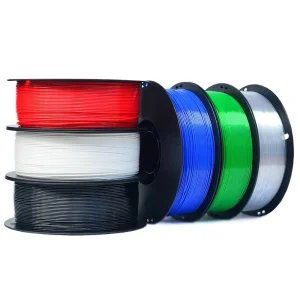
Select from our comprehensive array of colors, spool sizes, and specialized PETG grades ready for bulk container dispatch or OEM custom branding.
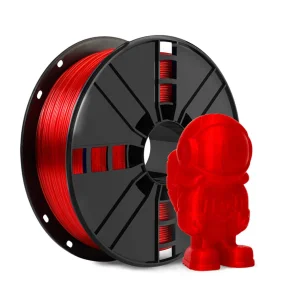
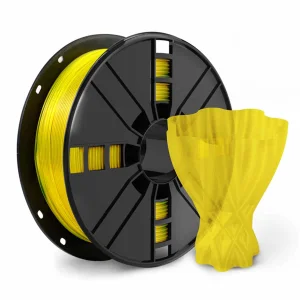
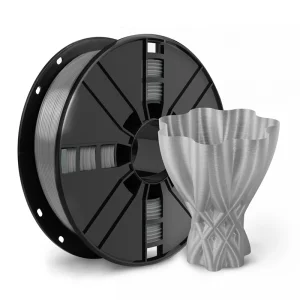
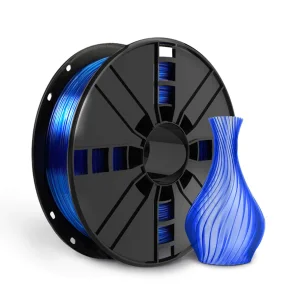

Get authoritative answers on technical extrusion parameters, customs duties, localized delivery times, and OEM customization options for London businesses.
Torwell PETG filament is manufactured using high-purity virgin resin with optimized fluid rheology. Our strict inline laser diffraction monitoring maintains a target diameter tolerance of $\pm0.02\text{mm}$, preventing volumetric flow fluctuations and nozzle clogs on high-speed hardware like Bambu Lab AMS, Voron, and Creality print arrays running at speeds up to $300\text{--}500\text{ mm/s}$.
We offer flexible Incoterms including FOB, CIF, and full DDP (Delivered Duty Paid) directly to your facility in Greater London (Park Royal, Croydon, Dartford, etc.). Under DDP terms, Torwell manages all UK import customs clearances, UK Global Tariff (HS Code 39169090), and VAT filing—eliminating administrative friction for UK buyers.
Yes. Every batch of PETG filament exported to the United Kingdom is backed by certified laboratory test reports confirming compliance with UK REACH (SVHC declaration) and RoHS 3 directives. Additionally, our natural clear raw resin conforms to FDA 21 CFR 177.1315 and EU Regulation 10/2011 for food contact applications.
Absolutely. We specialize in OEM and ODM brand creation for UK distributors. We can match any physical sample or Pantone code with high batch-to-batch consistency ($\Delta E < 1.0$). We offer 100% recyclable, heavy-duty cardboard spools branded with your logo, custom stickers, barcode labeling, and retail box packaging.
Recommended starting parameters for optimal mechanical bonding and optical finish: Nozzle Temperature: $230^\circ\text{C}\text{--}250^\circ\text{C}$; Heated Bed Temperature: $75^\circ\text{C}\text{--}85^\circ\text{C}$; Cooling Fan: $20\%\text{--}50\%$ (higher fan speeds improve bridging, lower fan speeds maximize Z-axis tensile strength); Print Speed: $60\text{--}300\text{ mm/s}$ depending on hotend volumetric capacity.
For standard stock PETG colors, our MOQ starts as low as 100 kg. For full custom OEM projects (custom colors, branded cardboard spools, unique box artwork), MOQ is typically 500 kg. Production lead times average 10–15 business days, with express air freight arriving in London within 5–7 days or ocean freight landing at UK ports in 25–30 days.
Filament spools are desiccated in environmental drying chambers to under 0.1% moisture content right before winding. Each spool is immediately vacuum sealed in high-barrier foil pouches alongside 10 grams of active silica gel desiccant. Spools are then boxed in double-walled corrugated shipping cartons to withstand humified sea freight containers.
Yes. In addition to standard 1.75mm filament, we extrude 2.85mm (3.00mm nominal) PETG on dedicated lines engineered for large-format additive systems such as Ultimaker, BigRep, and custom UK industrial gain machines. 2.85mm spools are available in 1kg, 2.5kg, 5kg, and 10kg master formats.