
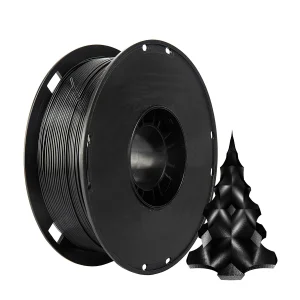
Wholesale High-Temp PC 3D Filament 1.75mm 1kg Black
Polycarbonate
HDT 140°C
±0.02mm
Direct factory extrusion with ±0.02mm inline laser precision tolerance, engineered for zero-warp structural components and thermal resistance.
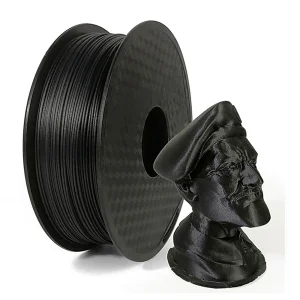
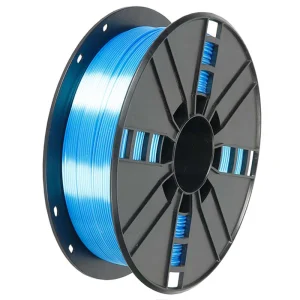
An in-depth analysis of how Korea's advanced semiconductor, automotive, and consumer electronics ecosystems are adopting industrial Polycarbonate (PC) 3D printing filaments for end-use functional parts.
South Korea stands as a global powerhouse in high-precision technology, anchored by major enterprise hubs in Gyeonggi-do (Pangyo Techno Valley, Pyeongtaek Semiconductor Cluster), Ulsan (Automotive & Heavy Industry), Changwon (Industrial Machinery), and Suwon. As product lifecycle windows contract and demand for low-volume customized production accelerates, South Korean original equipment manufacturers (OEMs) and Tier-1 suppliers are rapidly integrating Fused Deposition Modeling (FDM) additive manufacturing directly into their production lines.
Unlike commodity polymers such as standard PLA or PETG, Polycarbonate (PC) occupies a critical technical niche. Recognized for its high heat deflection temperatures (HDT up to $140^\circ\text{C}$), exceptional impact resistance, optical clarity, and flame-retardant properties, PC filament is indispensable for functional prototypes, electronic module enclosures, automated assembly jigs, and semiconductor chip carrier trays requiring structural stability under harsh operational conditions.
Polycarbonate is inherently hygroscopic and chemically sensitive during the extrusion process. Poorly extruded PC filaments suffer from diameter fluctuations, micro-voids, and severe warp tendencies when printed on industrial FDM equipment. South Korean enterprises demand manufacturers with stringent quality control, ISO-certified cleanroom drying procedures, and guaranteed batch consistency to satisfy strict domestic industrial standards (such as KC Certification guidelines and RoHS/REACH compliance).
Understanding the molecular dynamics, glass transition temperatures, and melt flow behavior of Torwell industrial-grade Polycarbonate 3D printing consumables.
Polycarbonate is an amorphous thermoplastic characterized by a high glass transition temperature ($T_g \approx 147^\circ\text{C}$). Torwell's proprietary PC formulation retains structural stiffness up to $135^\circ\text{C}-140^\circ\text{C}$ under load, making it far superior to ABS ($T_g \approx 105^\circ\text{C}$) or PETG ($T_g \approx 80^\circ\text{C}$) for under-the-hood automotive prototypes and heat-generating electrical housings.
Featuring a tensile strength at yield exceeding $65 \text{ MPa}$ and Charpy notched impact strength of over $35 \text{ kJ/m}^2$, PC filaments absorb significant mechanical stress before plastic deformation. This prevents catastrophic brittle fracturing in automated robotic end-effectors, protective industrial shields, and structural UAV airframes.
Through precise molecular weight distribution tuning during raw resin blending, Torwell PC filament achieves optimal melt flow index (MFI) at extrusion nozzle temperatures between $260^\circ\text{C}$ and $290^\circ\text{C}$. This ensures deep inter-layer polymer chain entanglements, drastically reducing Z-axis anisotropic weakness common in lower-tier PC materials.
Comprehensive comparative benchmark of engineering polymers utilized across Korean additive manufacturing facilities:
| Polymer Property / Grade | Torwell Industrial PC | Polycarbonate Composite (PC-CF) | Standard ABS | Engineering PETG |
|---|---|---|---|---|
| Glass Transition Temp ($T_g$) | 147 °C | 150 °C | 105 °C | 80 °C |
| Tensile Strength (ISO 527) | 65.5 MPa | 82.0 MPa | 43.0 MPa | 50.0 MPa |
| Flexural Modulus (ISO 178) | 2,350 MPa | 5,800 MPa | 2,100 MPa | 2,150 MPa |
| Dielectric Strength (IEC 60243-1) | 30 kV/mm | ESD Conductive/Static Dissipative | 20 kV/mm | 22 kV/mm |
| Recommended Chamber Temp | 70 °C – 90 °C | 80 °C – 100 °C | 50 °C – 70 °C | Ambient / 40 °C |
| Primary Korean Sector Application | Semiconductor Jigs, EV Housings | Robotics Arms, Defense Drones | Visual Prototypes, Consumer Electronics | Chemical Fluid Tanks, Packaging |
Leveraging direct Shenzhen-to-Busan maritime routes and high-capacity automated extrusion lines to deliver cost-effective, high-yield OEM supply contracts.
Founded in 2011, Torwell Technologies operates a state-of-the-art 2,500 m² production facility equipped with 6 fully automated high-precision extrusion lines. Generating over 60,000 kg of engineering-grade filament monthly, Torwell provides South Korean corporate buyers, print farm operators, and regional distributors with scalable manufacturing power without supply chain bottlenecks.
To eliminate diameter variances that cause extruder jam fires or under-extrusion in closed industrial printers, every meter of Torwell PC filament is continuously scanned by dual-axis laser diameter monitoring systems. Real-time automatic feedback loops enforce a strict $\pm 0.02\text{ mm}$ tolerance threshold, instantly rejecting out-of-spec sections before spooling.
Torwell maintains direct strategic procurement agreements with world-leading chemical suppliers, including Covestro (Makrolon®) and Sabic (Lexan®). By extruding 100% pure virgin polycarbonate pellets without recycled scrap contaminants, our technical team guarantees consistent optical purity, low moisture bubble formation, and predictable thermal contraction rates across every batch delivered to South Korea.
Real-world integration of Torwell Polycarbonate filament in top-tier South Korean industrial sectors.
Location Focus: Pyeongtaek & Yongin Semiconductor Clusters.
Wafer transport handling components require materials with minimal outgassing, high dimensional accuracy, and dimensional rigidity at elevated wash temperatures. Torwell PC filament provides the mechanical integrity needed for wafer carrier prototypes, ESD testing fixtures, and cleanroom robotic grippers.
Location Focus: Ulsan & Hwaseong Automotive Hubs.
Tier-1 automotive suppliers use Torwell high-impact PC filament to create functional prototypes of engine bay covers, electric vehicle (EV) battery module structural spacers, and HVAC ducting. The material withstands ambient engine heat without sagging or creep deformation.
Location Focus: Pangyo Techno Valley & Gumi Electronics Zone.
For smart device covers, optical light guides, and impact-resistant drone framework components, transparent and black PC filaments allow design engineers to rapidly iterate physical housing designs before committing to expensive injection molding tooling.
How Torwell ensures every spool shipped to South Korea satisfies international safety, environmental compliance, and long-term shelf storage protocols.
Importing polymer consumables into South Korea demands strict compliance documentation to clear customs smoothly and meet domestic enterprise environmental policies. Torwell provides complete certification packs with every order:
Polycarbonate is extremely hydroscopic; exposure to ambient humidity ($>0.02\%$ water absorption) leads to hydrolytic degradation during printing, causing surface steam popping, severe stringing, and brittle layer bonds.
The Torwell Zero-Moisture Protocol:
Key technological innovations shaping the future of PC filaments in high-temperature, multi-material FDM ecosystems.
Incorporating 15-20% chopped carbon fibers into the Polycarbonate matrix significantly increases flexural stiffness while reducing thermal expansion coefficient (CTE). This prevents warping on ultra-large format FDM printers used in aerospace and automotive tooling.
As modern core-XY 3D printers achieve speeds exceeding $500 \text{ mm/s}$, PC filaments must exhibit faster thermal response and controlled melt viscosity. Torwell's high-speed PC formulation ensures uniform flow rates without nozzle backpressure under high shear rates.
Aligning with Korea's ESG policies, Torwell is transitioning toward high-durability recycled cardboard spools and offering closed-loop industrial spool recycling agreements for high-volume Korean print farms.
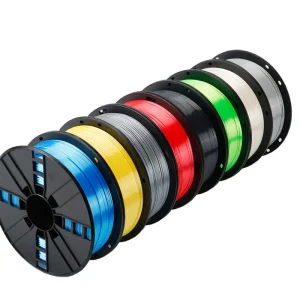
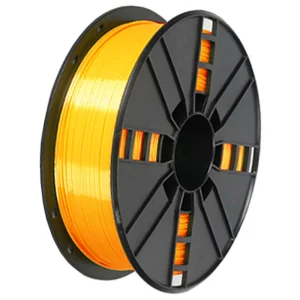
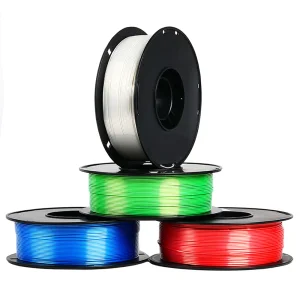
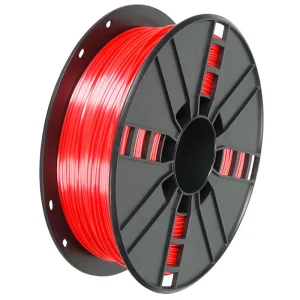
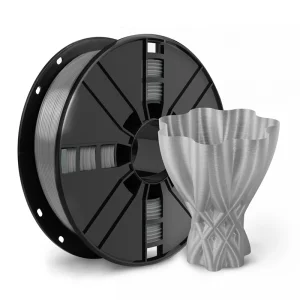
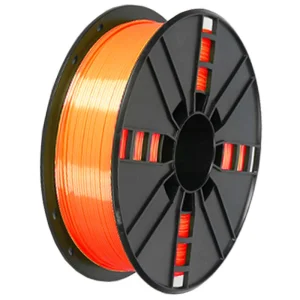
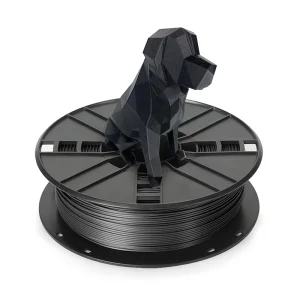
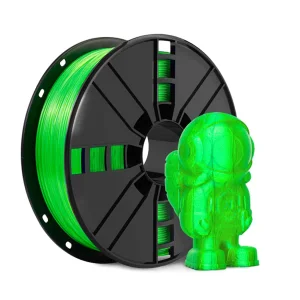
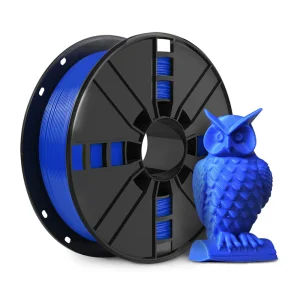
Explore our complete range of engineered PLA, PETG, Silk, and high-strength filament formulations available for export to South Korea.
Addressing common queries from South Korean procurement officers, engineering teams, and regional distributors.
For optimal mechanical performance and layer adhesion, we recommend nozzle temperatures between 270°C and 290°C, a heated bed temperature of 100°C to 120°C, and an enclosed print chamber heated to 70°C–90°C. Printing on PEI sheets with PVA-based adhesive glue ensures zero corner lifting on large structural components.
We offer turnkey OEM solutions including custom Pantone masterbatch color matching, branded spool stickers, customized master cartons, and localized Korean compliance labels. Minimum order quantities (MOQ) for custom private label spool packaging start at just 500 spools.
Standard orders ship from our Shenzhen facility directly to major South Korean ports (Busan or Incheon) within 3 to 5 business days via express ocean freight or air cargo. We handle complete export clearance documentation (Certificate of Origin, Form E, SDS, TDS) for seamless customs processing.
Yes. Every batch of Torwell PC, PLA, and PETG filament is accompanied by updated Material Safety Data Sheets (MSDS/SDS), Technical Data Sheets (TDS), and RoHS 2.0 / REACH chemical compliance documentation required by South Korean environmental authorities.
We utilize closed-loop dual-axis laser micrometers positioned immediately after the cooling bath. The continuous laser scan monitors diameter and ovality at a rate of 100 times per second, maintaining strict adherence to a ±0.02 mm tolerance window.
Prior to winding, raw PC resin undergoes 6 hours of continuous dehumidified drying at 110°C. Spools are immediately vacuum-sealed with high-grade desiccant inside heavy-duty multi-layer foil moisture barrier bags, ensuring shelf stability up to 24 months in humid sea shipping conditions.
Yes. We manufacture customized functional PC formulations, including halogen-free UL94 V-0 flame-retardant variants and ESD conductive/static-dissipative PC materials specifically engineered for electronic device manufacturing lines in South Korea.
We supply sample spools (1kg) for industrial testing and evaluation upon request. Wholesale MOQ for standard catalog items begins at 100 kg, with tiered volume pricing discounts available for full container load (20GP / 40HQ) recurring contracts.
Accelerate your additive manufacturing supply chain with factory-direct pricing, ±0.02mm guaranteed tolerance, and rapid shipping to South Korea.