Rigorous inline laser-controlled extrusions engineered for high thermal stability and industrial print reliability.
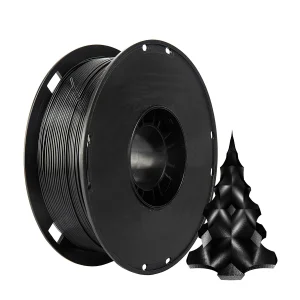
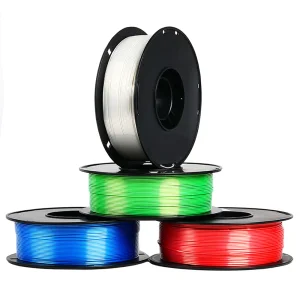
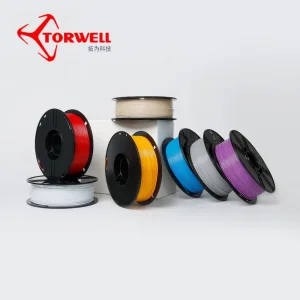
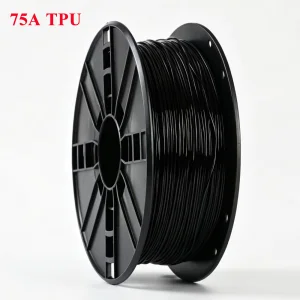
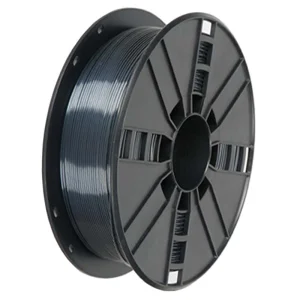
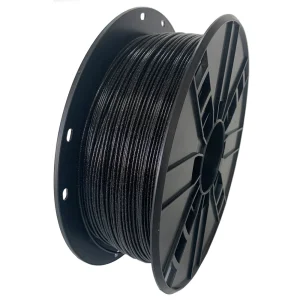
Polycarbonate (PC) stands at the pinnacle of functional Fused Deposition Modeling (FDM) and Fused Filament Fabrication (FFF) thermoplastics. Recognized for its extraordinary impact resistance, high mechanical tensile strength, and exceptional heat deflection temperatures (HDT up to 140°C–145°C), industrial PC filament transforms 3D printing from rapid prototyping into direct additive production of end-use functional components.
Unlike commodity polymers such as PLA or standard ABS, Polycarbonate possesses an amorphous molecular structure characterized by carbonate groups (-O-CO-O-) linking bisphenol A units. This unique chemical architecture yields high optical clarity (in clear grades), superior structural rigidity, and remarkable ductility under extreme mechanical loading. However, extruding PC filament at a manufacturing scale requires uncompromising thermal control, specialized screw geometry, and continuous moisture mitigation to prevent hydrolytic degradation during processing.
Withstands operational temperatures exceeding 135°C–145°C without structural deformation, ideal for under-the-hood automotive housing and industrial fixtures.
Delivers higher Izod impact strength than ABS or PETG, resisting sharp mechanical shock, structural vibration, and heavy static loads.
Engineered formulations minimize thermal shrinkage and internal stress accumulation, enabling tight-tolerance mechanical assemblies.
Latin America’s largest economy, Brazil, is undergoing a profound industrial evolution driven by the federal policy initiative "Nova Indústria Brasil" (NIB). Aimed at modernizing the nation's manufacturing backbone through digitization, automation, and sustainable industrialization, Brazilian enterprises are aggressively adopting industrial 3D printing to bypass traditional tooling bottlenecks, reduce import reliance, and accelerate localized low-volume production.
Because Brazil maintains dense industrial hubs across its territory, the demand for engineering-grade 3D printing filaments—specifically high-impact, heat-resistant Polycarbonate—has surged across key strategic economic zones:
The industrial heartland of Bernardo do Campo, Santo André, and Campinas houses tier-1 automotive manufacturing plants. PC filament is heavily utilized for printing custom assembly jigs, welding fixtures, ergonomic hand tools, and functional engine bay test components.
As home to Embraer and its extensive supply chain ecosystem, the aerospace sector requires ultra-reliable engineering polymers. Polycarbonate filaments are specified for interior cabin prototype components, air ducting models, and high-precision ground support tooling.
Brazil’s primary electronics assembly hub relies on flame-retardant and high-dielectric Polycarbonate to print prototype enclosures, automated sensor mounts, circuit board testing trays, and custom ESD-safe tooling.
Agricultural equipment manufacturers in Southern and Central Brazil utilize tough PC components for field-tested tractor cabin interfaces, harvest monitor brackets, and chemical-resistant fluid transfer prototypes.
Navigating Brazil’s complex import tariff structures (Imposto de Importação, ICMS, PIS/COFINS) requires Brazilian distributors and enterprise buyers to partner directly with high-volume, reliable OEM factories in China. By purchasing directly from Torwell Technologies, Brazilian companies secure consistent material properties, certified quality standards, and optimized freight cost structures that significantly lower the Total Cost of Ownership (TCO).
Selecting the optimal additive material requires rigorous evaluation of mechanical, thermal, and economic parameters. The table below illustrates how Torwell Industrial PC Filament compares against alternative FDM engineering polymers:
| Polymer Type | Tensile Strength (MPa) | Flexural Modulus (MPa) | Heat Deflection Temp (°C @ 0.45 MPa) | Impact Strength (kJ/m²) | Print Difficulty | Primary Industrial Application |
|---|---|---|---|---|---|---|
| Torwell Industrial PC | 65 – 72 | 2,300 – 2,500 | 138 – 145 | 35 – 45 | Medium-High (Chamber Required) | Functional Tooling, Structural Fixtures, Engine Components |
| Standard ABS | 38 – 45 | 1,900 – 2,100 | 85 – 95 | 15 – 22 | Medium | Prototypes, Consumer Electronics Housings |
| High-Impact PETG | 48 – 53 | 1,950 – 2,150 | 72 – 78 | 8 – 12 | Low-Medium | Chemical Containers, Ducting, Functional Covers |
| PA6 Carbon Fiber (Nylon CF) | 85 – 110 | 5,500 – 7,000 | 150 – 175 | 12 – 18 | High (Abrasive) | Lightweight Metal Replacement, Drone Frames |
| Standard PLA / PLA+ | 55 – 65 | 2,400 – 2,700 | 52 – 58 | 5 – 7 | Very Low | Visual Prototypes, Educational Models |
As demonstrated in the comparison matrix, while Carbon Fiber-reinforced Nylons offer higher stiffness, Polycarbonate delivers superior z-axis layer adhesion, higher isotropic toughness, and exceptional clarity in unpigmented grades, making it the most balanced engineering thermoplastic for heavy-duty structural parts.
Extruding Polycarbonate demands significantly higher process rigor than standard polymers due to its high melting point (~260°C–300°C) and extreme sensitivity to ambient moisture. Founded in 2011, Torwell Technologies operates a 2,500 m² modern manufacturing facility equipped with 6 automated extrusion lines and dedicated analytical quality labs, exporting premium 3D filaments to over 75 countries.
Continuous closed-loop laser monitoring inspects 100% of filament length during extrusion, ensuring a strict ±0.02 mm diameter tolerance and flawless roundness.
Virgin PC resin undergoes high-temperature vacuum desiccant drying down to <0.02% moisture prior to extrusion, preventing nozzle bubbling, popping, and stringing.
Automated tension-controlled spooling prevents cross-tangles and knotting, guaranteeing uninterrupted 24/7 printing in multi-material systems (AMS) and print farms.
The versatility of Torwell Polycarbonate filament empowers Brazilian engineers to solve tough operational challenges on the factory floor:
Scenario: Auto manufacturing plant in Greater São Paulo replaced CNC-machined aluminum arm brackets with 3D printed Torwell PC parts.
Result: Tooling cost reduced by 68%, weight reduced by 45%, with full structural integrity maintained during 10,000+ insertion cycles under high ambient heat.
Scenario: Brazilian energy infrastructure provider required custom high-voltage junction box covers capable of withstanding intense UV rays and solar heating up to 85°C.
Result: Custom clear PC enclosures provided flame retardancy, weather resistance, and transparent optical inspection windows without requiring secondary assembly.
Scenario: Agricultural equipment producer in Rio Grande do Sul produced short-run custom hydraulic hose brackets using Torwell PC.
Result: Parts successfully withstood continuous exposure to hydraulic fluids, mechanical vibration, and temperature swings from cold winter mornings to intense summer heat.
The global 3D printing filament industry is rapidly moving toward specialized composite and functional polymer formulations. Torwell’s R&D department is at the forefront of these innovations:
Torwell Technologies offers complete turn-key manufacturing programs for 3D printer manufacturers, regional distributors, Amazon sellers, and brand owners across Brazil and South America:
Custom full-color retail boxes, custom spool sticker artwork, branded vacuum bags, and master outer carton customization with your localized Portuguese branding.
We match physical sample swatches or Pantone codes precisely, developing signature branded colors with batch-to-batch consistency guaranteed.
Every shipment is accompanied by complete Technical Data Sheets (TDS), Safety Data Sheets (SDS), RoHS, REACH, and ISO 9001 compliance certificates for smooth Brazilian customs clearance.
Technical and commercial answers for industrial buyers and procurement managers in Brazil.
Polycarbonate requires high nozzle extrusion temperatures (270°C–300°C) and elevated bed temperatures (100°C–120°C). Due to its high thermal contraction coefficient, unoptimized PC can warp or suffer from layer delamination in unheated chambers. Torwell addresses this by introducing specialized flow-modifying additives that lower internal stress and improve inter-layer polymer diffusion without compromising thermal resistance or mechanical strength.
We supply standard 1.75mm and 2.85mm diameter PC filaments. Every reel is produced with an inline dual-axis laser measurement system maintaining a strict ±0.02mm diameter tolerance, preventing nozzle clogging and uneven volumetric extrusion flow.
Hygroscopic polymers like PC, PETG, and TPU are pre-dried to ultra-low moisture levels prior to spooling. Each spool is immediately vacuum sealed inside a heavy-duty moisture barrier bag containing active desiccant sachets. Individual product cartons protect the vacuum integrity during transoceanic shipping and regional transit across South America.
For optimal mechanical performance: Nozzle Temperature: 270°C – 290°C; Heated Bed Temperature: 100°C – 115°C; Enclosure Temperature: 70°C – 90°C (recommended); Print Speed: 40 – 70 mm/s; Bed Surface: PEI sheet with glue stick or specialized PC adhesive promoter.
Yes. Our experienced export team prepares full commercial invoices, packing lists with accurate NCM / HS codes (3916.90.90 for monofilaments), Certificates of Origin, and complete SDS/TDS documentation formatted to facilitate seamless customs clearance through Brazilian ports such as Santos, Paranaguá, and Rio de Janeiro.
Our standard OEM MOQ for private label spools with custom packaging is 200 kg per material/color combination. For stock items and standard Torwell branded packaging, lower MOQs and sample spools are available upon request.
From everyday prototyping PLA to high-grade flexible TPUs and engineering PETGs.
Scaling your 3D printing distribution in Brazil or launching a custom OEM private label line? Contact our technical engineering and international export sales team for bulk pricing, sample kits, and customized logistics solutions.
Send Inquiry Now