Engineered for batch consistency, dimensional stability (±0.02mm tolerance), and exceptional interlayer bonding for Melbourne's demanding industrial applications.
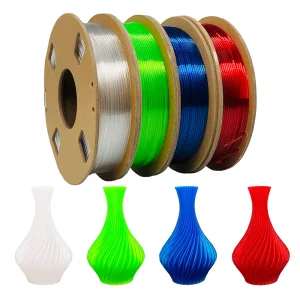
Vibrant color fastness and thermal stability for consumer product prototyping across Victoria.
View Product Specs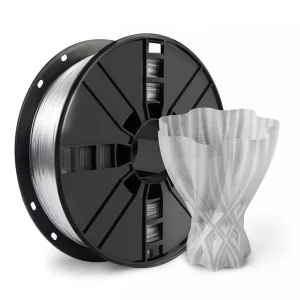
High optical clarity and light transmittance for fluidic channels, lighting housings, and containers.
View Product Specs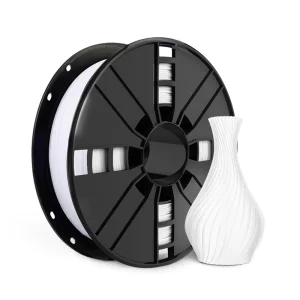
Pure white opacity with chemical resistance against mild acids and sterilizing agents.
View Product Specs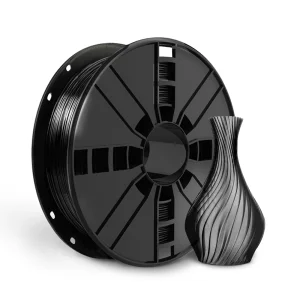
Deep matte/gloss black finish engineered for structural brackets, electronic enclosures, and jigs.
View Product SpecsMelbourne has rapidly evolved into Australia’s epicenter for advanced manufacturing, industrial design, and specialized engineering. From the automotive component redevelopment clusters in Dandenong and Campbellfield to the biomedical engineering precincts around Parkville and Clayton, additive manufacturing (AM) has shifted from early-stage conceptual modeling to direct digital manufacturing of functional end-use parts. In this high-stakes industrial ecosystem, Polyethylene Terephthalate Glycol (PETG) has emerged as the structural workhorse polymer of choice.
Combining the ease of Fused Deposition Modeling (FDM) printing inherent to PLA with the mechanical toughness, thermal endurance, and chemical resistance of ABS, PETG fills a vital gap. However, local Melbourne enterprises, print farms, and regional distributors often face challenges balancing localized procurement costs against stringent material consistency. As a premier China PETG filament manufacturer operating automated extrusion lines since 2011, Torwell Technologies delivers a strategic manufacturing framework tailored specifically to the Australian market.
By bypassing multi-tiered intermediary markup while enforcing rigorous ISO 9001 quality management systems, our direct factory-to-Melbourne distribution pipeline guarantees that local engineering firms receive premium-grade polymer spools with verified intrinsic viscosity, precise melt flow index (MFI), and zero batch-to-batch color drift.
Rapid tooling, thermoforming molds, and aftermarket vehicle bracketry requiring heat resistance up to 75°C under Australian sun conditions.
Biocompatable, sterilizable prototype housings, microfluidic test fixtures, and custom laboratory equipment components.
Aerospace structural mockups and naval defense prototyping demanding low outgassing and high tensile yield strength.
To understand why PETG has displaced traditional materials across Victorian manufacturing facilities, one must analyze its molecular architecture. Standard Polyethylene Terephthalate (PET) is a semi-crystalline polymer prone to hazing and embrittlement when processed rapidly. By copolymerizing PET with Cyclohexanedimethanol (CHDM) glycol, the crystallization process is disrupted, resulting in an amorphous polymer structure.
This glycol modification yields key mechanical advantages vital for Melbourne print farm operations:
| Physical / Mechanical Property | Testing Standard | Torwell PETG Value | Standard PLA Benchmark | ABS Benchmark |
|---|---|---|---|---|
| Tensile Strength at Yield | ISO 527 / ASTM D638 | 50 MPa | 60 MPa | 40 MPa |
| Flexural Modulus | ISO 178 / ASTM D790 | 2.1 GPa | 3.1 GPa | 2.3 GPa |
| Charpy Notched Impact Strength | ISO 179 | 8.5 kJ/m² | 2.7 kJ/m² | 15 kJ/m² |
| Heat Deflection Temp (HDT @ 0.45MPa) | ISO 75 | 75 °C | 55 °C | 85 °C |
| Glass Transition Temp (Tg) | DSC Measurement | 81 °C | 60 °C | 105 °C |
| Shrinkage Rate | Internal Flow Cell | 0.2% – 0.4% | 0.3% – 0.5% | 0.7% – 1.0% |
Global economic shifts and rising freight costs have forced Melbourne distributors, educational institutions (such as Monash University, RMIT, and the University of Melbourne), and commercial print services to reconsider their supply chain risk profiles. Reliance on localized spot-market resellers introduces erratic pricing and unpredictable inventory stockouts.
Torwell Technologies bridges this gap by offering direct OEM/ODM factory partnerships tailored for Victorian logistics nodes. Our manufacturing headquarters houses 6 fully automated continuous extrusion lines monitored by dual-axis laser micrometers operating at 1000Hz feedback frequencies. This ensures strict control over diameter variation (1.75mm and 2.85mm within ±0.02mm), mitigating nozzle clog risks across enterprise printer fleets.
Direct LCL and FCL shipments routed straight to the Port of Melbourne, reducing unit cost per spool for high-volume resellers.
Bespoke spool branding, QR-coded batch tracking, custom color matching (Pantone/RAL), and tailored cardboard or plastic spools.
Dehumidified pre-packing (<2% relative moisture level) wrapped in heavy-duty foil vacuum barrier bags with active silica desiccant packets.
The operational versatility of Torwell’s PETG formulations caters directly to the practical demands of Victorian commercial end-users:
Melbourne’s legacy of automotive engineering remains vibrant through specialized aftermarket modifications, EV conversions, and commercial transport tooling. PETG’s Glass Transition Temperature ($Tg \approx 81^\circ\text{C}$) ensures that dashboard-mounted gauge pods, engine bay sensor mounts, and ducting components do not warp or soften under heat levels experienced inside vehicles parked during Melbourne summer heatwaves.
The Parkville precinct demands cleanroom-compatible, non-gassing plastics. Torwell’s Optical Clear PETG filament exhibits exceptional clarity when printed with single-perimeter, high-temperature settings, allowing researchers to visually inspect fluid flow pathways inside 3D-printed manifolds and chemical mixing chambers.
With major infrastructure developments underway across Victoria (such as the Metro Tunnel and Suburban Rail Loop), leading architectural firms require durable scale models and custom concrete formwork liners. Unlike brittle PLA, PETG can be drilled, tapped with brass inserts, and solvent-welded using MEK or THF for large assembly structures.
Navigating Australian regulatory frameworks is vital for local businesses sourcing overseas raw materials. Torwell Technologies adheres to international standards while supporting Australian regulatory compliance requirements:
As the additive industry transitions toward high-speed motion systems capable of linear print speeds exceeding 500 mm/s and accelerations beyond 20,000 mm/s², conventional filament formulations suffer from severe melt-fracture and flow starvation. Torwell's R&D team is pioneering advanced polymer modifications to address these needs:
Engineered with adjusted molecular weight distribution for ultra-high volumetric flow rates (up to 30 mm³/s) without sacrificing layer adhesion.
Reinforced with 15% high-modulus chopped carbon fibers, increasing structural rigidity (Flexural Modulus >4.5 GPa) and providing a matte surface finish.
Upcycled post-industrial waste streams formulated into high-purity recycled filament, supporting circular economy initiatives across Australia.
Direct factory supply options available for Melbourne distributors, print hubs, and commercial institutions.
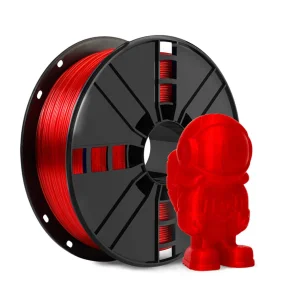
Vibrant red color formulation with high opacity for safety fixtures and industrial visual cues.
View Product Specs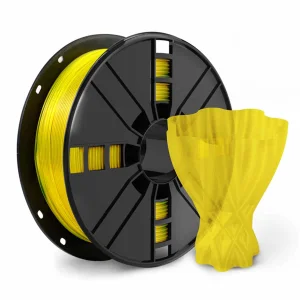
UV-stable yellow polymer designed for high-visibility industrial enclosures and protective covers.
View Product Specs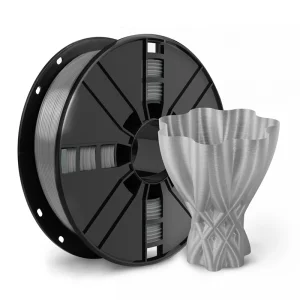
Neutral grey tone ideal for scanning verification, surface inspection, and functional mechanical parts.
View Product Specs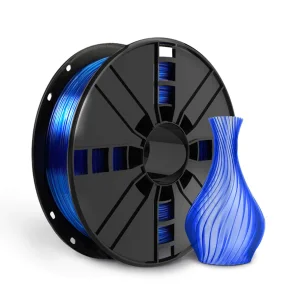
Deep blue aesthetic with chemical stability against moisture and saltwater exposure.
View Product Specs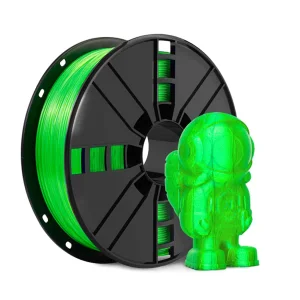
High-impact resistance and chemical stability for agricultural and green technology prototypes.
View Product Specs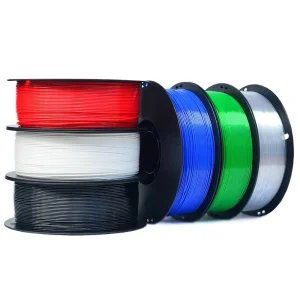
Dual diameter production availability supporting legacy 2.85mm systems and high-speed 1.75mm fleets.
View Product Specs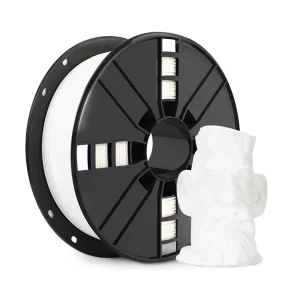
Toughened PLA modifier formulation providing high printability alongside improved impact performance.
View Product Specs
Consistent spool winding and precise color formulation engineered for multi-spool automated print systems.
View Product SpecsIn-depth technical and logistical answers curated by Torwell’s senior extrusion engineers and global export team.
Sourcing directly from Torwell Technologies eliminates middleman markups, giving Melbourne wholesalers, print farms, and educational hubs access to factory-direct bulk pricing. Moreover, factory-direct ordering allows for custom spool sizing (from 250g to 5kg industrial reels), custom Pantone color matching, private labelling, and direct batch-level Quality Control (QC) documentation.
Our automated extrusion lines utilize dual-axis high-speed laser micrometers that sample the filament diameter in real-time at 1000Hz. If the diameter drifts beyond set limits (e.g., >1.77mm or <1.73mm), the production line automatically adjusts extruder speed or flags the section for removal. This prevents heat-creep jams, gear grinding, and under-extrusion in high-speed FDM machines.
Recommended baseline settings for standard hotends include: Nozzle Temperature: 235°C – 250°C; Heated Bed Temperature: 75°C – 85°C; Print Surface: PEI sheet with glue stick or textured PEI plate; Cooling Fan: 20% – 50% after layer 3 (lower fan speed increases layer adhesion strength); Travel Speed: 150 – 300 mm/s depending on motion system capability.
PETG is moderately hygroscopic. Prior to spooling, our raw polymer granules are dried in desiccant hopper dryers for 4–6 hours at 70°C. Immediately after winding, spools are vacuum-sealed in thick foil-barrier bags alongside a high-absorption silica gel pack. Master shipping cartons are additionally sealed with moisture-barrier inner liners to withstand humid maritime transit routes.
Yes. We specialize in OEM/ODM partnerships. We can manufacture custom-branded box packaging, specialized spool labels, custom sticker sheets, barcode/SKU integration, and customized spool types (cardboard, transparent polycarbonate, or high-capacity reels) matching your exact brand identity for the Australian market.
Standard OEM production lead times range from 10 to 15 business days depending on order volume and custom requirements. Express air freight to Melbourne Airport (MEL) takes approximately 4–7 days, while LCL/FCL ocean freight to Port of Melbourne typically takes 14–20 days from departure.