High-demand SKUs optimized for immediate distribution, retail packaging, and institutional fulfillment across the Russian Federation.
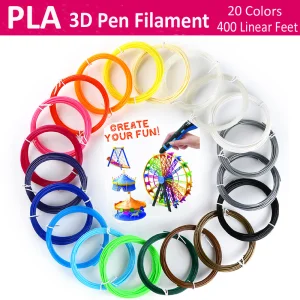
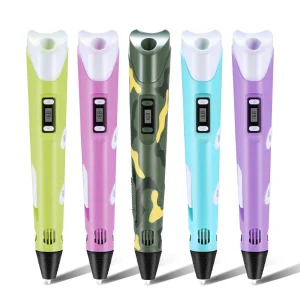
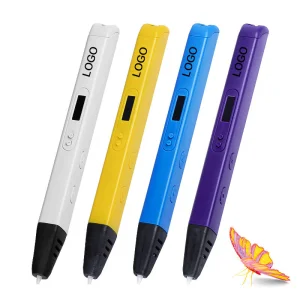
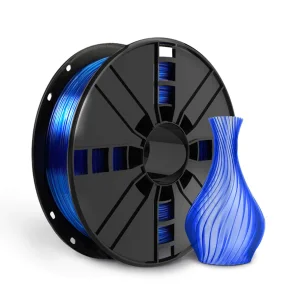
An in-depth analysis of supply chain realignments, local market demand drivers, and B2B import trends in the Russian Federation.
The additive manufacturing landscape in the Russian Federation has undergone a dramatic structural transformation over recent years. Driven by macro-economic adjustments, national import-substitution initiatives, and an aggressive pivot toward Asian manufacturing hubs, Russian enterprises are recalibrating their supply chains. The market for 3D pens, desktop Fused Deposition Modeling (FDM) 3D printers, and high-performance polymer filaments has expanded rapidly beyond consumer novelty into essential educational infrastructure, industrial prototyping, and local replacement-part fabrication.
Historically reliant on Western European brand-name distributors, Russian B2B buyers—ranging from large-scale e-commerce vendors on platforms like Wildberries, Ozon, and Yandex Market to regional educational suppliers—now directly interface with high-capacity Chinese manufacturing plants. This direct integration eliminates multi-tier intermediary markups, secures custom branding (OEM/ODM), and guarantees uninterrupted bulk delivery through established overland logistics corridors such as the Manzhouli-Zabaikalsk and Heihe-Blagoveshchensk multimodal routes.
Russia’s federal "Quantorium" (Кванториум) school initiatives and technical academies have integrated 3D pens and FDM printers into standard STEM curricula. Demand for non-toxic, odor-free PLA and low-temperature PCL filaments has surged, requiring certified child-safe materials complying with international safety standards.
Heavy manufacturing hubs across the Urals and Siberia—including Yekaterinburg, Chelyabinsk, and Novosibirsk—increasingly utilize engineering consumables (PETG, ABS, TPU, and Carbon Fiber PLA) to prototype custom jigs, seals, and machinery housing components without waiting for overseas spare part logistics.
Understanding how global material advances intersect with specific operational environments in the Russian market.
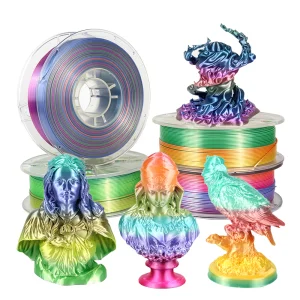
On a global scale, the FDM 3D printing filament and 3D pen market is projected to maintain a Compound Annual Growth Rate (CAGR) exceeding 20% through 2030. Key international growth vectors include ultra-high-speed printing formulations (capable of running reliably at speeds above 500 mm/s), aesthetic specialty materials (such as Dual-Color Co-Extrusion, Silk Rainbow, and Matte PLA), and high-rigidity carbon fiber composite polymers.
In Russia, while aesthetic consumer filaments command significant retail market share on domestic e-commerce channels, commercial procurement managers place extreme emphasis on thermal stability, moisture resistance, and anti-brittleness formulations. Due to vast geographic distances and winter transport temperatures dropping well below -30°C, low-grade filaments frequently suffer from cold-embrittlement and snapping inside feeding tubes. Professional Chinese factories counter this by incorporating proprietary toughening agents and multi-layer aluminum vacuum-barrier packaging into every export shipment.
Standard raw PLA resin experiences increased crystalline brittleness when exposed to sub-zero transport environments during Siberian rail freight. Factory-level addition of specialized elastomeric modifiers preserves polymer chain flexural modulus, guaranteeing that spools arrive intact and ready for immediate high-speed feeding without spool-shattering issues.
| Material Type | Nozzle Temp (°C) | Heat Deflection Temp | Key Mechanical Property | Primary Russian Market Application |
|---|---|---|---|---|
| PLA / PLA+ | 190 - 220 | 55 °C | High Tensile Strength, Zero Warp | 3D Pen Refills, STEM Education, Retail Sales |
| Silk PLA | 205 - 225 | 52 °C | High Sheen, Hidden Layer Lines | Architectural Models, Historical Souvenirs |
| PETG | 230 - 250 | 75 °C | Chemical & Moisture Resistance | Enclosures, Waterproof Functional Fittings |
| ABS | 240 - 260 | 95 °C | Impact Strength, Heat Resistance | Automotive Parts, Mechanical Components |
| TPU (95A) | 210 - 230 | Flexible Shore 95A | High Elasticity, Abrasion Proof | Gaskets, Protective Sleeves, Industrial Seals |
| Carbon Fiber PLA | 215 - 235 | 60 °C | Extreme Structural Stiffness | Drone Frames, Robotics, Functional Tooling |
Why modern automated extrusion facilities in China deliver unmatched cost-efficiency, technical consistency, and custom OEM flexibility.
By leveraging direct bulk procurement of virgin polymer resins (NatureWorks PLA, Covestro TPU, SABIC ABS) alongside continuous multi-line automated production, Chinese manufacturing hubs provide a 40% to 60% unit cost reduction compared to localized European re-spoolers.
Modern automated extrusion lines feature real-time dual-axis laser micrometers. Any dimensional deviation beyond ±0.02 mm instantly triggers automatic haul-off speed adjusters, eradicating nozzle clogging and extrusion starved prints for end-users.
Randomly wound spools are the leading cause of print failure due to overlapping tangles. CNC-controlled traverse winding systems ensure layer-by-layer parallelism, enabling smooth, uninterrupted feeding for automated print farms and 3D pen feeding mechanisms.
High-volume manufacturing requires strict adherence to international quality management systems. Prior to extrusion, raw resin undergoes high-temperature dehumidifying drying for 4 to 6 hours to reduce moisture levels below 0.02% (200 ppm). Micro-moisture in raw resin causes hydrolytic degradation during melt extrusion, resulting in internal voids, popping noises during printing, and weak inter-layer adhesion. Every batch is melt-flow indexed (MFI tested) and color-matched to strict Pantone standards using spectrophotometers to guarantee batch-to-batch color fidelity.
How specific material formulations solve practical challenges across regional industrial and commercial hubs.
Challenge: Indoor air quality concerns and low heating temperature safety in classrooms during long winter seasons.
Solution: Non-toxic, biodegradable PLA refills and ultra-low-temperature PCL filaments (melting at 60°C) tailored for 3D drawing pens. These release virtually zero volatile organic compounds (VOCs) and allow students to safely model direct-on-skin 3D structures.
Challenge: Recreating intricate classical architectural accents and urban development scale models requiring smooth surfaces without post-processing.
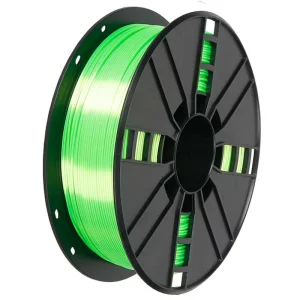
Solution: Silk Shiny PLA and Marble-textured PLA filaments. These materials diffuse light across layer boundaries, delivering a polished metallic or stone visual finish directly from the print bed.
Challenge: Fabricating durable, oil-resistant vibration dampers, protective caps, and industrial ducting adapters.
Solution: Thermoplastic Polyurethane (TPU 95A) and PETG spools. High chemical resistance ensures operational resilience when exposed to industrial lubricants, automotive fluids, and severe mechanical vibration.
Challenge: High return rates on Russian e-commerce sites caused by tangled spools and poor moisture sealing.
Solution: Complete turnkey OEM private label packaging—incorporating custom branded artwork in Russian, barcode integration, heavy-duty desiccant inserts, and high-density outer protective master cartons.
Streamlined workflow protocols for commercial buyers seeking direct factory-to-warehouse sourcing.
Establishing a dependable manufacturing partnership requires clear operational transparency. For Russian distributors and retail brands, selecting a factory partner involves evaluating technical parameters, custom tooling flexibility, compliance documentation, and logistical adaptability.
Supply Pantone codes or physical plastic samples. Samples are color-matched and verified under standard D65 illuminants within 48 hours.
Custom printed spool stickers, inner cardboard boxes, user manuals in Russian, and master cartons designed to your exact specs.
Available in standard 1.75mm and 2.85mm diameters, spooled from 250g mini-spools (for 3D pens) up to 1kg, 3kg, and 5kg industrial spools.
Complete documentation packages provided, including REACH, RoHS, CE, and Technical Data Sheets (TDS) for smooth customs clearance.
Anticipating material innovations and staying ahead of market shifts.
As modern CoreXY printers (such as Bambu Lab, Creality K1, and Voron) achieve speeds of 500–600 mm/s, legacy polymers experience thermal under-extrusion. Next-generation High-Speed PLA features modified melt viscosity, rapidly fluidizing upon hotend entry and instantly solidifying under cooling fans.
To reduce global plastic waste and lower import tariffs, single-use plastic spools are rapidly being replaced by heavy-duty die-cut cardboard spools. Cardboard spools are fully recyclable and compatible with automatic multi-material feeder systems.
Advanced dual-channel co-extrusion technology bonds two or three distinct color strands along the same 1.75mm filament length. As the printed object rotates, it shifts visually between dynamic colors without needing complex dual-nozzle hardware.
Direct answers from factory engineering teams regarding procurement, specifications, logistics, and quality assurance.
Yes. We offer complete OEM/ODM solutions tailored to the Russian market. This includes custom Pantone color development, custom spool sticker design, branded unit boxes with Russian language labeling, custom barcodes, and export master carton packaging ready for marketplace fulfillment (Ozon, Wildberries).
All production lines run dual-axis laser micrometers that continuously monitor output diameter in real-time. We guarantee a diameter tolerance of ±0.02 mm and an ovality (roundness) variation under 1%. Any strand exceeding these bounds is automatically flagged and rejected during winding.
We modify raw PLA and PETG resins with impact-resistant toughening agents to preserve flexural modulus at low temperatures. Furthermore, spools are dried to <0.02% moisture before vacuum sealing inside heavy-duty aluminum-laminated bags with high-absorption silica gel desiccant, preventing cold condensation and moisture brittleness.
While both utilize polylactic acid resin, 3D pen refills are cut to precise straight lengths (or coiled into small 5m/10m mini-hanks) and formulated for rapid thermal softening at lower temperatures. This prevents motor gear slipping inside 3D pens while ensuring low melt odor during manual hand drawing.
We work with established logistics partners specializing in China-to-Russia freight. Common options include direct container rail freight via Manzhouli/Zabaikalsk or Heihe/Blagoveshchensk to Moscow and major regional hubs, as well as sea freight through Vladivostok port followed by Trans-Siberian railway transport.
Our filaments comply with international environmental and safety standards, including RoHS, REACH, CE, and EN71-3 (Safety of Toys). Complete material safety data sheets (MSDS) and technical data sheets (TDS) are supplied with every order for institutional compliance verification.
Our 2,500 m² facility operates 6 automated extrusion lines with a monthly output of 50,000 to 60,000 kg. Standard wholesale orders are ready for dispatch within 10 to 15 business days, while custom OEM branding projects typically take 15 to 20 days upon artwork approval.
Factory-direct engineering resins, decorative silk filaments, and specialized polymers for global procurement partners.
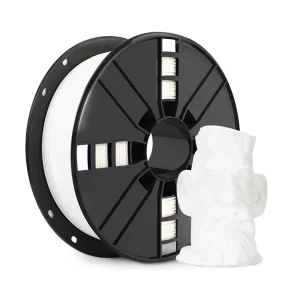
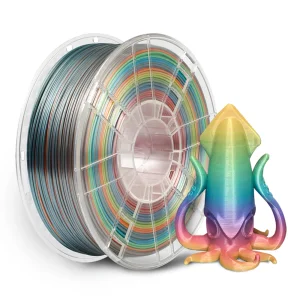
Gain competitive pricing, strict ±0.02 mm laser diameter control, and direct OEM manufacturing support tailored specifically for your distribution network in Russia.
Send Inquiry Now