Factory-direct wholesale 3D printer materials optimized for high-speed desktop & industrial print farms.
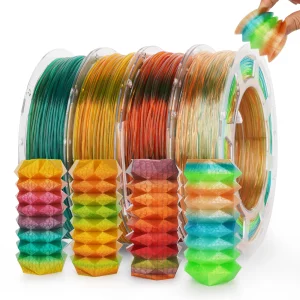
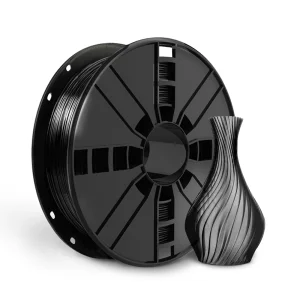
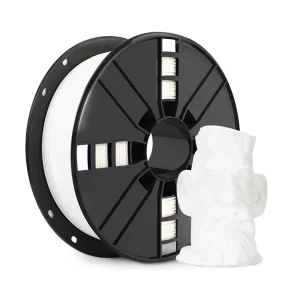
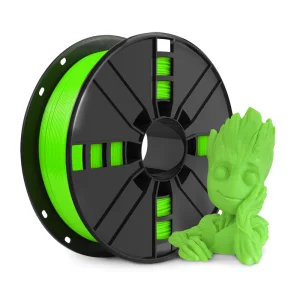
A strategic guide for B2B distributors, OEMs, and enterprise print farms navigating Scope 1-3 emissions reduction.
As additive manufacturing scales from rapid prototyping into full-fledged digital volume production, the industrial footprint of 3D printing consumables faces unprecedented environmental scrutiny. Modern enterprise procurement teams and OEM brand managers no longer evaluate 3D printer filament vendors solely on tensile strength or price-per-kilogram. Today, compliance with global ESG (Environmental, Social, and Governance) directives, Life Cycle Assessment (LCA) scores, and circular supply chain integration are core selection criteria.
Conventional polymer extrusion relies heavily on virgin petroleum-derived resins, which contribute significantly to greenhouse gas (GHG) emissions during catalytic refining. As a leading specialized Wholesale Eco Friendly 3D Filament Manufacturer & Factory, our facility addresses this macroeconomic challenge by developing engineered bio-based thermoplastics, post-consumer recycled (PCR) composites, and carbon-neutral spooling systems designed to drastically shrink the additive manufacturing carbon footprint.
Our circular manufacturing roadmap focuses on three critical vectors: raw material bio-sourcing, closed-loop waste reclamation during factory extrusion, and eco-conscious packaging systems. By substituting petro-chemical polymers with polylactic acid (PLA) synthesized from fermentable plant sugars (such as corn starch and sugarcane), we achieve up to 68% reduction in fossil fuel energy consumption compared to traditional ABS resin manufacturing.
Utilizing high-purity lactide monomers extracted from annually renewable agricultural crops. Reduces reliance on volatile petroleum supply chains while offering natural industrial biodegradability under EN 13432 standards.
Engineered recycled PETG (rPETG) and recycled TPU formulations that repurpose post-industrial and post-consumer plastic stream waste back into high-performance industrial 3D printing filament strands.
Eliminating single-use plastic waste via 100% recyclable heavy-duty cardboard spools, biodegradable molded paper cores, and masterless spool-less refill coils engineered for AMS automatic material changers.
Regional procurement trends, ESG mandates, and cross-border commercial dynamics for sustainable additive materials.
The global market for 3D printing filaments is undergoing a dramatic structural transformation. According to additive manufacturing industry intelligence, demand for eco-friendly 3D printing consumables is expanding at a Compound Annual Growth Rate (CAGR) exceeding 22.4%, outstripping standard petroleum polymer growth. This rapid expansion is driven by distinct regulatory landscapes and commercial directives across primary economic zones:
Our engineering laboratory performs rigorous comparative testing to ensure our eco-friendly formulations match or exceed the mechanical performance of conventional virgin petrochemical polymers:
| Material Grade | Bio-Base / Recycled Content | Tensile Strength (MPa) | Heat Deflection Temp (HDT @0.45MPa) | Carbon Footprint (kg CO2e/kg) | Primary Commercial Use |
|---|---|---|---|---|---|
| Torwell Premium PLA | 100% Bio-Derived (Lactide) | 62 - 65 MPa | 55 - 58 °C | 1.25 kg | Educational, Consumer Goods, Prototyping |
| High-Toughness PLA+ | 95% Bio-Derived + Toughener | 68 - 72 MPa | 60 - 62 °C | 1.40 kg | Functional Jigs, Fixtures, Enclosures |
| Eco-Recycled rPETG | 100% Post-Industrial Recycled | 50 - 54 MPa | 70 - 73 °C | 0.85 kg | Chemical Resistant Parts, Containers |
| Bio-Flexible TPU 95A | 45% Plant-Based Polyol | 35 - 40 MPa | 65 °C | 1.60 kg | Gaskets, Wearables, Protective Boots |
| Standard Virgin ABS | 0% (Petroleum Synthetic) | 40 - 45 MPa | 85 - 90 °C | 3.95 kg | High Heat Applications (Legacy) |
In-depth chemical structure, melt flow optimization, and crystallization control during extrusion.
Achieving structural integrity and smooth extrusion performance in eco-friendly 3D printing filaments requires sophisticated polymer chemistry and precise thermal profile engineering. Unlike crude recycled plastics that suffer from thermal degradation and chain scission during re-melting, our direct factory extrusion process utilizes proprietary chain extenders and nucleating agents to restore polymer molecular weight ($M_w$).
Pure PLA exhibits high tensile modulus but suffers from intrinsic brittleness due to slow crystallization kinetics during rapid cooling. In our automated manufacturing facility, we incorporate non-toxic impact modifiers and bio-compatibilizers into high-purity L-lactide resin. This molecular tuning alters the semi-crystalline morphology, increasing Izod impact strength from 2.5 kJ/m² (standard PLA) to over 7.8 kJ/m² in our engineered Wholesale PLA+ Filament formulations, without sacrificing biodegradability.
Polyethylene Terephthalate Glycol (PETG) incorporates cyclohexanedimethanol (CHDM) to prevent crystallization, yielding exceptional optical clarity and mechanical toughness. Our factory's closed-loop rPETG recycling process filters melt streams through 40-micron continuous screen changers to eliminate micro-particulates. This preserves inter-layer molecular diffusion during FDM printing, preventing part delamination along the Z-axis.
Modern high-speed 3D printers (operating at volumetric flow rates of 20 to 30 mm³/s and toolhead speeds exceeding 500 mm/s) demand precise polymer shear-thinning behavior. Our raw material formulations are calibrated for an optimal Melt Flow Index (MFI of 7 to 11 g/10min at 210°C/2.16kg for PLA). This ensures immediate shear melting inside the hotend nozzle followed by rapid viscoelastic recovery upon deposition, preventing stringing, oozing, and perimeter sagging.
Biopolymers are naturally hygroscopic. Hydrolysis during high-temperature extrusion breaks ester bonds, creating internal bubbles and diameter variation. Our factory operates 4-stage desiccant rotor dehumidifying dryers that maintain raw resin moisture levels below 200 ppm (0.02%) prior to extrusion.
All colorants, metallic pearlescent powders (Silk PLA series), and fluorescent additives are compounded into carrier matrices certified heavy-metal-free (RoHS compliant). Masterbatch dispersions are laser-analyzed to prevent nozzle clogging in 0.2mm and 0.4mm nozzles.
Inside our 2,500 m² automated production plant: precision extrusion, laser gauging, and batch packaging.
Consistency is the ultimate benchmark of high-grade 3D printer filament. A variation of merely 0.05mm in diameter can cause severe under-extrusion, hotend jam, or print failure in multi-day industrial print jobs. As a specialized 3D printer filament manufacturer founded in 2011, Torwell Technologies operates 6 automated precision extrusion lines within a standardized 2,500 m² facility capable of yielding 50,000 to 60,000 kg per month.
Our quality management and environmental management systems are audited annually. Every production lot receives a unique batch tracking ID printed on the inner spool core for full raw material traceability.
We provide complete turnkey private-label services: custom Pantone spool color matching, branded carton printing, custom QR code labels, customized spool dimensions, and eco-friendly cardboard packaging.
Each batch undergoes melt flow rate (MFR) testing, tensile bar breaking force verification, roundness ovality checks, and 24-hour continuous test prints across top-tier FDM 3D printer platforms.
Navigating international customs standards, safety documentation, and worldwide distributor support.
Exporting high-volume industrial consumables into global markets requires rigorous adherence to local chemical compliance, workplace safety standards, and regional environmental legislation. As a premier global supplier exporting to more than 75 countries across North America, Europe, South America, the Middle East, and Asia-Pacific, Torwell Technologies provides complete compliance documentation support to ensure frictionless customs clearance and retail distribution.
How leading global enterprises deploy our eco-friendly filament range across commercial sectors.
Tier-1 automotive suppliers utilize our high-impact Wholesale PLA+ Filament and Recycled PETG to fabricate rapid assembly jigs, sensor brackets, and ergonomic hand-tool holding fixtures, cutting prototype carbon footprint by 65% compared to aluminum machining.
Leading architectural design studios deploy low-warp, matte-finish PLA and Wood-composite filaments to construct intricate urban development scale models, achieving razor-sharp dimensional fidelity across large bed size prints.
Retail brand packaging designers deploy China PLA Silk 3D Filament and TPU 95A for rapid prototyping of cosmetic containers, protective phone cases, footwear soles, and luxury product display stands with high surface finish quality.
Pioneering the next generation of eco-friendly additive materials and high-speed extrusion engineering.
As 3D printing technology migrates toward high-speed multi-material printing arrays and automated digital print farms, material science must keep pace. Torwell Technologies invests continuously in advanced polymer research and automated manufacturing upgrades. Our 5-year technology development roadmap targets four primary breakthroughs:
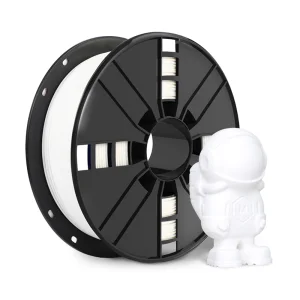
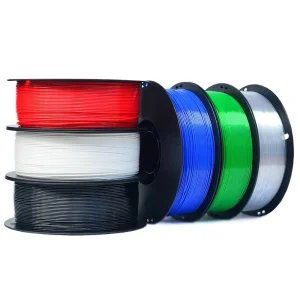
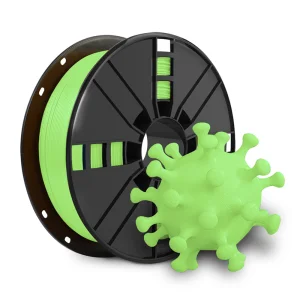
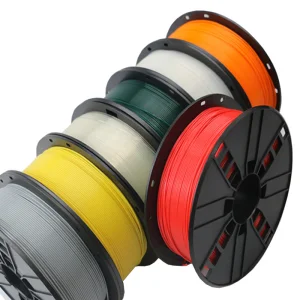
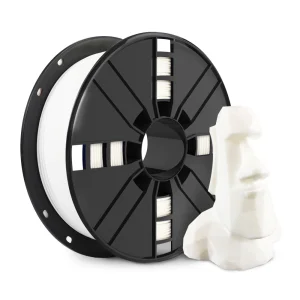
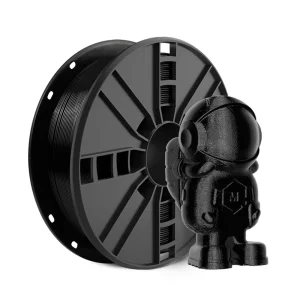
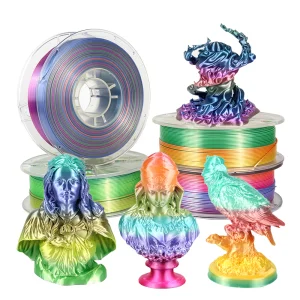
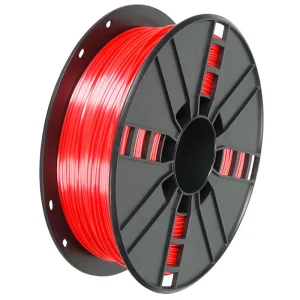
Complete your wholesale procurement catalog with factory-direct ABS, PETG, PLA Silk, and Tangle-Free formulations.
Expert technical insights for global brand owners, importers, and print farm operational leads.
Eco-friendly 3D filaments differ fundamentally in raw resin origin and lifecycle end-state. Standard filaments like traditional ABS rely entirely on non-renewable petroleum refining. In contrast, our eco-friendly PLA lines are synthesized from 100% annually renewable plant starches (lactide monomers), consuming 65% less fossil energy during raw synthesis. Additionally, our eco-range includes 100% Post-Industrial Recycled rPETG and bio-based TPU formulations, packaged on 100% recyclable heavy-duty cardboard spools or spool-less refill systems to eliminate plastic spool land-fill accumulation.
Torwell provides complete end-to-end OEM/ODM private label solutions for global brands, Amazon sellers, and regional distributors. Customization services include: 1) Pantone-matched custom filament color blending, 2) Custom spool branding (sticker graphics, laser-etched cardboard spools, or custom flange colors), 3) Customized retail box printing with your logo, barcodes, and localized languages, 4) Special spool sizing ranging from 250g, 500g, 1kg, to 3kg/5kg industrial master spools, and 5) Tailored Technical Data Sheets (TDS) and SDS documentation under your company name.
Our 2,500 m² factory operates 6 automated extrusion lines equipped with inline dual-axis laser micrometers that scan the filament strand at 1,000 Hz. If diameter drift occurs due to thermal fluctuation or melt pressure changes, the laser system communicates via a closed-loop controller to instantly adjust the haul-off puller speed and melt pump RPM. Combined with 4-stage vacuum dehumidification drying of raw resin before extrusion, we maintain consistent roundness and a strict target tolerance of ±0.02 mm across every roll.
Polylactic Acid (PLA) is industrially compostable under EN 13432 and ASTM D6400 standards. In an industrial composting environment maintained at 58–60°C with controlled humidity and microorganisms, PLA breaks down into carbon dioxide, water, and nutrient biomass within 90 to 180 days. Under normal room ambient storage conditions (20°C, dry environment), PLA remains mechanically stable for years without structural degradation or embrittlement.
Directly after winding and quality inspection, each spool is robotically vacuum-sealed in a high-density, multi-layer moisture-barrier foil or PE bag containing a fresh 5-gram active silica gel desiccant pack. Vacuum pressure is electronically monitored to ensure airtight seals. Sealed spools are packed in reinforced 5-ply cardboard individual boxes and stacked inside heavy-duty master export cartons fitted with edge protectors to withstand high ambient ocean humidity and stacking forces during ocean transit.
For standard stock colors and inventory SKUs, our Minimum Order Quantity (MOQ) starts at just 100 kg. For custom OEM private label orders or custom Pantone color matching, our standard MOQ is typically 500 kg per color/material grade. Production lead times for standard wholesale container orders are generally 15 to 20 business days from deposit confirmation and artwork approval, backed by our monthly manufacturing capacity of 50,000 to 60,000 kg.
Yes. Our filament spools are specifically engineered for flawless feeding inside automatic multi-material systems (such as Bambu Lab AMS, Creality K1 Max AMS, and industrial multi-feeder systems). Spool outer dimensions, flange smooth rolling edges, and tension-controlled neat winding prevent spool rim slippage and filament snapping during rapid automatic retract and reload cycles.
We provide a complete international compliance folder with every wholesale order, including Safety Data Sheets (SDS) in compliance with GHS standards, Technical Data Sheets (TDS), REACH SVHC test reports, RoHS 2.0 chemical analysis certification, and FDA food-contact compliance declarations where applicable. All shipments include detailed commercial packing lists and HS Code (3916.90) custom declarations for seamless customs entry worldwide.