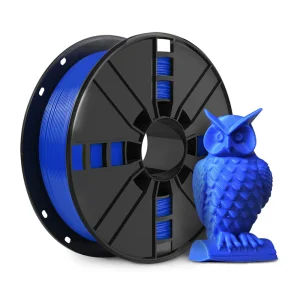
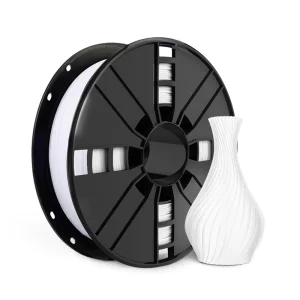
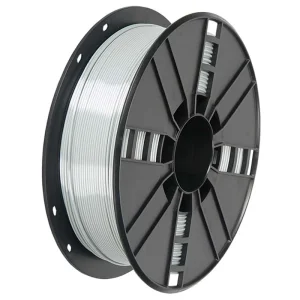
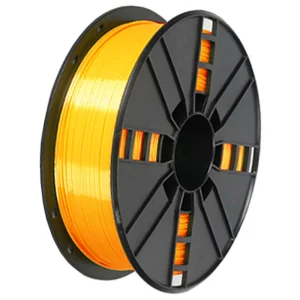
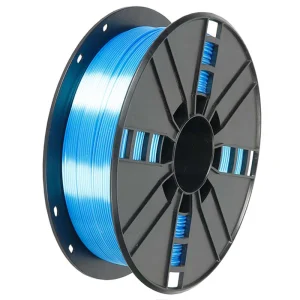
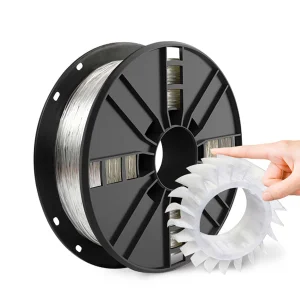
Direct factory supply of high-precision FDM 3D printer filaments extruded with tight ±0.02 mm diameter tolerance. Explore our wholesale bulk catalog tailored for high-performance engineering and consumer printing.
When engineering functional components for long-term outdoor deployment, traditional thermoplastics like ABS (Acrylonitrile Butadiene Styrene) suffer rapid degradation under ultraviolet (UV) radiation. The weak link in ABS polymer chain lies in the double bonds of its polybutadiene rubber phase, which undergoes photochemical cleavage when exposed to solar UV-A and UV-B spectra, causing micro-cracking, severe discoloration, and catastrophic impact strength decay. ASA (Acrylonitrile Styrene Acrylate) solves this fundamental limitation by replacing polybutadiene rubber with a synthetic acrylate ester elastomer matrix during graft copolymerization.
As a premier wholesale ASA filament bulk manufacturer and supplier, Torwell Technologies formulates industrial-grade ASA resin compounded with tertiary amine light stabilizers (HALS) and UV absorbers. This triple-action defense system ensures that 3D printed end-use components retain up to 95% of their initial impact resistance and tensile yield strength after 5,000 hours of accelerated weatherometer testing (ASTM G154 standards).
For B2B buyers, product designers, and industrial distributors, choosing between ASA, ABS, PETG, PC, and PLA+ requires evaluating mechanical, thermal, and environmental trade-offs. The comparative matrix below details empirical testing data from our laboratory:
| Material Grade | Tensile Strength (MPa) | Heat Deflection Temp (HDT @ 0.45 MPa) | Izod Impact Strength (kJ/m²) | UV Resistance Rating | Primary Industrial Use Case |
|---|---|---|---|---|---|
| Torwell Industrial ASA | 48 – 52 | 98 °C – 104 °C | 18 – 22 | Superior (A+) | Automotive exterior trim, IoT radomes, outdoor solar housings |
| Standard ABS | 40 – 45 | 92 °C – 96 °C | 15 – 18 | Poor (Degrades <6 mos) | Indoor electronic enclosures, functional internal jigs |
| PETG Engineering | 45 – 50 | 70 °C – 74 °C | 8 – 12 | Moderate (B) | Chemical tanks, fluid containers, clear protective covers |
| Polycarbonate (PC) | 65 – 72 | 135 °C – 142 °C | 30 – 35 | Moderate (Requires coating) | High-temperature industrial housings, structural frames |
| Torwell PLA+ Pro | 55 – 60 | 55 °C – 58 °C | 14 – 16 | Low (Fades/warps in sun) | Rapid prototyping, education, visual aesthetic models |
Operating a 2,500 m² standardized high-tech production facility with 6 automated twin-screw extrusion lines, Torwell Technologies delivers reliable industrial output designed for enterprise compliance and global scale.
Every line is equipped with closed-loop dual-axis laser micrometers operating at 500 Hz. Any ovality or diameter deviation instantly triggers auto-puller speed compensation, preventing nozzle blockage and under-extrusion.
Raw ASA polymer pellets undergo multi-stage desiccant drying to lower moisture content below 0.02% before extrusion. This eliminates hydrolysis, melt-popping, micro-foaming, and weak layer bonding during customer printing.
Precision servo-controlled traverse winding ensures crisp, layer-by-layer spooling without crossover loops. Fully optimized for high-speed multi-material systems such as Bambu Lab AMS, Creality CFS, and industrial print farms.
At Torwell Technologies, we bridge the gap between polymer synthesis and end-market branding. Whether you operate a regional 3D printing reseller distribution network, run an online Amazon storefront, or manage a 500-printer industrial farm, our custom OEM/ODM solutions provide seamless supply chain integration.
Beyond standard White, Black, Grey, Signal Red, and Army Green, our color masterbatch laboratory matches exact Pantone, RAL, or physical target samples with batch-to-batch Delta E < 1.0 consistency.
Supply formats include 250g sample spools, standard 1kg retail spools, 2.5kg medium spools, and 5kg to 10kg master industrial reels. Available on recyclable eco-cardboard spools or high-temperature plastic spools.
Every single spool is vacuum-sealed with high-capacity desiccant pouches, sealed in moisture-barrier aluminum foil or transparent film, and packed into custom-printed corrugated cartons with serialized batch tracking labels.
Industrial components printed with Torwell Wholesale ASA filament endure demanding environments across North America, Europe, Asia-Pacific, and the Middle East. Our formulations meet international chemical safety and environmental directives, protecting global buyers from regulatory liabilities.
Exterior mirror housings, roof rack end caps, radiator grilles, windshield wiper trim clips, and custom motorcycle bodywork subjected to harsh highway gravel and UV degradation.
5G small-cell radomes, agricultural sensor junction boxes, solar tracker control unit covers, and outdoor smart meter housings requiring rainproof and sun-proof durability.
Boat console trim bezels, sonar transom transducer mounts, marine radio enclosures, and outdoor street-lighting junction boxes exposed to saltwater spray and intense solar flare.
The additive manufacturing industry is transitioning rapidly toward high-speed CoreXY print architectures capable of volumetric flow rates exceeding 30 mm³/s and travel speeds over 500 mm/s. Traditional ASA formulations often exhibit severe inter-layer strength loss and surface dulling when extruded at these elevated speeds due to incomplete polymer chain entanglements.
Torwell Technologies' material engineering team has developed High-Speed Flow (HS-ASA) and Carbon Fiber Reinforced ASA (ASA-CF) to address next-generation production requirements:
To maximize layer adhesion, dimensional accuracy, and mechanical strength when printing Torwell ASA filament, we recommend implementing the following optimized print parameters on enterprise FDM equipment:
| Processing Parameter | Recommended Setting Range | Optimization Note |
|---|---|---|
| Extrusion Temperature | 240 °C – 260 °C | Use higher range (255°C) for high print speeds to ensure complete resin melting. |
| Heated Bed Temperature | 90 °C – 110 °C | Ensure bed temperature exceeds glass transition temp (Tg) during initial layers. |
| Enclosure Chamber Temp | 45 °C – 65 °C | Prevents thermal contraction stress & warping on tall structural parts. |
| Part Cooling Fan Speed | 0% – 20% (Max 30%) | Keep cooling minimal to preserve max inter-layer bonding tensile strength. |
| Build Surface Preparation | Textured PEI Sheet / ABS Juice / Bed Glue | PEI sheet or specialized adhesive ensures reliable initial bed adhesion. |
| Filament Drying Protocol | 70 °C for 4 – 6 hours | Pre-dry in blast oven if spool is exposed to ambient humidity >40% for over 48h. |
Clear, authoritative technical and commercial answers for brand owners, buyers, and print farm procurement directors.
From specialty high-gloss silks and flexible TPUs to engineering PC and weather-stable ASA, Torwell offers end-to-end 3D printing material manufacturing for global trade.