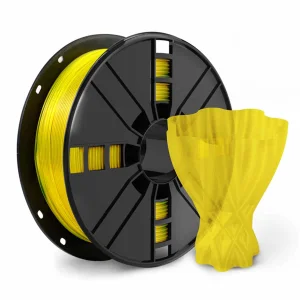
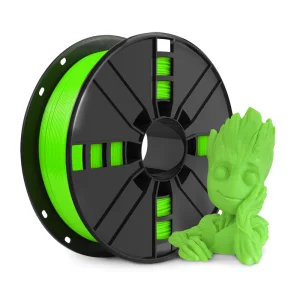
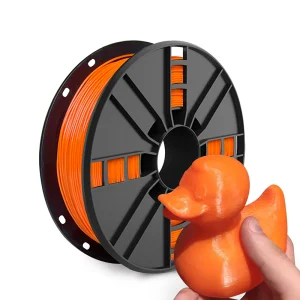
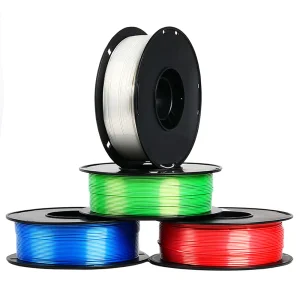
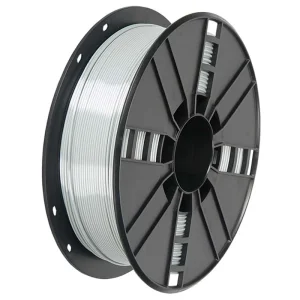
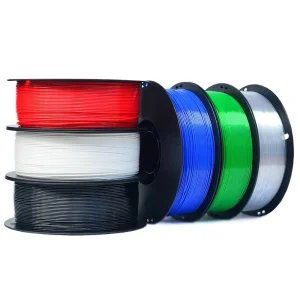
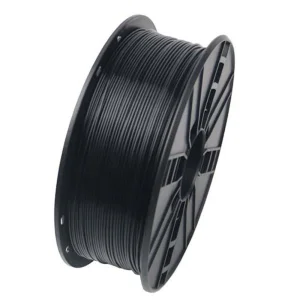
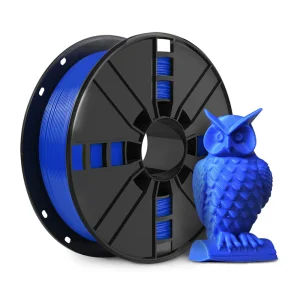
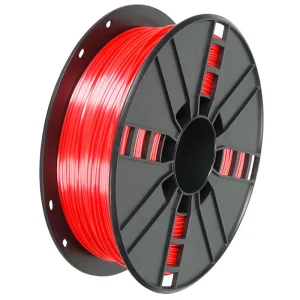
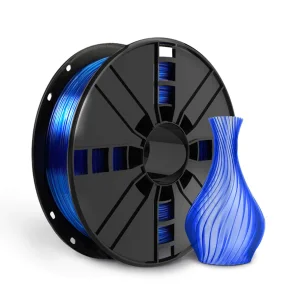
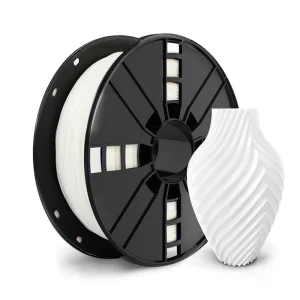
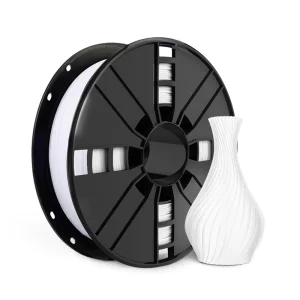
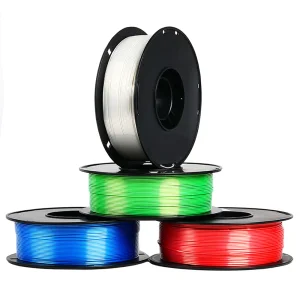
Explore our flagship filament spools engineered with strict diameter tolerances (±0.02mm), optimized flow rates, and high batch consistency for automated manufacturing lines.
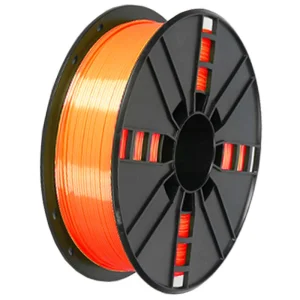
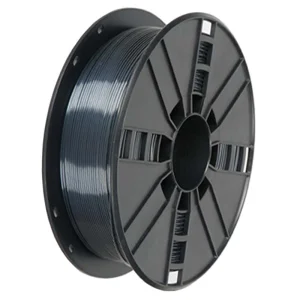
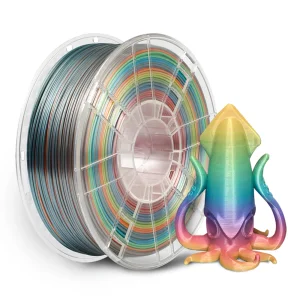
Understanding the chemical composition, thermal dynamics, and structural characteristics that make ABS the preferred thermoplastic for end-use functional prototypes and durable component manufacturing.
Acrylonitrile Butadiene Styrene (ABS) is a cornerstone terpolymer in additive manufacturing and industrial injection molding. Composed of three distinct monomers, ABS bridges the gap between commodity plastics like PLA and high-performance engineering polymers such as PEEK or Polycarbonate. For procurement directors, engineering teams, and high-volume print farm operations, selecting a reliable Wholesale ABS 3D Printing Supplier & Factory is critical to ensuring mechanical performance and batch repeatability across production cycles.
Provides thermal stability, chemical resistance to acids and alkalis, and elevated mechanical hardness. Gives ABS a high glass transition temperature (Tg ~105°C).
Delivers exceptional impact resistance and toughness even at sub-zero temperatures (-20°C to -40°C), preventing brittle mechanical failure under dynamic load.
Imparts structural rigidity, aesthetic surface gloss, and dimensional stability during the thermal extrusion process within FFF/FDM 3D printing equipment.
Unlike standard PLA, which degrades under thermal stress above 60°C, industrial grade ABS maintains structural integrity up to its Heat Deflection Temperature (HDT) of approximately 95°C at 0.45 MPa. This makes ABS filaments indispensable for automotive interior components, electrical enclosures, protective gear, and functional fixtures subject to thermal and mechanical loading.
| Physical / Mechanical Property | Standard Industrial ABS | Modified Low-Warp ABS | Standard PLA | PETG Engineering |
|---|---|---|---|---|
| Tensile Strength (MPa) | 40 – 45 | 42 – 48 | 55 – 65 | 48 – 52 |
| Flexural Modulus (GPa) | 2.1 – 2.4 | 2.2 – 2.5 | 3.1 – 3.8 | 1.9 – 2.1 |
| Izod Impact Strength (kJ/m²) | 28 – 35 | 25 – 30 | 3 – 5 | 8 – 12 |
| Glass Transition Temp (Tg) | ~ 105 °C | ~ 102 °C | ~ 58 °C | ~ 78 °C |
| Recommended Extrusion Temp | 230 – 260 °C | 235 – 255 °C | 190 – 220 °C | 230 – 250 °C |
| Heated Bed Temperature | 95 – 110 °C | 90 – 100 °C | 45 – 60 °C | 70 – 85 °C |
Leveraging high-capacity automated extrusion lines, ultra-pure virgin raw materials, and rigorous multi-stage quality control to supply OEM brands in 75+ countries.
We source prime polymer resin granules exclusively from global petrochemical leaders (such as Chimei and Styrolution). Zero regrind or recycled waste is introduced into our primary ABS formulations, ensuring stable melt flow index (MFI) and preventing nozzle clogging during print operations.
Every meter of extruded filament passes through continuous dual-axis laser diameter measurement systems. Operating at 500 Hz feedback loops, our lines automatically adjust tractor speeds to guarantee diameter precision within ±0.02mm, while rejecting ovality defects automatically.
Modern high-speed CoreXY 3D printers and multi-material AMS units require flawless spool winding. Our proprietary tension-controlled auto-spooling equipment guarantees tangle-free layer alignment, eliminating mid-print feeding failures for print farms running 24/7 operations.
ABS is hygroscopic, absorbing ambient moisture that causes steam micro-explosions, stringing, and weakened layer bonds. Immediately after extrusion and inline hot-air drying, each spool is vacuum-sealed with high-absorption desiccant gel packs inside high-barrier vacuum bags.
A comprehensive technical guide for industrial users to optimize printing parameters, bed adhesion, and chamber thermal gradients when printing large-scale ABS components.
The primary challenge in FDM/FFF 3D printing with ABS stems from its high coefficient of thermal expansion ($\approx 90 \times 10^{-6} \text{ K}^{-1}$). As extruded molten ABS cools from $240^\circ\text{C}$ to room temperature, internal volumetric contraction occurs. Without proper environmental thermal controls, this contraction generates severe internal shear stresses, causing corner lifting (warping) and inter-layer separation (delamination).
To achieve maximum isotropic strength in 3D printed ABS parts, the ambient chamber temperature must be maintained between 45°C and 65°C. This minimizes thermal shock across printed layers, allowing polymer chains to reptate and interdiffuse across layer boundaries before crystallization completes.
Tailored manufacturing options for international distributors, e-commerce brands, and print farms requiring private label branding, custom colors, and flexible packaging formats.
Achieve precise corporate or brand color matching. Send us Pantone/RAL codes or physical plastic samples; our masterbatch technicians formulate custom colors with batch-to-batch color variance Delta E < 1.0.
We provide full white-label and private-label packaging solutions. From branded spool stickers and custom outer color boxes to custom QR code serial tracking and instruction manuals tailored to your market.
Standard 1.0 kg spools, compact 250g/500g mini spools, or industrial high-capacity 3.0 kg, 5.0 kg, and 10.0 kg master spools designed for continuous high-output print farm production.
Complete international certification, hazardous substance testing, and turnkey logistics solutions for seamless customs clearance across EU, North American, and Asia-Pacific ports.
All Torwell ABS 3D printer filaments comply strictly with global safety and chemical regulations. We maintain up-to-date documentation to streamline your import compliance verification:
We provide hassle-free logistics tailored to your supply chain preferences. Whether you require FCL container shipping or LCL consolidated air freight, our global logistics network handles customs clearance and local delivery:
From automotive functional testing to consumer electronics housing, see where high-performance wholesale ABS filament delivers maximum value.
Interior dash trim prototypes, air ducting, functional clip assemblies, and custom mounting brackets subjected to elevated under-hood temperatures.
Custom housing units for IoT sensors, handheld devices, power tool casings, and circuit board testing fixtures requiring impact resistance.
Factory assembly jigs, robotic end-effectors, drill guides, and CMM inspection nests built to withstand repeated mechanical impact on assembly lines.
ABS printed components undergo acetone vapor smoothing to create non-porous, waterproof, high-gloss surfaces suitable for fluidic flow testing and consumer display models.
How additive manufacturing innovation is shaping the future of ABS composite formulations, eco-spooling initiatives, and high-speed extrusion technologies.
Compounding ABS with 15% chopped carbon fiber (ABS-CF) or glass fibers (ABS-GF) dramatically increases flexural modulus while suppressing thermal warping to near zero. Ideal for high-rigidity structural aerospace and drone components.
With modern CoreXY 3D printers exceeding print speeds of 300mm/s to 500mm/s, our R&D team has engineered low-viscosity ABS formulations that melt rapidly in high-flow hotends without compromising inter-layer bond strength.
To support global ESG goals and reduce single-use plastic waste, we offer fully recyclable cardboard spools engineered with reinforced hubs and smooth edge rims compatible with automatic multi-spool feeding systems.
Get instant answers regarding enterprise orders, OEM branding, technical parameters, and factory lead times from our technical sales team.
For standard stock colors (Black, White, Grey, Red, Blue), our minimum order quantity starts at 100 kg. For custom Pantone color matching or custom OEM private-label packaging, the baseline MOQ is typically 500 kg per color/specification.
Our proprietary ABS resin formula includes specialized impact modifiers and stress-relieving additives that lower volumetric shrinkage during polymer phase transition. When combined with tight diameter tolerances (±0.02mm), our ABS exhibits significantly less corner lift compared to generic market raw materials.
Yes. We offer complete OEM/ODM solutions, including custom-printed spool stickers, branded cardboard outer cartons, barcode labeling, custom vacuum bag branding, and alternative spool materials (recyclable cardboard spools or high-temperature plastic spools).
We recommend a nozzle temperature of 230°C – 260°C, a heated bed temperature of 95°C – 110°C, and an enclosed chamber temperature of 45°C – 60°C. Part cooling fans should generally remain off (0%) except when executing short layer times or tight overhangs.
Every shipment is accompanied by comprehensive Technical Data Sheets (TDS) and Safety Data Sheets (SDS / MSDS). Our materials are fully compliant with RoHS 2.0 and EU REACH SVHC standards, facilitating smooth customs clearance in the US, EU, UK, and APAC regions.
With 6 automated production lines yielding 50,000 to 60,000 kg monthly, standard wholesale orders (1,000–5,000 kg) are completed within 12–15 business days. Full container load (20ft FCL) orders typically ship within 20–25 days from order confirmation.
Complete your procurement portfolio with our full suite of PETG, ASA, TPU, and specialty Silk PLA filaments manufactured under strict factory quality standards.