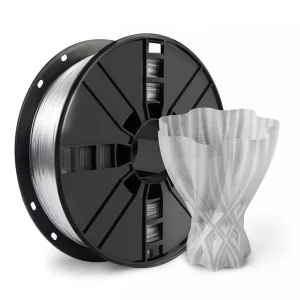
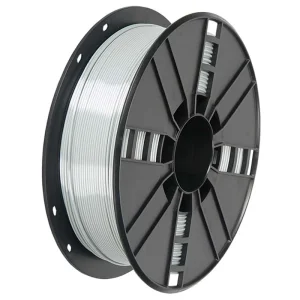
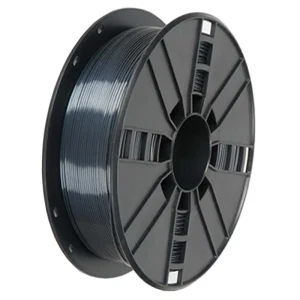
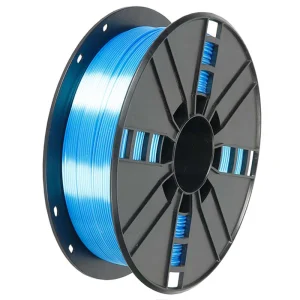
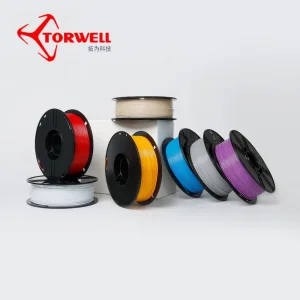
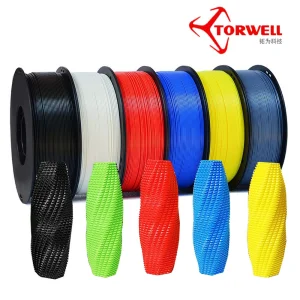
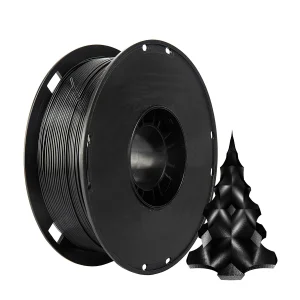
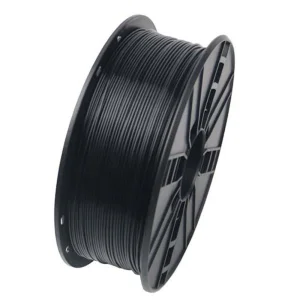
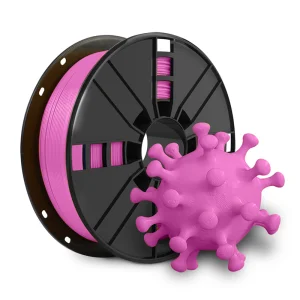
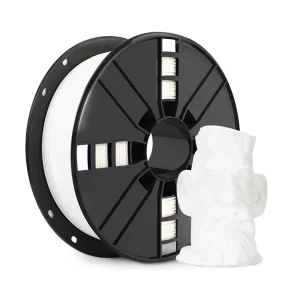
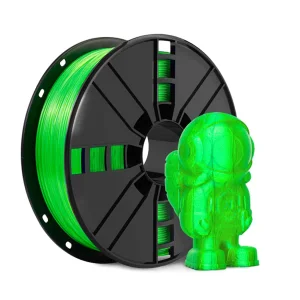
Extruded under strict ISO 9001 quality frameworks with real-time closed-loop laser monitoring. Explore our top enterprise-grade products available for OEM branding and bulk distribution.
Transitioning from consumer desktop novelty to continuous industrial-grade Fused Deposition Modeling (FDM) production.
The global 3D printing materials market has undergone a fundamental transformation over the past decade. What was once dominated by hobbyist experimentation with low-speed desktop printers operating at 40–60 mm/s has evolved into a hyper-competitive, high-throughput industrial additive manufacturing ecosystem. Modern high-speed CoreXY 3D printers, print farm arrays, and industrial prototyping cells routinely print at speeds exceeding 300 mm/s to 600 mm/s with volumetric acceleration rates above 30 mm³/s. This technological leap has placed unprecedented demands on 3D printer filament extrusion factories worldwide.
For procurement directors, brand owners, and global distributors sourcing from China filament factories, standard polymer extrusion no longer suffices. High-speed printing amplifies minor raw material defects: a diameter variation of just ±0.05 mm—previously acceptable in legacy printers—causes severe flow rate fluctuations, backpressure spikes in hotends, hotend clogging, and catastrophic layer delamination during rapid acceleration phases.
Standard PLA or PETG resins formulated for slow-speed printing exhibit high melt viscosity, causing gear slipping and extrusion underruns at speeds above 250 mm/s. Enterprise-grade wholesale filament factories must engineer custom polymer formulations by incorporating specialized flow modifiers and tuning molecular weight distributions. Optimized Melt Flow Index (MFI) ensures instant shear-thinning behavior under pressure inside the hotend nozzle without compromising inter-layer tensile strength after cooling.
When high-speed printers ramp hotend temperatures to 260°C–300°C to achieve high volumetric flow, polymer melt resides in heat zones under intense thermal stress. Superior wholesale filament manufacturing utilizes high-purity virgin resins combined with thermal stabilizers and non-blooming anti-oxidants, preventing polymer thermal degradation, nozzle carbonization, and micro-bubble formation during long, unattended printing runs.
An in-depth breakdown of chemical formulations, modification techniques, and application domains across key thermoplastic categories.
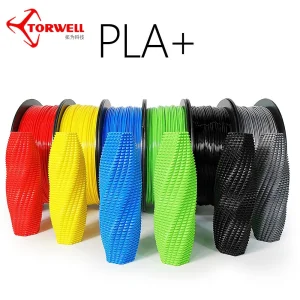
PolyLactic Acid remains the cornerstone of additive manufacturing due to its low thermal expansion coefficient and minimal odor. However, standard PLA suffers from brittleness. Modern PLA+ Pro formulations utilize polycaprolactone (PCL) impact modifiers and bio-based nucleating agents. This achieves up to 4x higher Charpy impact strength than standard PLA while promoting rapid crystallization upon nozzle exit, allowing clean overhangs and bridging at 500 mm/s speeds.
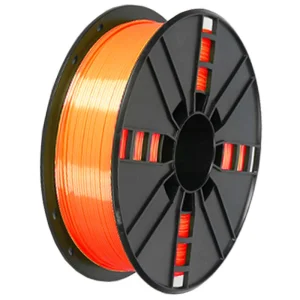
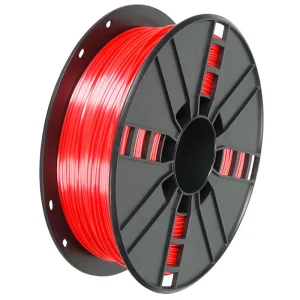
Achieving deep metallic gloss without compromising layer adhesion requires microscopic dispersion of elastomeric polyester elastomers (TPE/TPU blend modifiers) into the PLA matrix. Advanced dual-color and tri-color coextrusion technology aligns distinct color strands side-by-side inside a single 1.75 mm filament, yielding dynamic optical color-shifting effects on 3D printed surfaces depending on view angles.
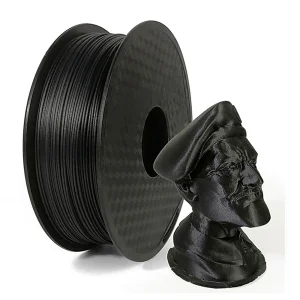
Polyethylene Terephthalate Glycol-modified combines the chemical resistance and clarity of PET with the printability of PLA. By incorporating 15%–20% high-modulus chopped carbon fibers (8–10 μm length distribution), PETG Carbon Fiber (PETG-CF) achieves elevated flexural modulus, negligible warping, matte surface finish, and operational temperature resistance suitable for end-use functional brackets and automotive enclosures.
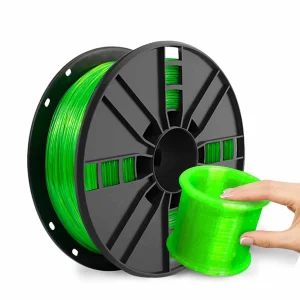
Direct Drive and Bowden extruder systems require precise Shore Hardness control. Standard wholesale TPU 95A delivers high resilience, oil/grease resistance, and high strain at break (>450%). For specialized damping gaskets and flexible wearable devices, precise diameter tolerances are required to eliminate buckling and binding inside printer feed tubes.
Acrylonitrile Styrene Acrylate (ASA) replaces the butadiene phase of ABS with an acrylic ester rubber, conferring exceptional UV stability, weatherability, and chemical resistance. ASA and ABS filaments engineered by advanced factories incorporate low-warping anti-shrinkage additives, reducing micro-cracking and bed lifting on enclosed printing chambers heated to 90°C–110°C.
Featuring a Heat Deflection Temperature (HDT) up to 110°C–125°C, high-purity optical Polycarbonate provides ultimate impact resistance and structural integrity. Formulated specifically to avoid structural embrittlement during printing, PC filaments serve severe industrial applications including electrical housings and high-stress fixtures.
How state-of-the-art Chinese manufacturing hubs ensure batch-to-batch consistency and supply chain toughness.
The core advantage of partnering with top-tier 3D filament manufacturers in China lies in the integration of automated Industry 4.0 extrusion lines, direct raw material supply chains, and stringent quality control protocols. Modern production lines operate continuously under precise melt pressure and temperature feedback loops.
Every meter of extruded filament is scanned continuously along X and Y axes by dual-laser infrared calipers operating at 500 Hz sample rates. If the strand diameter deviates beyond target parameters (e.g., 1.75 mm ± 0.02 mm), the system instantly adjusts tractor puller speed and melt pump pressure via dynamic feedback control algorithms. Off-spec sections are automatically flagged, cut, and discarded prior to spooling.
Tangling and cross-layer overlapping are major failure modes in automated multi-spool feeding systems (such as Bambu Lab AMS or Prusa MMU3). Modern factories utilize servomotor-driven mechanical traverse winding. Spooling tension is continuously calculated relative to real-time spool diameter, guaranteeing neat, uniform side-by-side coil arrangement that feeds smoothly without snapping or binding.
Hygroscopic polymers like PETG, TPU, ABS, and PC absorb ambient humidity quickly, leading to hydrolytic degradation, popping sounds during printing, micro-voids, and severe stringing. Factory quality control requires raw polymer desiccant drying down to <0.05% moisture content before extrusion, followed by immediate online cooling in controlled temperature water baths, inline air-knife drying, and instant vacuum packaging with high-capacity silica desiccant bags in aluminum foil/peelable barrier pouches.
For OEM brand owners and retail channels, color variation between manufacturing lots causes customer churn. China factories leverage computer-controlled dosing feeders for masterbatch pigments. Standardized testing using spectrophotometers guarantees color accuracy within a strict Delta E (ΔE) < 1.0 threshold across different manufacturing cycles.
Evaluating vendor selection beyond unit FOB price: defect rates, lead times, custom packaging, and private label optimization.
Establish your unique identity in local markets. Tier-1 factories support complete private-label OEM solutions, including custom color pantone formulation, customized spool sticker labels, die-cut outer boxes, eco-friendly recyclable cardboard spools, and custom spool flange dimensions for automated multi-material feeder systems.
Maximizing shipping efficiency drops per-unit landed costs. Standard master carton arrangements fit 12 or 24 spools per carton. A standard 20ft container accommodates approximately 10,000–11,000 kg (1kg spools), while a 40ft HQ container holds up to 22,000–24,000 kg with palleted, shrink-wrapped loading for safe ocean freight transit.
Cross-border distribution into Europe, North America, and Australia requires full regulatory documentation. Reputable manufacturers supply up-to-date Technical Data Sheets (TDS), Safety Data Sheets (SDS/MSDS), and certification compliance including RoHS 2.0, REACH SVHC, FDA food contact status, and UL94 flame retardancy testing reports.
Comprehensive technical metrics compiled by senior material engineers to assist procurement teams and print farm operators.
| Material Grade | Density (g/cm³) | Tensile Strength | Heat Deflection Temp (HDT) | Nozzle Temp (°C) | Bed Temp (°C) | Hygroscopic Sensitivity |
|---|---|---|---|---|---|---|
| PLA / PLA+ Pro | 1.24 g/cm³ | 55 – 68 MPa | 55 °C | 190 – 230 °C | 0 – 60 °C | Low - Medium |
| Silk PLA Series | 1.22 g/cm³ | 48 – 58 MPa | 52 °C | 200 – 230 °C | 50 – 60 °C | Low - Medium |
| PETG Standard | 1.27 g/cm³ | 45 – 53 MPa | 68 °C | 230 – 250 °C | 70 – 80 °C | Medium (Requires Drying) |
| PETG Carbon Fiber | 1.32 g/cm³ | 62 – 75 MPa | 80 °C | 240 – 265 °C | 75 – 85 °C | Medium (Requires Drying) |
| ABS Industrial | 1.04 g/cm³ | 40 – 50 MPa | 85 °C | 230 – 260 °C | 90 – 110 °C | Medium |
| ASA Weather-Proof | 1.07 g/cm³ | 42 – 52 MPa | 96 °C | 240 – 260 °C | 90 – 110 °C | Medium |
| TPU 95A Flexible | 1.21 g/cm³ | 35 – 45 MPa (Tear 110N/mm) | 60 °C | 210 – 230 °C | 30 – 60 °C | High (Store with Desiccant) |
| PC Engineering | 1.20 g/cm³ | 65 – 75 MPa | 115 – 125 °C | 260 – 290 °C | 100 – 120 °C | Very High (Mandatory Dryer) |
Explore the remainder of our engineered 3D printing materials manufactured for global export, distributor stocking, and OEM private label brands.
Streamlining international customs clearance, brand protection, and rapid door-to-door freight execution.
Through automated dry-gas purging during foil bag sealing, products maintain structural integrity and low moisture content (<0.05%) for up to 24 months in storage when unopened.
All shipments include harmonized HS Code declarations (e.g., HS 3916.90 for monofilaments), Certificate of Origin (Form E/Form F), and commercial invoices tuned for smooth import duties processing.
Global buyers receive access to dedicated B2B account technicians. Any lot experiencing diameter defects exceeding ±0.02 mm qualifies for instant factory replacement or credit issuing.
Detailed answers to key commercial, technical, and logistics inquiries from international wholesale buyers.