Precision-extruded thermoplastic formulations engineered for industrial reliability, high speed printing, and flawless surface aesthetics.
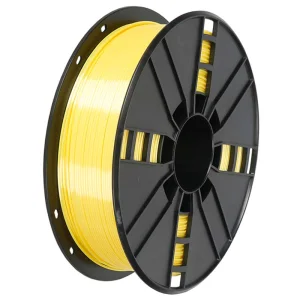
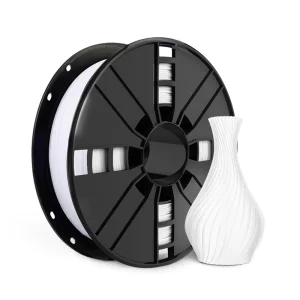
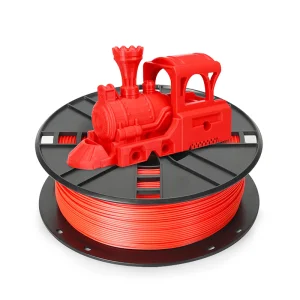
A comprehensive examination of rheological mechanics, thermal degradation thresholds, and twin-screw extrusion protocols in Chinese high-precision additive manufacturing.
The global additive manufacturing domain is experiencing a profound paradigm shift towards bio-based functional composites. Among these engineered materials, Wood Filament 1.75mm has emerged as an essential bio-composite, bridging the aesthetic, tactile, and acoustic qualities of natural timber with the geometric flexibility of Fused Deposition Modeling (FDM) and Fusion Layer Modeling (FLM). As tier-one China wood filament 1.75 manufacturers and automated factories, standardizing material behavior requires a rigorous understanding of polymer physics, interfacial adhesion chemistry, and thermal extrusion dynamics.
Unlike unfilled commodity plastics (such as standard PLA or ABS), wood-filled thermoplastics represent a complex multi-phase system: a hydrophobic polymeric matrix (polylactic acid) suspended with hydrophilic organic fillers (lignocellulosic micro-fibers). Achieving a true $\pm0.02\text{ mm}$ tolerance without nozzle clogging or micro-voiding requires micro-milling pine/birch flour down to 120–200 mesh and deploying reactive silane coupling agents during melt compounding.
The performance of Wood Filament 1.75 in high-speed 3D printers depends heavily on the volume fraction, particle size distribution, and aspect ratio of the embedded organic fibers. In modern factory formulations, natural wood flour is harvested from FSC-certified timber waste (typically pine, bamboo, birch, or cedar) and subjected to multi-stage air-jet milling.
A persistent failure mode in low-grade wood filaments is inter-layer delamination caused by poor stress transfer between the hydrophobic PLA polymer chains and the hydrophilic hydroxyl (-OH) groups of raw wood cellulose. To overcome this, top-tier Chinese manufacturing facilities utilize reactive compatibilizers, specifically Maleic Anhydride Grafted Polylactic Acid (MAh-g-PLA) or organo-functional silanes.
During twin-screw extrusion compounding, the maleic anhydride functional groups react covalently with the cellulose hydroxyl groups, while the PLA backbone entangles with the primary polymer matrix. This chemical modification yields a dramatic increase in tensile modulus, flexural strength, and impact resistance, ensuring that printed parts retain structural integrity under mechanical loads.
Deploying bio-composite wood filaments across architecture, acoustic engineering, luxury packaging, and historical artifact restoration.
Architectural firms require rapid fabrication of physical terrain maps and building concepts with authentic timber textures. 1.75mm wood filament eliminates visible layer lines upon light sanding, accepts conventional wood stains, and provides a matte, non-reflective organic finish ideal for client presentations.
Natural wood fibers increase the mechanical damping coefficient ($\tan \delta$) of printed thermoplastics. Speaker cabinets, headphone cups, and acoustic diffusers manufactured with high-density wood PLA composite reduce internal standing waves and unwanted cabinet resonance compared to standard unfilled polymers.
High-end cosmetics, spirits, and jewelry brands leverage 1.75mm wood filaments for limited-edition bespoke packaging. The natural smell of real wood emitted during extrusion and present in the final component accentuates eco-friendly brand identity while offering 100% industrial compostability.
Museum curators and film production studios utilize wood filament composites to replicate antique woodwork, historical artifacts, and structural film props. Printed models can be carved, planed, drilled, and lacquered using traditional woodworking tools and varnishes.
How state-of-the-art production infrastructure delivers batch-to-batch consistency and global enterprise scalability.
Compounding natural fiber with polymer matrix requires precise shear input. Co-rotating twin-screw extruders feature customized screw elements (kneading blocks and reverse-conveying zones) ensuring homogeneous dispersion without thermal degradation of wood fibers.
Moisture is the primary enemy of wood composite extrusion. Factory lines integrate multi-vent vacuum degasification zones operating under $-0.098\text{ MPa}$ pressure, extracting free and bound moisture down to $<0.03\%$ prior to filament shaping.
Real-time inline laser gauges capture diameter variations across $X$ and $Y$ axes 500 times per second. Automated closed-loop puller speed control maintains strict 1.75mm diameter bounds within a precise $\pm0.02\text{ mm}$ window.
Comprehensive engineering performance data comparing Wood Composite against standard FDM materials.
| Performance Metric | Wood Filament 1.75 | Standard PLA | PETG | ABS |
|---|---|---|---|---|
| Base Polymer Matrix | PLA / Bio-Resin Blend | Pure Poly-Lactic Acid | Glycol-Modified PET | Acrylonitrile Butadiene Styrene |
| Organic Fiber Content | 15% - 30% Wood Flour | 0% | 0% | 0% |
| Nozzle Temp. Range | $190^\circ\text{C} - 210^\circ\text{C}$ | $190^\circ\text{C} - 220^\circ\text{C}$ | $230^\circ\text{C} - 250^\circ\text{C}$ | $230^\circ\text{C} - 260^\circ\text{C}$ |
| Bed Temp. Requirement | $45^\circ\text{C} - 60^\circ\text{C}$ | $50^\circ\text{C} - 60^\circ\text{C}$ | $70^\circ\text{C} - 80^\circ\text{C}$ | $90^\circ\text{C} - 110^\circ\text{C}$ |
| Ideal Nozzle Type & Size | Hardened Steel / Brass ($\ge 0.4\text{mm}$) | Brass ($0.2\text{mm} - 0.4\text{mm}$) | Brass ($0.4\text{mm}$) | Brass ($0.4\text{mm}$) |
| Tensile Strength (MPa) | $38 - 45\text{ MPa}$ | $55 - 65\text{ MPa}$ | $48 - 52\text{ MPa}$ | $40 - 45\text{ MPa}$ |
| Surface Texture & Finish | Matte, Organic Wood Grain | Glossy / Semi-Gloss | High Gloss Translucent | Matte / Satin (Acetone Smoothable) |
| Compostability / Eco Status | 100% Bio-based & Industrial Compostable | Bio-based Compostable | Recyclable (RIC 1) | Petroleum Synthetic |
Mitigating risk for global distributors, retail brands, and OEM buyers through certified raw material sourcing and rigorous documentation.
All wood flour utilized in our manufacturing facilities originates from FSC-certified sustainable forestry operations, ensuring full traceability and zero deforestation impact for environmentally conscious Western markets.
Filament batches undergo chemical testing by independent laboratories (SGS / TÜV) to guarantee compliance with EU REACH SVHC regulations and RoHS heavy metal limits (lead, cadmium, mercury, hexavalent chromium free).
Full custom ODM/OEM solutions: customized spool sizing (250g, 500g, 1kg, 3kg, 5kg), master carton branding, high-barrier aluminum foil vacuum sealing with active desiccant packs, and DDP direct-to-Amazon FBA fulfillment.
Pioneering the next frontier in advanced bio-composite materials for additive manufacturing.
Transitioning from pure PLA matrix to Polyhydroxyalkanoate (PHA) bio-polymers, yielding marine-biodegradable wood filaments that decompose fully in natural soil and water environments within 180 days.
Incorporating Cellulose Nanocrystals (CNCs) alongside micro-wood flour to increase tensile strength by $>40\%$ without altering the signature natural wood finish or increasing melt viscosity.
Modifying dynamic flow modifiers to enable reliable wood filament printing at speeds exceeding $350\text{ mm/s}$ on next-gen industrial printers without stringing, nozzle clogging, or layer separation.
Technical solutions and procurement answers direct from factory material engineers.
Explore our complete spectrum of specialty filaments, technical polymers, and high-performance composites.