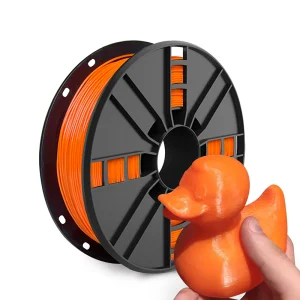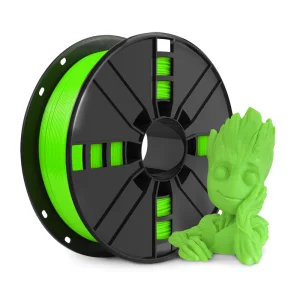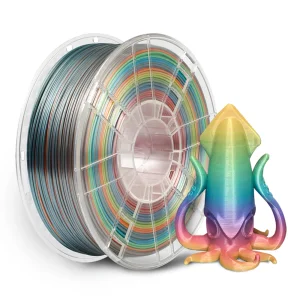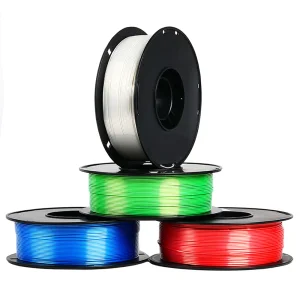
Analyzing elastomeric additive manufacturing: from raw chemical synthesis to high-speed extrusion mechanics.
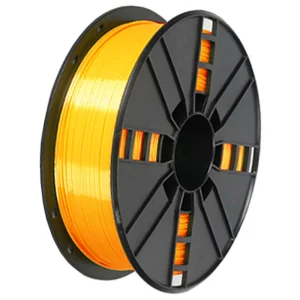
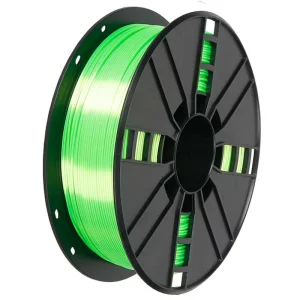
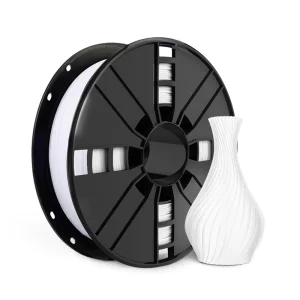
Thermoplastic Elastomers (TPE) have emerged as the foundational material class bridging rigid thermoplastics and vulcanized rubbers in Fused Deposition Modeling (FDM) and Fused Filament Fabrication (FFF). As enterprise manufacturing demands shift from visual prototyping toward functional, end-use elastomeric parts, sourcing high-grade 1.75mm TPE filament directly from a specialized China TPE filament 1.75 manufacturer has become a strategic priority for global OEMs, print farms, and regional distributors.
Unlike standard rigid polymers such as PLA or ABS, processing TPE in a 1.75mm monofilament format presents severe physical challenges: buckling tendencies within the extruder drive gears, high surface friction coefficient, hygroscopic moisture retention, and non-Newtonian melt rheology. China's leading manufacturing ecosystems—headprinted by pioneers like Torwell Technologies Co., Ltd. (operating since 2011)—have solved these compounding and extrusion bottlenecks through precise block copolymer formulation, proprietary slip-agent grafting, and multi-axis inline laser monitoring.
TPE 1.75mm filaments engineered at Shore 85A to 95A provide exceptional vibration damping, oil resistance, and low thermal creep for custom automotive grommets, door seals, and engine bay dampeners.
Biocompatible skin-safe TPE variants allow rapid additive manufacturing of custom orthotic insoles, prosthetic socket liners, and ergonomic surgical tool grips with tailorable flexural modulus.
Soft-touch, UV-stabilized TPE formulations resist skin lipids and environmental degradation, powering high-volume production of smartwatch bands, audio cushions, and protective rugged cases.
Understanding block copolymer morphology, Shore hardness control, and viscoelastic behavior during 1.75mm extrusion.
In industry terminology, Thermoplastic Elastomer (TPE) is an umbrella designation encompassing several distinct block copolymer families. A frequent source of confusion among international buyers is distinguishing between standard TPE (often Styrenic block copolymers, TPS/SEBS) and Thermoplastic Polyurethane (TPU). As a leading OEM/ODM manufacturer in China, Torwell tailors specific chemical backbone structures to meet exact mechanical requirements:
| Polymer Class | Chemical Family | Shore Hardness Range | Tensile Strength (MPa) | Elongation at Break | Key Performance Attribute |
|---|---|---|---|---|---|
| TPE (TPS / SEBS) | Styrene-Ethylene-Butylene-Styrene | 60A - 90A | 12 - 25 MPa | 500% - 750% | Ultra-soft touch, high flexibility, excellent weatherability |
| TPU (Polyester/Polyether) | Thermoplastic Polyurethane | 85A - 64D | 35 - 60 MPa | 400% - 600% | Superior abrasion resistance, tear strength, chemical resistance |
| TPV (PP/EPDM) | Dynamically Vulcanized Alloy | 70A - 50D | 15 - 30 MPa | 350% - 500% | Extreme temperature resistance (-40°C to +135°C), low compression set |
| TPC-ET (COPE) | Copolyester Elastomer | 90A - 72D | 25 - 45 MPa | 300% - 450% | High fatigue resistance, flexural memory, industrial toughness |
While 2.85mm filament provides higher column stiffness to prevent buckling in Bowden tubes, 1.75mm TPE monofilament has become the global industry standard due to its compatibility with modern high-speed Direct-Drive extruders (e.g., dual-gear systems). Torwell's precise tight-tolerance manufacturing (±0.02mm) eliminates diameter variance that causes flow rate fluctuations and nozzle clogging.
TPE resins hydrolyze when exposed to ambient moisture, resulting in steam voids, popping noises during printing, stringing, and severe layer delamination. Torwell enforces strict inline vacuum drying under -40°C dew point air prior to twin-screw compounding and spooling, sealing each roll with active desiccant pouches.
The molecular entanglement of TPE soft polymer segments across print layers allows near-isotropic structural properties. When printed at optimal melt temperatures (210°C–240°C), parts exhibit Z-axis tensile strength reaching up to 90% of X-Y axis performance, virtually eliminating anisotropic failure.
Inside China's premier 2,500 m² automated manufacturing facility producing tier-one 3D printer materials.
Pioneering high-speed printing, conductive elastomeric matrices, and sustainable bio-TPE formulations.
Traditional TPE required slow printing (15-30 mm/s). Torwell's newest fast-flow TPE formulations feature shear-thinning rheology, enabling flawless printing at speeds exceeding 150–250 mm/s on modern CoreXY platforms without nozzle backpressure failure.
Aligning with European ESG regulations, Torwell is integrating up to 40% bio-based monomers derived from plant lipids into our TPE matrix, delivering low-carbon elastomer filaments that retain 98% of virgin mechanical strength.
Engineered with carbon nanotube (CNT) network doping, specialized functional TPE variants allow multi-material additive manufacturing of flexible strain sensors, soft robotic tactile skin, and integrated ESD-safe gaskets.
Comprehensive technical and commercial answers for sourcing managers, distributors, and enterprise buyers.
TPE (typically SEBS-based) offers a significantly softer, rubber-like matte finish with lower density and higher damping capability compared to TPU. However, TPU generally exhibits higher tensile strength, tear resistance, and abrasion resistance. From a printing standpoint, soft TPE requires tight control over extruder tolerances and dry conditions to prevent filament wrapping around feed rollers.
Because TPE is an elastic material with low flexural modulus, any diameter spikes (e.g., +0.05mm) create extreme friction inside PTFE lining tubes, leading to immediate drive gear slipping or buckling inside the hotend heat break. Conversely, undersized diameter leads to inconsistent volumetric extrusion and under-extrusion gaps in printed walls.
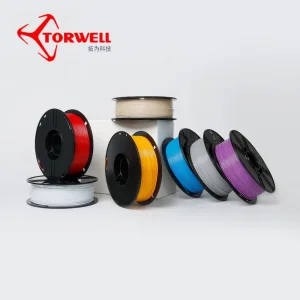
Yes. Torwell specializes in OEM/ODM manufacturing for top international 3D printing brands. We match custom Pantone colors, offer customized spool options (100g sample spools, 500g, 1kg, 3kg, up to 5kg industrial spools), design custom retail packaging, and provide customized Technical Data Sheets (TDS).
Recommended settings vary by Shore Hardness: Nozzle Temperature: 210°C – 235°C; Print Bed Temperature: 30°C – 60°C (or unheated with PEI/painters tape); Print Speed: 25 – 60 mm/s (up to 150 mm/s for high-speed grades); Retraction: Minimal retraction (0.5 – 2mm on Direct Drive; disable retraction on Bowden systems).
All finished spools undergo a 12-hour inline dehumidification cycle, followed by immediate vacuum packaging in high-barrier aluminum/poly bags containing active silica desiccant pouches. Individual spools are packed in reinforced corrugated outer cartons to withstand ocean transport moisture.