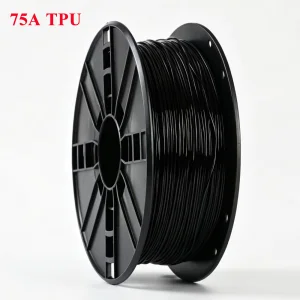
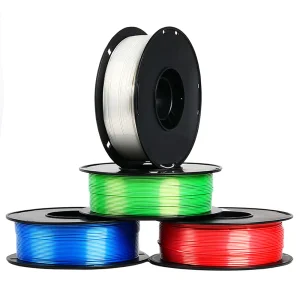
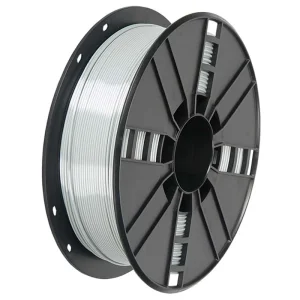
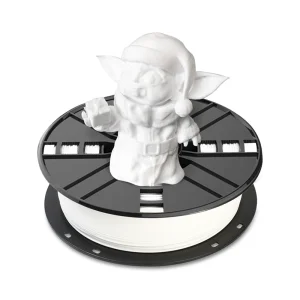
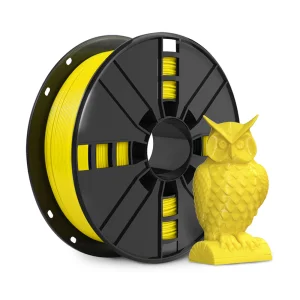
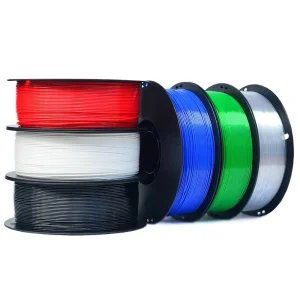
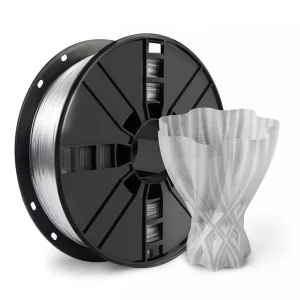
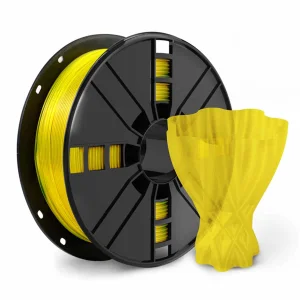
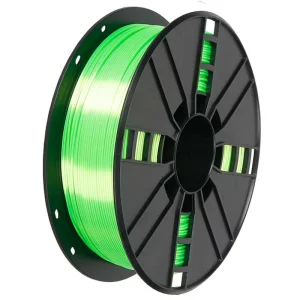
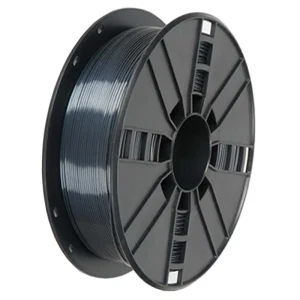
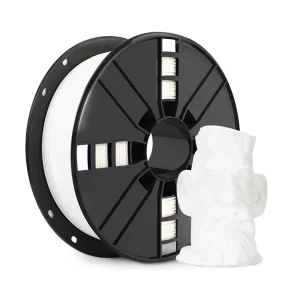
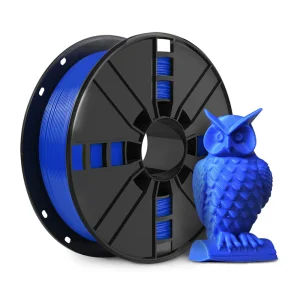
Factory-direct 1kg spools engineered for high dimensional stability, ±0.02mm laser tolerance, and clean un-tangled winding.
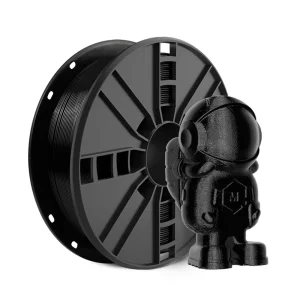
Analyzing the transition of aesthetic FDM materials from niche enthusiast products to high-volume commercial manufacturing supplies.
In the modern additive manufacturing ecosystem, Silk Filament 1kg has evolved from a novel decorative formulation into a fundamental material category for consumer brands, architectural modeling firms, rapid prototyping bureaus, and global e-commerce distributors. Unlike standard Poly-lactic Acid (PLA) filaments which produce a matte or semi-gloss finish requiring extensive manual sanding, priming, and painting, premium Silk PLA produces an iridescent, silky satin surface directly off the print bed. This unique visual aesthetic effectively masks visible layer lines (Z-axis staircase effect), dramatically reducing post-processing labor and operational costs for commercial print farms.
The global demand for 1kg net-weight spools represents the optimal equilibrium point for international logistics, automated multi-material print systems (such as Bambu Lab AMS, Prusa MMU, and Voron Stealthburner setups), and enterprise inventory management. Bulk purchasing managers across North America, Europe, and the Asia-Pacific region prioritize China-based manufacturers due to raw material processing integration, advanced compounding chemistry, and unrivaled extrusion scale. Understanding the chemical dynamics, quality metrics, and supply chain efficiencies of Chinese Silk Filament manufacturers is paramount for procurement directors seeking long-term competitive differentiation.
The visual appeal of Silk PLA relies on total internal specular reflection. By incorporating elastomeric luster modifiers into high-purity virgin PLA resin, light is reflected uniformly along the curved surface of extruded micro-filaments. This optical behavior tricks the human eye into perceiving a continuous metallic shell rather than individual fused layers of 0.2mm thickness.
Deconstructing the chemical composition and thermal processing dynamics of high-luster Silk PLA formulations.
Standard PLA is a rigid thermoplastic aliphatic polyester derived from renewable plant resources such as corn starch or sugarcane. While standard PLA exhibits high tensile strength and minimal thermal contraction during cooling, its brittle nature and flat optical characteristics limit its application in luxury consumer goods. China Silk Filament 1kg manufacturers overcome these limitations through precise polymer blending and additive engineering.
To induce a silky luster, raw PLA polymer pellets (such as NatureWorks Ingeo 4032D or 3052D series) are melt-blended with flexible Thermoplastic Elastomers (TPE) or low-durometer Thermoplastic Polyurethanes (TPU) at a concentration ratio between 10% to 20% by weight. This elastomeric phase disperses as micro-scale droplets throughout the continuous PLA matrix. During extrusion through a 0.4mm 3D printer nozzle, these micro-droplets align along the shear velocity gradient, forming microscopic linear oriented domains that reflect light directionally.
In addition to elastomeric modifiers, high-grade Silk PLA contains organic luster agents, micro-crystalline waxes, and synthetic mica particles (< 15 microns in diameter). These additives lower melt viscosity at high shear rates, permitting smooth material flow while preventing nozzle clogging during extended high-speed print operations. The presence of these agents elevates the Gloss Unit (GU) rating from a standard PLA baseline of 35-45 GU up to >85 GU when measured with a 60° gloss meter.
The addition of elastomeric phase modifiers alters the Glass Transition Temperature (Tg) and Melt Flow Index (MFI) of the filament. Standard PLA typically prints between 190°C and 210°C with an MFI of 6-8 g/10min (210°C/2.16kg). Silk PLA requires a slightly elevated nozzle temperature (200°C - 225°C) to ensure full melting of both the rigid PLA continuous phase and the elastomeric dispersed phase. Higher print temperatures foster polymer chain entanglement across layer boundaries, mitigating the z-axis delamination risks traditionally associated with additive-heavy filaments.
How state-of-the-art extrusion infrastructure and inline optical monitoring deliver consistent bulk quality.
China's leadership in 1kg Silk Filament manufacturing stems from a tightly integrated industrial infrastructure that spans raw resin synthesizing, precision color masterbatch formulation, automated high-speed extrusion lines, and direct export logistics. Leading OEMs such as Torwell Technologies operate specialized facility footprints equipped with multi-stage twin-screw extruders, continuous melt-filtration systems, and automated spooling robotics.
The primary point of failure in low-cost filament extrusion is diameter variance. Fluctuations exceeding ±0.05mm lead to under-extrusion (causing weak structural walls) or over-extrusion (causing nozzle jams and surface blobs). Advanced Chinese factories utilize closed-loop dual-axis laser micrometers positioned directly after the water cooling troughs. These sensors sample filament diameter at a frequency of 1,000 Hz across two orthogonal axes. If the strand drifts beyond ±0.02mm, feedback signals instantly adjust the haul-off puller speed and melt pump RPM to restore dimensional equilibrium.
With the rise of high-speed 3D printers featuring automated filament changers (AMS/MMU), neat spool winding has become a non-negotiable procurement requirement. Manual or poorly tensioned winding allows outer filament loops to slip underneath inner layers, causing catastrophic print failures due to spool binding. Modern Chinese manufacturing lines implement robotic servo-driven traverse spoolers that maintain precise lateral pitch and tension control, ensuring tight, parallel layer deposition across the full 1kg spool width.
Standardized laboratory testing parameters comparing Silk PLA against engineering thermoplastics.
| Material Grade | Density (g/cm³) | MFI (g/10min) | Tensile Strength (MPa) | Gloss Rating (GU @ 60°) | Print Temp Range | Bed Temp | Primary Industrial Fit |
|---|---|---|---|---|---|---|---|
| Silk PLA 1kg | 1.25 | 7 - 9 (210°C/2.16kg) | 45 - 52 | > 85 (High Satin) | 200°C - 225°C | 45°C - 60°C | Display Models, Cosplay, Decor |
| Standard PLA+ | 1.24 | 6 - 8 (210°C/2.16kg) | 55 - 60 | 35 - 45 (Semi-Gloss) | 190°C - 215°C | 40°C - 55°C | Functional Prototyping, Jigs |
| PETG Clear / Solid | 1.27 | 10 - 15 (230°C/2.16kg) | 48 - 54 | 65 - 75 (Glossy) | 230°C - 250°C | 70°C - 80°C | Enclosures, Chemical Tanks |
| ABS Industrial | 1.05 | 12 - 20 (220°C/10kg) | 40 - 45 | 20 - 30 (Matte/Low) | 230°C - 260°C | 90°C - 110°C | Automotive Parts, Tool Housings |
| TPU 95A Flexible | 1.21 | 15 - 25 (210°C/1.2kg) | 30 - 38 | 40 - 50 (Flexible) | 210°C - 235°C | 30°C - 50°C | Gaskets, Wearables, Dampers |
| Carbon Fiber PLA | 1.29 | 4 - 6 (210°C/2.16kg) | 65 - 75 | < 15 (Ultra-Matte) | 215°C - 235°C | 50°C - 65°C | Drones, Aerospace Brackets |
Deploying Silk Filament 1kg spools across specialized market sectors to maximize end-product visual impact.
Architects require clean, non-distracting concept models that highlight building geometry and light interaction. Silk Gold, Silver, and Bronze filaments recreate metallic facade elements without post-spray painting.
Fast-moving consumer goods (FMCG) packaging designers use Silk PLA to prototype perfume bottles, compact cases, and premium cosmetic caps, presenting accurate tactile mockups to brand stakeholders.
Film studios and cosplay creators print full-scale armor suits and prop weapons. Silk PLA’s intrinsic metallic sheen cuts surface preparation time by up to 70%, dramatically lowering production deadlines.
High-end lamp shade manufacturers leverage the translucent, light-refracting properties of Silk PLA to create intricate lithophanes and geometric diffusers that emit warm, ambient room lighting.
Next-generation polymer developments shaping the future of high-speed aesthetic 3D printing.
Modern CoreXY 3D printers operate at speeds 5x to 8x faster than traditional Cartesian machines. Standard Silk PLA often experiences surface dulling when printed at high speeds due to insufficient melt dwell time inside the hotend. China manufacturers are responding by formulating High-Speed (HS) Silk PLA, incorporating ultra-high melt flow indices (MFI > 18 g/10min) and rapid-crystallization nucleating agents that preserve deep satin luster even at volumetric flow rates exceeding 24 mm³/s.
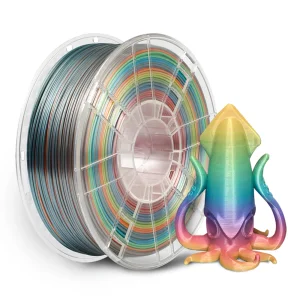
Pioneered by advanced Chinese extrusion facilities, co-extrusion technology blends two or three distinct silk colors simultaneously along the cross-section of a single 1.75mm strand. As the 3D printer nozzle moves, the printed object displays dynamic chromatic color-shifting depending on the viewer's angle, opening entirely new visual possibilities for consumer merchandise.
Enterprise procurement standards increasingly require carbon footprint reduction. Leading manufacturers are transitioning from virgin plastic spools to 100% recycled die-cut cardboard spools. Furthermore, research into chemically recycled Silk PLA (rPLA) ensures that off-spec factory trim and industrial scrap are re-compounded without loss of mechanical integrity or optical gloss.
Key technical parameters for B2B buyers evaluating China 3D printing filament supplier capabilities.
Selecting a reliable China Silk Filament 1kg manufacturer requires thorough auditing beyond standard unit pricing. Enterprise buyers should verify the following four critical operational criteria:
PLA polymer is hygroscopic and hydrolyzes when exposed to ambient moisture, causing popping sounds, stringing, and severe brittleness. Ensure the supplier bakes raw filament strands in dehumidifying hoppers to <0.02% water content prior to immediate vacuum sealing with fresh silica gel packets and high-barrier foil/poly bags.
For global OEM private label brands, color consistency across different production batches is vital. Demand spectrophotometer color-difference analysis reports (Delta E < 1.0) for every production lot to guarantee masterbatch stability.
Confirm that all raw polymers, pigments, and luster modifiers fully comply with EU RoHS 2.0, REACH SVHC, and US FDA food contact guidelines (where applicable), preventing legal and customs clearance roadblocks in destination markets.
Audit the manufacturer’s capability to deliver custom die-cut retail boxes, branded spool sticker labels, customized barcode/UPC printing, and master carton reinforcement for Amazon FBA or direct-to-distributor freight drop-shipping.
Expert insights regarding print parameters, troubleshooting, and enterprise ordering logistics.
Explore our extended series of specialty, flexible, engineering, and silk composite filaments for international buyers.