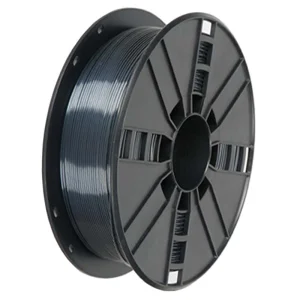
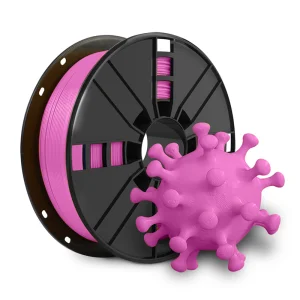
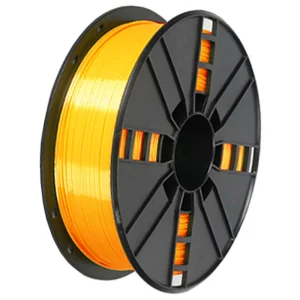
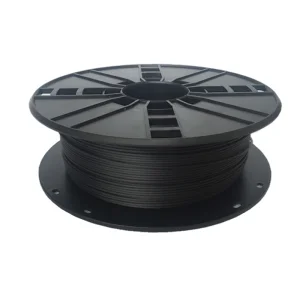
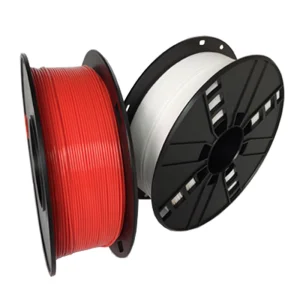
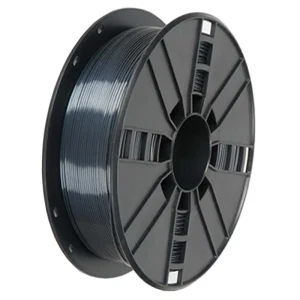
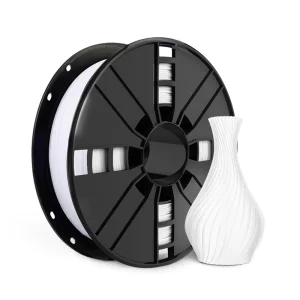
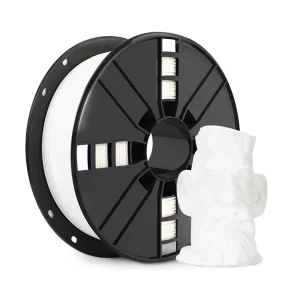
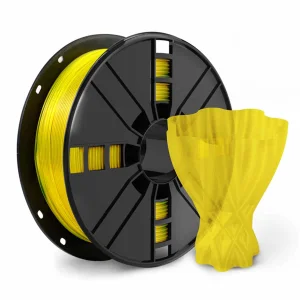
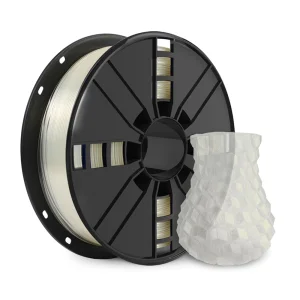
Precision-extruded filaments manufactured under strictly controlled closed-loop laser gauge monitoring (±0.02mm diameter tolerance).
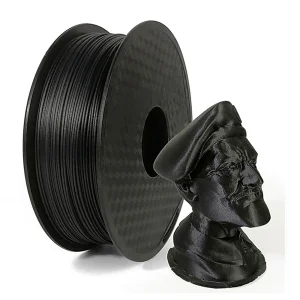
Delivering high-throughput polymer materials to global OEM brands, industrial print farms, and regional distributors across 75+ countries.
The global additive manufacturing sector has undergone a profound structural shift from rapid prototyping novelty to high-rate end-use part production. At the epicentre of this transformation is the polymer extrusion ecosystem in China. As global demand for reliable Fused Deposition Modeling (FDM) / Fused Filament Fabrication (FFF) thermoplastic wire scales toward multi-billion dollar valuations, seeking out an established China PLA ABS filament factory has become a core strategic initiative for hardware manufacturers, filament distributors, and high-volume additive production hubs.
China’s competitive dominance in thermoplastics stems from integrated upstream chemical supply chains, advanced melt-spinning technology adaptations, and automated quality verification protocols. Torwell Technologies, founded in 2011, operates at the vanguard of this ecosystem. Operating a 2,500 m² standardized cleanroom manufacturing floor outfitted with 6 fully automated high-speed extrusion lines, Torwell bridges the gap between raw biopolymer/synthetic polymer synthesis and sub-millimeter extrusion precision required by modern high-speed 3D printers.
Information Gain Insight: High-speed 3D printing architectures (accelerating printing velocities from legacy 50 mm/s to 600 mm/s) demand a fundamental redesign of melt rheology. Standard commodity PLA or ABS filaments experience melt-fracture and severe layer delamination at elevated flow rates. Torwell's modified PLA+ and ABS formulations utilize specialized melt strength enhancers and thermal stabilizers engineered specifically for ultra-high volumetric flow environments.
Understanding the molecular dynamics, crystallization kinetics, and mechanical performance parameters of primary 3D printing polymers.
Chemical Structure: Sourced from renewable plant starch (corn or sugarcane), PLA is a aliphatic polyester made up of polymerized lactic acid units.
Rheological Characteristics: Exhibits low thermal shrinkage (~0.3-0.5%), a Glass Transition Temperature ($T_g$) between 55°C and 60°C, and excellent inter-layer bonding due to moderate polymer chain mobility at 190°C–220°C.
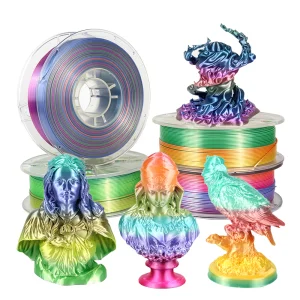
Key Variations: Standard PLA, High-Toughness PLA+ (impact resistance optimized by 4x over virgin PLA), Silk PLA (elastomeric co-monomers added for high-sheen pearlescent optics), and Carbon Fiber PLA (short carbon fiber reinforcement for high flexural modulus).
Chemical Structure: Terpolymer combining Acrylonitrile (chemical resistance & thermal stability), Butadiene (toughness & low-temperature impact strength), and Styrene (surface gloss & rigidity).
Rheological Characteristics: Amorphous structure with a high Glass Transition Temperature ($T_g$) of ~105°C and Heat Deflection Temperature (HDT) of ~85°C. Requires an enclosed build chamber (bed temp 90°C–110°C) due to thermal contraction coefficient (~1.2–1.5%).
Key Variations: Low-Odor ABS (vacuum-degassed during extrusion to minimize styrene VOC emissions), Flame-Retardant ABS (UL94 V-0 certified), and ASA (Acrylonitrile Styrene Acrylate, substituting butadiene with acrylic rubber for outdoor UV weathering immunity).
| Polymer Grade | Density (g/cm³) | Tensile Strength (MPa) | Flexural Modulus (MPa) | Izod Impact (kJ/m²) | HDT @ 0.45 MPa | Primary Target Application |
|---|---|---|---|---|---|---|
| Standard PLA | 1.24 | 60 - 65 | 3,150 | 3.2 | 56°C | Prototyping / Consumer |
| Toughened PLA+ | 1.23 | 58 - 62 | 2,900 | 12.5 | 58°C | Functional Models |
| Silk PLA | 1.25 | 48 - 52 | 2,400 | 4.5 | 54°C | Aesthetics & Decor |
| Industrial ABS | 1.04 | 40 - 45 | 2,100 | 22.0 | 88°C | Automotive & Tooling |
| UV-Stable ASA | 1.07 | 42 - 48 | 2,200 | 18.0 | 94°C | Outdoor Assemblies |
| Carbon Fiber PLA | 1.29 | 75 - 82 | 5,400 | 6.8 | 65°C | Drone & Aerospace |
Eliminating diameter drift, void formation, moisture degradation, and spool tangling at the factory level.
Virgin raw pellets undergo twin-tower desiccant air drying until internal moisture content falls below 200 ppm (0.02%), completely preventing hydrolytic degradation and steam void creation during melting.
Extruders featuring L/D ratios of 30:1 ensure complete melt homogenization. Precision barrier screws eliminate un-melted gels, while multi-zone PID controllers maintain melt temperature within ±0.5°C.
Inline high-frequency dual-axis laser micrometers measure strand diameter and ovality at 500 Hz. Automated feedback loops adjust puller speeds instantaneously to maintain a absolute ±0.02mm tolerance.
Fully automated spoolers utilize servo-driven traverse units and closed-loop tension controllers. Filament is wound layer-by-layer without overlapping, guaranteeing 100% tangle-free feeding in multi-material AMS setups.
Extruded spools pass directly into humidity-controlled holding rooms before being vacuum sealed inside heavy-duty moisture barrier foil/transparent bags alongside specialized active silica desiccant packs.
Empowering global 3D printing brands with turnkey white-label manufacturing, custom color matching, and compliant export logistics.
For international brands, retail chains, and Amazon store owners seeking to scale their market share, collaborating directly with a reputable China PLA ABS filament factory provides massive operational leverage. Torwell Technologies offers comprehensive OEM/ODM solutions tailored to exact client branding requirements:
Supply Chain Security Note: Torwell maintains strategic buffer stocks of virgin raw polymer resins (NatureWorks PLA, LG Chem ABS) to insulate global partners against raw material price volatility and ensure uninterrupted 15-day turnaround times for standard FCL (Full Container Load) export orders.
Engineered polymer properties tuned for demanding operational conditions across commercial and technical domains.
Torwell ABS and ASA filaments deliver the structural integrity, heat deflection, and solvent resistance required for assembly jigs, check gauges, custom ducting, and functional end-use vehicle interiors.
Optimized for continuous 24/7 printing environments. Enhanced melt flow rates eliminate nozzle clogging while strict diameter control guarantees identical layer deposition across hundreds of networked printers.
PLA and Silk PLA series offer high dimensional stability, crisp overhang fidelity, and visually stunning pearlescent finishes, making them ideal for rapid visual prototypes, architectural scale models, and retail concepts.
Advancing polymer circularity, eco-friendly formulations, and extreme high-speed extrusion readiness.
As global environmental regulations push for strict carbon neutrality, the extrusion industry is undergoing rapid innovation. Torwell’s R&D laboratory is currently pioneering next-generation PLA formulations derived entirely from agricultural side-stream waste. Furthermore, our closed-loop recycling initiative incorporates post-industrial recycled ABS (rABS) stabilized with reactive elastomeric chain extenders to match the mechanical impact resistance of 100% virgin polymer resin.
With modern 3D printers pushing kinematic speeds beyond 600 mm/s and accelerations past 20,000 mm/s², conventional filament extrusion techniques face significant thermal transfer limitations. Torwell’s upcoming HyperFlow Series incorporates dynamic shear-thinning additives that dramatically lower viscosity at high shear rates while preserving static inter-layer adhesion when the polymer cools.
Direct technical and operational answers from our engineering and export trade teams.
Expand your product catalog with high-margin specialty blends, rainbow gradients, and flexible materials.