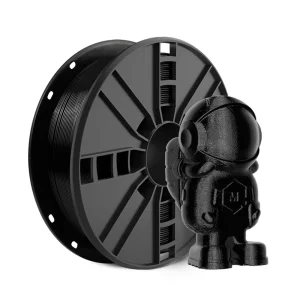
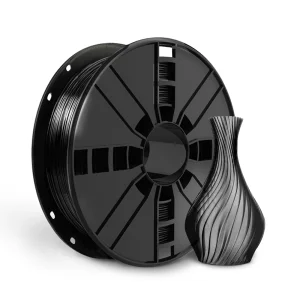
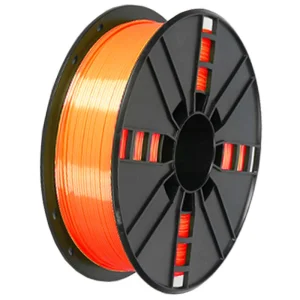
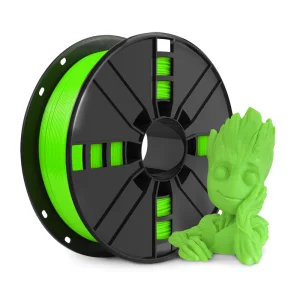
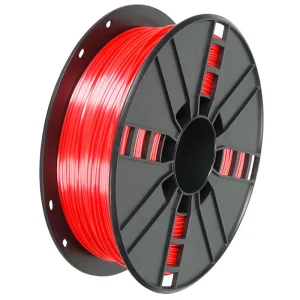
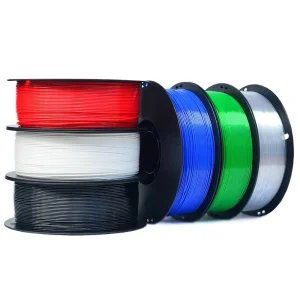
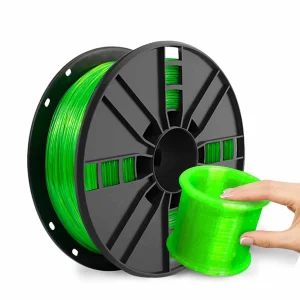
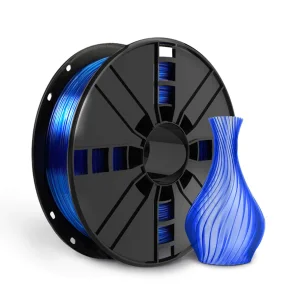
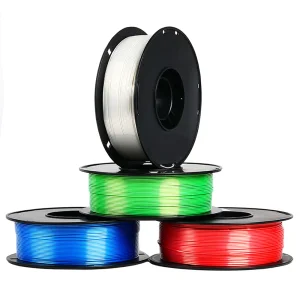
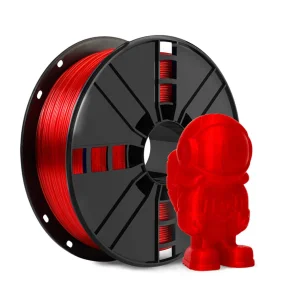
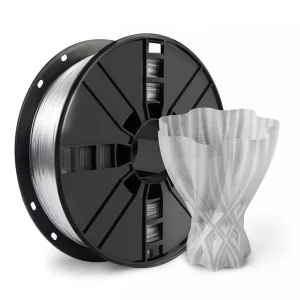
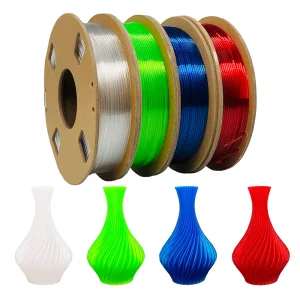
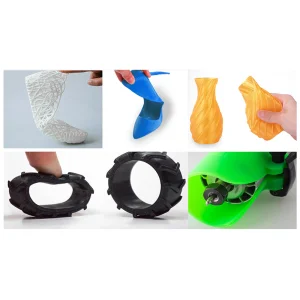
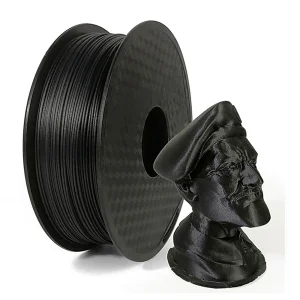
Standard and specialty extrusion spools engineered for seamless feed reliability across top-tier FDM automated printing systems.
Transforming high-volume additive manufacturing through ultra-clear, glycol-modified thermoplastic extrusion technology.
As global enterprises transition from rapid prototyping to bridge tooling and direct digital manufacturing (DDM), securing high-grade raw materials is paramount. Our China manufacturing complex maintains automated extrusion lines operating under strict ISO 9001 protocols, mitigating global supply bottlenecks and offering scalable OEM/ODM capacity.
1.75mm Clear PETG serves as the definitive structural middle-ground between brittle acrylic (PMMA) and costly, hard-to-print Polycarbonate (PC). It eliminates warping and bed adhesion failures while delivering superior impact resistance, chemical immunity, and crystal-clear optical transparency.
For industrial print farms operating hundreds of FDM machines simultaneously, filament diameter inconsistency causes nozzle clogs, under-extrusion, and costly scrap rates. Our continuous inline laser monitoring guarantees zero diameter variance, maximizing printing yield and lowering total operational cost.
Understanding CHDM glycol-modification, refractive index optimization, and hydrolytic stability during melt extrusion.
Polyethylene Terephthalate Glycol-modified (PETG) is synthesized by replacing a portion of ethylene glycol with 1,4-cyclohexanedimethanol (CHDM) during the polycondensation polymerization process. Standard PET is a semi-crystalline polymer that turns opaque upon slow thermal cooling due to spherulite crystallization. The incorporation of bulky CHDM rings disrupts the structural regularity of the polymer chain, preventing crystallization entirely.
This creates a permanently amorphous polymer structure. Because no internal crystallites exist to refract or scatter passing light waves, 1.75mm Clear PETG maintains crystal transparency regardless of print cooling speed or wall thickness, while preserving substantial mechanical impact energy absorption.
Our raw resin selection is meticulously calibrated to achieve a Refractive Index ($n$) matching approximately 1.570 at the sodium D-line (589.3 nm). When extruded at optimal temperatures (230°C – 245°C), inter-layer void spaces are completely eliminated, minimizing light scattering interfaces.
Spectral spectrophotometer analysis confirms that parts printed with our 1.75mm Clear PETG filament achieve a luminous transmittance exceeding 91.5% in the visible spectrum (400nm – 700nm), with a haze value maintained below 1.2%, matching commercial optical acrylic standards.
PETG is highly sensitive to moisture degradation (hydrolysis) at elevated melt temperatures. When water molecules are present in the raw polymer matrix during extrusion, heat causes nucleophilic attack on the ester linkages, severing polymer chains, decreasing Molecular Weight ($M_w$), and causing micro-bubbling, severe stringing, and severe brittleness.
| Physical Parameter | Test Standard | Nominal Specification |
|---|---|---|
| Filament Diameter | Laser Measurement | 1.75 mm ±0.02 mm |
| Density | ISO 1183 | 1.27 g/cm³ |
| Glass Transition Temp ($T_g$) | ISO 11357 (DSC) | 80 °C |
| Melt Flow Index (MFI) | ISO 1133 (230°C/2.16kg) | 15–20 g/10min |
| Tensile Strength (Yield) | ISO 527 (50 mm/min) | 50 MPa |
| Flexural Modulus | ISO 178 | 2,100 MPa |
| Charpy Impact (Notched) | ISO 179/1eA | 8.5 kJ/m² |
| Optical Transmittance | ASTM D1003 | > 91.5 % |
5-tier quality control architecture ensuring batch-to-batch consistency for seamless automated high-speed extrusion.
Prior to extrusion melt-processing, virgin PETG pellets undergo double-stage desiccant rotor drying at 70°C for 6 consecutive hours. Moisture levels are forced down below 0.02% (200 ppm), completely preventing hydrolytic degradation and internal void creation during thermal processing.
Every extrusion line is integrated with high-frequency dual-axis laser optical micrometers scanning at 1,000 measurements per second. Any spool section exceeding the strict ±0.02mm diameter variance or 1.5% ovality tolerance is automatically flagged, cut, and discarded in real-time.
To support high-speed multi-material automatic feeding systems (such as Bambu Lab AMS, Prusa XL, and Creality K1 Max), spools are wound using伺服 (servo)-driven automatic traverse system. Layer-by-layer precision alignment completely eliminates cross-winding tangles and feeding jams.
Tailored technical properties satisfying regulatory, optical, and mechanical demands across key global sectors.
Used for non-patient contact fluidic manifold prototypes, clear protective face-shield structures, and transparent equipment housings requiring chemical wipe-down compatibility (isopropyl alcohol, bleach solutions).
Ideal for functional interior light pipe prototypes, vehicle tail-light housing mockups, clear fluid reservoir validation models, and custom protective clear covers for assembly line jigs.
Delivers high dielectric strength and transparency for custom PCB protective enclosures, LED display windows, automated sensor covers, and industrial dust-proof translucent shrouds.
Empowers luxury cosmetics container design houses and beverage packaging engineers to print clear, high-gloss visual prototypes matching real PET blow-molded bottles.
Pioneering high-speed polymer melt rheology, circular sustainability, and advanced functional coatings.
Optimizing polymer chain weight distribution to support print speeds in excess of 600 mm/s. Novel thermal stabilizer packages prevent shear-induced degradation and maintain clarity under extreme nozzle volumetric flow rates ($>35 \text{ mm}^3/\text{s}$).
Integrating up to 50% post-industrial chemical recycling monomer feeds without degrading luminous transparency or mechanical yield. Proprietary filtration systems remove particulate contaminants down to 5 microns.
Engineered additives introducing UL94-V0 self-extinguishing flame retardancy and HALS (Hindered Amine Light Stabilizers) preventing yellowing ($YI < 1.5$) under 5,000 hours of continuous outdoor solar radiation exposure.
Streamlined international trade protocols, custom OEM private labeling, and absolute regulatory alignment.
We provide full-service turn-key manufacturing for multinational 3D printing material brands, regional distributors, and e-commerce enterprise retailers:
Every batch produced in our facilities complies strictly with international chemical safety and environmental import mandates:
Explore our complete range of high-clarity, silk-finish, carbon-fiber reinforced, and flexible filaments.
Expert answers addressing material performance, print settings, packaging protection, and OEM terms.
Maximum transparency relies on eliminating internal micro-air gaps between extruded beads. We recommend: (1) Increasing print temperature to 240°C–245°C to enhance polymer flow and layer fusion; (2) Printing with 100% aligned rectilinear infill or single-wall vase mode; (3) Increasing layer height to 0.75× nozzle diameter; (4) Reducing cooling fan speed to 0%–20%; and (5) Printing at lower speeds (20–30 mm/s) to ensure homogeneous thermal dissipation.
All 1.75mm PETG filaments are produced under inline dual-axis laser feedback control guaranteeing a strict ±0.02mm diameter deviation and less than 1.5% ovality across the entire 1,000-meter continuous spool length. Real-time statistical process control (SPC) automatically rejects out-of-spec segments during production.
Immediately following post-extrusion dehumidification, spools are sealed in heavy-duty vacuum aluminum barrier pouches containing active desiccant packs (1:10 desiccant-to-weight ratio). Master shipping cartons utilize 5-ply corrugated cardboard reinforced against ambient humidity and sea-freight transit stress.
Our baseline OEM MOQ for private label spools is 200 kg per SKU. Customization services encompass Pantone/RAL color matching, custom box printing, branded spool stickers, custom spool net weights (250g to 10kg master rolls), and fully customizable technical data sheet (TDS) labeling.
Yes. Our virgin clear PETG resin is formulated using monomers compliant with FDA 21 CFR 177.1315 and EU Regulation No 10/2011. Full RoHS 2.0 and REACH SVHC test documentation is supplied with every bulk batch shipment.
PETG combines the printability and low-warp characteristics of PLA with the high impact resistance, chemical durability, and thermal stability (Tg ~80°C) of ABS. Unlike ABS, PETG emits virtually zero odor during printing and does not require an enclosed heated chamber, making it ideal for large-format functional parts.