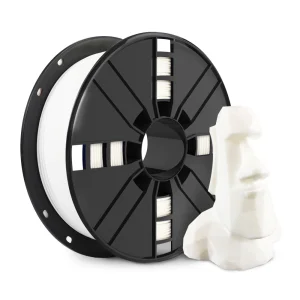
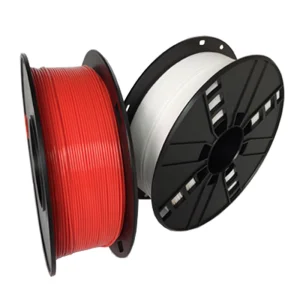
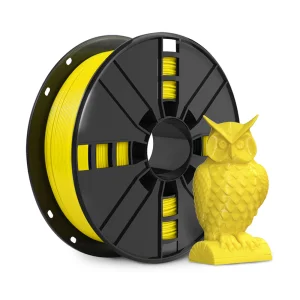
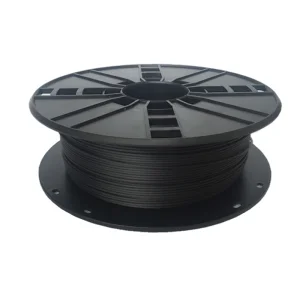
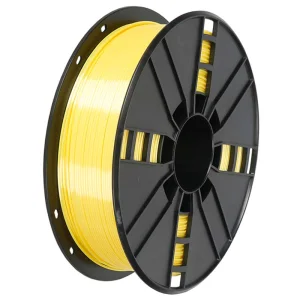
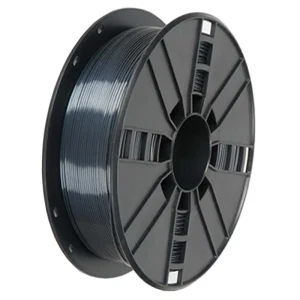
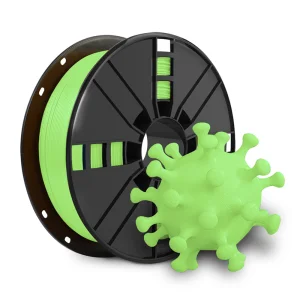
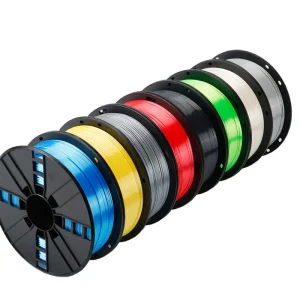
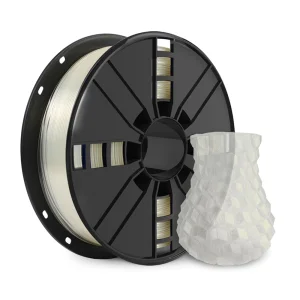
Verified structural stability, laser-monitored tolerance ±0.02 mm, engineered for Bambu Lab, Creality, Voron, and Industrial FDM Fleet Operations.
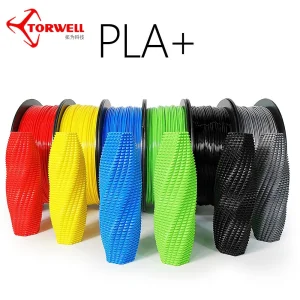
Why Polyethylene Terephthalate Glycol has emerged as the definitive bridge material between standard prototyping polymers and high-cost engineering plastics.
In the rapidly maturing landscape of additive manufacturing, global enterprise buyers, print farm operators, and OEM brands require raw materials that balance chemical resilience, mechanical toughness, optical clarity, and thermal stability. While Polylactic Acid (PLA) dominates the entry-level educational and decorative desktop markets due to its melt simplicity, and Acrylonitrile Butadiene Styrene (ABS) offers thermal resistance but suffers from aggressive volumetric shrinkage and severe warping, Polyethylene Terephthalate Glycol (PETG) represents the sweet spot of functional material engineering.
As a leading China PETG 3D printer filament supplier and supplier ecosystem partner, Torwell Technologies has witnessed a fundamental paradigm shift over the past decade. Enterprise procurement officers are migrating their core volume purchases toward customized PETG formulations. The underlying chemistry of PETG—specifically the glycol modification of standard PET resin—prevents the polymer chains from crystallizing during rapid Fused Deposition Modeling (FDM) extrusion. This amorphous state yields exceptional layer-to-layer adhesion, low shrinkage coefficient (<0.4%), outstanding chemical resistance against acids, alkalis, and solvents, and high impact strength.
Incorporating cyclohexane dimethanol (CHDM) during synthesis disrupts polymer crystallization, providing optical transparency, impact resistance, and preventing brittle fracturing under dynamic stress loads.
PETG delivers tensile adhesion strength across layer boundaries that approaches 85-90% of isotropic injection-molded parts, virtually eliminating anisotropic structural failures in end-use parts.
Offers superior resistance to moisture degradation compared to standard nylon, and withstands harsh industrial cleanings, greases, oils, and automotive fluids without stress cracking.
Built upon 13+ years of polymer R&D, precision extrusion automation, and strict global quality management systems.
| Polymer Grade | Tensile Strength (MPa) | Heat Deflection Temp (°C @ 0.45MPa) | Shrinkage Rate (%) | Chemical Resistance | Primary Target Application |
|---|---|---|---|---|---|
| PETG Industrial | 49 - 52 | 75 - 80 °C | 0.2% - 0.4% | High (Acids, Bases, Oils) | Jigs, Fixtures, Chemical Tanks, Housings |
| Standard PLA | 55 - 65 | 52 - 55 °C | 0.1% - 0.3% | Low (Solvent Sensitive) | Visual Models, Architectural Concepts |
| PLA+ Pro | 60 - 68 | 55 - 58 °C | 0.1% - 0.3% | Moderate | Functional Toys, Functional Concept Models |
| ABS Technical | 40 - 45 | 85 - 95 °C | 0.8% - 1.4% | Moderate (Aromatic Solvents) | Enclosed Automotive Components, Tool Bodies |
| Carbon Fiber Composite | 75 - 110 | 110 - 150 °C | < 0.1% | High | Aerospace Drone Frames, Robotics Arms |
How specialized Chinese extrusion technology protects global brands against raw material volatility, batch inconsistency, and lead-time bottlenecks.
Navigating the global 3D printing supply chain requires more than basic extrusion capability; it demands absolute resin purity, digital process monitoring, continuous inline feedback loops, and robust raw material sourcing. As a premiere China PETG 3D printer filament supplier based in China’s high-tech manufacturing corridor, Torwell Technologies operates under an integrated Industry 4.0 smart factory model that guarantees supply chain continuity and price competitiveness for international buyers.
Filament performance is heavily determined by virgin polymer purity. Torwell maintains direct strategic procurement agreements with world-tier chemical suppliers (such as SK Chemicals, Eastman, and NatureWorks). By enforcing strict melt flow index (MFI) screening upon incoming raw resin batches, we eliminate batch-to-batch viscosity variance. Unlike secondary re-grind suppliers that mix recycled post-consumer waste, our virgin PETG resin formulations ensure zero molecular degradation during extrusion, maintaining consistent glass transition temperatures ($T_g \approx 80^\circ\text{C}$) and crystal-clear clarity.
Diameter fluctuation is the primary cause of extrusion starvation, nozzle clogging, and erratic print wall thicknesses. Our six automated extrusion lines are fitted with dual-axis infrared laser micrometer gauges that continuously sample filament diameter at a rate of 500 Hz. The real-time data feeds directly into servo-motor puller drives: if the strand deviates by more than $\pm0.02\text{ mm}$ from the target $1.75\text{ mm}$ or $2.85\text{ mm}$ profile, automatic micro-adjustments are applied instantly. Flawed segments are automatically marked and rejected by inline optical sensors prior to spooling.
Modern high-speed 3D printers equipped with Automatic Material Systems (AMS) or multi-spool feed units require flawless spool winding. Tangles, crossed loops, or uneven spool layer stackings cause immediate machine downtime in print farms. Torwell’s multi-axis robotic winders control linear spooling pitch and tension dynamically. Every layer of PETG, PLA, or ABS filament is laid down in neat, non-overlapping concentric wraps, preventing snags during high-speed retraction moves (up to $500\text{ mm/s}$).
From industrial automation assembly lines to medical prototype testing, explore how Torwell PETG filament powers multi-industry production.
Factory assembly floors deploy PETG for custom robotic end-effectors, drill guides, and conveyor brackets due to its mechanical toughness, fatigue resistance, and low tool wear.
With dielectric insulation properties and IP-sealable surface finishes, PETG enclosures safeguard IoT sensors, PCB assemblies, and outdoor junction boxes against moisture ingress.
Petrochemical, agricultural, and laboratory research facilities rely on PETG containers and liquid manifolds that resist hydrocarbon breakdown, mild acids, and detergent solutions.
Empowering global distributors, e-commerce brands, and print farm networks with customized material formulations and white-label packaging.
Building a successful 3D printing supply brand requires a flexible manufacturing partner capable of adapting to complex brand identity guidelines, regulatory compliance mandates, and region-specific spool formats. Torwell’s end-to-end OEM service provides turnkey support from masterbatch development to retail-ready packaging.
Our pigment engineers synthesize custom masterbatch formulations matched precisely to your target Pantone (PMS) or physical color swatch with Delta E ($\Delta E < 1.0$) color consistency across years of re-orders.
Select from eco-friendly recycled cardboard spools, high-temperature clear polycarbonate spools, or multi-use detachable spools in $250\text{ g}$, $1\text{ kg}$, $3\text{ kg}$, or $5\text{ kg}$ bulk farm sizes.
To eliminate moisture degradation during ocean transit, every spool is dried to $<0.05\%$ moisture, vacuum-sealed in heavy-gauge foil/poly barrier bags with high-capacity silica desiccant, and batch-stamped.
Expert insights regarding procurement, technical extrusion behavior, OEM customization, and global distribution logistics.
Torwell Technologies brings over 13 years of specialized extrusion manufacturing experience, operating a 2,500 m² modern factory equipped with 6 fully automated production lines. We enforce dual-axis laser diameter measurement for a tight ±0.02 mm tolerance, guarantee virgin material purity (no post-consumer regrind contamination), and supply OEM brands across 75+ countries with certified ISO9001, RoHS, and REACH compliance.
PETG delivers the ideal operational compromise: it prints without the toxic odor, enclosure requirements, or extreme thermal warping associated with ABS, while offering much higher impact strength, layer adhesion, and thermal resistance (HDT ~75°C) than standard PLA. For high-speed print farms utilizing modern Bambu Lab or Voron systems, Torwell PETG formulations maintain melt stability at flow rates exceeding 20-30 mm³/s.
Optimal print parameters generally fall within the following technical windows: Nozzle Temperature: 230°C – 250°C; Heated Bed Temperature: 70°C – 80°C; Print Speed: 40 mm/s to 300 mm/s (depending on hotend volumetric capacity); Cooling Fan Speed: 20% to 50% (lower fan speeds maximize Z-axis strength; higher speeds enhance fine detail bridging). Bed Adhesion: PEI sheet, glass with glue stick, or textured build plates.
Yes, PETG resin is moderately hygroscopic and will absorb atmospheric moisture over time if exposed to humid environments, leading to stringing, micro-void bubbling, and popping during extrusion. Torwell eliminates this risk by hot-air drying all raw filament before spooling, followed by immediate vacuum-sealing with active silica desiccant bags in heavy-duty moisture-proof barrier pouches prior to carton packing.
We provide full white-label and private label manufacturing services including: Pantone-matched custom filament colors; custom-designed spool stickers and outer carton boxes; selection of plastic, cardboard, or high-capacity print farm spools (0.25kg, 1kg, 3kg, 5kg); customized QR code batch tracking labels; and complete technical documentation (TDS & MSDS) branded for your enterprise.
For standard stock colors and standard Torwell packaging, our MOQ is flexible (starting from 100 spools). For custom private label OEM projects or custom Pantone color matches, our typical minimum order threshold is 500 to 1,000 kg depending on specific material requirements. Production lead time for full container orders (20ft / 40ft) is generally 15 to 20 business days from art approval and deposit receipt.
Filament tangles are mathematically impossible during the extrusion winding phase; they occur only when the loose end of the strand is released and slips beneath an adjacent layer. Torwell utilizes automated tension-controlled winding machines that maintain continuous mechanical pull throughout spooling. Furthermore, each spool features secure anchor holes on the outer flange to lock the filament end in place immediately upon winding completion.
Yes. All raw materials and finished filaments manufactured by Torwell strictly comply with EU REACH regulations, RoHS hazardous substance limitations, and VOC emission testing. We provide full Material Safety Data Sheets (MSDS) and Technical Data Sheets (TDS) for every product line to support your regulatory compliance and import documentation.
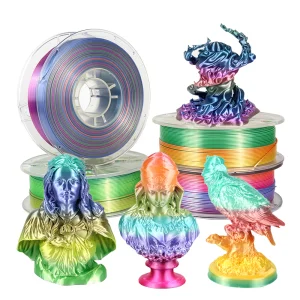
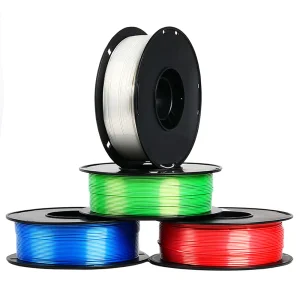
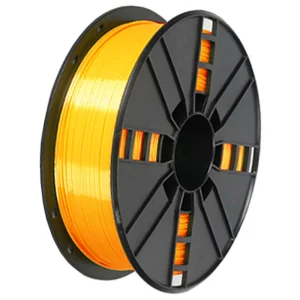
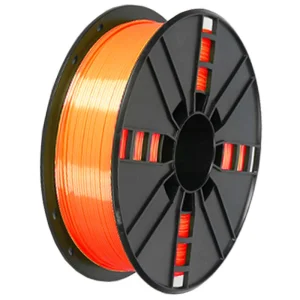
Expand your product catalog with high-margin specialty aesthetic materials: Silk shiny gradients, rainbow transitions, high-clarity transparent PLA, and pearlescent finishes.