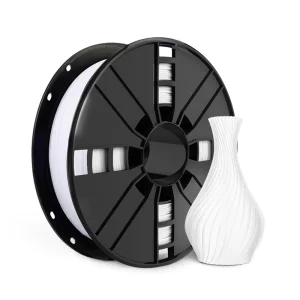
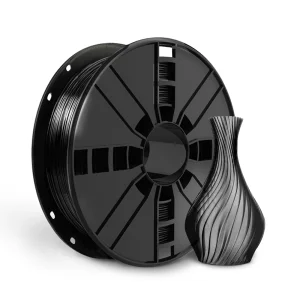
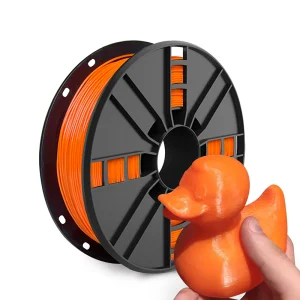
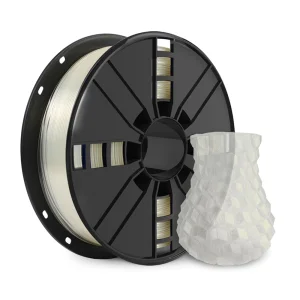
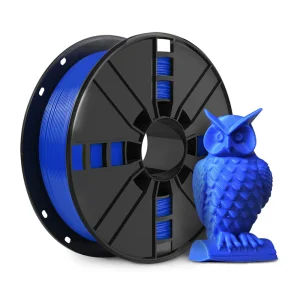
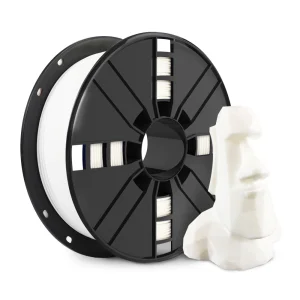
Direct factory wholesale options engineered for print farms, industrial manufacturers, and brand distributors worldwide.
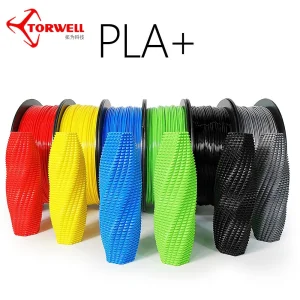
Wholesale Torwell PLA PLUS Pro (PLA+) Filament with high strength, 1.75mm 2.85mm 1kg spool Supplier, Factories
View Details & Quote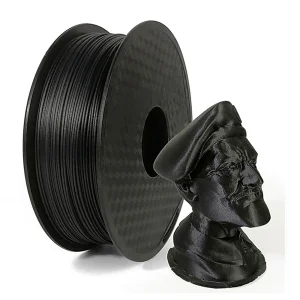
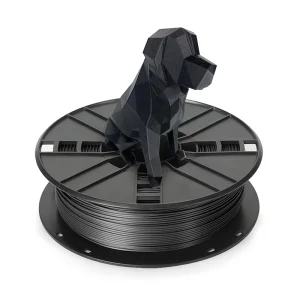
Wholesale PETG Carbon Fiber 3D Printer Filament, 1.75mm 800g/spool Manufacturers, Supplier
View Details & Quote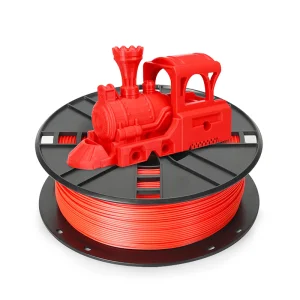
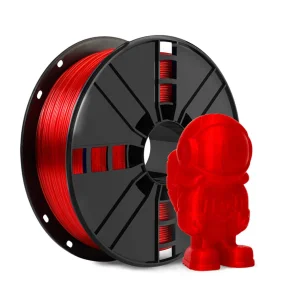
Wholesale PLA plus Red PLA filament 3D printing materials Manufacturer, Factory
View Details & QuoteAn in-depth technical analysis on lightweighting, flexural modulus elevation, and structural performance in modern additive manufacturing.
The global 3D printing filament market is undergoing a seismic paradigm shift from cosmetic prototyping materials toward high-rigidity functional composites. As a premier China Carbon Fiber PLA Filament Manufacturer & Supplier, Torwell Technologies Co., Ltd. (established in 2011) leverages over a decade of extrusion expertise to compound micro-milled, high-aspect-ratio carbon fibers into refined Polylactic Acid (PLA) matrix resins. The resulting composite—commonly designated as PLA-CF—addresses the historical limitations of unreinforced thermoplastics by delivering exceptional tensile stiffness, near-zero isotropic shrinkage, and a matte architectural surface finish that conceals layer lines.
Understanding where Carbon Fiber Reinforced PLA stands against traditional unreinforced plastics and higher-temperature composite alternatives is crucial for product developers, procurement officers, and private label resellers:
| Material Type | Tensile Strength (MPa) | Flexural Modulus (GPa) | Heat Deflection Temp (°C @ 0.45MPa) | Warping / Shrinkage Risk | Enclosure Requirement |
|---|---|---|---|---|---|
| Standard Neat PLA | 55 – 60 | 3.1 – 3.4 | 52 – 55 °C | Very Low | Open Air (Not Required) |
| Torwell PLA-CF (Carbon Fiber) | 68 – 75 | 5.2 – 6.1 | 62 – 68 °C | Negligible (Ultra-Low) | Open Air (No Enclosure) |
| Standard PETG | 48 – 52 | 1.9 – 2.2 | 68 – 72 °C | Low to Medium | Open Air / Optional |
| Torwell PETG-CF | 62 – 68 | 4.5 – 5.0 | 75 – 80 °C | Very Low | Open Air / Optional |
| PA-CF (Nylon Carbon Fiber) | 85 – 110 | 7.5 – 9.0 | 150 – 190 °C | High (Hygroscopic) | Required (High Temp Chamber) |
How precise fiber aspect ratios and matrix compatibilizers eliminate directional anisotropy in FDM printed parts.
Torwell’s formula integrates 15% to 20% by weight of chopped high-modulus carbon fiber strands (mean fiber diameter 7–10 μm). These fibers align along the polymer flow path during extrusion, creating a rigid structural network inside the printed bead that resists bending and shear deformation.
Thermal expansion coefficients are dramatically reduced. Standard PLA experiences microscopic cooling contractions that yield dimensional drift across large builds. The embedded carbon matrix absorbs internal thermal stress, enabling flat, dimensional tolerances suited for CNC soft jaws and housing fixtures.
Micro-refractions caused by light scattering off carbon micro-structures impart a premium, deep-black matte visual texture. Layer lines virtually disappear, minimizing the requirement for post-processing, sanding, chemical smoothing, or primer coating in finished retail components.
Because carbon fibers are inherently abrasive, processing PLA-CF demands precise extruding engineering. Standard brass nozzles will experience rapid orifice enlargement when extruding carbon composites, leading to loss of dimensional control and inconsistent backpressure.
Empowering engineers, robotics designers, and automotive specialists with light-weight, high-stiffness polymer components.
Unmanned Aerial Vehicles (UAVs) require exceptional stiffness-to-weight ratios to endure high rotational forces and rapid maneuvers. Torwell PLA-CF is widely adopted for printing lightweight drone arm struts, motor mounts, shock-absorbing camera gimbals, and battery enclosures without adding weight penalties.
From rapid prototyping of intake manifolds to custom dashboard bezels and sensor brackets, carbon fiber PLA resists under-hood ambient heat while maintaining structural integrity against engine vibration. Ideal for custom tuning shops and low-volume motorsport production.
Replace heavy, expensive machined aluminum fixtures with rapid 3D-printed soft jaws, assembly alignment jigs, inspection templates, and end-of-arm tooling (EOAT) for robotic manipulators. Reduces lead time from weeks to hours while lowering manufacturing costs up to 80%.
High-end audio equipment chassis, ruggedized camera mounts, handheld testing enclosures, and radio frequency shielding brackets benefit from the non-reflective matte aesthetic, structural stiffness, and dimensional fidelity of PLA-CF filaments.
Custom orthotic braces, protective sports guards, cycling accessories, and archery component prototypes leverage carbon fiber PLA for tailor-made ergonomics combined with impact resistance and rigidity.
Designed to work seamlessly with modern high-speed CoreXY 3D printers operating at accelerations up to 20,000 mm/s². The rapid thermal dissipation of carbon fiber allows quick solidifying of overhangs and bridges.
End-to-end manufacturing control: from raw resin drying to inline dual-axis laser diameter monitoring.
Operating inside our 2,500 m² modern workshop, our specialized twin-screw extrusion systems deliver steady plasticizing and homogeneous dispersion of carbon micro-fibers, preventing resin voiding and fiber agglomeration.
Dual-axis laser diameter gauges continuously measure strand dimensions at 500 Hz. Automated feedback loops dynamically adjust capstan puller speed to maintain a strict ±0.02 mm tolerance, eliminating extrusion surges.
Comprehensive ODM turnkey solutions including customized spool weights (250g, 500g, 1kg, 3kg, 5kg), eco-friendly cardboard or plastic spools, custom Pantone box printing, high-vacuum desiccant sealing, and custom barcoding.
Ensuring complete regulatory safety, environmental compliance, and reliable documentation for international distributors.
Torwell Carbon Fiber PLA raw materials undergo stringent third-party testing (SGS/TÜV) to guarantee total compliance with EU RoHS 2.0 and REACH SVHC standards. Free from heavy metals, toxic plasticizers, and hazardous volatile compounds.
Every shipment is backed by comprehensive Technical Data Sheets (TDS) detailing tensile strength, flexural modulus, Izod impact values, heat deflection temperatures, and Safety Data Sheets (SDS) formatted for North American, European, and Asia-Pacific customs compliance.
State-of-the-art automatic layer winding machines prevent overlapping loops, crisscross tangles, and spooling tension variations, ensuring seamless compatibility with modern multi-material automated switching systems (e.g., AMS, MMU).
Engineered printing profiles for maximum layer adhesion, surface finish quality, and high-speed reliability.
| Parameter Category | Recommended Settings (Standard FDM) | High-Speed Printer Settings (CoreXY / AMS) |
|---|---|---|
| Printing Nozzle Temp | 200 °C – 220 °C | 220 °C – 240 °C |
| Build Plate Temperature | 45 °C – 60 °C (PEI / Glass / Textured Sheet) | 50 °C – 65 °C |
| Nozzle Material & Diameter | Hardened Steel / Ruby (≥ 0.4 mm) | Hardened Steel / DLC Coated (≥ 0.4 mm or 0.6 mm) |
| Printing Speed | 40 – 80 mm/s | 150 – 350 mm/s |
| Cooling Fan Speed | 50% – 100% (Reduce for maximum strength) | 70% – 100% |
| Retraction Length | Direct Drive: 0.5 – 1.5 mm | Bowden: 2 – 4 mm | Direct Drive: 0.4 – 0.8 mm |
| Drying Specifications | 55 °C for 4–6 hours (if exposed to ambient humidity) | In-line Dryer Box recommended for long builds |
Cause: Standard 0.2mm/0.3mm nozzle or low melt temp.
Solution: Upgrade to a 0.4mm or 0.6mm hardened steel nozzle; increase printing temperature by 10 °C to fluidize carbon fibers.
Cause: Excessive cooling fan speed or low nozzle temp.
Solution: Turn off part cooling fans for the first 3 layers, limit maximum fan speed to 50%, and print at 225 °C.
Cause: Moisture absorption in base PLA resin.
Solution: Dry spool at 55 °C in a dedicated filament dryer for 4 hours before printing long parts.
Innovating next-generation bio-composites, recycled fiber integration, and functional nanomaterials.
Torwell R&D is pioneering the integration of recycled carbon fiber (rCF) sourced from aerospace off-cuts combined with 100% bio-based PLA matrices, reducing the cradle-to-gate carbon footprint of industrial 3D printing by over 45%.
Formulations under development feature multi-walled carbon nanotubes (MWCNTs) blended into PLA-CF matrices to impart electrostatic discharge (ESD) safe properties (10^6 to 10^9 ohms/sq) for semiconductor manufacturing fixtures.
Integrating real-time vision inspection system AI algorithms into our 6 factory extrusion lines to detect micro-surface anomalies, filament ovality, and fiber dispersion density prior to spool winding.
Expert insights addressing key technical, purchasing, and manufacturing questions from engineering buyers and OEM partners.
Yes. While standard PLA has a flexural modulus of approximately 3.1–3.4 GPa, Torwell Carbon Fiber PLA achieves a flexural modulus of 5.2–6.1 GPa—representing an 80%+ increase in structural stiffness. This high rigidity prevents bending under mechanical loads. Additionally, carbon fibers eliminate isotropic thermal shrinkage during cooling, resulting in dramatically higher dimensional accuracy across large surface areas.
Microscopic carbon fibers act as abrasive particles during extrusion. Standard brass nozzles will experience rapid orifice wear within 250 grams to 500 grams of printing, leading to unpredictable flow rates, wall thickness variations, and degraded print quality. Hardened steel, stainless steel, or ruby-tipped nozzles resist wear and maintain stable orifice diameters over hundreds of printing hours.
No. One of the greatest practical advantages of Carbon Fiber PLA over Nylon-CF (PA-CF) or PC-CF is that it prints effortlessly on open-frame 3D printers without requiring a heated chamber or high-ambient-temperature enclosure. The low thermal expansion of the PLA-CF compound prevents corner lifting and bed warping.
All Torwell filaments are extruded with inline closed-loop dual-axis laser measurement systems that monitor diameter and roundness 500 times per second. We maintain a strict tolerance of ±0.02 mm on both standard 1.75 mm and 2.85 mm formats, ensuring smooth feeding without jams or under-extrusion.
Absolutely. As an established OEM/ODM factory supplier, Torwell offers turnkey private label customization. We can match custom Pantone colors for base resins, supply customized cardboard or plastic spools, produce custom branded packaging boxes, insert custom technical leaflets, and provide fully customized barcoding for retail channels.
To prevent moisture absorption during maritime transit, each filament spool is thoroughly oven-dried prior to spooling, wrapped in high-barrier vacuum bags alongside high-capacity desiccant packs, and packed into individual reinforced corrugated boxes. Outer cartons are palletized and stretch-wrapped for sea and air freight safety.
Explore our comprehensive range of consumer, educational, and high-performance 3D printing filaments.
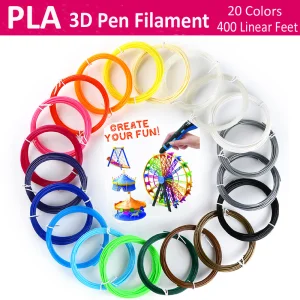
China Torwell PLA 3D pen Filament for 3D printer and 3D pen Manufacturer, Factories
View Details & Quote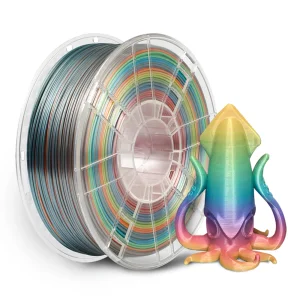
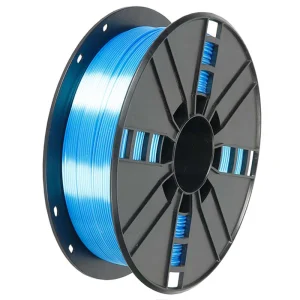
Wholesale PLA Silky Rainbow filament 3D printer Filament Manufacturer, Supplier
View Details & Quote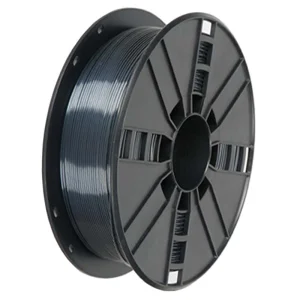
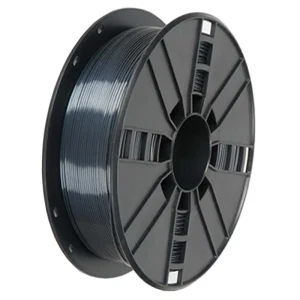
Wholesale Silk Black PLA Filament 1.75mm 3D Printing Filament Manufacturers, Factories
View Details & Quote