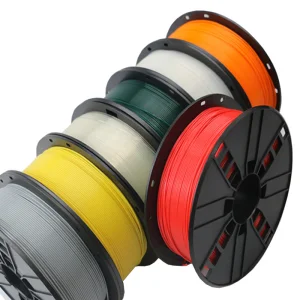
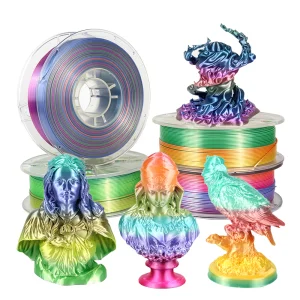
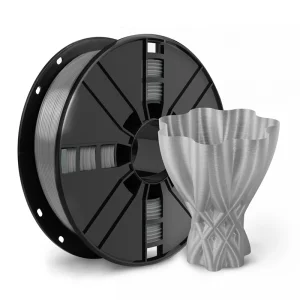
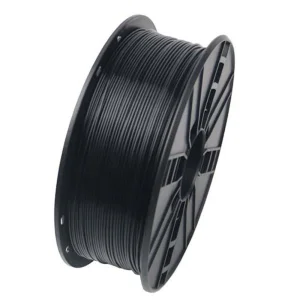
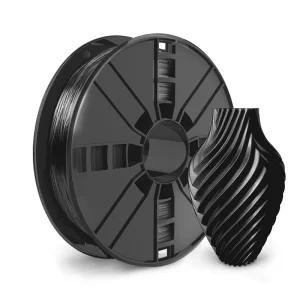
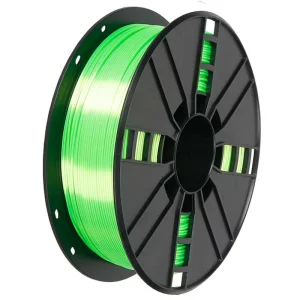
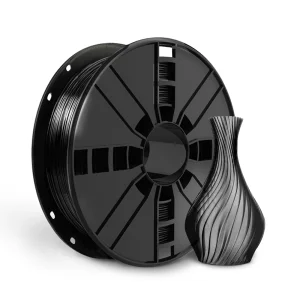
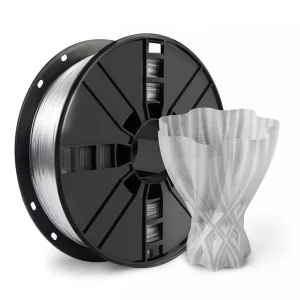
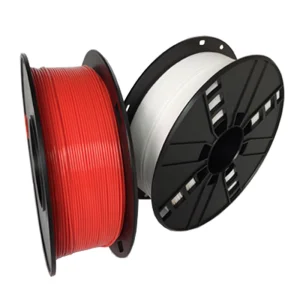
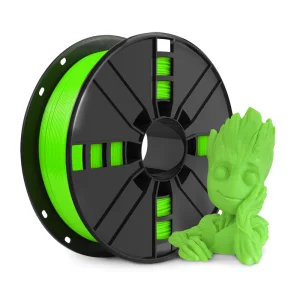
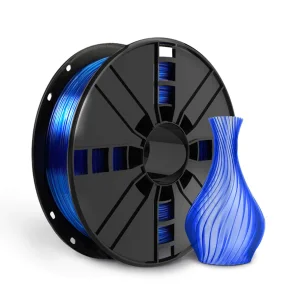
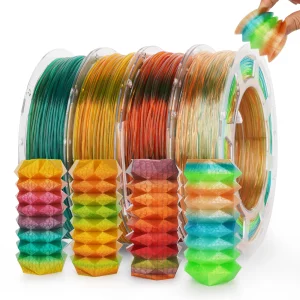
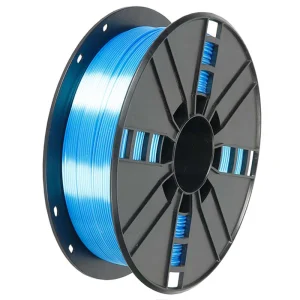
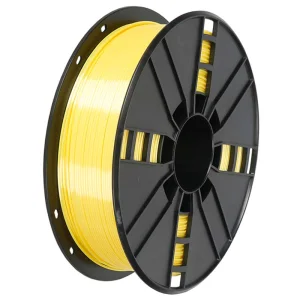
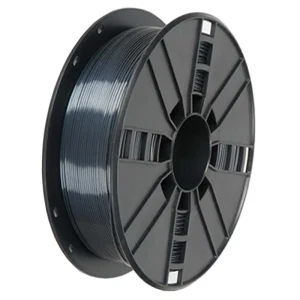
Explore our premium grade 3D printing filaments manufactured in our 2,500 m² automated Shenzhen facility with inline dual-axis laser diameter calibration.
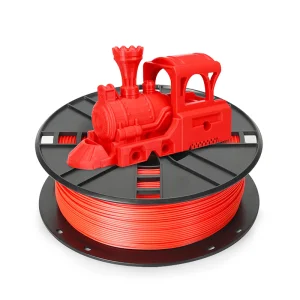
The global manufacturing ecosystem is experiencing a monumental paradigm shift toward lightweighting, structural optimization, and rapid digital fabrication. Modern industrial applications no longer settle for standard neat polymers like standard PLA or ABS when subjected to mechanical strain, elevated thermal environments, and harsh chemical exposure. This is where Carbon Fiber Reinforced Polymer (CFRP) 3D Printing Materials come into play, redefining the economics of low-volume production and customized component engineering.
As a leading China Carbon Fiber 3D Printing Material Manufacturer & Factory, Torwell Technologies has spearheaded composite filament formulation since 2011. By micro-compounding high-modulus chopped carbon fibers (typically 15% to 30% by weight ratio) into engineering-grade base polymers—such as PA12, PA6, PETG, ABS, PC, and PEEK—our composite materials transform conventional Fused Filament Fabrication (FFF) / Fused Deposition Modeling (FDM) 3D printers into high-precision structural manufacturing hubs.
Information Gain Insight: Unlike standard unfilled filaments, chopped carbon fiber loading mitigates volumetric thermal shrinkage during layer deposition to near-zero levels (<0.15%), eliminating structural warping even when printing large-format industrial jigs, fixtures, and automotive housings without enclosed heated chambers.
Carbon fiber reinforced filaments offer tensile strength and specific stiffness comparable to cast aluminum alloy (6061-T6) while delivering a massive 40% to 50% weight reduction for drone arms, robotics end-of-arm tooling, and racing components.
Chopped carbon fiber micro-strands naturally scatter light reflections, concealing Z-axis layer lines and producing a sleek, professional matte black aesthetic straight off the build plate without post-processing.
Carbon fiber's near-zero coefficient of thermal expansion (CTE) drastically reduces internal thermal stress, enabling tight tolerance part production (±0.05mm part dimensional accuracy) across wide temperature spans.
As a true manufacturing factory, Torwell Technologies does not merely master compounding—we engineer the interfacial bond between matrix polymers and high-tensile carbon micro-fibers. The key performance limitation in lower-tier carbon fiber filaments is fiber pull-out due to weak silane coupling agents and uneven fiber dispersion. Our proprietary twin-screw extrusion protocol ensures uniform fiber alignment along the melt flow axis.
| Material Grade | Base Matrix Resin | CF Content (wt%) | Tensile Modulus (MPa) | HDT @ 0.45 MPa (°C) | Primary Industrial Application |
|---|---|---|---|---|---|
| Torwell CF-PETG | Glycol-Modified PET | 15% Short CF | 4,850 MPa | 85 °C | Chemical-resistant brackets, outdoor enclosures, drone frames |
| Torwell CF-PA12 | Polyamide 12 (Nylon) | 20% Micro CF | 6,200 MPa | 145 °C | High-vibration robotics tooling, automotive engine bay parts |
| Torwell CF-ABS | Acrylonitrile Butadiene Styrene | 15% Short CF | 4,100 MPa | 98 °C | Impact-resistant structural housings, functional prototypes |
| Torwell CF-PC | Polycarbonate | 20% Premium CF | 7,100 MPa | 138 °C | Flame-retardant structural mounts, aerospace cabin fixtures |
| Torwell CF-PEEK | Polyether Ether Ketone | 30% Ultra CF | 11,500 MPa | 280 °C | Aerospace propulsion components, oil & gas valve manifolds |
Extruding carbon fiber filled materials introduces physical wear mechanisms due to the abrasive nature of chopped carbon fibers. Standard brass nozzles will experience rapid orifice erosion, leading to diameter enlargement and severe over-extrusion issues. Torwell’s R&D team provides complete operational guidance for enterprise client integration:
From industrial automation lines in Germany to aerospace startup labs in California, Torwell’s Carbon Fiber 3D printing filaments are deployed in critical structural and end-use applications worldwide.
Custom drone frames, motor mounts, landing gears, and camera gimbal brackets require maximum rigidity to suppress high-frequency motor vibrations while minimizing total payload mass. Torwell CF-PA12 and CF-PETG enable UAV engineers to print lightweight, flight-ready components in hours rather than waiting weeks for CNC aluminum machining.
On the automotive assembly floor, ergonomic worker tools, welding alignment jigs, and CMM inspection fixtures must be light enough for repetitive manual handling yet strong enough to maintain micron-level accuracy. Motorsport teams utilize CF-ABS and CF-PC for custom intake scoops, brake cooling ducts, and dash enclosures.
High-speed pick-and-place industrial robots demand low-inertia End-of-Arm Tooling (EOAT). Using carbon fiber 3D printed vacuum gripper plates and mechanical finger adapters allows robotic arms to accelerate faster, carry heavier payloads, and reduce servo motor wear over millions of continuous operational cycles.
Custom lower-limb orthotic braces, prosthetic socket connectors, and protective exoskeletons benefit greatly from carbon fiber’s high strength-to-weight ratio. Patients receive custom-fitted anatomical supports that are exceptionally durable, lightweight, and discreet under clothing.
Torwell Technologies operates a 2,500 m² modern manufacturing facility housing 6 automated high-speed extrusion lines with a monthly output exceeding 60 metric tons. We are structured specifically to support global 3D printer manufacturers, regional wholesalers, Amazon brand owners, and industrial additive service bureaus.
Every millimeter of filament extruded passes through high-frequency dual-axis laser micrometers. Diameter variations outside the strict ±0.02mm threshold automatically trigger real-time extrusion speed adjustments or spool rejection.
Equipped with precision tension-controlled automatic spooling machines, Torwell guarantees neat, layer-by-layer parallel winding. This prevents crisscross spool tangles during overnight enterprise print farm operations.
We provide end-to-end ODM/OEM customization: custom Pantone color matching, private label spool stickers, custom outer retail boxes, high-density corrugated shipping cartons, and specialized spool weights (250g, 500g, 1kg, 3kg, 5kg spools).
Virgin engineering resins (PA12, PETG, ABS) undergo multi-stage vacuum desiccant drying down to <0.01% moisture content prior to compounding.
Chopped carbon fiber micro-strands are introduced via side-feeders into the molten polymer stream, ensuring uniform fiber shear dispersion without degrading fiber aspect ratio.
Continuous inline diameter measuring ensures circular roundness (ovality <1%) and strict 1.75mm / 2.85mm outer dimension tracking.
Sample spools from every batch undergo ASTM D638 tensile strength testing, Melt Flow Index (MFI) analysis, and test prints on Bambu Lab, Ultimaker, and industrial FDM machines.
Spools are immediately desiccated, foil-vacuum sealed, batch-coded, and packed into drop-tested protective export cartons.
Exporting to over 75 countries requires comprehensive regulatory adherence and seamless localized technical integration for our B2B partners.
All Torwell 3D printing filaments strictly comply with international environmental and safety standards, including RoHS 2.0, REACH (SVHC), and ISO 9001:2015 Quality Management Systems. Full Technical Data Sheets (TDS) and Safety Data Sheets (SDS / MSDS) are provided for seamless enterprise customs clearance and workplace safety compliance.
To ensure your end-customers achieve zero-failure printing, our engineering team supplies ready-to-import slicing profiles (.3mf, .curaprofile, Bambu Studio profiles) tuned for nozzle temperature, retractions, cooling fan speed, and print bed adhesion across major commercial 3D printer platforms.
Additive manufacturing material science is continuously advancing. Torwell Technologies invests 8% of annual revenue back into R&D to stay at the leading edge of composite filament engineering.
Developing ultra-conductive and anti-static (ESD-safe) carbon fiber materials tailored for semiconductor packaging trays and sensitive electronic enclosures.
Introducing eco-friendly bio-polyamide bases combined with reclaimed aerospace carbon fiber to reduce total product carbon footprint by up to 60% without sacrificing mechanical modulus.
Extending core compounding capabilities to support continuous carbon fiber reinforcement strands directly embedded into ultra-polymers like PEEK and PEKK for aerospace flight-critical structural hardware.
Find authoritative answers to common engineering, procurement, and technical queries regarding Torwell Carbon Fiber 3D printing filaments.
Discover our extended spectrum of aesthetic, flexible, and eco-friendly filaments available for wholesale distribution and custom private labeling.