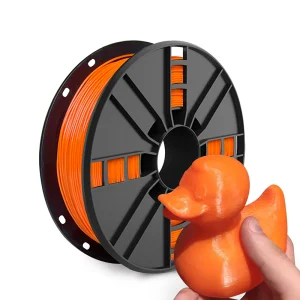
Explore our export-ready industrial standard 3D printing filaments, precision-extruded with tight ±0.02 mm diameter tolerance for professional and desktop additive manufacturing systems.
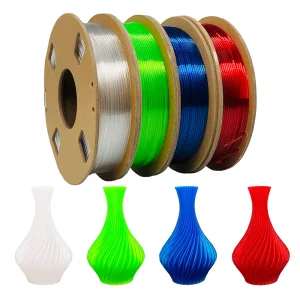
Industrial additive manufacturing is transitioning rapidly from visual prototyping to load-bearing functional end-use component fabrication. Carbon fiber reinforced filaments stand at the absolute center of this technological revolution.
Global original equipment manufacturers (OEMs) across automotive, aerospace, and industrial automation sectors are aggressively replacing machined aluminum, brass, and structural steel components with carbon-fiber-filled thermoplastic composites. Carbon fiber (CF) composite filaments offer exceptional strength-to-weight ratios, enabling up to 65% weight reduction without sacrificing tensile strength or dimensional stability. This shift reduces energy consumption in moving parts, speeds up cycle times on robotic end-effectors, and dramatically lowers raw material waste compared to subtractive CNC machining.
Unfilled commodity polymers such as neat PLA, ABS, PETG, and Nylon suffer from high thermal expansion coefficients, thermal distortion, and anisotropic structural warping during Fused Deposition Modeling (FDM / FFF). Compounding high-aspect-ratio micro carbon fibers (typically 15% to 30% loading weight) into polymer matrices fundamentally alters their thermomechanical profile. The carbon fiber lattice restricts polymer chain mobility during solidification, virtually eliminating Z-axis warping, suppressing coefficient of thermal expansion (CTE), and elevating Heat Deflection Temperatures (HDT) by up to 50°C.
According to global additive manufacturing benchmark surveys, over 48% of enterprise 3D printing print farms now utilize carbon fiber reinforced composites for functional tooling, assembly jigs, and short-run production parts. Sourcing from a verified manufacturer in China ensures direct chemical compounding control, stable fiber alignment, and reliable bulk extrusion scaling.
Achieving defect-free, high-strength carbon fiber 3D prints requires precise polymer compounding, optimal fiber length distribution (150–300 μm), surface sizing agents, and calibrated extrusion parameters.
| Material Grade | Base Matrix Resin | CF Content (wt%) | Nozzle Temp (°C) | Bed Temp (°C) | HDT @ 0.45 MPa | Tensile Modulus | Nozzle Requirement |
|---|---|---|---|---|---|---|---|
| Torwell PA12-CF | Polyamide 12 (Nylon) | 20% Chopped CF | 270 – 300 °C | 70 – 90 °C | 165 °C | 6,800 MPa | Hardened Steel / Ruby (≥0.4mm) |
| Torwell PET-CF | Polyethylene Terephthalate | 15% Micro CF | 260 – 290 °C | 70 – 85 °C | 125 °C | 5,200 MPa | Hardened Steel / Tungsten Carbide |
| Torwell ABS-CF | High-Impact ABS Polymer | 15% Milled CF | 240 – 270 °C | 90 – 110 °C | 98 °C | 4,600 MPa | Hardened Steel (≥0.4mm) |
| Torwell PLA-CF | High-Crystallinity PLA | 15% Fine CF | 190 – 220 °C | 40 – 60 °C | 65 °C | 4,100 MPa | Hardened Steel / Coated Brass |
| Torwell PC-CF | High-Viscosity Polycarbonate | 20% Micro CF | 280 – 320 °C | 100 – 120 °C | 145 °C | 6,100 MPa | Hardened Alloy / Diamond Nozzle |
Micro-milled carbon fibers embedded in the polymer melt orient aligned to the direction of nozzle travel due to convergent shear forces during extrusion. This alignment maximizes longitudinal tensile strength while producing a non-reflective, matte matte-black surface finish that completely hides FDM layer lines.
The primary engineering challenge in composite 3D printing is avoiding inter-layer delamination. Torwell utilizes proprietary coupling agents and polymer compatibilizers that chemically bond the carbon fiber sizing to the matrix chains, ensuring stress transfers evenly across molecular interfaces during load-bearing flexing.
Carbon fiber loaded polymers—especially Nylon (PA) and PET—are highly hygroscopic. Torwell operates dual-stage vacuum desiccant dehumidifiers prior to extrusion, maintaining resin moisture content below 0.02% (200 ppm) to prevent hydrolysis, micro-void bubbling, and nozzle sputtering.
From Tier-1 automotive assembly plants to custom drone fabrication, discover how Torwell carbon fiber 3D printer filaments solve real-world mechanical bottlenecks.
Use Case: Lightweight custom air intake manifolds, brake cooling ducts, interior gauge clusters, and high-temp under-hood brackets.
Material Selected: Torwell PET-CF / PA-CF
Benefit: Resists continuous operating temperatures up to 150°C and hydrocarbon exposure (gasoline, oils) while dropping part weight by 45% compared to cast aluminum fittings.
Use Case: Industrial drone arms, motor mounts, landing gear skids, and camera gimbal frames for aerial mapping and defense applications.
Material Selected: Torwell PA12-CF
Benefit: Exceptional rigidity and vibration damping properties minimize motor oscillation resonance, extending flight times and protecting sensitive optics.
Use Case: Robotic End-of-Arm Tooling (EOAT), CMM inspection fixtures, welding alignment clamps, and assembly line soft jaws.
Material Selected: Torwell ABS-CF / PLA-CF
Benefit: Rapid 24-hour turnaround on custom assembly jigs; high dimensional tolerance ensures zero flex under pneumatic pressure on production lines.
Use Case: Patient-customized lower-limb orthotic braces, wrist splints, and lightweight prosthetic structural sockets.
Material Selected: Torwell PET-CF / PLA-CF
Benefit: High stiffness-to-weight ratio allows sleek, breathable lattice designs that withstand repeated dynamic stress without fatigue cracking.
Use Case: Custom housings for outdoor wireless sensors, handheld diagnostic computers, and anti-static electronic testing trays.
Material Selected: Torwell ABS-CF / PC-CF
Benefit: Carbon fiber content provides inherent surface electrical dissipation (10^6 to 10^9 ohms/sq range), safeguarding sensitive PCBs from electrostatic discharge.
Use Case: Bicycle computer mounts, archery bow accessories, tactical equipment brackets, and custom racing steering wheels.
Material Selected: Torwell PLA-CF / PET-CF
Benefit: Premium matte-black metallic aesthetics directly out of the printer with high impact resistance and UV weathering tolerance.
Operating a standardized 2,500 m² factory equipped with 6 fully automated precision extrusion lines, Torwell Technologies provides global distributors and OEM brands with unprecedented cost-to-performance efficiency and rapid delivery times.
Located in the heart of China’s advanced polymer industrial cluster, Torwell maintains direct strategic partnerships with top-tier raw carbon fiber precursors and primary resin synthesis factories. This direct integration eliminates intermediate broker markups, guarantees continuous raw material availability during global supply crunches, and allows customized fiber-loading formulations tailored to client specifications.
Every extrusion line is regulated by online dual-axis laser micrometers feeding dynamic real-time data back to continuous melt pumps. If the filament diameter fluctuates beyond the target threshold of 1.75 mm ± 0.02 mm, the system automatically adjusts haul-off speeds, isolating and purging non-compliant segments instantly.
We empower international brands, regional distributors, and e-commerce leaders with complete white-label customization. From Pantone masterbatch color matching to eco-friendly cardboard spools, high-barrier aluminum vacuum packaging, custom-printed retail cartons, and private TDS documentation, Torwell provides end-to-end manufacturing solutions.
Torwell Technologies prioritizes regulatory compliance, rigorous material testing, and seamless technical integration to protect your brand reputation and lower operational risk.
All Torwell filaments are synthesized from non-hazardous raw resins fully compliant with international market standards:
To guarantee immediate success for your end customers, our in-house application engineers maintain validated slicing profiles across major ecosystem platforms:
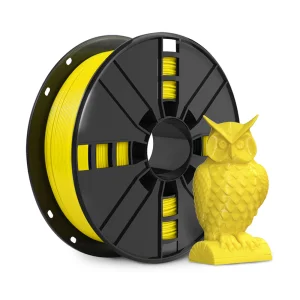
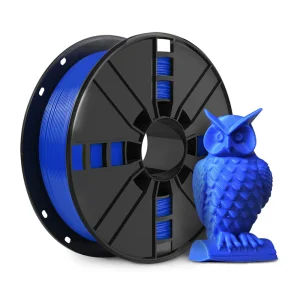
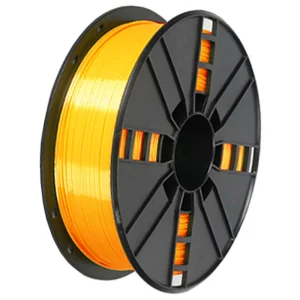
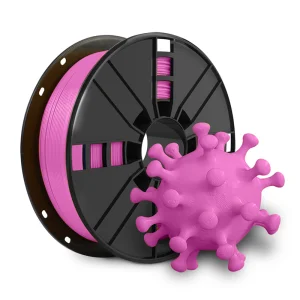
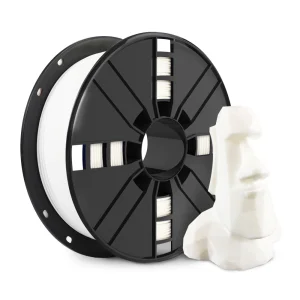
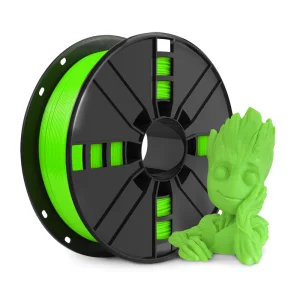
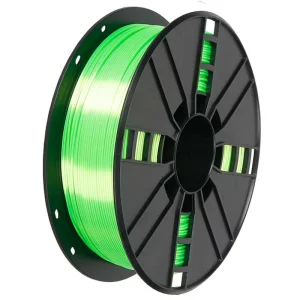
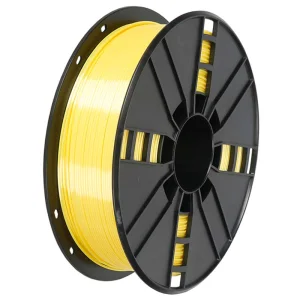
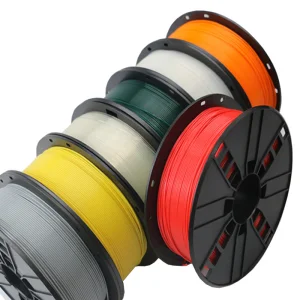
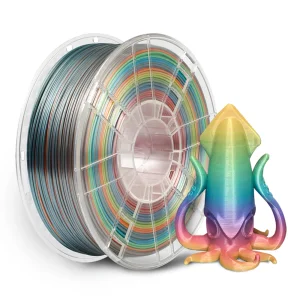
Explore our specialized range of high-strength PLA, Silk PLA, flexible TPU, impact-resistant ABS, and high-temp PETG spools available for immediate bulk shipment.
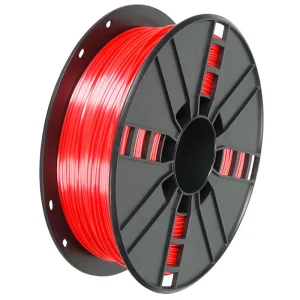
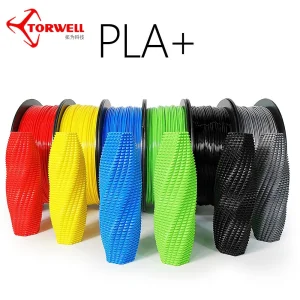
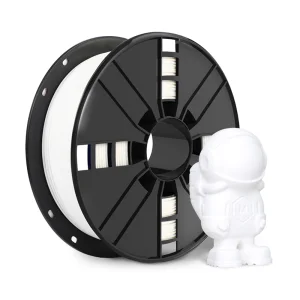
As industrial 3D printing accelerates toward high-speed multi-material manufacturing, Torwell R&D center is actively pioneering three breakthrough polymer technologies for 2025–2030 deployment.
Transitioning from short chopped fiber reinforcement to continuous carbon strand feeding. Co-extruding continuous 1K and 3K carbon fiber tow directly into thermoplastic matrix cores yields tensile strength profiles rivaling aerospace 6061-T6 aluminum alloys (>700 MPa tensile strength).
Pioneering closed-loop eco-composites by compounding bio-PLA and recycled post-industrial PET with reclaimed carbon fiber sourced from aerospace manufacturing scrap, cutting carbon footprint by up to 72% without sacrificing structural modulus.
Developing functional carbon-nanotube (CNT) hybridized filaments that possess conductive piezoresistive qualities. Printed parts double as real-time strain-sensing elements, enabling smart structural health monitoring in high-stress aerospace and automotive components.
Detailed engineering, manufacturing, and logistics answers compiled by Torwell’s senior material extrusion specialists.
Contact Torwell Technologies today to request a factory direct wholesale price list, custom material sample kit, or full OEM manufacturing catalog.