Explore our premium polymer spools engineered with strict ±0.02 mm laser tolerance for professional rapid prototyping, manufacturing tooling, and commercial printing applications.
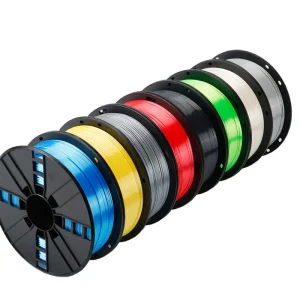
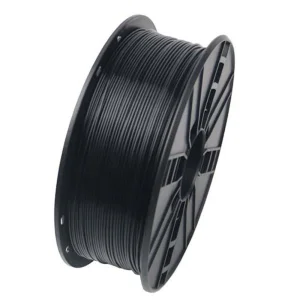
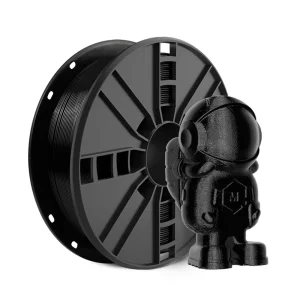
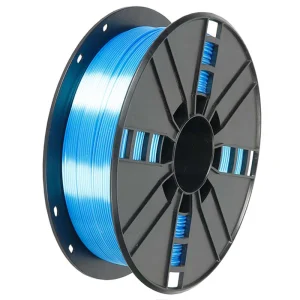
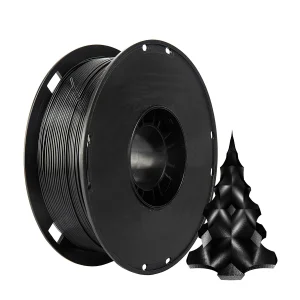
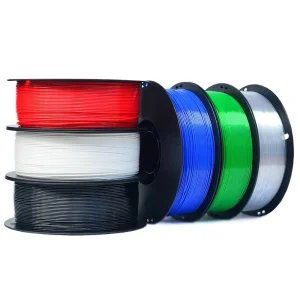
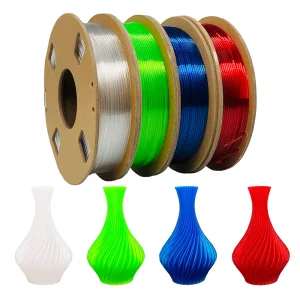
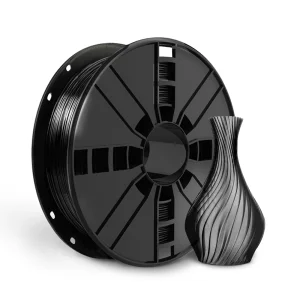
Analyzing the shift toward high-purity Acrylonitrile Butadiene Styrene (ABS) in grey color formulations for functional verification, optical scanning, and commercial production.
In the evolving additive manufacturing ecosystem, China ABS Filament Grey Suppliers & Factories represent a critical nexus for international procurement, industrial design validation, and high-volume Fused Deposition Modeling (FDM) manufacturing. While primary colors such as red, blue, or yellow serve consumer hobbies, Industrial Grey ABS (RAL 7001, RAL 7035, and RAL 7040 standard spectrums) serves as the global standard for mechanical engineering, automotive component prototyping, architectural master modeling, and enclosure manufacturing.
Grey ABS filament occupies a unique position in polymer science. The neutral shade provides optimal light diffusion across 3D surfaces, allowing quality assurance inspectors, optical 3D scanners, and design engineers to instantly evaluate surface roughness, layer adhesion consistency, and microscopic geometric deviations without the visual glare associated with natural translucent resins or pure whites. Consequently, international procurement teams from North America, Europe, and Asia-Pacific overwhelmingly specify Grey ABS as their primary benchmark material for end-use functional testing and visual inspection assemblies.
Understanding how Acrylonitrile, Butadiene, and Styrene ratios dictate thermal stability, impact strength, and layer cohesion during high-speed hotend processing.
Provides chemical resistance to oils, greases, and aliphatic hydrocarbons, while boosting thermal stability up to glass transition temperatures ($T_g$) of $105^\circ\text{C}$. Essential for under-the-hood automotive enclosures.
Acts as an elastomer matrix dispersed within the rigid styrene-acrylonitrile copolymer phase. Yields high Izod impact strength ($180\text{--}240\text{ J/m}$), maintaining fracture toughness even in cold ambient settings.
Delivers structural rigidity, low melt viscosity, and characteristic processing ease. Regulates surface finish aesthetics and guarantees consistent volumetric flow rates through nozzles at temperatures between $230^\circ\text{C}$ and $260^\circ\text{C}$.
A persistent technical hurdle for budget extrusion factories lies in colorant-induced physical degradation. Masterbatch additions often act as stress concentrators if poorly dispersed. Leading Chinese factories overcome this by compounding non-organic Titanium Dioxide ($\text{TiO}_2$) and specialized Carbon Black micro-pigments directly into virgin polymer melt during twin-screw extrusion. This produces a consistent Delta-E ($\Delta E < 0.5$) color profile across spools while preventing polymer chain scission or plasticizer migration.
How top-tier Chinese factories eliminate diameter drift, voids, moisture bubbles, and tangle-induced print failures.
Raw ABS pellets are hydro-hygroscopic and readily absorb ambient moisture. Virgin resin undergoes 4 to 6 hours of continuous desiccant hopper drying at $80^\circ\text{C}$, reducing resin moisture levels below $0.02\%$ prior to entering the heated barrel.
Extrusion lines integrate high-speed dual-axis optical laser gauges that sample strand dimensions at 500 Hz. Automated feedback loops adjust puller speeds in real-time to maintain strict diameter tolerances ($\pm0.02\text{ mm}$) and ovality ($>98\%$).
Uncontrolled cooling induces severe internal residual stresses and cross-sectional warping. Multi-stage temperature-controlled water troughs gradually cool the extruded filament from $90^\circ\text{C}$ down to room temperature without thermal shock.
Tangles and cross-overs cause print failures on modern automatic material systems (AMS). CNC tension-controlled spooling units lay down neat, parallel filament layers to guarantee smooth unspooling during high-speed printing.
Benchmarking Grey ABS against engineering-grade additive manufacturing thermoplastics.
| Material Grade | Tensile Strength (MPa) | Flexural Modulus (GPa) | Izod Impact (kJ/m²) | HDT @ 0.45 MPa (°C) | UV Weatherability | Shrinkage / Warpage Risk |
|---|---|---|---|---|---|---|
| Industrial Grey ABS | 42 - 48 | 2.1 - 2.4 | 20 - 24 | 98 - 102 | Moderate (Requires Coating) | Moderate (Chamber Recommended) |
| ASA Grey (Outdoor) | 40 - 46 | 1.9 - 2.2 | 18 - 22 | 96 - 100 | Excellent (UV Stable) | Moderate |
| PETG Grey | 45 - 50 | 1.9 - 2.1 | 8 - 12 | 70 - 74 | Good | Very Low (Easy Print) |
| PC-ABS Alloy Grey | 55 - 62 | 2.4 - 2.8 | 35 - 45 | 110 - 118 | Moderate | High (Enclosed Chamber Required) |
| Carbon Fiber ABS Grey | 65 - 75 | 4.5 - 5.8 | 12 - 15 | 108 - 114 | Moderate | Very Low (CF Stiffened) |
From automotive functional testing to consumer electronic housings: Where Grey ABS excels.
Used extensively for dashboard air vent mockups, center console snap-fit housings, and under-hood mounting bracket validation prior to mass injection molding.
Provides impact resistance, structural rigidity, and post-processing compatibility (sanding, drilling, tapping threaded brass inserts) for electrical control boxes.
Print custom assembly jigs, fixtures, drill guides, and end-of-arm robotic tooling (EOAT) components that withstand daily shop-floor handling and mechanical shocks.
Meeting European, American, and Asia-Pacific environmental standards with seamless containerized freight services.
Exported Grey ABS filaments comply with international directives including RoHS 3 (EU Directive 2015/863), REACH SVHC chemical safety standards, and Halogen-free testing. Raw materials undergo annual third-party SGS testing to ensure compliance for medical device and food-contact adjacent prototype testing.
All spools are oven-dried prior to automated vacuum sealing inside high-barrier aluminum foil pouches alongside 10g active silica gel desiccants. Master shipping cartons are double-walled corrugated fiberboard to endure long-distance ocean container shipping and air cargo transfers without seal rupture.
Pioneering high-melt-flow ABS formulations designed for 500 mm/s+ CoreXY printing hardware.
The rapid evolution of high-speed FDM hardware (Bambu Lab, Voron, Creality K1 series, and industrial CoreXY systems) operating at volumetric flow rates exceeding $30\text{ mm}^3/\text{s}$ has fundamentally reshaped ABS filament extrusion requirements. Traditional ABS formulations suffer from severe layer separation and melt fracture under ultra-fast print speeds.
Leading Chinese manufacturing R&D centers are pioneering High-Speed Grey ABS Formulations utilizing controlled chain-length polymer modifiers. These modified resins feature a narrower Molecular Weight Distribution (MWD), enabling instantaneous melting within short hotend melt zones and rapid re-crystallization upon deposition. This maintains over $85\%$ of static layer adhesion strength even when printing at linear speeds of $500\text{ mm/s}$.
Tailored spool sizes, custom spectrophotometric color matching, and full turnkey packaging solutions for global brands and regional distributors.
Formulate exact brand colors using spectrophotometric analysis to match physical samples, Pantone codes, or RAL color charts within a strict $\Delta E < 0.5$ tolerance.
Choose from standard 1 kg spools, 250 g sample packs, or high-capacity 3 kg to 10 kg production reels in cardboard, high-heat polycarbonate, or recycled plastic spools.
Complete OEM services including custom-printed inner boxes, barcode sticker generation, branded spool labels, custom outer carton packaging, and included Technical Data Sheets (TDS).
Clear answers to common questions about industrial Grey ABS filament, printing setups, minimum order quantities, and supply logistics.
Explore our complete catalog of specialized PLA, PETG, TPU, and functional composite spools ready for international container shipping.