The global 3D printing industry is moving from workshop experimentation toward repeatable manufacturing. Wohlers Report 2024 valued the additive manufacturing market at approximately $20 billion in 2023, with double-digit annual growth. That expansion increases demand for dependable polymer materials, especially PLA, PETG, ABS, TPU, and engineering-grade blends. Yet filament quality can vary sharply between batches. A lower price may hide moisture, inconsistent diameter, weak winding, or incomplete technical documentation.
This guide examines the Top 10 Wholesale 3D Printer Filament Suppliers Worldwide through a practical procurement lens. It considers product range, production capacity, regional distribution, private-label support, packaging, and quality systems. Supplier claims are not enough. Buyers should request certificates of analysis, dimensional-tolerance data, drying guidance, and sample spools before placing large orders. A well-packed 1.75 mm spool should unwind smoothly, without brittle sections or tangled loops. Small details matter.
Market estimates also require caution. Smithers and other industry analysts report continued growth, but their figures differ because some include industrial materials, resins, or complete printing systems. That limitation deserves attention. A supplier ranking can never replace factory testing. The best choice depends on printer compatibility, annual volume, target application, and delivery geography. Wholesale 3d Printer Filament purchasing is therefore a technical decision, not merely a price comparison. This article presents leading international suppliers, while recognizing that regional manufacturers may offer better lead times and more responsive support. Personal testing remains essential.
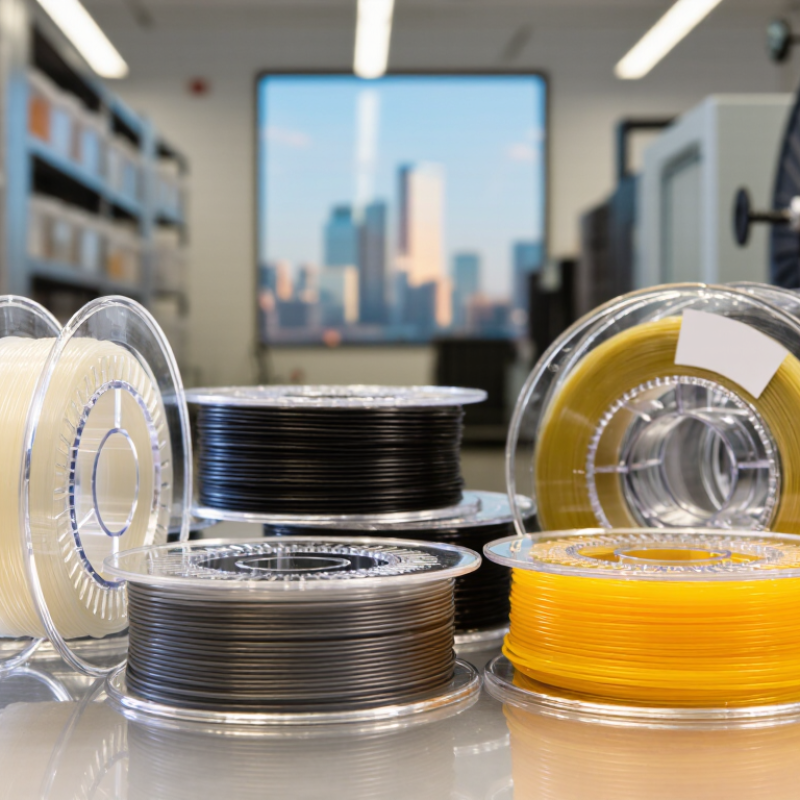
Wholesale 3D printer filament suppliers connect material producers with manufacturers, service bureaus, schools, and resellers. They purchase large volumes, manage inventory, and distribute consistent filament in practical quantities. Their role is broader than price reduction.
The 2024 Wohlers Report valued the global additive manufacturing industry at approximately 20 billion US dollars in 2023, with 23.5% annual growth. This expansion increases demand for dependable polymer supply chains. A capable wholesaler checks diameter tolerance, color consistency, moisture exposure, and batch records before shipment. A sealed spool with desiccant can prevent disappointing prints after long storage. Lot codes also help technicians trace warping, brittleness, or uneven extrusion.
Wholesale suppliers often support demand forecasting, mixed-cart orders, private logistics, and technical documentation. They may provide safety data sheets and processing guidance for common thermoplastics. According to market projections from Grand View Research, 3D printing materials are expected to maintain double-digit growth through 2030. That forecast sounds encouraging, but it can hide practical problems. Forecasts rarely show delayed containers or humid warehouses. Some suppliers still treat filament as ordinary plastic cable. That is a mistake. Material handling affects print quality, waste rates, and customer trust. Reliable sourcing requires testing, transparent specifications, and honest communication when a batch performs differently. Thin margins should not replace quality control.
A credible place among the top 10 wholesale 3D printer filament suppliers depends on more than low pricing. Wohlers Associates reported that the additive manufacturing industry reached about $20 billion in 2023. This growth increases pressure on wholesalers to prove consistency, not just capacity.
Procurement teams should examine filament diameter, roundness, moisture control, and batch traceability. A typical tolerance near ±0.02 mm can support steadier extrusion, but published tolerances need independent verification. Ask for certificates of analysis, safety data sheets, and retention samples from each production batch. Suppliers aligned with ISO/ASTM 52900 terminology are easier to compare across regions. Logistics also matter. Review lead times, customs documentation, packaging strength, and storage conditions. The 2024 Wohlers Report highlights expanding industrial adoption, yet many buyers still judge suppliers mainly by price. That is a costly shortcut.
Tips: Test three batches before signing a large contract. Weigh sealed spools, inspect winding, and print a repeatable calibration model. Record nozzle temperature, humidity, layer adhesion, and color variation. Do not rely on one successful spool. A perfect scorecard is unrealistic. Even experienced buyers can overlook regional humidity or seasonal transport delays. The better approach is transparent evidence, controlled sampling, and a documented response plan when quality falls short.
| Rank | Anonymous Supplier Profile | Primary Supply Region | Main Filament Portfolio | Typical Wholesale MOQ | Diameter Options | Typical Diameter Tolerance | Standard Spool Sizes | Estimated Production Lead Time | Quality and Compliance Documentation | Evaluation Score |
|---|---|---|---|---|---|---|---|---|---|---|
| 1 | Profile A — High-Volume Standard Range | East Asia | PLA, PETG, ABS, TPU | 500–1,000 kg per SKU | 1.75 mm, 2.85 mm | ±0.02–0.05 mm | 0.75 kg, 1 kg, 2.5 kg | 15–30 days | Batch test report, SDS, RoHS or REACH declaration where applicable | 9.2/10 |
| 2 | Profile B — Custom Color and Private-Label Specialist | East Asia | PLA, PETG, PLA composites, recycled blends | 300–800 kg per color | 1.75 mm, 2.85 mm | ±0.03–0.05 mm | 0.25 kg, 0.5 kg, 1 kg | 20–35 days | Color sample approval, batch traceability, SDS, material declarations | 9.0/10 |
| 3 | Profile C — European Regional Stock Supplier | European Union | PLA, PETG, ABS, ASA, TPU | 100–300 kg per SKU | 1.75 mm, 2.85 mm | ±0.02–0.05 mm | 0.75 kg, 1 kg | 3–10 business days from regional stock | SDS, technical data sheet, REACH and RoHS documentation where applicable | 8.9/10 |
| 4 | Profile D — Engineering-Grade Materials Supplier | North America | Nylon, PC, ASA, carbon-fiber composites, TPU | 100–500 kg per material | 1.75 mm, 2.85 mm | ±0.03–0.05 mm | 0.5 kg, 0.75 kg, 1 kg | 20–45 days | Technical data sheet, SDS, lot testing, moisture and mechanical-property data | 8.8/10 |
| 5 | Profile E — Sustainability-Focused Wholesaler | European Union | Recycled PLA, recycled PETG, bio-based blends | 200–600 kg per SKU | 1.75 mm | ±0.03–0.05 mm | 0.5 kg, 1 kg | 15–30 days | Recycled-content statement, SDS, material traceability, packaging information | 8.6/10 |
| 6 | Profile F — Fast-Delivery North American Distributor | North America | PLA, PETG, ABS, ASA, flexible TPU | 50–250 kg per SKU | 1.75 mm, 2.85 mm | ±0.03–0.05 mm | 0.5 kg, 1 kg | 2–7 business days from stock | SDS, technical data sheet, lot identification and return policy | 8.5/10 |
| 7 | Profile G — Flexible and Specialty Filament Producer | East Asia | TPU, TPE, PVA, BVOH, support materials | 100–400 kg per material | 1.75 mm, 2.85 mm | ±0.03–0.05 mm | 0.5 kg, 1 kg | 20–40 days | SDS, drying guidance, technical data sheet and batch test results | 8.3/10 |
| 8 | Profile H — Entry-Level Distributor for Education and Retail | Southeast Asia | PLA, PETG, silk-effect PLA, basic TPU | 50–200 kg per SKU | 1.75 mm | ±0.05 mm | 0.25 kg, 0.5 kg, 1 kg | 15–35 days | SDS, basic technical data sheet and pre-shipment inspection option | 8.0/10 |
| 9 | Profile I — Industrial Contract Manufacturing Partner | East Asia | PLA, PETG, ABS, PC, nylon and custom blends | 1,000–5,000 kg per formulation | 1.75 mm, 2.85 mm, custom sizes | ±0.02–0.05 mm | 1 kg, 2.5 kg, 5 kg, custom | 30–60 days | Material specification, quality plan, batch traceability, SDS and inspection records | 7.9/10 |
| 10 | Profile J — Multi-Region Trading and Consolidation Supplier | Asia-Pacific and Middle East | PLA, PETG, ABS, TPU and specialty composites | 100–500 kg per SKU | 1.75 mm, 2.85 mm | ±0.03–0.05 mm | 0.5 kg, 1 kg, 2.5 kg | 20–45 days, depending on origin | Supplier certificates, SDS, commercial invoice, packing list and inspection option | 7.7/10 |
The top 10 wholesale 3D printer filament suppliers worldwide are usually judged by consistency, not colorful catalogs. Experienced buyers check diameter tolerance, moisture control, material data, and batch traceability. A reliable supplier should provide samples before large orders. That small step prevents expensive production failures.
Leading suppliers commonly offer PLA, PETG, ABS, TPU, nylon, and recycled options. However, material names can hide major differences. A spool labeled PETG may print smoothly at 235°C, while another needs a different temperature range.
Ask for technical data sheets, recommended drying settings, packaging details, and storage guidance. Vacuum-sealed bags with desiccant are useful, especially during long international shipments.
Wholesale performance also depends on practical service. Look for stable monthly capacity, clear minimum order quantities, export experience, and responsive quality claims. Inspectors should compare several spools from one batch, measuring diameter at different points. I would not trust a perfect sample alone. Real production can vary. One weakness remains: recycled filament may show color or flow changes between batches. Suppliers should explain this openly and provide test records. Buyers should also confirm local labeling, customs, safety, and environmental requirements before placing an order.
Wholesale filament selection now depends on material performance, not color catalogs. The 2024 Wohlers Report valued the global additive manufacturing industry at about $20.0 billion in 2023, with 13.5% growth. That expansion increases demand for stable, traceable polymer feedstock.
PLA remains practical for prototypes, classroom models, and low-temperature packaging fixtures. PETG offers better impact resistance for workshop jigs and display components. ABS supports heat exposure, but requires controlled printing conditions and ventilation. Flexible TPU suits seals, grips, and protective covers. Nylon and polycarbonate serve stronger mechanical parts, while PEEK targets demanding aerospace, medical, and chemical environments. High-performance materials need specialized equipment.
Material choice is only half the decision. Wholesale buyers should request batch certificates, moisture data, diameter tolerance, and storage guidance. A 1.75 mm spool with inconsistent diameter can produce weak layers, under-extrusion, and visible surface scars. Small details matter.
Grand View Research projects strong expansion in the 3D printing materials market through 2030, driven by industrial adoption. Yet forecasts cannot replace testing. Run a repeatability check across several spools, not one sample. Some suppliers publish impressive specifications but provide limited evidence. That gap deserves attention. For global purchasing, compare packaging quality, drying requirements, customs documentation, and technical response times before approving large-volume orders.
Wholesale 3D printer filament sourcing demands more than a low unit price. I usually request samples before discussing large-volume orders. A practical test includes diameter consistency, spool winding, color stability, and print performance. Ask suppliers for batch records, material specifications, and moisture-control procedures. Pricing should include filament, packaging, tooling, inland transport, and export charges. A cheap quote can become expensive after freight and customs fees.
Quality control needs measurable limits. For example, request diameter tolerance data and inspection reports for every production batch. Check whether sealed bags include desiccant and production dates. During one trial, I overlooked spool deformation, which caused feeding problems. That mistake changed my inspection checklist. International shipping also requires clear commercial invoices, packing lists, accurate weights, and agreed delivery terms. Compare air freight with sea freight, especially for urgent orders. Confirm insurance coverage and responsibility for damaged cartons before payment.
Tips: Start with a small mixed-color order. Record nozzle temperature, flow rate, and print defects during testing. Keep retained samples from each batch. Ask for photos of packed cartons before shipment. Build extra time into customs clearance. Suppliers may promise fast delivery, but port delays remain unpredictable. Recheck every document. Small errors in product descriptions can delay clearance and disrupt production schedules.
It connects material producers with manufacturers, schools, service bureaus, and resellers. Suppliers buy large volumes and manage inventory. They also distribute practical quantities. Price is only one part of the service.
Check diameter tolerance, roundness, color consistency, moisture exposure, and batch records. A tolerance near ±0.02 mm may support steadier extrusion. Still, published figures need independent testing. Do not trust numbers alone.
Moisture can cause bubbling, weak layers, brittleness, and uneven extrusion. A sealed spool with desiccant helps during long storage or shipping. Humid warehouses remain a real risk. Dry storage matters.
Test at least three production batches before making a large commitment. Weigh sealed spools and inspect the winding pattern. Print the same calibration model each time. Record nozzle temperature, humidity, adhesion, and color changes.
Request technical data sheets, safety information, drying instructions, and processing guidance. Batch certificates and retention samples can support later investigations. Lot codes help trace warping or flow problems. Missing records deserve attention.
Common options include PLA, PETG, ABS, TPU, nylon, and recycled materials. Their printing behavior can differ significantly. One PETG spool may print at 235°C, while another needs adjustment. Material labels are not complete specifications.
Review lead times, packaging strength, customs paperwork, and storage conditions. International shipments may face delays or seasonal humidity. Strong packaging protects spools from crushing and moisture. Delivery promises are not always perfect.
Be cautious when a supplier focuses only on low prices or colorful catalogs. Limited batch records and unclear quality claims are also concerns. Recycled filament may show changing color or flow between batches. I would not trust one flawless sample.
This guide explores the role of Wholesale 3d Printer Filament suppliers in supporting manufacturers, retailers, schools, design studios, and service providers with reliable materials at competitive volumes. It explains how wholesalers help streamline sourcing, maintain consistent inventory, and provide technical support for different printing requirements. The article also presents a practical framework for evaluating international suppliers, including product consistency, material selection, production capacity, certifications, customer service, pricing transparency, and delivery reliability.
The overview compares ten types of leading global suppliers without focusing on individual brand names, while examining common filament materials such as PLA, ABS, PETG, TPU, nylon, and specialty composites. It connects these materials with applications in prototyping, education, engineering, product development, and general manufacturing. Readers will also learn about ordering procedures, bulk pricing, quality control, packaging, customs documentation, and international shipping considerations, enabling them to select suitable wholesale partners and manage supply decisions more effectively.