Choosing a 3d Filament Factory is not just a price comparison. Global buyers need evidence that a supplier can deliver consistent diameter, stable color, and dependable batches. A spool may look flawless under showroom lights, yet print poorly after hours on a real machine. Small details matter: sealed packaging, clear material data, and traceable batch records.
Dr. Joshua Pearce, a researcher in additive manufacturing, has published widely on 3D printing and its practical applications. A fair takeaway from his work is simple: assess materials by their performance in use, not by their claims alone. That principle guides this overview of the Top 10 3D Filament Factories for Global Buyers. It considers product range, quality controls, production capacity, export experience, and the clarity of technical support. Details vary by factory. Some suppliers publish more useful specifications than others, and a polished catalog is not proof of consistent output. That deserves scrutiny.
No list is perfect. A buyer still needs samples, current documentation, and a conversation about print settings and intended use. We look at the evidence available, while recognizing that factory capabilities can change. The aim is practical: help procurement teams compare manufacturers with fewer assumptions and better questions. After all, reliable filament should behave predictably on the printer—not merely promise it.
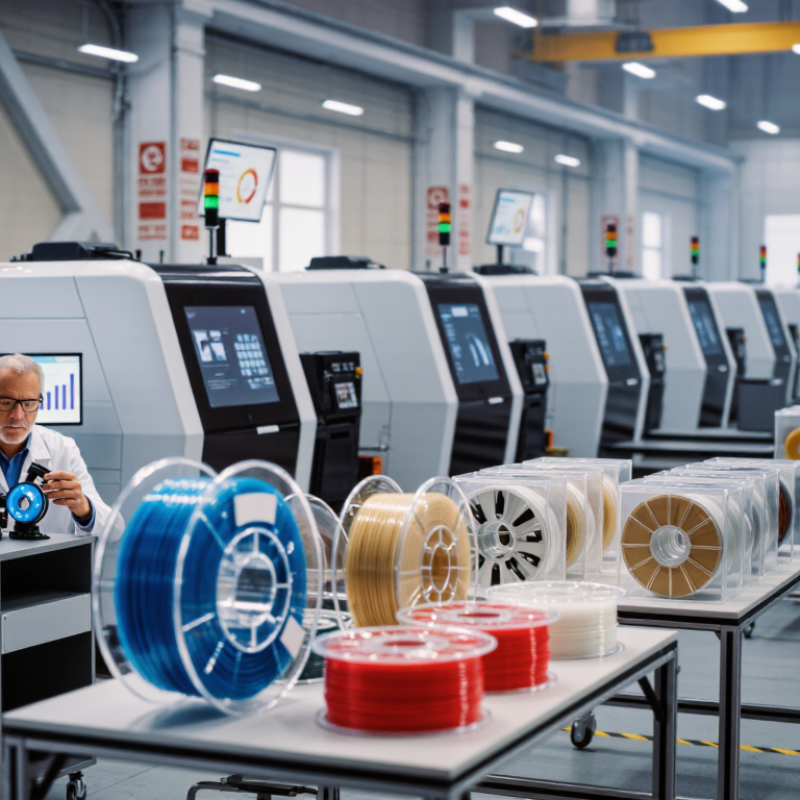
Understanding the global 3D filament manufacturing landscape means looking beyond factory size and advertised output. Manufacturers differ in raw-material sourcing, drying controls, extrusion equipment, and testing routines. These details affect diameter consistency, spool winding, and how smoothly filament feeds through a printer. A buyer comparing suppliers should request data for the specific material and production batch, not rely only on a general product sheet. Ask how diameter is measured and how moisture-sensitive materials are stored. Clear answers matter.
Tips: Request a recent sample spool and its batch record. Check diameter at several points, inspect winding, and print a small test part using your usual settings. One test cannot predict every shipment, but it can reveal obvious feed or surface issues.
Global sourcing also involves practical trade-offs. A distant factory may offer broader capacity, while a nearer supplier can make communication and replenishment easier. Neither option guarantees better quality. Compare lead times, minimum order quantities, packaging, and how the supplier handles production changes. Confirm that specifications, tolerances, and acceptance criteria are written down before ordering. Even careful checks can miss variation between batches; that is a reason to keep records, not to assume every spool will behave identically. A reliable comparison weighs measurable evidence alongside service and fit for your printing needs.
Evaluating a 3D filament factory starts with consistency, not a glossy product sheet. Ask for diameter tolerances and test records from multiple production batches. A spool that measures 1.75 millimeters in one spot may still vary across its length. Those shifts can cause uneven extrusion, especially during long prints. Request samples from different batches and compare them on the same printer, using identical settings. Watch for brittle sections, tangled winding, and changes in surface finish. Small details matter.
Material handling deserves equal attention. Ask how resin or polymer pellets are stored, dried, and checked before extrusion. Moisture can affect print quality, so packaging should be sealed and clearly labeled with material type and batch information. A reliable factory should explain its quality checks in plain language and share relevant documentation. Check production capacity, lead times, and how problems are handled when a shipment fails inspection. No checklist is perfect. A neat sample spool does not guarantee every order will match it, and buyers sometimes overlook that gap. Compare samples with production records, clarify acceptable variation, and keep expectations realistic. Clear answers are useful; vague promises are not.
The ten factory profiles show how production choices affect international buyers. One specializes in high-volume standard filament, while another handles small batches for product testing. A third focuses on consistent color matching; a fourth offers several polymer options for varied printing needs. The remaining profiles represent factories with automated winding, careful moisture control, custom spool sizes, export-ready packaging, in-house testing, or flexible order planning. These differences matter. A neat sample does not prove every shipment will match it.
Buyers can compare practical details across the profiles: diameter tolerance, batch records, drying and storage methods, sample lead times, and packaging protection. Ask how measurements are recorded and what happens when a batch falls outside the agreed range. Clear answers are useful evidence of process control, though they are not a guarantee. Factory capacity also deserves a closer look. A supplier suited to large repeat orders may be less responsive to a small first run. Some profiles may leave questions unanswered; that is worth checking, not overlooking.
Tips: Request samples from the intended production line, then measure several points along each spool. Confirm order quantities, lead times, payment terms, and shipping responsibilities in writing. Ask for recent quality records where available. Keep the evaluation simple, but not simplistic: one successful test spool is only one data point.
A useful comparison of 3D filament factories begins with the materials they can produce consistently. PLA is often selected for easy printing, while PETG offers greater impact resistance. ABS and nylon may suit demanding applications, but they need tighter control of heat and moisture. TPU requires stable extrusion to maintain flexibility. Ask suppliers how they dry resin, manage color changes, and verify filament diameter. A spool can look perfect. Printing tells more.
Production capacity needs context. Monthly output alone may not show whether a factory can meet your order on time. Ask about active production lines, typical lead times, and how capacity changes during peak seasons. Then compare quality controls: diameter tolerance, ovality, spool winding, batch records, and sample test reports. ISO 9001 certification can indicate a documented quality system, but it does not guarantee every spool performs identically. Request samples from more than one production batch and test them on your own printer. Some buyers skip this step. That can be costly. Capacity figures are not always directly comparable, and even careful testing cannot remove every variation between materials, machines, and print settings.
Global 3D filament sourcing is not just a price comparison. Buyers should examine how suppliers control diameter consistency, moisture exposure, and lot-to-lot color variation. Ask for a current technical data sheet and a sample spool from the production grade under review. Print a small test part on your own machine. Watch for brittle filament, uneven extrusion, and tangled winding. Small flaws matter.
A capable factory should explain material sourcing, drying procedures, protective packaging, and batch traceability in plain terms. Request measured tolerances, not broad claims, and confirm how measurements are taken. Compare diameter readings at several points along a spool, then note nozzle behavior at a fixed temperature. Also ask about spool dimensions, labeling, carton strength, and pallet plans. These details affect warehouse handling and production schedules.
Global orders add shipping time, customs paperwork, and currency risk, so assess communication and delivery records alongside technical quality. Ask whether the quoted lead time includes production, inspection, and packing. Check how the supplier handles a delayed batch or a damaged carton. A neat audit file is useful, but it cannot replace a real trial. No checklist is perfect. Sampling costs time, and one successful print proves little; repeat tests across lots before committing to volume. Buyers may still miss something, especially when specifications differ between regions.
Compare material handling, diameter consistency, testing records, lead times, and packaging. Ask for details about the specific material and production batch.
It lets you inspect winding and measure diameter at several points. Try a small print with your usual settings. Small details matter.
Not necessarily. A distant factory may have more capacity, while a nearby supplier may simplify communication and replenishment.
Print them on the same machine with identical settings. Look for brittle sections, tangled winding, uneven extrusion, or changes in surface finish.
Ask how pellets are stored and dried before extrusion. Check that spools arrive sealed and labeled with the material type and batch information.
Request diameter tolerances and test records from multiple batches. Keep your own measurements and notes, too.
No test is perfect. A clean sample cannot guarantee consistent future orders, so compare samples with production records and clarify acceptable variation.
Write down specifications, tolerances, acceptance criteria, minimum order quantities, and lead times. I might still miss a detail, so reviewing the terms twice seems wise.
This article explores the global 3D filament manufacturing landscape and the factors that help international buyers identify reliable suppliers. It outlines practical evaluation criteria, including material consistency, production capacity, quality control, technical support, and experience serving overseas markets. The profiles of ten factories offer a structured way to understand how manufacturers may differ in their capabilities and product offerings, without assuming that one supplier is suitable for every buyer.
A comparison of materials, manufacturing scale, and quality standards can help buyers narrow their options and ask more informed questions. The article also considers how to assess a 3d Filament Factory for global sourcing by reviewing product specifications, sample performance, communication, lead times, and supply reliability. Together, these perspectives provide a useful starting point for matching supplier capabilities with project requirements and making a well-informed sourcing decision.