Buying Wholesale 3D Filament can lower the cost per spool, but a low quote means little if the material prints poorly. This guide explores ten practical checks for choosing a dependable supplier. It looks at filament type, diameter consistency, color options, minimum order quantities, packaging, lead times, and sample testing. Small details matter. A slightly oval strand can cause uneven extrusion; a damp spool may hiss and leave rough surfaces.
The goal is not simply to find the cheapest pallet. It is to find material your printers can use reliably, batch after batch. Compare technical data sheets, ask how quality is checked, and request samples before placing a large order. Keep records of test prints, including nozzle temperature, bed temperature, and visible defects. One honest limitation: a supplier’s specifications cannot replace testing on your own machines. Results can vary.
A trustworthy guide should also distinguish verified expertise from sales language. No source article or verifiable expert quotation was provided, so this introduction does not invent a named specialist’s quote. The advice ahead focuses on checks buyers can confirm: inspect the spool, measure consistency, clarify storage and packing, and compare the full delivered cost. Wholesale 3d Filament can be a smart purchasing choice—but only when quality, service, and supply reliability hold up in practice.
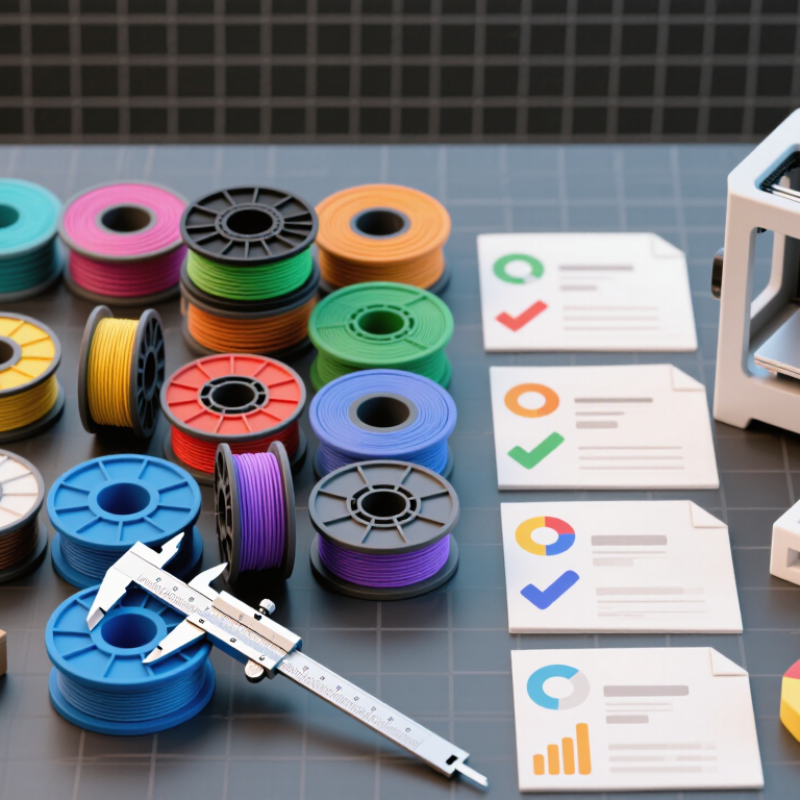
Before buying wholesale 3D filament, define what your printers and projects actually require. List the materials, colors, and finishes used for each part. A decorative model may need a different filament from a functional bracket exposed to heat or repeated stress. Check printer compatibility, nozzle temperature limits, and whether an enclosure is needed. Small details matter. A spool is not useful if the machine cannot feed it reliably.
Estimate demand from slicer reports for a typical month, then compare those figures with your recent print history. Slicer estimates are useful, but they do not include every failed print, purge line, or calibration cube. Add a modest allowance based on your own waste rate. Not quite an exact science. Track actual spool use for several weeks; even a simple note beside the printer can reveal which materials move fastest. Consider storage, too. Moisture-sensitive filament may need sealed bags and desiccant, while a large stockpile can sit unused if project plans change. The estimate will still be imperfect, so begin with a quantity your workspace can store properly.
When comparing wholesale 3D filament, match the material to the part’s job. PLA is often easy to print and suits display pieces, while PETG can handle more moisture and impact. ABS typically needs a warm, enclosed printing space. TPU is flexible, but feeding it through a long or narrow path can be difficult. Check the printer’s hot-end temperature range and whether its extruder handles flexible filament. Small details matter.
Read the full specification, not just the material name. Confirm filament diameter and stated tolerance, recommended nozzle temperature, and spool dimensions. A spool that does not fit the holder can interrupt a production run. For large orders, request a sample from the same production batch when possible. Print a short test, inspect layer bonding, and weigh the spool if net filament weight is unclear. Keep samples dry; moisture can cause popping sounds and rough surfaces. I still catch myself comparing colors before checking spool fit. That is easy to overlook. Ask how batches are labeled and stored, then record settings that work on your machines. A sample cannot guarantee every spool will behave identically, so allow time for checks.
| Filament Material | Typical Nozzle Temperature | Typical Bed Temperature | Printer / Environment Needs | Common Strengths and Uses | Wholesale Compatibility Check |
|---|---|---|---|---|---|
| PLA | 190–220°C | 0–60°C; an unheated bed may work | Usually prints without an enclosure; verify cooling and build-surface recommendations. | Easy to print; suitable for prototypes, models, and general-purpose parts. | Confirm the printer’s nozzle and bed can reach the supplier’s recommended range. Check whether the formulation contains additives that alter settings. |
| PETG | 220–250°C | 70–90°C | An enclosure is usually optional; use a suitable build surface and avoid excessive first-layer adhesion. | Tough, impact-resistant parts and functional prototypes; generally more heat-resistant than PLA. | Check the printer’s hotend limit and bed capability. Test adhesion on the intended build plate before committing to a large batch. |
| ABS | 230–260°C | 90–110°C | A heated bed and enclosed printer are commonly recommended; provide appropriate ventilation. | Durable functional parts with better heat resistance than PLA; prone to warping if conditions are unsuitable. | Confirm the printer supports the required temperatures and enclosure conditions. Check whether the facility can manage printing fumes and ventilation. |
| ASA | 240–270°C | 90–110°C | An enclosure and controlled cooling are commonly helpful; provide appropriate ventilation. | Outdoor and functional parts where weather and UV resistance are useful. | Check hotend and bed limits, enclosure availability, and the supplier’s exact settings; ASA formulations can differ. |
| TPU | 210–240°C | 30–60°C | Feed slowly; a direct-drive extruder is often easier to use, though some Bowden printers can handle suitable TPU grades. | Flexible parts such as protective covers, seals, and compliant components. | Match the filament’s stated flexibility or Shore hardness to the extruder and feed path. Request a sample to test reliable feeding. |
| Nylon (PA) | 240–270°C | 70–100°C | Dry filament before use; an enclosure may help reduce warping. Requirements vary by PA type. | Tough, wear-resistant functional parts and components exposed to repeated mechanical stress. | Verify the specific PA grade, drying instructions, and printer temperature limits. Ask how moisture-barrier packaging is specified and handled. |
| Polycarbonate (PC) | 260–310°C | 90–120°C | A high-temperature hotend, heated bed, and enclosure are commonly needed; exact requirements depend on the PC blend. | Strong, heat-resistant parts for demanding applications. | Confirm that the entire printer—not only the hotend—supports the required temperatures. Check the supplier’s blend-specific settings and safety guidance. |
| PVA | 190–220°C | 45–60°C | Keep dry and use with a compatible dual-extrusion setup; water-soluble support material requires suitable storage. | Water-soluble support structures, commonly paired with compatible model materials. | Confirm compatibility with the model filament, nozzle arrangement, and soluble-support workflow. Check the recommended storage and drying procedure. |
Temperature note: These are common starting ranges, not universal settings. Formulations, printer calibration, nozzle design, and print conditions can change the recommended values. Check the technical data sheet for the exact product.
| No. | What to Check | Specification or Question to Verify | Why It Matters |
|---|---|---|---|
| 1 | Material grade | Confirm the exact polymer and any blend, reinforcement, or additive. | Different formulations can have different print settings, strength, flexibility, and compatibility. |
| 2 | Filament diameter | Match the printer’s required diameter, commonly 1.75 mm or 2.85 mm. | The wrong diameter can cause feeding problems, under-extrusion, or over-extrusion. |
| 3 | Diameter tolerance | Request the stated tolerance and measurement method; compare it with the printer’s requirements. | Consistent diameter helps maintain predictable extrusion across a production run. |
| 4 | Temperature range | Check recommended nozzle and bed temperatures against the printer’s verified limits. | A printer that cannot reach the material’s working range may not produce reliable prints. |
| 5 | Extruder and nozzle setup | Check flexible-filament feed-path needs and whether abrasive additives require a wear-resistant nozzle. | Material behavior and additives can affect feeding and nozzle wear. |
| 6 | Build surface and enclosure | Confirm recommended bed surface, enclosure conditions, and ventilation requirements. | These factors affect adhesion, warping, print quality, and safe operation. |
| 7 | Moisture control | Ask for storage, drying, and packaging guidance, especially for moisture-sensitive materials. | Moist filament can cause poor surface quality, inconsistent extrusion, and weakened parts. |
| 8 | Spool and winding | Verify spool dimensions, center-hole fit, net filament weight, and winding consistency. | Spools must fit the holder and feed smoothly without tangles or unexpected interruptions. |
| 9 | Color and batch consistency | Request color references and ask how production lots are identified and checked. | Color and appearance can vary between batches, which matters for repeat orders and visible parts. |
| 10 | Sample and quality verification | Test samples from the intended material and production lot; review documentation before scaling up. | A small trial helps confirm printability, dimensional consistency, and suitability for the actual application. |
When comparing wholesale 3D filament suppliers, look beyond the quoted price. Ask for a current technical data sheet showing material type, diameter tolerance, recommended drying conditions, and print-temperature range. Check whether the supplier tracks production batches and can explain how defects are handled. Clear answers matter. Vague claims about “premium quality” do not tell you whether a spool will feed consistently.
Tip: Request samples from more than one production batch, not just a display spool. Print the same small test part on each sample, using one printer and identical settings. Watch for diameter variation, snags, brittle sections, uneven winding, and color shifts. Keep notes. A single successful print is useful, but it does not prove that bulk stock will perform reliably.
Before placing a large order, confirm minimum quantities, lead times, packaging, storage, and the process for reporting damaged or inconsistent rolls. Ask how filament is protected from moisture; inspect the sealed bags and desiccant when samples arrive. Tip: Start with a modest trial order if possible, then compare several spools across repeat prints. It is easy to overvalue one neat sample. Supplier documentation helps, yet your own checks may reveal issues the paperwork misses.
Two widely used nominal filament diameters are 1.75 mm and 2.85 mm. Before placing a wholesale order, confirm that the filament matches your printers and ask the supplier to specify its diameter tolerance and quality-control process. These values show common formats, not supplier test results.
When comparing wholesale filament quotes, calculate landed cost per usable kilogram, not just spool price. Add freight, insurance, duties, packaging, and any moisture-damaged stock. Divide the full invoice by the kilograms you can actually print. A 20-kilogram order with two unusable spools costs more than its unit price suggests. Wohlers Report 2024 estimated that the global additive manufacturing industry reached $20.0 billion in revenue in 2023, up 11.1 percent. That growth makes supplier comparisons useful, but it does not guarantee lower bulk prices. Ask for tiered quotes at several order sizes, then compare the delivered cost.
Shipping can erase a discount. Request carton dimensions and gross weight before checkout; carriers may charge by dimensional weight. Get a written quote for your actual destination and delivery window. UNCTAD’s Review of Maritime Transport 2021 documented record-high, volatile container freight rates, a reminder that old shipping estimates can quickly become unreliable. Keep a buffer.
Storage matters too. PLA, nylon, and other moisture-sensitive materials can absorb humidity and print inconsistently. Check each material’s data sheet, store sealed spools with fresh desiccant, and record storage conditions. A small humidity meter helps. I learned that “sealed” is not the same as dry. Bulk buying can still leave slow-moving colors aging on a shelf, so forecast monthly use before ordering.
Before committing to a wholesale filament order, test samples on the printers and settings you actually use. Check spool winding, diameter consistency, moisture, color, and extrusion over a sustained print. A clean first layer is encouraging, but it proves little about a full spool. Record the results, including failures; small differences can become costly across a large batch.
Tip: Ask for samples from the same production lot proposed for your order. Measure filament at several points with calipers, then print a simple part with thin walls and bridges. Note nozzle temperature, flow, and any stringing. Wohlers Report 2024 estimated the global additive manufacturing industry reached $20 billion in 2023, an 11.1% year-over-year increase. That growth makes repeatable material checks more useful, not less.
Before placing the order, confirm material type, diameter tolerance, net weight, packaging, lead time, and how defects are handled. Request a written specification and a retained sample for comparison with later deliveries. Start with a manageable quantity if your testing is incomplete. It may feel slower. But one inconsistency I would revisit is the temptation to approve a material from a single short print; that test can miss problems that appear only after hours of extrusion.
Request a current data sheet with material type, diameter tolerance, drying conditions, and print-temperature range. Ask how production batches and defects are tracked. Clear answers matter.
Print the same small part using one printer and identical settings. Check for snags, brittle sections, uneven winding, and color shifts. Keep notes.
No. A short print may not reveal problems that appear after hours of extrusion. Test samples from multiple batches when possible.
Check minimum quantities, lead times, packaging, net weight, and defect-handling procedures. Ask for written specifications and keep a sample for later comparisons.
Calculate the delivered cost per usable kilogram. Include freight, insurance, duties, and damaged stock. The spool price alone can mislead.
Ask for carton dimensions, gross weight, and a written delivery quote for your destination. Dimensional weight can change the final cost.
Follow each material’s drying and storage guidance. Keep sealed spools with fresh desiccant, and record storage conditions. A small humidity meter helps.
Start with a manageable quantity and compare several spools across repeat prints. Slow-moving colors can age on a shelf. I have underestimated that risk.
Buying Wholesale 3d Filament starts with understanding your printing needs. Consider the types of projects you handle, the printers you use, and how much filament you consume over time. Compare materials such as PLA, PETG, and ABS, paying attention to diameter, tolerance, print temperature, and compatibility with your equipment. Matching these specifications to your workflow can help prevent printing issues and unnecessary waste.
Before ordering in bulk, assess suppliers for consistent product quality, clear specifications, and dependable communication. Compare the full cost, including unit prices, shipping, and any storage needs, since filament should be kept in suitable conditions to preserve its performance. Request samples when possible to test print quality and compatibility before committing. Once you have confirmed the material and supplier meet your requirements, estimate a practical order quantity and place your wholesale order with confidence.