What Is a Wholesale Filament Supplier and How to Find One?

Time:2026-10-26 Author:Henry
0%

A wholesale filament supplier is more than a company selling large spools at lower prices. It is a manufacturing and distribution partner for retailers, print farms, schools, laboratories, and growing product businesses. These suppliers usually offer PLA, PETG, ABS, TPU, nylon, and specialty blends in consistent batches. Their value appears in practical details: sealed packaging, accurate weight, stable diameter, and dependable delivery dates.

As 3D printing educator Richard Horne, widely known as RichRap, has emphasized, “Material choice can be just as important as printer choice.” That observation matters when comparing Wholesale Filament Suppliers. A cheap spool may look attractive, yet uneven winding can cause tangles, while inconsistent diameter can produce weak layers or clogged nozzles. Small problems become expensive when hundreds of spools are involved.

Finding a reliable supplier requires more than requesting a price list. Buyers should ask for technical data, sample rolls, production capacity, moisture-control methods, and batch traceability. Check whether the supplier explains tolerances clearly. Read independent customer feedback, not only polished testimonials. A direct factory relationship may reduce costs, but communication can become slower across languages and time zones. That is an uncomfortable trade-off.

Start with a limited test order. Print the same calibration model using each sample. Examine surface finish, layer adhesion, color consistency, and spool winding. Also calculate the landed cost, including shipping, taxes, storage, and defective material. The right supplier may not offer the lowest unit price. It should offer repeatable quality, honest communication, and evidence that supports long-term purchasing decisions.
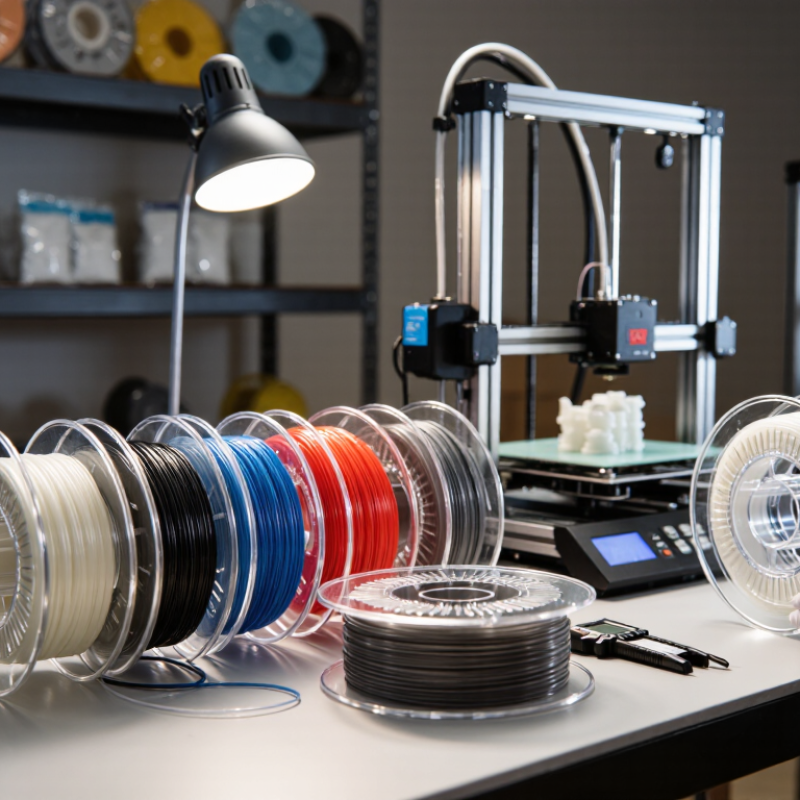
What Is a Wholesale Filament Supplier and How to Find One?

Define Wholesale Filament Supply with ISO/ASTM 52900 Terminology

A wholesale filament supplier provides polymer feedstock in larger, repeatable quantities for material extrusion additive manufacturing. ISO/ASTM 52900 terminology helps buyers describe this clearly. Filament is a feedstock form, while material extrusion is the process that deposits material through a nozzle, layer by layer. Wholesale supply therefore involves more than low pricing. It requires stable diameter, controlled moisture, consistent color, and dependable lot records.

A reliable supplier should explain the material’s polymer type, recommended processing range, spool mass, and diameter tolerance. Ask whether each production lot has inspection data. Request samples before signing a large purchase agreement. Measure the filament with a calibrated tool, then test it through your actual equipment. Watch for bubbles, brittle sections, uneven winding, or excessive nozzle residue. These details often reveal problems that a polished brochure hides. A supplier using ISO/ASTM 52900 terms may communicate more precisely, but terminology alone does not prove product quality. I have seen specifications look complete while practical testing remained incomplete.

Tips: Define your required feedstock, process, dimensions, and delivery schedule in writing. Check packaging for moisture protection and traceability codes. Compare several lots, not one spool. Keep a small reserve for testing. Wholesale savings can disappear when inconsistent filament causes failed builds, maintenance, or delayed production.upplier selection also deserves review after delivery; early performance is useful, but long-term consistency matters more.

Match PLA, PETG, ABS, and Nylon to ASTM D638 Test Data

A wholesale filament supplier does more than offer lower prices. It should connect each material to repeatable ASTM D638 tensile data. The standard measures tensile strength, yield behavior, elongation, and modulus under controlled conditions. Ask for the specimen type, print orientation, nozzle temperature, layer height, conditioning time, and test speed. Without these details, a reported “strength” value is difficult to compare.

PLA usually suits rigid prototypes and dimensional checks. Public ASTM D638 datasets often show high stiffness but limited elongation. PETG generally provides greater ductility and better resistance to cracking during handling. ABS can fit functional parts needing toughness, although chamber temperature and cooling strongly affect results. Nylon may offer excellent strength and elongation, but moisture can change its performance before testing. Keep the spool sealed. It matters. A supplier should show lot-based results, not only a polished average. I have seen datasheets omit humidity history, which weakens otherwise impressive numbers.

The market also demands stronger verification. Wohlers Report 2024 reported that the additive manufacturing industry reached approximately 20.035 billion US dollars in 2023, with continued growth across production applications. That expansion makes traceability more important for wholesale purchasing. Compare at least three lots and request ASTM D638 reports from the same production window. Check whether values describe printed specimens or molded material. They are not interchangeable. A practical buying decision may favor stable PETG data over a higher but inconsistent PLA result. Supplier audits, retained samples, and documented storage conditions can expose gaps before a large order is released.

Typical ASTM D638 Tensile Performance of Common Filament Materials

The chart compares representative midpoints from commonly reported ASTM D638 tensile-testing ranges for 3D-printing filament materials. Values can vary significantly with print orientation, layer adhesion, specimen geometry, temperature, moisture, and test conditions. Use supplier-specific ASTM D638 reports when qualifying wholesale material.

Verify 1.75 mm or 2.85 mm Diameter and ±0.05 mm Tolerance

What Is a Wholesale Filament Supplier and How to Find One?

A wholesale filament supplier provides production materials in larger quantities, often with batch documentation and technical support. Diameter control deserves close attention. Most desktop printers use 1.75 mm filament, while some industrial machines use 2.85 mm filament. A tolerance of ±0.05 mm means the actual diameter should remain within that range. Small variations can change extrusion flow, layer bonding, and surface finish.

The Wohlers Report 2024 valued the global additive manufacturing industry at approximately $20.0 billion in 2023. This growth increases the need for consistent feedstock, not just lower prices. Reliable suppliers should provide a certificate of analysis, lot numbers, moisture information, and measured diameter data.

Ask how measurements are taken. A single reading is weak evidence. Production checks should use a calibrated micrometer at several points along the spool. Measure different angles too, because ovality can cause feeding problems. A perfect-looking spool can still print poorly. That is an easy mistake to miss.

Tips: Request samples before placing a wholesale order. Test both 1.75 mm and 2.85 mm options on your own equipment. Compare flow, winding quality, and nozzle pressure. Standards from ASTM International and ISO help define additive manufacturing practices, but supplier verification remains essential. I would also review the data twice; published tolerances may describe averages rather than every meter of filament.

Audit MOQ, Capacity, and Lead Times Using Supplier Batch Records

A wholesale filament supplier should be judged by records, not polished promises. Audit the minimum order quantity, production capacity, and lead times through recent batch documents. A low MOQ may hide higher setup costs or limited color choices. Ask whether the quoted MOQ applies per order, material, diameter, or color.

Request batch records from several recent production runs. Check lot numbers, production dates, raw material details, diameter measurements, moisture readings, and inspection results. Records reveal habits. Consistent measurements suggest controlled production, while repeated unexplained gaps deserve questions. Compare the promised capacity with actual batch sizes and production frequency. A facility claiming high monthly output should show enough completed batches to support that claim.

Lead-time records need closer attention. Compare purchase dates, production dates, inspection dates, and dispatch dates across different orders. Separate manufacturing time from packaging and transport time. A supplier may quote ten days, but the records might show two weeks before production even begins. That difference affects inventory planning. I once treated an average lead time as a guarantee. That was a mistake. Now, I examine the longest delay and ask what caused it.

Also verify how the supplier handles rejected batches, material changes, and urgent replenishment requests. Capacity is not only machine volume. It includes trained operators, quality controls, maintenance schedules, and available raw materials. Ask for redacted records if confidentiality is required, but do not accept unsupported figures. A reliable supplier should explain inconsistencies clearly and provide measurable evidence.

Screen COA, SDS, RoHS, and ISO 9001 Documents Before Contracting

A wholesale filament supplier buys or produces large filament volumes for resellers, manufacturers, and print farms. This role demands more than low pricing. The Wohlers Report 2024 valued the global additive manufacturing industry at $20.035 billion in 2023, with 13.5% growth. That expansion increases sourcing pressure, but a polished catalog proves little. Before contracting, request a recent Certificate of Analysis (COA) for each material and color. Check the lot number, resin grade, diameter tolerance, moisture level, tensile results, test methods, and issuing laboratory. A COA without traceable batch details is weak evidence.

Review the Safety Data Sheet (SDS) for handling, storage, exposure controls, and composition information. Confirm that its revision date matches the supplied product. For electrical and electronic applications, request RoHS evidence tied to the tested filament or resin batch. A general compliance statement may not replace a laboratory report. ISO 9001 documentation also needs careful screening. ISO’s Survey 2022 recorded more than 1.2 million ISO 9001 certificates worldwide, yet certification does not guarantee perfect filament quality. Verify the certificate number, scope, expiry date, and certification body. Ask whether the scope covers filament production, inspection, and distribution. Small details matter. One overlooked moisture result can cause brittle prints, bubbling, or inconsistent layer bonding. I would also order samples and compare them under identical drying and printing conditions. Paperwork guides trust, but physical testing can expose uncomfortable gaps.

What Is a Wholesale Filament Supplier and How to Find One? - Screen COA, SDS, RoHS, and ISO 9001 Documents Before Contracting

Screening Dimension Recommended Requirement Evidence to Request Acceptance Criteria Risk if Not Verified Priority
Wholesale capability Supplies consistent filament quantities for recurring orders rather than one-time retail sales. Written quotation, minimum order quantity, monthly capacity statement, lead-time schedule. Capacity, MOQ, lead time, and packaging units are clearly stated and commercially acceptable. Unexpected delays, stock shortages, or higher landed cost. High
Material identification Every spool must identify polymer type, grade, diameter, color, net weight, and lot number. Product specification sheet, spool label artwork, lot traceability procedure. Material and lot information match the purchase order and technical specification. Incorrect print settings, mixed materials, or difficult complaint investigation. High
Dimensional consistency Nominal filament diameter should be defined, commonly 1.75 mm or 2.85 mm, with a stated tolerance. Inspection report, calibration records, and diameter test method. The stated diameter tolerance is supported by batch inspection data and calibrated equipment. Uneven extrusion, nozzle blockage, under-extrusion, or inconsistent surface quality. High
Moisture control Moisture-sensitive materials must be dried, sealed, and packed with desiccant where appropriate. Moisture test results, drying parameters, packaging specification, and seal inspection records. Moisture limit is defined for each material and verified before shipment. Bubbling, weak layer bonding, poor finish, and unstable print performance. High
COA: Certificate of Analysis A COA should be available for each production lot or shipment batch. Signed or electronically approved COA showing lot number, test results, specification limits, and release status. COA lot number matches the delivered spool; results are within documented limits. No reliable proof that the delivered batch matches the approved sample. High
COA data fields Include diameter, net weight, color or appearance, moisture, tensile or mechanical data where relevant, and inspection status. Blank COA template and one recent anonymized example. Test methods, units, acceptance limits, sampling date, and approval signature are present. Results may be incomplete, incomparable, or impossible to audit. Medium
SDS: Safety Data Sheet An up-to-date SDS should cover the exact filament formulation, additives, pigments, and relevant hazards. Current 16-section SDS in the required destination-market language. Product name and revision date match the supplied material; handling, storage, fire, and disposal information is complete. Improper workplace handling, shipping delays, or regulatory non-compliance. High
RoHS compliance The material should meet applicable restrictions for restricted substances in electrical and electronic equipment. Signed RoHS declaration and, where required, laboratory test report for the exact material or color. Declaration identifies the product scope, applicable revision, responsible signatory, and supporting evidence. Customer rejection, import issues, or inability to use the filament in regulated products. High
ISO 9001 certification The quality management system should be certified to ISO 9001 by a competent, accredited certification body. Certificate showing legal entity, site address, scope, certificate number, issue date, expiry date, and certification body. Certificate is current, site-specific, and its scope covers filament manufacturing or related production activities. Weak process control, inconsistent corrective actions, and limited audit confidence. High
Certificate verification Documents must be checked for validity rather than accepted solely as email attachments. Certification-body directory record, QR verification, or written confirmation from the issuing body. Certificate details, organization name, location, scope, and validity status are consistent. Expired, altered, or incorrectly scoped certificates may be used in supplier qualification. High
Sample qualification Evaluate samples using the intended printer, nozzle, temperature range, layer height, and speed. Sample approval record, test coupons, print photographs, dimensional checks, and defect log. Printability and appearance meet predefined limits across multiple spools or lots. A visually good sample may not represent regular production quality. High
Packaging and storage Spools should be protected from humidity, contamination, crushing, and ultraviolet exposure during storage and transport. Packaging specification, carton test details, sealing method, desiccant quantity, and storage instructions. Packaging is sealed, labeled, undamaged, and suitable for the expected transport and storage period. Moisture uptake, damaged spools, missing labels, and increased returns. Medium
Change control The supplier should notify the buyer before changing resin, additives, pigment, process, spool, or packaging. Change-control procedure and written notification commitment. Material changes require review, updated documents, and requalification when performance may be affected. Unexpected color, strength, printability, or compliance changes. High
Nonconformance handling There should be a documented process for complaints, root-cause analysis, corrective action, and replacement. Complaint form, corrective-action template, response-time commitment, and return policy. The supplier defines response deadlines, evidence requirements, disposition options, and escalation contacts. Recurring defects, unresolved claims, and production downtime. Medium
Contract document package Attach approved specifications and compliance obligations to the purchase agreement. Signed specification, approved sample reference, COA requirement, SDS, RoHS declaration, ISO 9001 evidence, and change-control clause. All required documents are version-controlled and referenced in the contract or purchase order. Disputes over quality, documentation, substitutions, and acceptance responsibility. High
Suggested qualification rule: Do not approve a wholesale filament supplier until the sample passes print testing and the COA, SDS, RoHS, and ISO 9001 documents have been reviewed for product scope, lot traceability, validity, and consistency.

FAQS

Why should a wholesale filament supplier provide D638 tensile data?

It shows strength, elongation, yield behavior, and stiffness under controlled testing. Without test details, comparisons become unreliable.

Which printing details should accompany tensile results?

Request specimen type, print orientation, nozzle temperature, layer height, conditioning time, and test speed. These details affect results.

How do PLA, PETG, ABS, and Nylon differ?

PLA is stiff and suits rigid prototypes. PETG usually handles impact and cracking better. ABS offers functional toughness. Nylon can provide high strength and elongation, but moisture changes its behavior.

What filament diameter should buyers verify?

Confirm whether the material is 1.75 mm or 2.85 mm. A tolerance of ±0.05 mm supports steadier extrusion and layer bonding.

How should diameter consistency be checked?

Use a calibrated micrometer at several spool locations and angles. Check for ovality. One reading is weak evidence.

What documents should a supplier provide for each batch?

Request lot numbers, production dates, raw material details, moisture readings, and inspection results. Certificate-style records are useful, but actual measurements matter more.

How can buyers evaluate minimum order quantities and capacity?

Check whether the minimum applies per order, material, diameter, or color. Compare claimed capacity with several completed batch records. Records reveal habits.

How should lead times be audited?

Compare purchase, production, inspection, packaging, and dispatch dates. Separate manufacturing time from transportation time. A quoted ten-day lead time may hide a delayed production start.

Why should buyers compare multiple production lots?

Test at least three lots from a similar production period. A stable result may be safer than one impressive average. I once trusted averages too quickly.

Conclusion

A wholesale filament supplier provides production-scale 3D printing materials for businesses, distributors, and manufacturing teams. When evaluating Wholesale Filament Suppliers, first confirm that their product descriptions use consistent ISO/ASTM 52900 terminology. Match PLA, PETG, ABS, and nylon grades to relevant ASTM D638 tensile-test data to compare strength, flexibility, and quality objectively. It is also essential to verify whether the filament is available in 1.75 mm or 2.85 mm diameters and whether the actual measurement remains within the stated ±0.05 mm tolerance.

A reliable supplier should provide clear information about minimum order quantities, monthly capacity, and lead times, supported by batch records that demonstrate production consistency. Before signing a contract, review the certificate of analysis, safety data sheet, RoHS documentation, and ISO 9001 certification. These checks help confirm material composition, handling requirements, regulatory suitability, and quality-control procedures, reducing the risk of inconsistent shipments and manufacturing delays.


Henry

Henry

Henry is a dedicated marketing professional with a profound expertise in the company's offerings. With years of experience in the industry, he possesses an impressive understanding of the market dynamics and consumer behaviors that drive success. Henry is committed to sharing his insights through......