How to Choose a 3D Printer Filament Manufacturer

Time:2026-11-20 Author:Henry
0%

Choosing a 3d Printer Filament Manufacturer is not just a price comparison. It is a decision about repeatability: whether the next spool behaves like the last one. A sample may print beautifully, yet tell little about production consistency. Ask for material specifications, batch traceability, and practical guidance for storage and printing. Then test the filament on your own machine.

Kai Parthy, a German filament developer known for specialty materials, offers a useful perspective through his work. A fair paraphrase of its lesson is: “Novelty matters less when a material cannot perform consistently.” This is not a verified verbatim quotation, so it should not be presented as one. The distinction matters. Supplier claims deserve evidence, not borrowed authority.

Look closely at the details. Does the manufacturer state diameter tolerance and recommend drying conditions? Can its technical team explain how a material handles a 0.4-millimeter nozzle, a textured build plate, or a long print? Request a sample spool and record extrusion consistency, layer bonding, and surface finish. Small test parts help. A failed print can still teach you something.

Price matters, but so does reliable support when a spool arrives damp or prints differently than expected. Compare delivery times, packaging, documentation, and response quality. Do not assume that a polished website proves strong quality control. I would also question my own first impressions: one successful benchy is not a qualification process. The right manufacturer makes performance easier to verify, batch after batch.
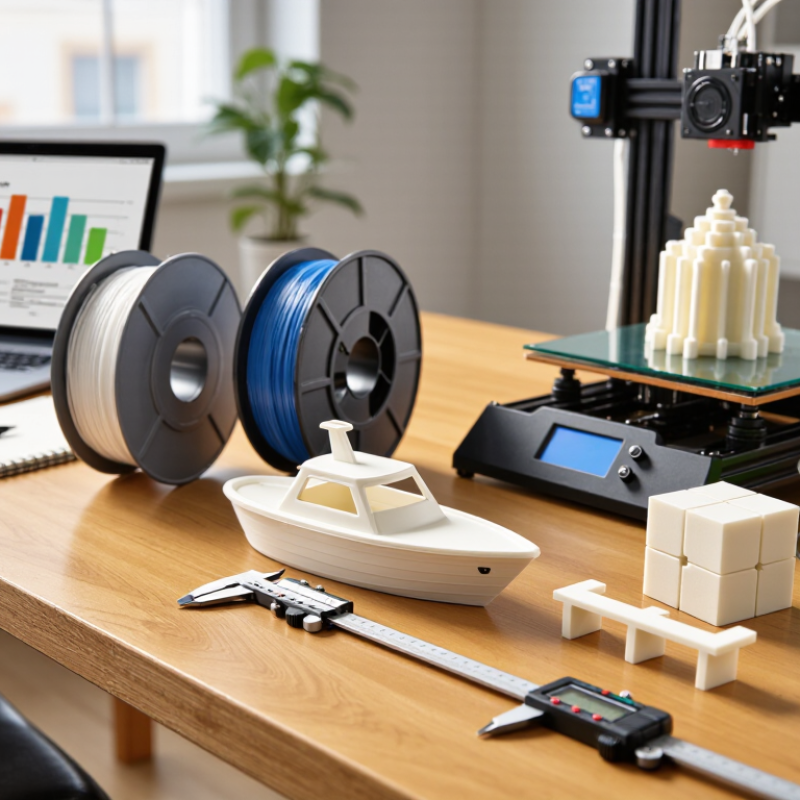
How to Choose a 3D Printer Filament Manufacturer

Identify Your Printing Needs and Material Requirements

Before choosing a 3D printer filament manufacturer, define what the printed part must do. Is it a display model, a fixture, or an outdoor enclosure? A small desk prototype may need clean detail more than impact strength. A bracket near a warm motor may need better heat resistance. Record your printer’s nozzle range, bed temperature, and chamber setup. These limits quickly narrow suitable materials. They sound obvious, yet they are easy to overlook.

Then compare materials against real operating conditions. Consider temperature, moisture, UV exposure, flexibility, and expected loads. Ask for a technical data sheet with tolerances, recommended print settings, and storage guidance. Consistent diameter matters: variation can cause uneven extrusion, visible surface lines, or failed prints. A small sample roll can reveal problems before you commit to regular orders. It is tempting to choose the strongest or most advanced material, but that can add cost without improving the part. Revisit your assumptions after testing; the first choice may not be the best one.

Tips: Print a short test piece using your normal settings. Check fit, layer bonding, and surface quality. Keep notes on the spool and conditions. Small details count.

Compare Filament Quality and Production Consistency

When comparing filament manufacturers, look beyond a neat sample spool. Request material data and ask how often diameter is measured during production. A caliper check at several points can reveal variation that a single reading misses. Also inspect the strand for bubbles, rough patches, and color shifts. Small flaws matter. They can interrupt a long print or leave visible bands on a smooth surface.

Consistency is easier to judge with repeatable tests. Ask whether production batches are recorded and whether retained samples can be checked later. Print the same simple test part from two batches, using identical settings. Compare layer bonding, extrusion sound, surface finish, and the amount of stringing. These observations do not replace lab testing, but they show how the filament behaves in an actual printer. Keep notes. Memory is surprisingly unreliable.

Packaging and handling deserve attention, too. A sealed bag with a desiccant helps protect moisture-sensitive materials, but storage instructions should be clear. Ask how the manufacturer controls winding tension; tangled filament can stop a print even when the polymer itself is sound. I would not treat one perfect test spool as proof of dependable production. That may be an inconvenient answer, but it is a more honest one. Compare results across multiple spools and ask for an explanation when they differ.

How to Choose a 3D Printer Filament Manufacturer - Compare Filament Quality and Production Consistency

Quality dimension What to compare Useful evidence or test Practical purchasing benchmark Potential warning sign
Filament diameter Specified diameter, tolerance, and variation along the spool. In-line laser measurement records or documented measurements from multiple points and spools. Compare the supplier’s written tolerance with your printer’s requirements. ±0.02 mm is a common commercial target for some products, not a universal requirement. Only a nominal diameter is stated, with no tolerance or measurement records.
Roundness and ovality Whether the filament remains consistently round rather than flattened or irregular. Measurements taken across two perpendicular axes at several points. Ask how ovality is measured and whether it is included in the product specification; compare results across samples and lots. Diameter is reported as a single reading, without explaining how roundness is checked.
Moisture control Resin drying, moisture limits, and protection during packaging and storage. Material-specific drying procedures, moisture test records, and sealed packaging details. Require a moisture-control specification appropriate to the polymer; different materials need different handling and limits. The supplier gives one moisture limit for every polymer or cannot describe its drying and storage controls.
Mechanical properties Tensile strength, elongation, impact performance, and consistency between production lots. Test reports using a stated method, such as ISO 527 or ASTM D638 for tensile testing; check specimen preparation and conditioning. Compare products only when test methods, specimen geometry, print orientation, and conditioning are comparable. Performance claims have no test method, sample details, or supporting report.
Thermal and flow behavior Recommended printing range, melt behavior, and flow consistency. Technical data sheet and, where relevant, test results such as melt mass-flow rate under a stated method and conditions. Check that processing guidance is material-specific and that flow data include the test temperature and load. A wide printing-temperature claim is given without explaining material grade or test conditions.
Color consistency Color match within a batch and between repeat orders. Retained color samples, lot records, and instrumental color measurements such as CIEDE2000 (ΔE00), if used. Agree on a reference sample and a color-acceptance range before placing repeat or large-volume orders. Color is approved from an online image alone, with no reference sample or lot-control process.
Spool winding and usability Even winding, tangles, spool dimensions, and compatibility with the intended feeder. Sample-spool inspection and a continuous print test using the target printer or feeder setup. Test representative spools for smooth feeding and confirm spool dimensions and hub compatibility before bulk purchasing. Loose winding, crossed loops, or unclear spool dimensions cause feeding interruptions.
Lot-to-lot consistency Whether key dimensions and performance remain stable across production runs. Certificates of analysis or inspection summaries linked to lot numbers, plus samples from more than one lot. Request the same defined measurements for each lot and compare results against agreed acceptance limits. A sample passes, but the supplier cannot show how production lots are checked or identified.
Traceability and quality controls Raw-material identification, production records, inspection steps, and complaint handling. Lot coding, documented inspection procedures, corrective-action records, and applicable quality-system documentation. Confirm that a delivered spool can be traced to its production lot and that nonconforming product has a defined resolution process. No lot code, no written inspection process, or no clear response procedure for quality issues.

Note: Benchmarks are screening guidelines, not universal standards. Confirm the material, test conditions, and acceptance limits with the manufacturer before comparing offers.

Check Material Range, Specifications, and Printer Compatibility

A dependable filament manufacturer should offer more than a long color list. Check whether its material range fits the parts you actually print: PLA for quick prototypes, PETG for tougher everyday components, and flexible or heat-resistant options when a design requires them. Keep the use case specific. A decorative desk model and a clip exposed to warmth need different properties. Start with the part, not the catalog.

Read technical data sheets before comparing prices. Look for stated diameter tolerance, recommended nozzle and bed temperatures, drying guidance, and relevant strength or heat-resistance data. A figure without a test method can be hard to compare. Ask how production batches are checked, and whether spool weight and material composition are clearly reported. Details matter.

Compatibility is practical, not just a label. Confirm the filament diameter supported by your printer, the hotend’s temperature limit, and whether the bed surface suits the material. Check spool width and hub shape too; a spool that rubs against its holder can interrupt a long print. A sample spool can reveal feeding problems, stringing, or uneven extrusion before a larger order. Results vary. Keep notes on temperature, speed, and humidity, since one setting rarely works for every machine. Supplier tables are useful, but sometimes incomplete; verify the material on your own printer.

Evaluate Certifications, Technical Support, and Traceability

When choosing a 3D printer filament manufacturer, check whether its certificates match the material and production site you will actually use. ISO 9001 certification covers a quality management system; it does not guarantee a filament’s print performance. Ask for test methods, recent results, and a lot-specific certificate of analysis. Can the supplier connect a spool’s ID to its raw-material batch and production records?

The Wohlers Report 2024 estimated that the additive manufacturing industry reached $20.0 billion in 2023, growing 11.1% from the previous year. Growth is not a quality guarantee. It does make consistent supply controls worth checking. Good traceability can link resin batch, extrusion line, diameter checks, and spool ID. If a batch prints poorly, those records help narrow down the cause. Technical support matters, too. Ask how quickly staff respond and whether they can explain settings using your printer, nozzle, and material conditions. A polished data sheet is useful, but real troubleshooting can be less tidy.

Tips: Request a sample spool and print a repeatable test part. Record dimensional results and support response time. Keep the packaging label; it may be the quickest link to a production lot.

Assess Pricing, Sample Options, and Supply Reliability

A low price per kilogram can be misleading. Compare the full landed cost, including shipping, packaging, and any fees for small orders. Ask whether the quote applies to a trial batch or only to large volumes. A slightly higher price may be worthwhile if diameter tolerances and spool winding stay consistent. Cheap material is not always cheap in practice.

Request samples before committing. Print the same small test part with each sample, using identical settings and a clean, dry nozzle. Check for uneven extrusion, brittle strands, rough surfaces, and color shifts between spools. Ask for the material’s technical data and lot identification, too. Useful details. A sample is only a snapshot, though; it cannot prove every production run will match. I still find it easy to overvalue one good print.

Supply reliability needs specific questions. Ask for typical lead times, available stock, minimum order quantities, and how delays are communicated. If a supplier changes raw materials or production settings, will customers be notified? Request realistic answers rather than a confident promise of constant availability. For recurring orders, compare delivery records and batch consistency over time. No checklist removes every risk, and I would not treat a polished sample as a guarantee. A clear contact person and prompt, factual updates matter when a shipment slips.

FAQS

What should I define before choosing a filament?

Decide what the printed part must do. A desk model may need fine detail, while a warm-motor bracket may need heat resistance. Start there.

Which printer details should I check?

Note your nozzle range, bed temperature, and chamber setup. These limits can quickly rule out unsuitable materials.

What conditions should guide material selection?

Consider temperature, moisture, UV exposure, flexibility, and expected loads. A material that looks suitable on paper may still fail outdoors.

What should I look for in a technical data sheet?

Check tolerances, recommended print settings, and storage guidance. Ask for test methods and recent results, too.

Why does filament diameter consistency matter?

Diameter variation can cause uneven extrusion, visible surface lines, or failed prints. Check with a small sample spool first.

How can I test a filament before ordering more?

Print a short piece with your normal settings. Check fit, layer bonding, and surface quality. Keep notes.

What do certifications tell me about a filament?

Confirm that certificates match the material and production site. A quality-management certificate does not guarantee print performance.

How does traceability help if a batch prints poorly?

Lot records can connect a spool ID with its raw-material batch and production checks. Keep the packaging label; it may help identify the lot.

What should I ask technical support?

Ask how quickly staff respond and whether they can explain settings for your printer and nozzle. Support may be less tidy than the data sheet.

Conclusion

Choosing the right 3d Printer Filament Manufacturer starts with understanding your printing needs, including the materials, performance, and finish required for your projects. Compare filament quality and production consistency by looking for dependable diameter control, even winding, and repeatable results between batches. A broad material range can help you find suitable options, but check each filament’s specifications and confirm that it works with your printer and intended settings.

Before making a commitment, evaluate the manufacturer’s certifications, technical support, and ability to trace materials and production batches. Clear documentation and responsive guidance can make it easier to resolve printing issues and maintain consistent results. Compare pricing alongside sample availability, so you can test materials before placing larger orders. Finally, assess supply reliability, including stock availability, lead times, and communication about delays. Considering these factors together helps you choose a supplier that fits both your technical requirements and your long-term production needs.


Henry

Henry

Henry is a dedicated marketing professional with a profound expertise in the company's offerings. With years of experience in the industry, he possesses an impressive understanding of the market dynamics and consumer behaviors that drive success. Henry is committed to sharing his insights through......