Finding reliable Wholesale Asa Filament in China requires more than comparing prices on a supplier directory. ASA filament is valued for outdoor durability, UV resistance, and stable performance in demanding applications. However, quality can vary between factories, even when product descriptions look identical.
A dependable supplier should provide clear technical data, production details, and recent test records. Check filament diameter consistency, moisture control, spool winding, color stability, and recommended printing temperatures. A practical sample test can reveal problems quickly. Print a small enclosure or automotive trim part, then inspect layer adhesion, surface finish, warping, and odor. Small details matter.
Look for manufacturers with documented quality systems, responsive engineers, and experience serving international buyers. Ask whether the factory controls compounding, drying, extrusion, and packaging internally. Request batch numbers and material specifications before placing a large order. Independent laboratory reports can also support claims about UV resistance and mechanical strength.
Price still matters. It should not be the only measure. A low quotation may hide inconsistent raw materials, weak packaging, or limited after-sales support. Some suppliers communicate confidently but cannot explain their testing process. That is a warning sign.
The best sourcing decision may come from a supplier that admits limitations and offers a realistic improvement plan. China has many capable filament producers, yet no single factory suits every buyer. Production scale, custom colors, private labeling, minimum order quantities, and delivery reliability should match your actual requirements. Careful verification turns a promising listing into a trustworthy long-term supply relationship.
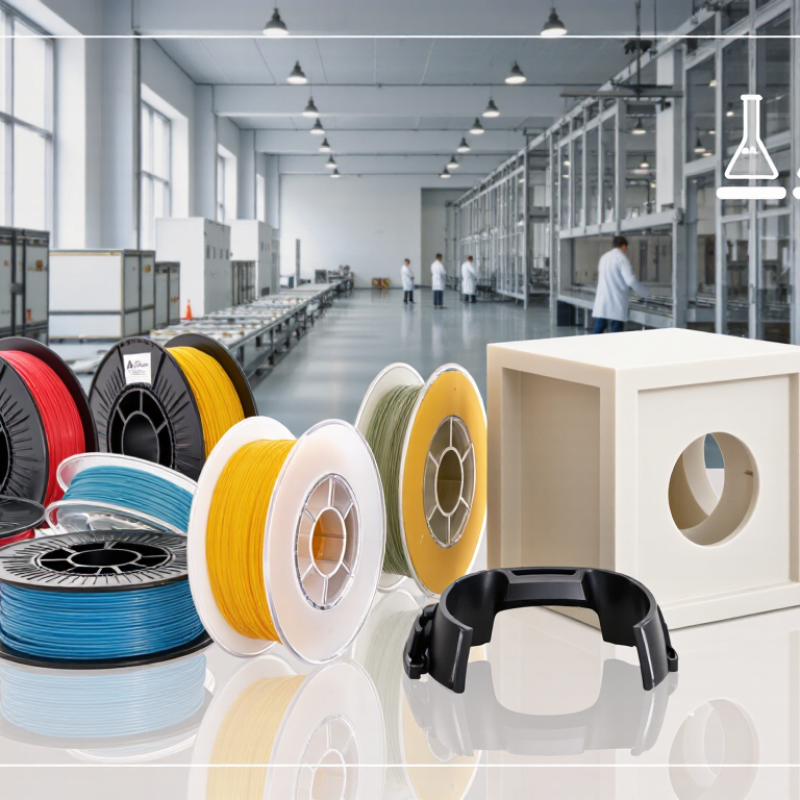
ASA filament is a durable engineering thermoplastic made from acrylonitrile, styrene, and acrylate. Unlike ABS, it retains color and strength better under sunlight, rain, and temperature changes. That makes it suitable for outdoor housings, vehicle parts, signs, and functional prototypes. It still warps. A heated chamber, stable bed temperature, and controlled cooling remain important.
Wholesale supply in China can reduce unit costs for distributors, schools, and manufacturers. More importantly, capable suppliers can provide consistent extrusion across large batches. Ask for diameter tolerance, moisture content, tensile data, and softening temperature. A useful incoming check measures 1.75 mm filament at several spool points. I would also print a thin wall and a sun-facing test piece. Small details reveal inconsistent cooling or poor drying. Sealed bags with desiccant protect the material during sea transport.
Do not treat the lowest quotation as proof of value. A cheaper spool may cause nozzle clogs, rough surfaces, or failed prints. Request samples before ordering pallet quantities. Review production records, batch labels, and the replacement policy. China’s manufacturing depth is valuable, but supplier verification still requires patience and evidence. My preference is a small pilot order first. It costs more initially. It can prevent a larger mistake.
| Category | Data Dimension | Typical ASA Filament Specification or Benchmark | Why It Matters When Buying Wholesale in China |
|---|---|---|---|
| Material | Polymer type | Acrylonitrile Styrene Acrylate, a weather-resistant engineering thermoplastic | Confirms that the product is ASA rather than standard ABS, which generally has lower outdoor weathering resistance. |
| Performance | UV and weather resistance | High resistance to sunlight, moisture, and outdoor aging compared with many general-purpose filaments | Suitable for outdoor housings, automotive prototypes, signage, fixtures, and functional parts exposed to weather. |
| Thermal Properties | Glass-transition temperature | Approximately 100–105°C, depending on formulation and test method | Indicates better heat resistance than PLA and helps buyers assess suitability for warm environments. |
| Printing | Nozzle temperature | Typically 240–265°C | A supplier should provide tested settings for the exact grade, color, and additive package. |
| Printing | Build-plate temperature | Typically 90–110°C | A heated bed, enclosure, and suitable build surface are normally recommended to reduce warping. |
| Printing | Recommended environment | Enclosed printer with controlled airflow; ventilation is recommended | Helps maintain dimensional stability and improves consistency across large wholesale production runs. |
| Material | Density | Approximately 1.05–1.10 g/cm³ | Useful for estimating filament length per spool and comparing material consumption between grades. |
| Dimensional Control | Filament diameter | Most common diameters: 1.75 mm and 2.85 mm | The diameter must match the printer configuration and slicer profile. |
| Dimensional Control | Diameter tolerance | Common commercial target: approximately ±0.02 mm; verify the supplier’s inspection standard | Tighter and consistently measured diameter can improve extrusion stability and reduce printing defects. |
| Packaging | Standard spool weight | 1 kg net weight is widely used; larger industrial spools may also be available | Standard spool sizes simplify inventory management, shipping calculations, and reseller packaging. |
| Moisture Control | Packaging requirement | Sealed moisture-resistant bag with desiccant; vacuum sealing is commonly used | Proper packaging helps prevent bubbles, poor layer bonding, and inconsistent surface quality during storage and transport. |
| Quality Verification | Documents to request | Technical data sheet, safety data sheet, batch records, and dimensional inspection results | Documents make it easier to compare anonymous suppliers and verify consistency without relying on brand reputation. |
| Wholesale Process | Sample approval | Test samples from the intended production grade before confirming a bulk order | Samples reveal warping, color consistency, layer adhesion, odor, spool winding, and actual printability. |
| Wholesale Process | Order quantity | Minimum order quantity varies by color, packaging, labeling, and customization requirements | Ask for separate quantities for standard colors, custom colors, private labels, and mixed-container orders. |
| Cost Planning | Wholesale price factors | Resin grade, color, spool type, packaging, order volume, testing, and shipping terms | The lowest quoted price may exclude testing, custom packaging, export cartons, freight, or import-related costs. |
| Supplier Selection | Factory assessment points | Extrusion control, batch traceability, color management, drying procedures, spool winding, and export packing | These factors are more reliable indicators of wholesale quality than product photos or a low initial quotation. |
| Application Fit | Best-use examples | Outdoor prototypes, vehicle accessories, enclosures, tools, brackets, industrial covers, and functional models | ASA is a strong wholesale choice when UV stability and outdoor durability are more important than the easiest possible printing. |
Note: Specifications are typical commercial ranges and can vary by formulation, color, production batch, printer, and test method. Always confirm the current technical data sheet and approve a production sample before placing a large order.
ASA is a durable engineering plastic for outdoor housings, vehicle parts, signs, and functional prototypes. It handles sunlight well. It can still warp during printing.
Large-volume supply can reduce unit costs for distributors, schools, and manufacturers. Capable suppliers may also provide steadier extrusion across many batches. Lower prices alone prove nothing.
Zhejiang, Jiangsu, and Guangdong have strong polymer-processing and filament-manufacturing capabilities. Some suppliers offer custom colors, flexible quantities, and faster sample development. Location is not a guarantee.
Request diameter tolerance, moisture content, tensile data, softening temperature, spool weight, and drying guidance. Also confirm color, packaging, and minimum order quantity. Keep everything written.
Measure 1.75 mm filament at several spool points with a micrometer. Print a thin wall and a sun-facing test piece. Check bonding, warping, surface finish, odor, and winding.
Sealed bags with desiccant help protect filament during long transport. Inspect bag seals, spool labels, and moisture protection before accepting delivery. Small gaps matter.
Define technical requirements before requesting quotations. Ask for samples from two production lots. Test them on your own printer. Then compare price, packaging, lead time, inspection costs, and shipping terms.
Ask for technical data sheets, batch records, production photos, and retained samples. A factory audit can reveal storage and quality-control conditions. A polished sample may still hide uneven batches.
Use a heated chamber, stable bed temperature, and controlled cooling when possible. Printer settings affect warping, layer bonding, and surface quality. I once trusted a clean surface too quickly. Longer testing changed my opinion.
This guide explains how Wholesale Asa Filament can help manufacturers, distributors, and 3D printing businesses reduce sourcing costs while maintaining reliable material performance. ASA filament is valued for its weather resistance, UV stability, impact strength, and suitability for outdoor or functional parts. China offers several manufacturing regions with strong polymer processing and filament production capabilities, but buyers should evaluate suppliers carefully rather than choosing based on price alone.
The article covers how to assess diameter consistency, color uniformity, layer adhesion, moisture control, packaging, and essential quality certifications. It also explains how to compare quotations by considering material grade, spool weight, order volume, customization, shipping terms, and payment conditions. Finally, buyers can follow a practical ordering process: define specifications, request samples, verify production capacity, confirm inspection requirements, negotiate terms, and arrange shipment. With clear communication and thorough supplier evaluation, international customers can build a dependable wholesale ASA filament supply chain from China.